
If you have been told that you need a root canal treatment, one of the first questions you may have is: What happens to the nerve during root canal treatment?
Many people hear the words “nerve removal” and immediately worry that the procedure will be extremely painful or that the entire tooth will somehow “die.” In reality, root canal treatment is designed to remove the inflamed or infected pulp tissue inside the tooth, clean the root canal system, and seal it so that the natural tooth can continue functioning.
The American Association of Endodontists (AAE) explains that dental pulp contains nerves, blood vessels and connective tissue. When the pulp becomes infected or irreversibly inflamed, root canal treatment can remove the diseased tissue and help save the natural tooth.
If you are looking for root canal treatment in Noida, The Dental Crowns provides painless root canal treatment as part of its dental services.
Quick Answer: What Happens to the Nerve During Root Canal Treatment?
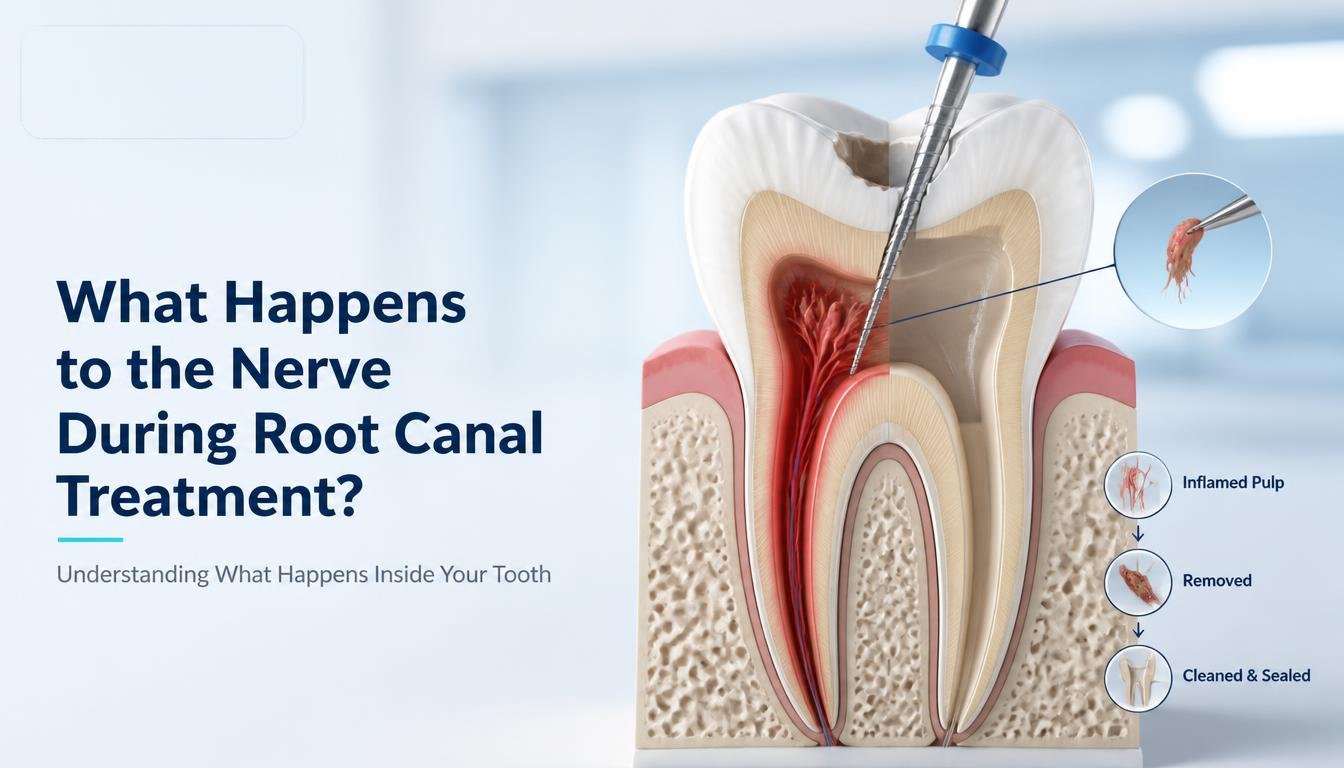
During a root canal, the dentist removes the infected or inflamed pulp, which contains the tooth’s nerves and blood vessels. The inside of the tooth is then carefully cleaned, disinfected, shaped and sealed.
The nerve tissue inside the tooth is therefore no longer present after successful root canal treatment. However, this does not mean the entire tooth is dead.
A fully developed tooth can continue to function after its pulp has been removed because it receives support and nourishment from the surrounding tissues. The AAE specifically states that a root canal does not kill the tooth and that a treated tooth can continue to function normally.
What Is the “Nerve” Inside a Tooth?
To understand what happens during root canal treatment, it helps to understand basic tooth anatomy.
A tooth has several layers:
- Enamel: The hard outer layer.
- Dentin: The layer underneath enamel.
- Pulp: The soft tissue in the center of the tooth.
- Root canals: Narrow spaces inside the roots containing pulp tissue.
The pulp contains nerves, blood vessels and connective tissue. It plays an important role while the tooth is developing.
However, once a permanent tooth has fully developed, the pulp is no longer essential for the tooth to remain functional. This is why a mature tooth can continue working after root canal treatment.
Why Does the Nerve Need to Be Removed?
A dentist may recommend root canal treatment when the pulp becomes severely inflamed or infected.
Common causes include:
- Deep tooth decay
- A cracked or fractured tooth
- Dental trauma
- Repeated dental procedures
- Problems beneath an existing restoration
- Bacterial infection reaching the pulp
If infected or severely inflamed pulp is left untreated, the infection may spread beyond the tooth and can contribute to an abscess.
This is why root canal treatment is not simply about removing a nerve. The main objective is to remove diseased tissue, eliminate infection from the root canal system and preserve the natural tooth.
For a broader understanding of available treatments, you can explore The Dental Crowns’ complete dental services.
Does Root Canal Treatment Remove the Entire Nerve?
In simple terms, root canal treatment removes the pulp tissue and nerve tissue inside the tooth’s pulp chamber and root canals.
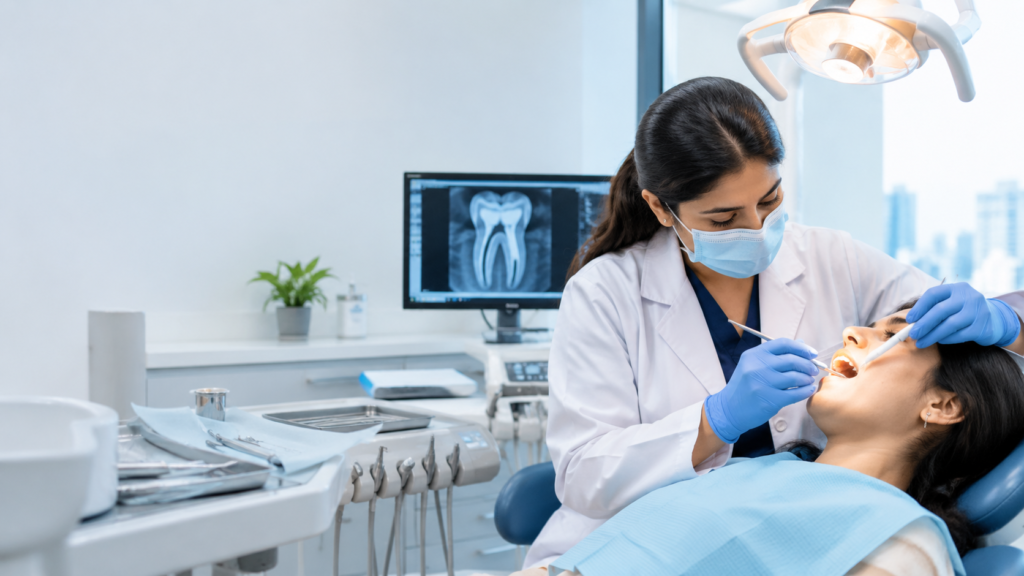
The dentist first creates a small opening in the tooth to reach the infected pulp. Specialized dental instruments are then used to remove the diseased tissue from the pulp chamber and root canals.
The canals are subsequently cleaned and shaped before being filled and sealed.
It is important to understand that this is not the same as removing every nerve in your jaw or mouth. The treatment is focused specifically on the internal pulp of the affected tooth.
What Happens During Root Canal Treatment Step by Step?
1. Examination and Diagnosis
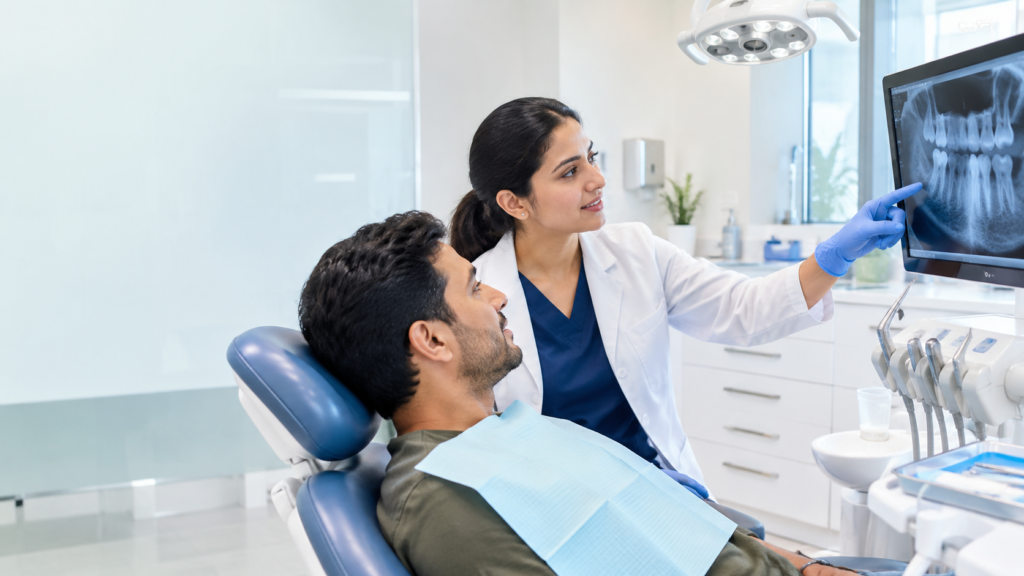
Before treatment begins, your dentist examines the tooth and may take dental X-rays.
The objective is to determine:
- Whether the pulp is infected or irreversibly damaged
- How many roots and canals the tooth has
- The extent of infection
- Whether the tooth can be restored
- What type of treatment is appropriate
Accurate diagnosis is an important part of successful root canal treatment.
2. Local Anaesthesia
The dentist administers local anaesthesia to numb the area around the tooth.
This helps make the procedure comfortable. You remain awake, but the treated area is numbed.
Modern root canal treatment is generally performed using local anaesthesia, and patients should discuss their concerns about pain or anxiety with their dentist before treatment.
3. Accessing the Pulp
The dentist creates a small opening through the crown of the tooth.
This provides access to the pulp chamber and root canals where the infected or inflamed tissue is located.
4. Removing the Infected Pulp and Nerve Tissue
This is the stage most people associate with “nerve removal.”
Specialized instruments are used to remove the diseased pulp from the tooth.
The goal is not simply to pull out a nerve. The dentist removes the infected or inflamed tissue from the internal canal system.
5. Cleaning and Disinfecting the Root Canals
After the pulp has been removed, the root canals are carefully cleaned and shaped.
This step is essential because bacteria and infected material can remain inside complex canal spaces.
The AAE describes root canal treatment as a process involving removal of diseased pulp, cleaning and disinfecting the root canals, followed by filling and sealing.
6. Filling and Sealing the Canals
Once the canals have been adequately cleaned and shaped, they are filled with a biocompatible material, commonly gutta-percha.
The canals are sealed to reduce the possibility of bacteria entering the treated space again.
7. Restoring the Tooth
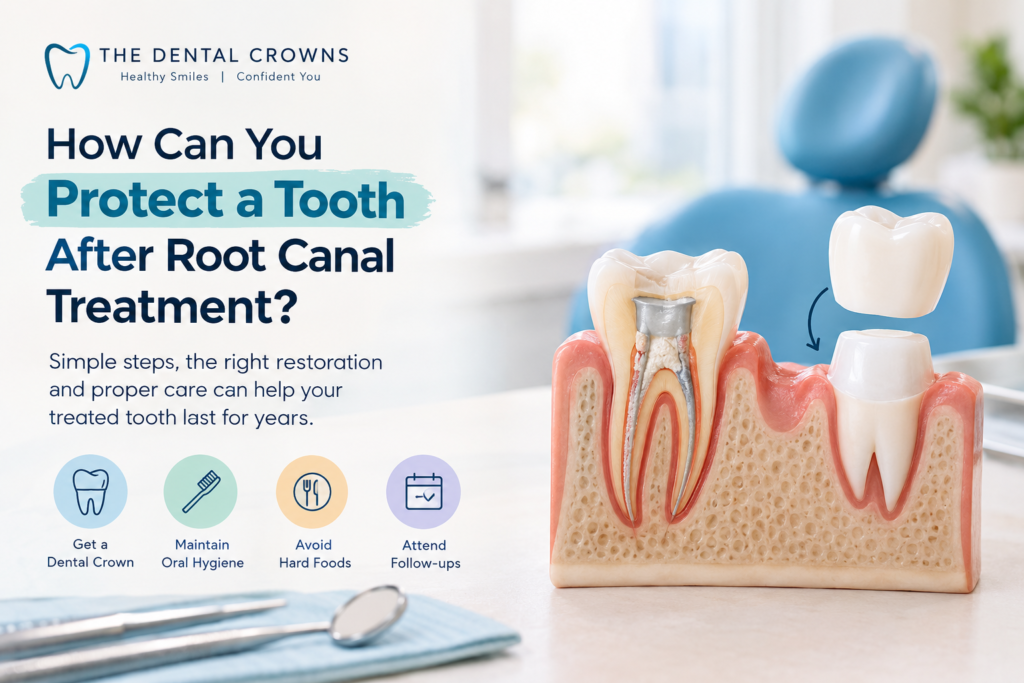
After root canal treatment, the tooth may require a filling or dental crown depending on how much tooth structure remains and which tooth has been treated.
A crown can provide additional protection to a weakened tooth and restore its function.
If you are interested in restorative options, see dental crown treatment at The Dental Crowns.
Does Removing the Nerve Kill the Tooth?
No. Root canal treatment does not kill a fully developed tooth.
This is one of the most common misconceptions about RCT.
The pulp is important during tooth development, but a mature tooth can continue functioning after the pulp has been removed. The surrounding tissues continue to support the tooth.
According to the AAE, after successful endodontic treatment and appropriate restoration, the tooth can continue to function like a natural tooth.
So although the tooth no longer has living pulp inside it, it can still:
- Help you chew
- Maintain your bite
- Support surrounding teeth
- Remain part of your natural smile
Will I Feel Pain When the Nerve Is Removed?
This is probably the biggest concern for people considering RCT.
Modern root canal treatment is performed with local anaesthesia, which numbs the tooth and surrounding area.
You may feel pressure, vibration or movement during treatment, but you should not expect the sharp pain associated with an untreated infected tooth.
The AAE notes that modern root canal treatment is designed to relieve dental pain and save the natural tooth.
At The Dental Crowns, painless root canal treatment is offered in Noida with an emphasis on patient comfort and modern dental techniques. You can learn more about the clinic’s Painless Root Canal Treatment.
Why Can a Tooth Still Hurt After the Nerve Is Removed?
It may seem strange that a tooth can be sore after the nerve has been removed.
The reason is that the tissues around the tooth’s root are still alive.
During treatment, the tissues surrounding the root may experience temporary irritation. As a result, some patients may experience:
- Mild soreness
- Tenderness when biting
- Sensitivity around the treated tooth
- Temporary discomfort
The AAE notes that a tooth can be sore or numb after treatment and that mild discomfort may occur for a few days.
If pain is severe, continues to worsen, or is accompanied by significant swelling or other concerning symptoms, contact your dentist for an evaluation.
Can the Nerve Grow Back After a Root Canal?
In a conventional root canal treatment, the infected or inflamed pulp tissue inside the treated tooth is removed, and the canal system is cleaned, filled and sealed.
The objective is to prevent reinfection and allow the tooth to remain functional.
A successfully treated mature tooth does not normally regenerate its original pulp and nerve tissue inside the sealed root canal space.
This is one reason why proper cleaning, disinfection and sealing are so important.
What If the Nerve Is Already Dead Before Root Canal Treatment?
Sometimes the pulp becomes necrotic, meaning the tissue inside the tooth has died before treatment.
This can happen following severe infection, deep decay or trauma.
Importantly, a dead nerve does not necessarily mean the tooth must be extracted.
If the tooth has enough healthy structure and can be predictably restored, root canal treatment may allow the natural tooth to be retained. The purpose is to remove diseased tissue and infection and then seal the internal space.
What Happens If an Infected Nerve Is Not Treated?
When infected or irreversibly inflamed pulp is not treated, bacteria can continue to multiply inside the tooth.
This may eventually result in:
- Persistent toothache
- Pain when biting
- Swelling
- Gum tenderness
- An abscess
- Bone changes around the tooth
- Further damage to the tooth
The AAE explains that untreated pulp inflammation or infection can cause pain and may lead to an abscess.
Therefore, if you have persistent tooth pain or sensitivity, it is better to have the tooth examined instead of waiting for symptoms to disappear.
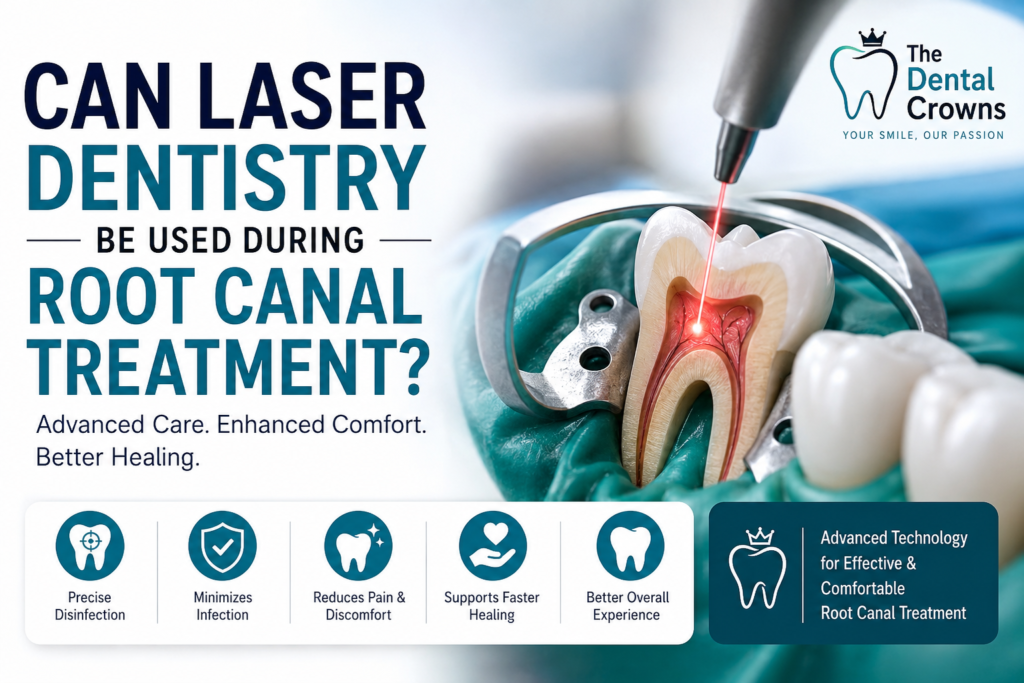
Can Laser Dentistry Be Used During Root Canal Treatment?
In selected cases, laser technology may be used as an adjunct to root canal treatment.
Potential applications can include assisting with disinfection or bacterial reduction in the root canal system. However, laser dentistry does not automatically replace conventional root canal procedures, and its suitability depends on the individual case, equipment and dentist’s treatment protocol.
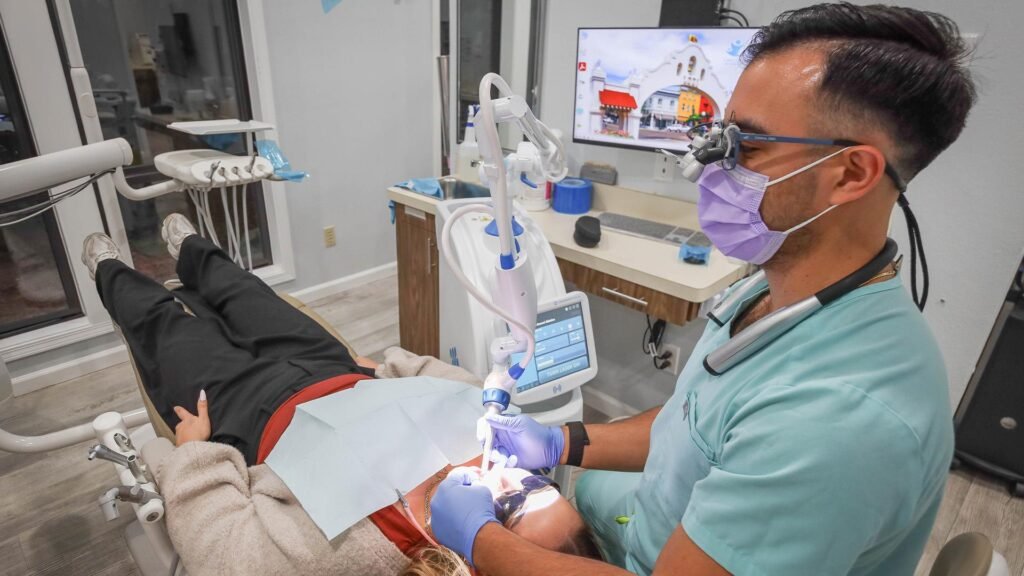
The Dental Crowns provides Advanced Clinical Laser Dentistry in Noida.
The clinic also provides information about laser dentistry and root canal treatment.
Does Every Tooth Need a Crown After Root Canal Treatment?
Not necessarily.
The decision depends on:
- Which tooth was treated
- How much natural tooth structure remains
- The amount of damage or decay
- The tooth’s function
- The strength of the remaining structure
- Your dentist’s restorative plan
Back teeth often experience substantial chewing forces, so a crown may be recommended when appropriate to protect the remaining tooth structure.
Your dentist should assess the tooth before deciding whether a crown, filling or another restoration is appropriate.
Root Canal Treatment vs Tooth Extraction
When a tooth has severely damaged or infected pulp, treatment options may sometimes include either root canal treatment or extraction.
The major difference is that root canal treatment attempts to preserve the natural tooth, while extraction removes it.
If the tooth can be successfully restored, saving the natural tooth may help maintain normal chewing function and avoid the need to replace the missing tooth.
The AAE explains that extraction can subsequently require replacement with options such as an implant or bridge.
This is why dentists generally consider whether a natural tooth can be predictably saved before recommending extraction.
How Long Does Root Canal Treatment Take?
The duration depends on:
- Which tooth is being treated
- Number of root canals
- Complexity of the canal anatomy
- Severity of infection
- Whether additional procedures are required
- The dentist’s treatment approach
Some root canals can be completed in one visit, while others require multiple appointments.
The AAE notes that many root canal treatments can be completed in one or two appointments, although individual cases vary.
What Should You Do After Root Canal Treatment?
After your root canal:
- Follow your dentist’s instructions carefully.
- Avoid chewing hard foods on the treated tooth until advised otherwise.
- Attend the recommended restoration appointment.
- Maintain regular brushing and flossing.
- Return for follow-up if your dentist recommends it.
- Contact your dentist if significant pain, swelling or other unusual symptoms develop.
A properly restored and maintained root-treated tooth can remain functional for many years.
When Should You See a Dentist for Possible Root Canal Treatment?
You should consider a dental examination if you experience:
- Persistent toothache
- Severe pain while chewing
- Lingering hot or cold sensitivity
- Swelling around a tooth
- Gum tenderness
- A chipped or cracked tooth
- A recurring dental infection
- A pimple or drainage point on the gum
- Tooth discoloration
These symptoms do not automatically mean that you need a root canal. A dental examination and appropriate diagnostic tests are needed to determine the actual cause.
Frequently Asked Questions
Does root canal treatment remove the nerve?
Yes. Root canal treatment removes the diseased pulp tissue inside the tooth, including the nerve tissue contained within the pulp.
Does removing the nerve kill the tooth?
No. A mature tooth can continue to function after its internal pulp has been removed because the surrounding tissues support it.
Is nerve removal during RCT painful?
The tooth is normally numbed with local anaesthesia before treatment. Patients may experience pressure or vibration, but modern root canal treatment is designed to be comfortable.
Can a root canal tooth feel pain afterward?
Yes. Temporary soreness or tenderness can occur after treatment because tissues surrounding the root may be irritated.
Can the nerve grow back after a root canal?
The removed pulp and nerve tissue inside a conventionally treated mature tooth do not normally grow back inside the sealed root canal.
How long does a root canal tooth last?
With appropriate treatment, restoration and oral hygiene, a root-treated tooth can remain functional for many years. The AAE notes that with proper care, many teeth treated endodontically can last a lifetime.
Does every root canal require a crown?
No. The need for a crown depends on the tooth and the amount of remaining tooth structure. Your dentist should determine the most appropriate restoration.
Can laser dentistry be used during RCT?
Laser technology can be used as an adjunct in selected root canal procedures, particularly for certain disinfection applications. It does not replace every conventional step of root canal treatment.
Is root canal treatment better than extraction?
When a tooth can be predictably restored, root canal treatment may allow you to retain your natural tooth. Extraction removes the tooth and may require replacement with an implant, bridge or denture.
Final Takeaway: What Happens to the Nerve During Root Canal Treatment?
So, what happens to the nerve during root canal treatment?
The infected or irreversibly inflamed pulp inside the tooth is carefully removed. This includes the nerve tissue located within the pulp. The root canals are then cleaned, disinfected, filled and sealed.
The important point is that removing the internal nerve does not mean losing the natural tooth. A mature tooth can continue to function after root canal treatment when it is properly treated and restored.
If you are experiencing persistent tooth pain, sensitivity, swelling or discomfort while chewing, do not rely on symptoms alone to determine whether you need RCT. A professional dental examination is the best way to identify the cause.
For patients looking for root canal treatment in Noida, The Dental Crowns offers painless root canal treatment at its clinic in Civitech Stadia, Sector 79.
Book a dental consultation with The Dental Crowns to find out whether root canal treatment is appropriate for your tooth.
Explore Root Canal Treatment at The Dental Crowns