

Dental treatment has come a long way from the days when patients associated a dental visit with drills, discomfort and lengthy recovery. Today, advances in technology are helping dentists perform many procedures with greater precision and improved patient comfort. One of the technologies contributing to this transformation is laser dentistry.
But how is laser dentistry changing modern dental treatment, and does it really offer advantages over conventional techniques?
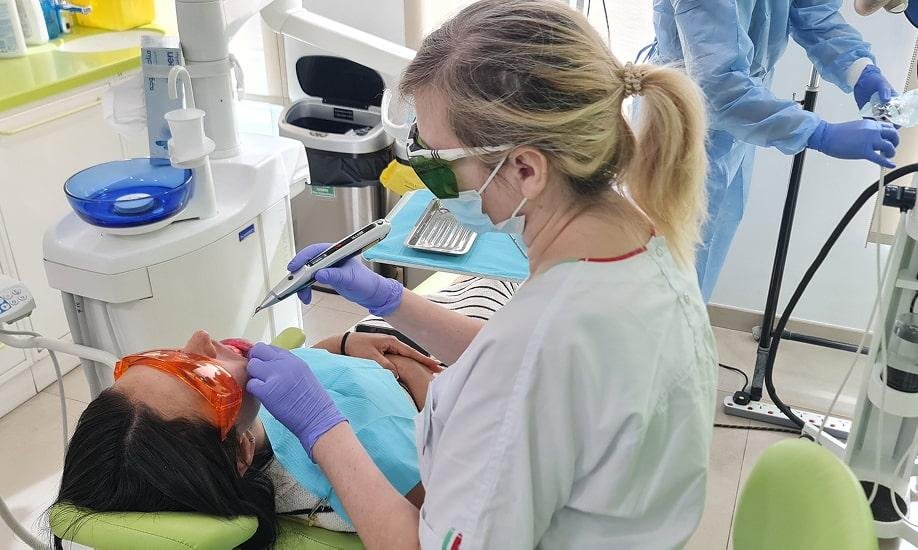
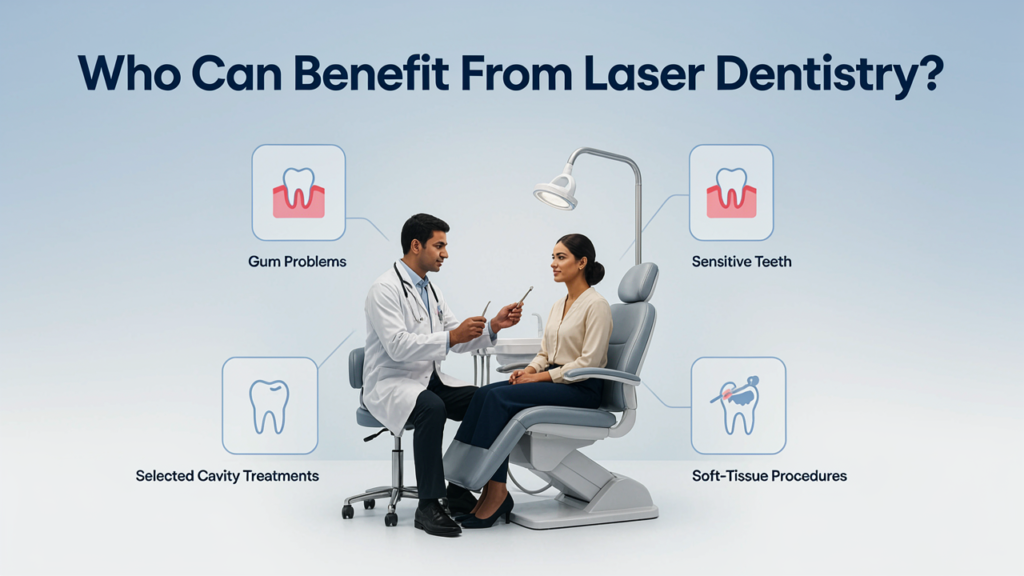
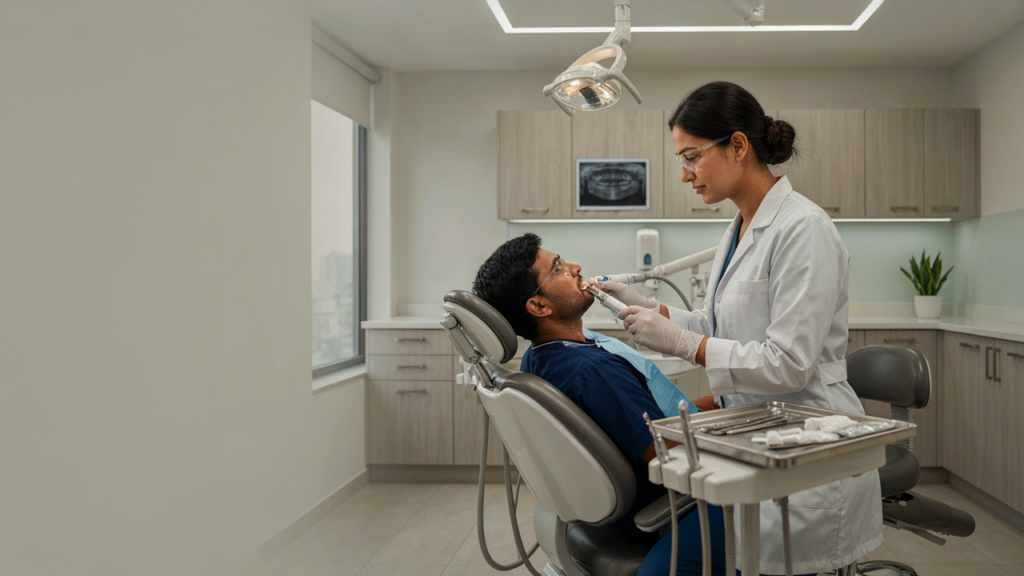
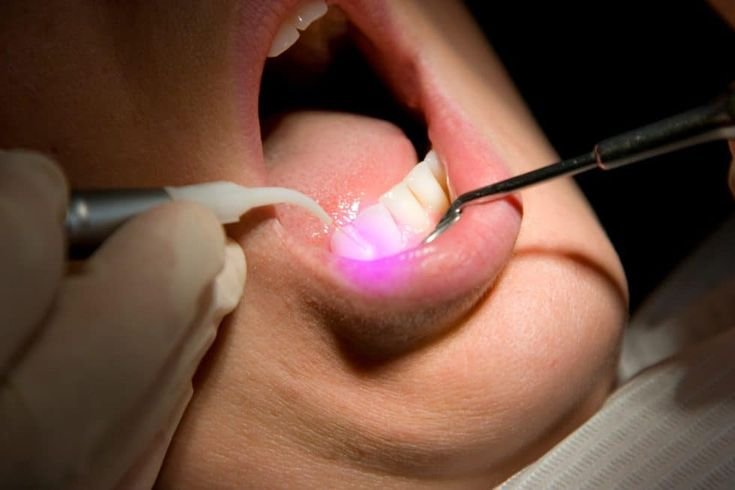
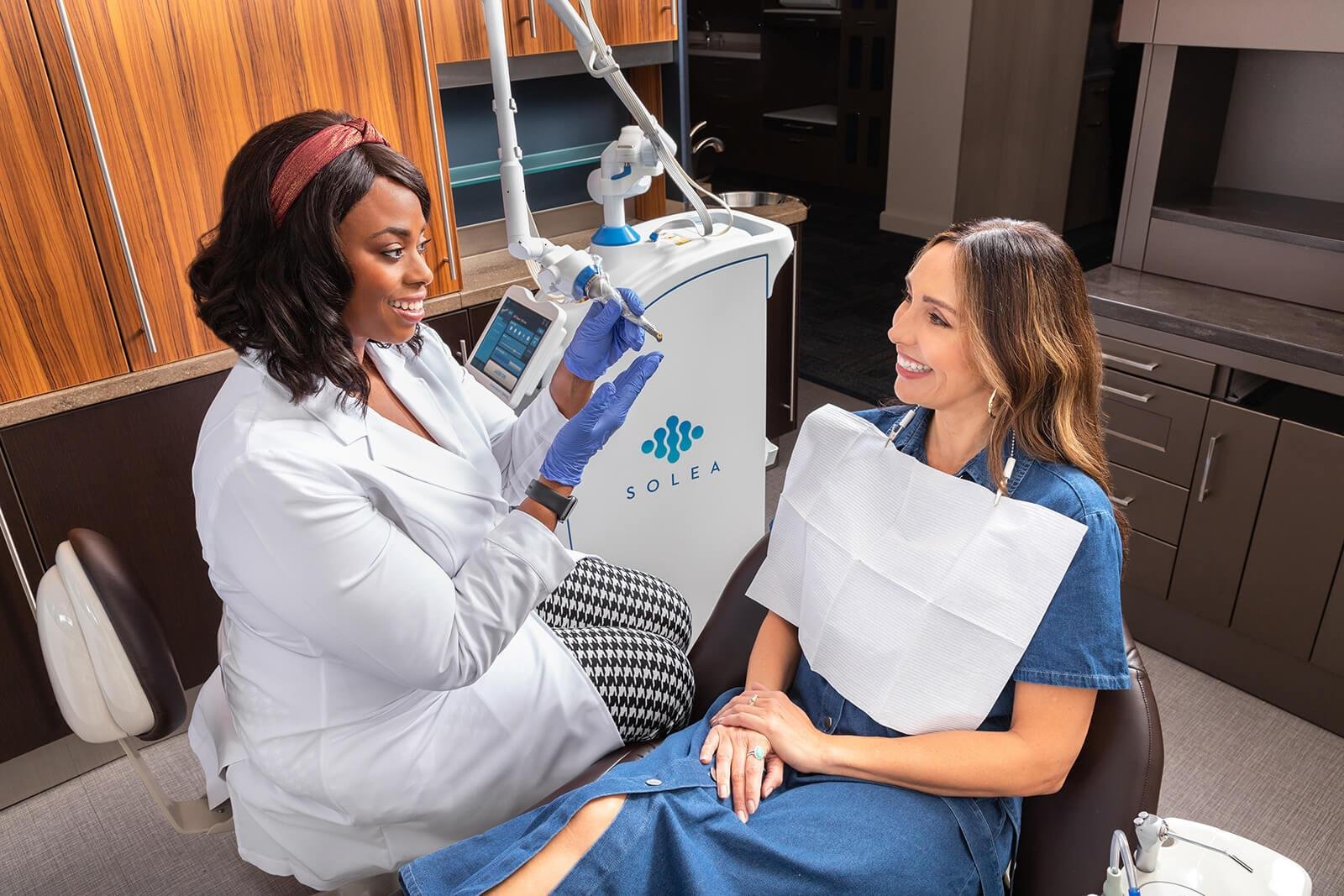
Laser dentistry uses concentrated light energy for selected dental procedures involving the teeth, gums and other oral tissues. Depending on the laser and the procedure, it may be used for gum treatment, certain cavity-related procedures, soft-tissue procedures, root canal disinfection, sensitivity management and other clinically appropriate applications.
For patients searching for laser dentistry in Noida, understanding what the technology can and cannot do is important before choosing treatment.
At The Dental Crowns, advanced clinical laser dentistry is offered alongside comprehensive dental treatments, including root canal treatment, dental implants, dental crowns and other general and cosmetic dental services.
What Is Laser Dentistry?
Laser dentistry is a modern dental technique that uses focused light energy to interact with oral tissues.
Unlike traditional dental instruments that rely primarily on mechanical cutting or physical contact, dental lasers deliver energy to a specific treatment area. The exact effect depends on the wavelength of the laser, the tissue being treated and the clinical objective.
Laser technology may be used with:
- Gum treatments
- Selected soft-tissue procedures
- Certain cavity treatments
- Root canal disinfection
- Treatment of tooth sensitivity
- Gum reshaping
- Selected oral surgical procedures
- Some cosmetic dental procedures
It is important to understand that laser dentistry does not mean every dental procedure can be performed entirely with a laser. Dentists choose the appropriate technique according to the patient’s diagnosis, treatment requirements and overall oral health.
How Is Laser Dentistry Changing Modern Dental Treatment?
The biggest change is not simply the introduction of a new piece of equipment. Laser dentistry is helping dentists explore approaches that can be more precise, conservative and comfortable for selected procedures.
Here are some of the ways laser technology is influencing modern dental care.
1. Greater Precision During Selected Procedures
Precision is one of the major advantages associated with laser technology.
A dental laser can deliver concentrated energy to a targeted area. This can allow the dentist to work on specific tissues while limiting unnecessary disruption to surrounding areas when the procedure and technology are appropriate.
This is particularly relevant in procedures involving soft tissues such as the gums.
Greater precision can help dentists plan treatments more conservatively and may contribute to a more controlled treatment experience.
2. More Comfortable Dental Experiences
Dental anxiety is a major reason some people postpone dental treatment.
The sound, vibration and sensation associated with conventional dental instruments can make some patients uncomfortable. Depending on the procedure, laser technology may reduce the need for certain traditional instruments and can make treatment feel different for the patient.
Research reviewing laser surgery in dentistry has reported potential benefits in postoperative pain and quality of life for certain indications, although results depend on the procedure and the clinical situation.
This makes laser-assisted treatment an interesting option for patients who are particularly concerned about dental discomfort.
However, it is important not to assume that every laser procedure is completely painless. The level of discomfort depends on the treatment, the patient’s condition and the type of laser used.
3. Minimally Invasive Treatment Approaches
Modern dentistry increasingly focuses on preserving healthy tooth and oral tissue whenever possible.
Laser technology can support minimally invasive approaches in selected procedures because it can allow controlled treatment of specific tissues.
For example, certain dental lasers can be used on soft tissues with less mechanical contact than traditional surgical instruments.
This approach can be particularly useful when the dentist is treating gum tissue or performing selected soft-tissue procedures.
4. Reduced Bleeding in Certain Soft-Tissue Procedures
Some dental lasers can interact with blood vessels during soft-tissue procedures, which may help control bleeding.
Reduced bleeding can provide the dentist with a clearer treatment field and may improve convenience during selected procedures.
The effect, however, depends on the type of laser, the tissue involved and the specific treatment being performed.
Therefore, laser dentistry should be viewed as a clinical technology rather than a universal replacement for conventional dental equipment.
5. Faster Recovery for Some Procedures
Another reason laser dentistry is receiving attention is its potential effect on healing.
Some laser procedures can cause less tissue trauma than conventional approaches when used appropriately. This may contribute to a more comfortable recovery in selected cases.
Evidence suggests that laser surgery can have benefits related to postoperative pain and quality of life for certain dental indications, although more research is still needed for some applications.
Your dentist should explain the expected recovery period based on your specific procedure rather than promising a particular healing time.
6. Improved Management of Dental Anxiety
Dental anxiety can prevent people from receiving necessary treatment.
For patients who dislike the noise and vibration of conventional dental instruments, the possibility of laser-assisted treatment can make dental visits feel less intimidating.
This can be particularly relevant for:
- Nervous dental patients
- Patients who have previously experienced uncomfortable treatment
- People who avoid dental appointments
- Some children requiring suitable dental procedures
- Patients who prefer minimally invasive treatment options
The goal is not simply to eliminate every traditional instrument but to create a treatment plan that balances clinical effectiveness with patient comfort.
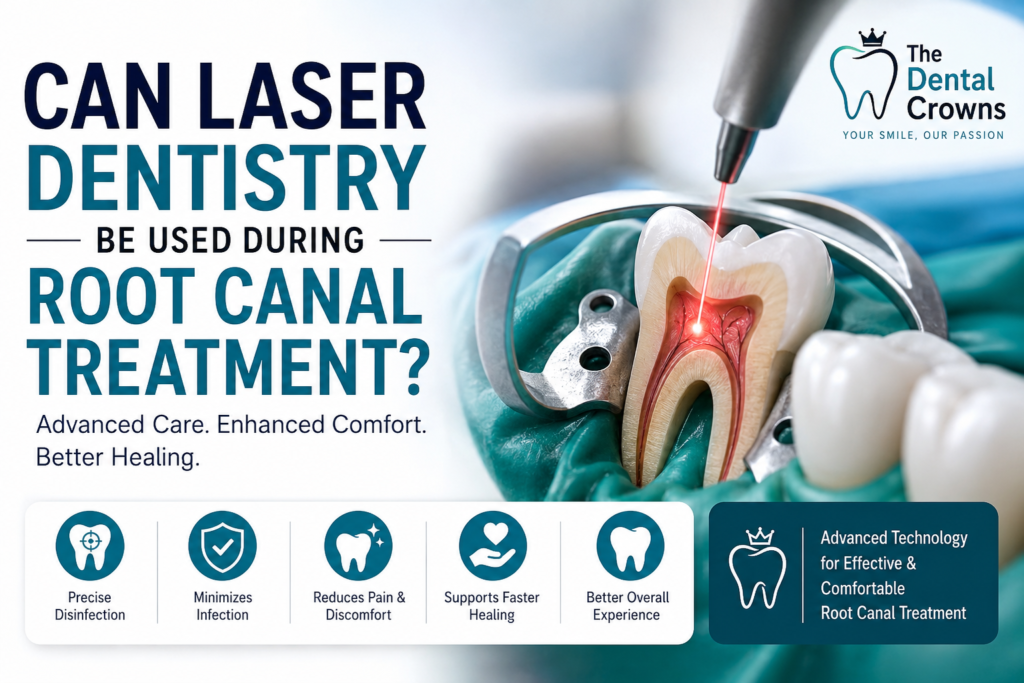
7. Laser Technology Can Support Root Canal Treatment
Root canal treatment is performed to remove infection or inflammation from inside a tooth and preserve the natural tooth whenever possible.
Laser technology may be used as an adjunct in certain root canal procedures, including disinfection.
At The Dental Crowns, laser technology is incorporated into the clinic’s approach to painless root canal treatment, with an emphasis on precision and patient comfort.
You can learn more about the treatment here: Painless Root Canal Treatment
Laser technology does not eliminate the need for proper root canal cleaning, shaping, irrigation and sealing. Instead, when clinically appropriate, it can be incorporated into a broader treatment protocol.
8. New Possibilities for Gum Treatment
Healthy gums are essential for maintaining healthy teeth.
Gum disease can cause inflammation, bleeding, bad breath and, in advanced cases, damage to the structures supporting the teeth.
Depending on the diagnosis and laser technology available, lasers may be used as part of selected periodontal and soft-tissue procedures.
Laser-assisted approaches may allow dentists to target diseased or unwanted tissue with controlled energy.
However, laser treatment is not automatically the best solution for every gum condition. A dental examination is necessary to determine the severity and appropriate treatment.
9. Laser Dentistry Can Complement Modern Dental Technology
Laser dentistry is only one part of the broader technological transformation taking place in dentistry.
Modern dental practices may combine different technologies and techniques, including digital imaging, digital treatment planning, intraoral scanning, CAD/CAM systems and laser technology.
The American Dental Association has highlighted how digital technologies are changing diagnosis, treatment planning and dental procedures.
This means the future of dentistry is not about one technology replacing everything else. Instead, dentists can combine different technologies to create treatment plans tailored to individual patients.
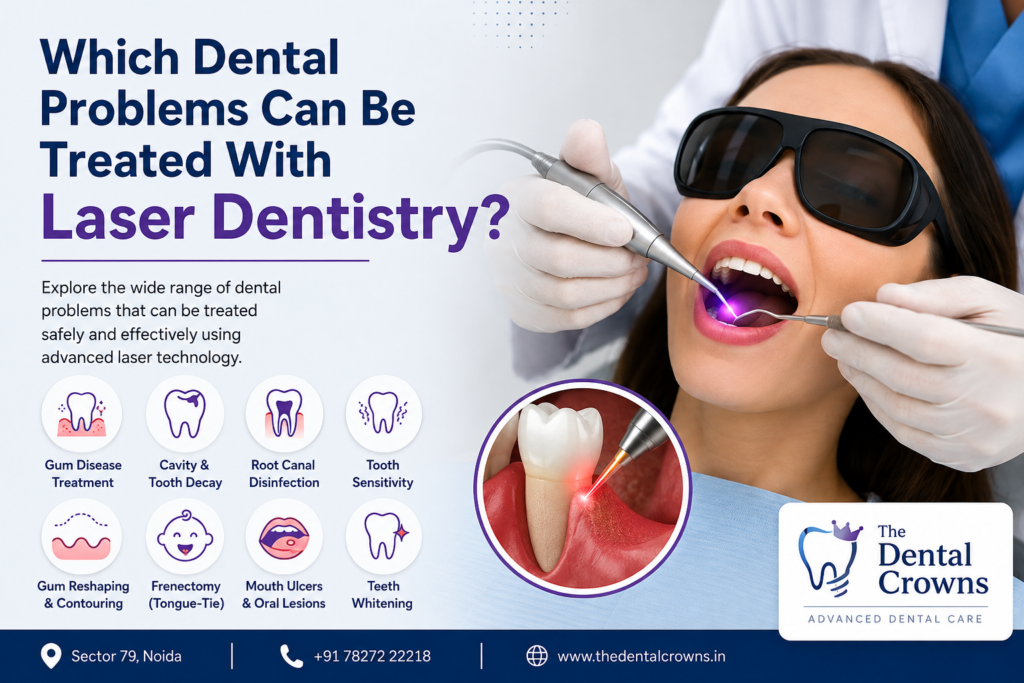
What Dental Problems Can Laser Dentistry Treat?
Laser dentistry has multiple applications, but the exact uses depend on the laser system and the dentist’s training.
Potential applications include:
- Gum treatment
- Selected cavity procedures
- Soft-tissue surgery
- Gum reshaping
- Frenectomy procedures
- Root canal disinfection
- Certain oral lesions
- Tooth sensitivity management
- Selected cosmetic procedures
At The Dental Crowns, patients can discuss laser dentistry alongside other treatment options during a dental consultation.
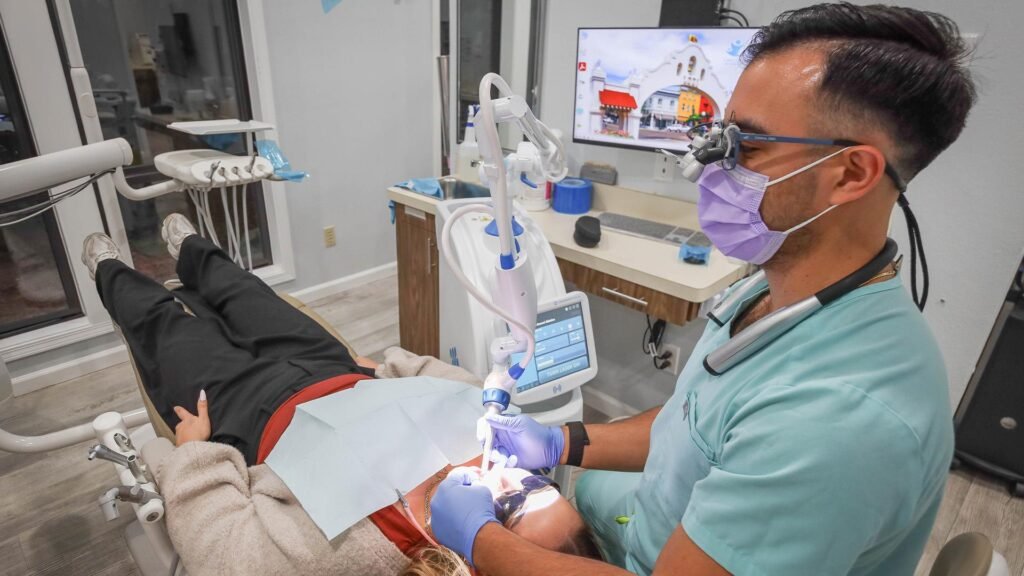
Advanced Clinical Laser Dentistry Treatment
Is Laser Dentistry Better Than Traditional Dentistry?
This is one of the most common questions patients ask.
The answer is: not necessarily for every procedure.
Laser dentistry offers advantages in certain clinical situations, but conventional dental instruments remain essential for many procedures.
A dentist may choose:
- Laser treatment
- Conventional treatment
- A combination of laser and conventional techniques
The decision should be based on the patient’s diagnosis, the treatment required, the dentist’s expertise and the expected clinical outcome.
Choosing a procedure simply because it uses advanced technology is not always the right approach.
Laser Dentistry vs Traditional Dental Treatment
| Feature | Laser Dentistry | Traditional Techniques |
|---|---|---|
| Precision | Highly targeted for suitable procedures | Depends on instruments and technique |
| Tissue interaction | Controlled light energy | Mechanical instruments |
| Noise/vibration | Can be lower for certain procedures | May involve drills or other instruments |
| Anesthesia | May be reduced for selected procedures | Often required depending on treatment |
| Bleeding | Can be reduced in selected soft-tissue procedures | Depends on procedure |
| Recovery | May be faster for certain procedures | Depends on treatment |
| Suitability | Procedure-specific | Broad range of dental procedures |
The important point is that both laser and conventional dentistry have an important place in modern dental care.
Is Laser Dentistry Safe?
When performed by a properly trained dental professional using the appropriate equipment and settings, laser dentistry can be a safe treatment option for suitable procedures.
However, safety depends on factors such as:
- Correct laser selection
- Appropriate settings
- Dentist training
- Patient diagnosis
- Protective equipment
- Proper treatment protocols
The American Dental Association and other professional and scientific sources continue to emphasize evidence-based clinical decision-making as dental technology develops.
Patients should therefore ask their dentist whether laser treatment is clinically appropriate for their particular condition.
What Are the Benefits of Laser Dentistry?
Depending on the procedure, potential benefits may include:
Better precision
Laser energy can be concentrated on a specific treatment area.
Reduced discomfort
Some procedures may involve less discomfort compared with conventional approaches.
Less bleeding
Certain soft-tissue procedures may benefit from laser-assisted tissue management.
Minimal tissue trauma
Some laser applications can support minimally invasive treatment approaches.
Potentially faster recovery
Certain procedures may have a more comfortable recovery.
Reduced dental anxiety
Less noise and vibration during suitable procedures may improve the patient experience.
Multiple applications
Laser technology can be used for several different dental applications.
These benefits should always be evaluated in the context of the individual treatment rather than treated as guarantees.
Who Can Consider Laser Dentistry?
Laser dentistry may be worth discussing with your dentist if you:
- Are looking for a minimally invasive treatment option
- Experience dental anxiety
- Need certain gum procedures
- Require selected soft-tissue treatment
- Need a root canal where laser-assisted disinfection is clinically appropriate
- Want to explore modern dental treatment options
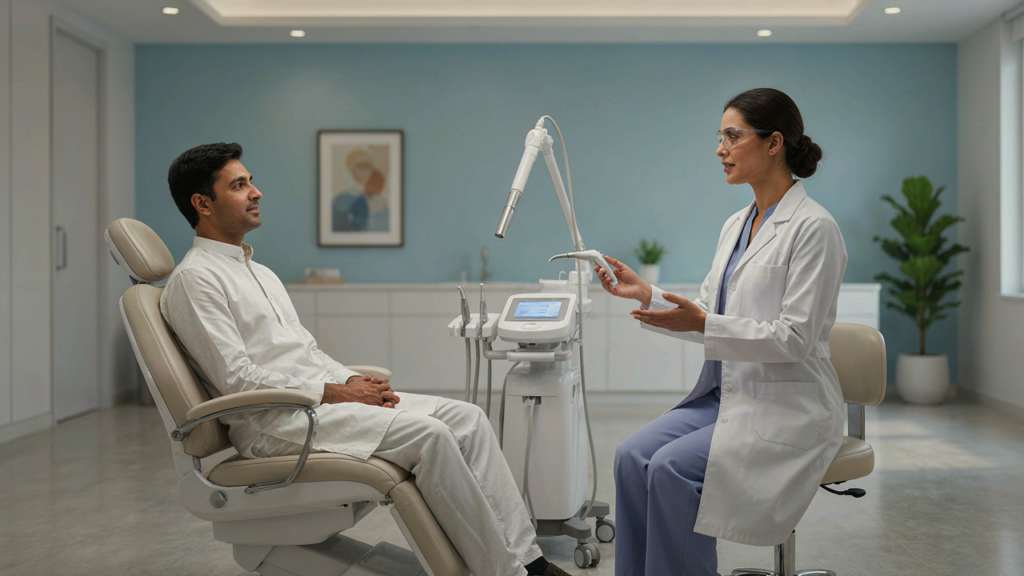
A consultation is the best way to determine whether laser technology is suitable for your condition.
How Much Does Laser Dentistry Cost in Noida?
The cost of laser dentistry varies considerably.
There is no single fixed price because treatment costs can depend on:
- Type of dental problem
- Procedure required
- Type of laser used
- Number of teeth or treatment areas
- Complexity of the case
- Additional dental procedures
- Dentist’s expertise
- Follow-up requirements
For this reason, patients should be cautious about choosing a clinic based solely on the lowest advertised laser dentistry price.
A proper examination and treatment plan provide a more meaningful estimate.
Why Choose The Dental Crowns for Laser Dentistry in Noida?
The Dental Crowns in Sector 79, Noida, provides advanced clinical laser dentistry along with a wide range of dental treatments.
The clinic’s services include:
- Laser dentistry
- Root canal treatment
- Dental implants
- Dental crowns
- Dental bridges
- Dentures
- Cosmetic dentistry
- General dental care
The clinic is located at Civitech Stadia, Sector 79, Noida, making it accessible to patients from nearby areas including Sector 74, Sector 75, Sector 76, Sector 77 and Sector 78.
You can explore the complete range of treatments through the clinic’s Dental Services page.
For patients considering tooth replacement, you can also explore: Dental Implants at The Dental Crowns
The Future of Laser Dentistry
Dentistry is becoming increasingly technology-driven.
From digital imaging and computer-aided treatment planning to lasers and advanced restorative techniques, modern dental technology is helping clinicians approach treatment with greater precision and efficiency.
A systematic review of laser applications in dentistry found that lasers are being used across both soft- and hard-tissue procedures and highlighted their potential for improving comfort and reducing the need for anesthesia in selected situations.
At the same time, ongoing research is important because not every laser application has the same level of evidence.
The future of laser dentistry is therefore likely to involve better technology, more precise applications and stronger evidence-based treatment protocols.
Frequently Asked Questions About Laser Dentistry
1. What is laser dentistry?
Laser dentistry uses concentrated light energy to treat or assist with selected dental procedures involving the teeth, gums and other oral tissues.
2. Is laser dentistry completely painless?
Not necessarily. Some laser procedures can reduce discomfort, but the experience depends on the procedure, laser type and individual patient.
3. Can lasers replace dental drills?
No. Lasers cannot replace conventional dental instruments for every procedure. Dentists select the appropriate technology according to the treatment required.
4. Can laser dentistry be used for root canals?
Laser technology may be used as an adjunct for root canal disinfection in selected cases. It does not replace the complete root canal treatment process.
5. Can laser dentistry treat gum disease?
Certain dental lasers can be used as part of selected gum and periodontal procedures. Your dentist must first assess the severity and type of gum disease.
6. Is laser dentistry suitable for children?
Some laser procedures may be appropriate for children, but suitability depends on the child’s dental condition, age, procedure and dentist’s assessment.
7. Is laser dentistry available in Noida?
Yes. Laser dentistry and laser-assisted dental procedures are available in Noida, including at The Dental Crowns in Sector 79.
8. How long does laser dental treatment take?
Treatment time varies according to the procedure, number of teeth involved and complexity of the case. Your dentist can provide a more accurate estimate after examination.
9. Is laser dentistry expensive?
The cost depends on the procedure and complexity of treatment. A consultation is required to determine the appropriate treatment and associated cost.
10. How do I know if laser dentistry is right for me?
The best way is to consult a qualified dentist. Laser treatment should be recommended based on your diagnosis rather than simply because it is newer technology.
Conclusion
Laser dentistry is changing modern dental treatment by introducing more precise, minimally invasive and patient-focused approaches for selected procedures.
From gum treatments and soft-tissue procedures to certain cavity treatments and root canal disinfection, laser technology can provide dentists with another tool for delivering modern dental care.
However, laser dentistry is not a universal replacement for traditional dental treatment. The most effective approach depends on the patient’s dental condition, treatment goals and professional clinical assessment.
If you are searching for laser dentistry in Noida and want to understand whether laser-assisted treatment is suitable for you, a professional dental consultation is the right place to start.
Visit The Dental Crowns in Sector 79, Noida, to discuss your dental concerns and explore suitable modern treatment options.
Book your dental consultation and take the next step toward healthier teeth and gums.