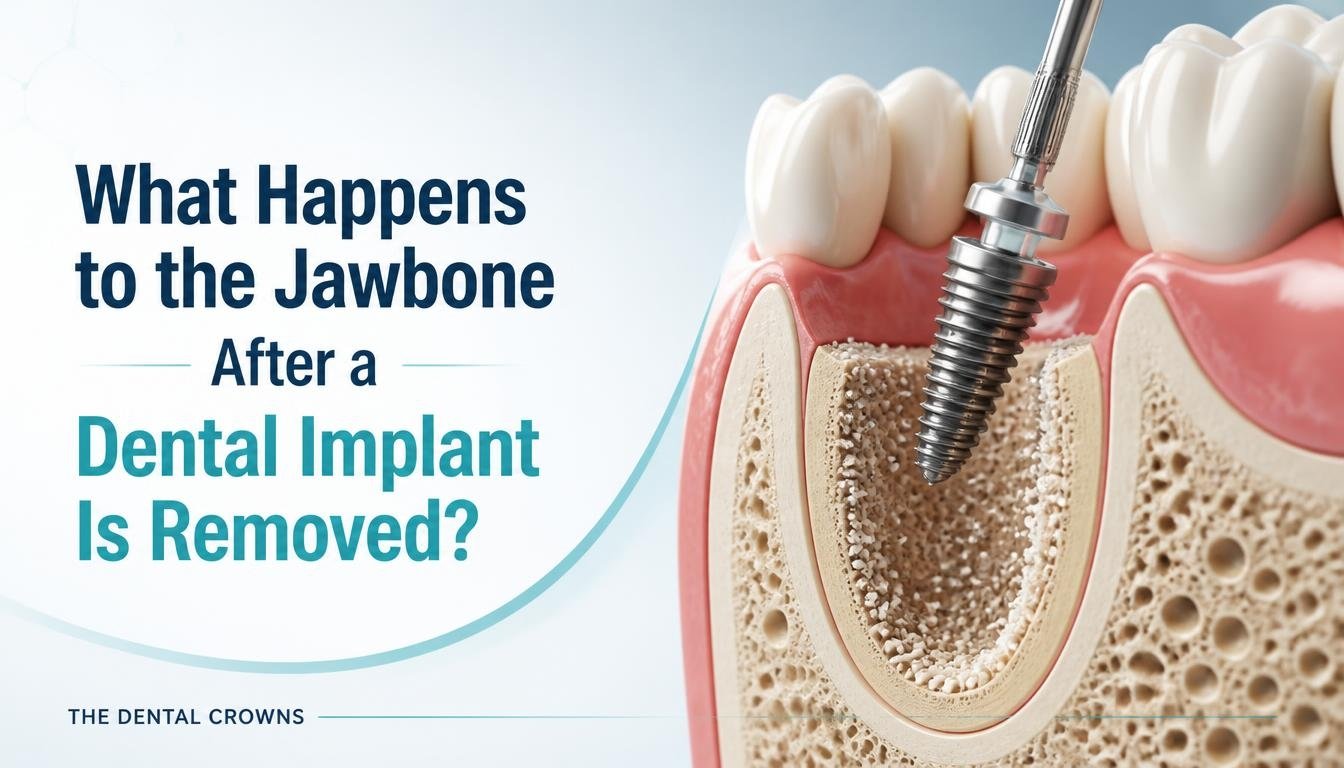
Dental implants are designed to replace missing teeth by acting as artificial tooth roots that integrate with the jawbone. They are considered a reliable tooth replacement option, but sometimes complications such as infection, implant mobility, implant fracture or surrounding bone loss may require dental implant removal.
One of the biggest concerns patients have is: What happens to the jawbone after a dental implant is removed?
Does the bone shrink? Can it heal naturally? Is bone grafting necessary? And can another dental implant be placed in the same location?
The good news is that removing a dental implant does not automatically mean permanent jawbone damage. The outcome depends on the reason for removal, the amount of existing bone, the removal technique and the patient’s healing capacity.
In this guide, we explain what happens to the jawbone after dental implant removal, how the healing process works, when bone grafting may be required and what replacement options are available.
1. Why Does a Dental Implant Need to Be Removed?
Before understanding what happens to the jawbone, it is important to know why a dental implant may need removal.
Although dental implants have high long-term success rates, certain complications can affect their stability and surrounding tissues.
Some common reasons include:
Peri-implantitis
Peri-implantitis is an inflammatory condition affecting the tissues surrounding a dental implant. It can cause gum inflammation, infection and progressive jawbone loss.
If the condition becomes severe and the implant loses sufficient bone support, removal may be recommended.
Failed Osseointegration
Osseointegration is the process through which the dental implant integrates with the surrounding jawbone.
If the implant fails to bond properly with the bone, it may become loose or unstable. In such situations, the dentist may recommend removing it.
Dental Implant Fracture
Although dental implants are manufactured using strong materials, excessive biting forces, mechanical complications or other factors can sometimes cause implant fractures.
A fractured implant may not be suitable for continued use and may require surgical removal.
Incorrect Implant Placement
An implant positioned incorrectly may cause functional problems, discomfort, difficulty maintaining oral hygiene or damage to surrounding structures.
Depending on the severity, removal and replacement may be considered.
2. What Happens to the Jawbone Immediately After Dental Implant Removal?
When a dental implant is removed, a small surgical opening remains in the jawbone where the implant was previously positioned.
The size and condition of this area depend on the implant’s dimensions, the removal technique and the amount of bone already lost.
The surrounding bone does not necessarily disappear after implant removal. Instead, the body begins a natural healing and remodelling process.
Here is what generally happens:
- Formation of a healing blood clot: A blood clot develops in the surgical area and helps initiate tissue repair.
- Early tissue healing: New blood vessels and healing cells begin supporting the repair process.
- Bone remodelling: The body gradually reorganises the existing bone around the implant site.
- New bone formation: Depending on the condition of the site, new bone may develop within the remaining defect.
However, the healing process can vary considerably. If the implant was removed because of severe peri-implantitis, infection or extensive bone loss, the remaining bone may require additional treatment.
3. Does the Jawbone Shrink After Dental Implant Removal?
Yes, some changes in jawbone dimensions can occur after dental implant removal, but the extent varies between patients.
When an implant is removed, the surrounding bone may undergo remodelling. If infection or inflammation has already damaged the supporting bone, the resulting defect may be more significant.
The findings included reductions in ridge width and height, although the extent depended on the clinical situation and treatment approach.
It is important to understand that implant removal does not produce exactly the same bone changes in every patient.
Factors that influence jawbone changes include:
- The amount of bone remaining before removal.
- Whether peri-implantitis or infection is present.
- The duration of implant failure.
- The surgical technique used for removal.
- The patient’s general health and healing capacity.
- Whether bone grafting is performed.
Therefore, a dental examination and appropriate imaging are necessary to evaluate the actual condition of the jawbone.
4. How Long Does the Jawbone Take to Heal After Dental Implant Removal?
Jawbone healing after dental implant removal happens gradually rather than overnight.
The healing timeline depends on the size of the surgical defect, the presence of infection, the patient’s health and whether additional regenerative procedures are needed.
The general healing stages include:
First Few Days
A blood clot forms at the removal site. Mild swelling, tenderness and discomfort may occur as part of the normal healing response.
First 1–2 Weeks
The gum tissue begins closing over the surgical area. Soft tissue healing progresses, although the underlying bone continues to repair itself.
First 1–3 Months
Bone remodelling and new bone formation continue within the surgical defect. The rate of healing depends on the amount of existing bone and whether regenerative treatment was performed.
Around 4–6 Months
In suitable cases, the bone may have healed sufficiently for the dentist to reassess the site for another dental implant.
However, this is not a fixed timeline. Some patients may need additional healing time, particularly when extensive infection or bone grafting is involved.
A dentist may recommend follow-up X-rays or a CBCT scan to evaluate bone volume before planning further treatment.
5. Is Bone Grafting Necessary After Dental Implant Removal?
Bone grafting is not necessary in every dental implant removal case.
Whether it is required depends on the condition of the surrounding jawbone and whether enough healthy bone remains to support future treatment.
Bone grafting may be recommended when:
- Significant bone loss has occurred around the failed implant.
- The implant removal creates a large bone defect.
- There is insufficient bone volume for another implant.
- The dentist wants to preserve the jawbone structure for future tooth replacement.
- Infection-related damage has affected the surrounding bone.
How Does Bone Grafting Work?
Bone grafting is a dental procedure that helps restore or maintain bone volume in areas where bone is missing or damaged.
During the procedure, a suitable graft material is placed into the affected area. Depending on the clinical situation, a protective membrane may also be used.
Over time, the graft material supports the body’s natural bone-healing process.
The purpose is to create a more favourable foundation for future dental treatment.
Not every patient needs a graft, and the material and technique must be selected according to individual requirements.
6. Can You Get Another Dental Implant After Removing a Failed Implant?
Yes, getting another dental implant after removing a failed one is possible in many cases.
However, the decision depends on the reason for the original implant failure and the amount and quality of the remaining jawbone.
Before planning another implant, the dentist generally evaluates:
- The condition of the surrounding bone.
- Whether infection has been controlled.
- The healing of the previous implant site.
- The available bone height and width.
- The patient’s oral hygiene and overall health.
- Factors that may have contributed to the previous implant failure.
Immediate vs Delayed Dental Implant Replacement
There are two general approaches to replacing a failed dental implant.
Immediate replacement:
In carefully selected cases, another implant may be placed during the same surgical appointment as the removal.
This approach is possible only when the infection, bone condition, implant removal and initial stability requirements make it clinically suitable.
Delayed replacement:
In other cases, the dentist may recommend allowing the area to heal before placing another implant.
If bone grafting is necessary, additional healing time may be required before replacement.
A 2024 literature review reported that replacement after failed implant removal achieved a weighted survival rate of approximately 86.3% over 1–5 years in the studies reviewed. This is a study-specific finding, not a guarantee of success for an individual patient.
7. What Are the Alternatives If Another Dental Implant Is Not Possible?
Not every patient is an ideal candidate for another dental implant.
If the jawbone cannot support an implant or the patient prefers a different treatment, alternative tooth replacement options may be considered.
Dental Bridges
A dental bridge replaces a missing tooth by using support from neighbouring teeth or other suitable structures.
It can restore chewing function and appearance without placing another implant in the affected area.
Removable Partial Dentures
A removable partial denture can replace one or multiple missing teeth. It may be considered when implant treatment is unsuitable or when a less invasive replacement option is preferred.
Bone Regeneration Followed by Dental Implant Treatment
If insufficient jawbone is the main obstacle, bone grafting or other regenerative procedures may help make future implant placement possible.
The most appropriate option depends on the patient’s dental condition, treatment goals and clinical assessment.
8. How Can You Protect Your Jawbone After Dental Implant Removal?
Following your dentist’s post-surgical instructions is essential for proper healing.
Here are some important precautions:
- Maintain oral hygiene: Keep your mouth clean while avoiding direct disturbance of the surgical site.
- Follow dietary instructions: Choose soft foods initially and avoid chewing directly over the affected area.
- Avoid smoking: Smoking can interfere with wound healing and increase the risk of complications.
- Attend follow-up appointments: Regular examinations help the dentist monitor bone and gum healing.
- Take prescribed medications correctly: Follow your dentist’s instructions regarding medications and oral care.
- Avoid unnecessary pressure: Do not disturb the healing area with your tongue, fingers or hard foods.
Contact your dentist if you experience increasing swelling, persistent bleeding, fever, pus, worsening pain or other concerning symptoms.
9. When Should You Consult a Dentist for Dental Implant Removal?
You should arrange a dental examination if you notice symptoms such as:
- An implant that feels loose or moves.
- Redness or swelling around the implant.
- Bleeding while brushing around the implant.
- Pus or an unpleasant taste near the implant.
- Pain or discomfort while chewing.
- Gum recession or visible changes around the implant.
These symptoms do not automatically mean that the implant needs removal. Early diagnosis may help identify problems that can sometimes be managed without removing the implant.
If you are experiencing complications, consult a qualified dental professional for a proper examination and treatment plan.
Frequently Asked Questions (FAQs)
1. Does removing a dental implant damage the jawbone?
Not necessarily. Modern implant removal techniques aim to minimise damage to the surrounding bone. However, existing infection, bone loss and the removal method can influence the final bone condition.
2. Does bone grow back after dental implant removal?
Some natural bone healing and regeneration can occur after implant removal. However, the amount of new bone formation depends on the size of the defect, existing bone condition and whether bone grafting is required.
3. Is bone grafting always required after dental implant removal?
No. Bone grafting is not necessary in every case. It may be recommended when significant bone loss or a large surgical defect affects the possibility of future implant placement.
4. How long should I wait before getting another dental implant?
There is no universal waiting period. Some carefully selected patients may qualify for immediate replacement, while others may need several months of healing or bone grafting before another implant can be placed.
5. Can I live normally after dental implant removal?
Yes. Most patients can return to their normal daily activities as healing progresses. However, the missing tooth should be evaluated and an appropriate replacement option discussed with the dentist.
6. What happens if I do not replace a removed dental implant?
The space left by a missing tooth may affect chewing, bite distribution and neighbouring teeth. Depending on the location and individual condition, changes in the jawbone may also occur over time.
7. Is dental implant removal painful?
The procedure is generally performed under local anaesthesia, which helps minimise pain during treatment. Some soreness, swelling and discomfort may occur afterwards and can usually be managed with appropriate post-operative care.
Conclusion: Understanding Jawbone Healing After Dental Implant Removal
Removing a failed dental implant does not automatically mean losing the surrounding jawbone permanently.
The jawbone can undergo natural healing and remodelling after removal. However, the final outcome depends on the extent of existing bone loss, the reason for implant failure, the surgical technique and whether additional treatment such as bone grafting is required.
If you are experiencing dental implant complications, getting an early professional assessment can help protect your oral health and identify suitable replacement options.
At The Dental Crowns, Sector 79, Noida, patients can consult the dental team for dental implant-related concerns and explore appropriate treatment options based on their oral health needs.
Whether you need an implant evaluation, treatment planning or guidance about restoring a missing tooth, a personalised dental assessment is the right first step.
Book a dental consultation with The Dental Crowns and take an informed step towards maintaining your oral health.
Medical Disclaimer
This article is intended for general educational purposes and should not be considered a substitute for professional dental advice, diagnosis or treatment. Dental implant removal and replacement decisions should always be made following an individual clinical examination.