Have you recently received a dental crown and noticed redness, swelling, tenderness or bleeding around the treated tooth? You might be wondering whether your dental crown is responsible for the discomfort.
Yes, a dental crown can sometimes cause gum irritation, particularly when it does not fit properly, has rough or overhanging edges, or makes it difficult to clean the surrounding area. However, gum irritation is not always caused by the crown itself. Plaque accumulation, pre-existing gum disease and improper oral hygiene can also contribute to inflammation.
Dental crowns are designed to protect damaged teeth, restore chewing function and improve the appearance of your smile. When properly designed, fitted and maintained, they can provide long-lasting results without harming the surrounding gum tissues.
In this guide, we will explore why gum irritation occurs after dental crown placement, the symptoms to watch for, available treatment options and practical ways to maintain healthy gums.
Can a Dental Crown Cause Gum Irritation?
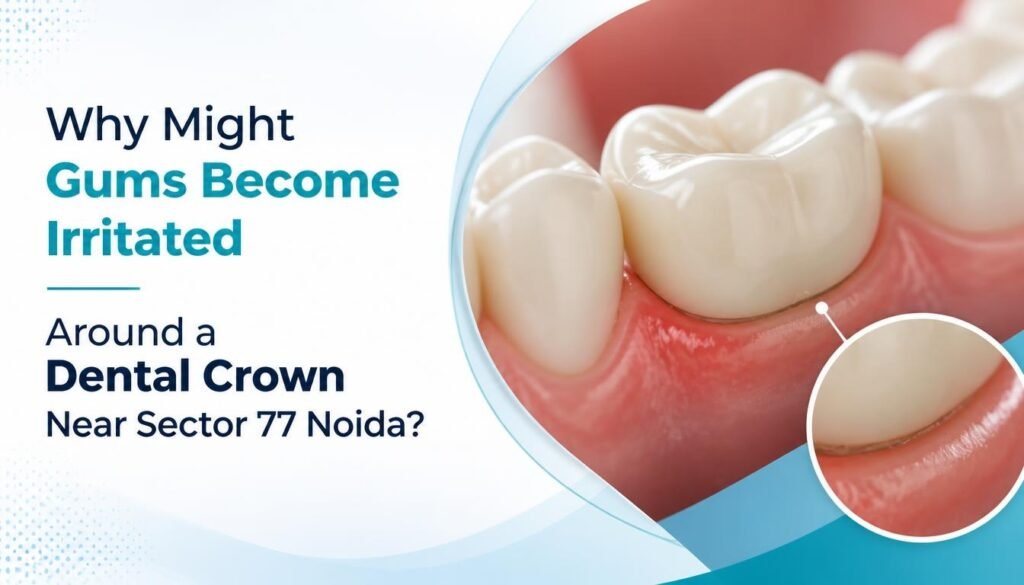
Yes, dental crowns can contribute to gum irritation in certain situations. The gums surrounding a crowned tooth may become inflamed if the crown has an improper fit, excessive contouring, rough margins or an edge extending too far beneath the gumline.
Another common reason is plaque accumulation around the crown. If food particles and bacteria collect between the crown and surrounding gum tissue, they may trigger inflammation.
However, a properly fitted dental crown should not continuously cause pain, swelling or bleeding.
It is important to understand that mild tenderness immediately after crown placement may occur as the surrounding tissues adjust. Persistent or worsening irritation should be evaluated by a dentist to identify the underlying cause.
7 Common Reasons Why a Dental Crown May Irritate Your Gums
Understanding the possible causes of gum irritation can help you recognise when professional dental attention is necessary.
1. Poorly Fitted Dental Crown
One of the most common reasons for irritation around a dental crown is an improper fit.
If the crown does not align correctly with the natural tooth, its edges may create spaces where bacteria and food particles accumulate. These areas can become difficult to clean, increasing the risk of gum inflammation.
An ill-fitting crown may also feel uncomfortable while chewing or create pressure against nearby gum tissue.
2. Excessively Bulky Crown Edges
A dental crown should follow the natural shape of your tooth. However, an excessively bulky or overcontoured crown can interfere with normal gum health.
When the crown extends too far outward, it may make brushing and flossing difficult. This can encourage plaque accumulation and cause redness, swelling and bleeding around the gums.
A dentist may need to evaluate the crown’s shape and determine whether adjustment or replacement is necessary.
3. Plaque and Bacterial Accumulation
Even though dental crowns cannot develop cavities in the same way as natural teeth, the natural tooth underneath and the surrounding gum tissues still require proper care.
Plaque can accumulate along the crown margins, especially when brushing and flossing are inadequate.
Over time, this buildup may irritate the gums and contribute to gingivitis or more advanced gum disease.
4. Crown Margins Extending Below the Gumline
Sometimes, a dental crown is positioned slightly beneath the gumline for functional or cosmetic reasons.
However, poorly positioned or inadequately finished crown margins may interfere with the surrounding gum tissues.
5. Rough or Improperly Finished Crown Surface
The surface and margins of a dental crown should be smooth and properly finished.
Rough edges or irregular surfaces may encourage plaque retention and make cleaning more challenging.
If the crown feels rough against your tongue or irritates the surrounding gums, consult your dentist rather than attempting to smooth or adjust it yourself.
6. Pre-Existing Gum Disease
Sometimes, gum irritation after dental crown treatment is related to an existing dental problem rather than the restoration.
Patients with gingivitis or periodontitis may experience increased gum sensitivity, bleeding and swelling around crowned teeth.
Treating the underlying gum condition is essential for maintaining the health and stability of the crown.
7. Allergic or Material Sensitivity
Although uncommon, some individuals may experience sensitivity to particular dental materials or components used in restorations.
A suspected material reaction requires professional evaluation because similar symptoms can also result from plaque accumulation, inflammation or mechanical irritation.
Your dentist can assess the symptoms and determine whether material sensitivity is a possibility.
What Are the Signs of Gum Irritation Around a Dental Crown?
Recognising early warning signs can help prevent minor irritation from becoming a more serious dental problem.
Look out for the following symptoms:
- Red or swollen gums: The gum tissue around the crowned tooth may appear red, enlarged or inflamed.
- Bleeding while brushing: You may notice blood when brushing or flossing around the crown.
- Tenderness or soreness: The surrounding gum tissue may feel uncomfortable when touched.
- Persistent bad breath: Bacterial buildup around the crown may contribute to unpleasant breath.
- Pain while chewing: An improperly fitted crown or another underlying dental issue may cause discomfort during eating.
- Food getting stuck: Food frequently becoming trapped around the crown may indicate a contact or contour problem.
- Gum recession: The gum tissue may gradually move away from the crown, exposing more of the underlying tooth.
If you experience pus, significant swelling, fever, facial swelling or severe pain, seek urgent dental care. Do not wait for the symptoms to disappear on their own.
How to Treat Gum Irritation Caused by a Dental Crown
Treatment depends on what is causing the inflammation. A dentist will examine the crown, surrounding gums and underlying tooth before recommending an appropriate solution.
Here are some commonly considered treatment approaches.
1. Professional Dental Cleaning
If plaque and tartar accumulation are responsible for the irritation, professional cleaning may help remove deposits around the crowned tooth.
Your dentist may also recommend improved brushing and flossing techniques to prevent future buildup.
2. Adjusting the Dental Crown
If the crown has an uneven bite, excessive contouring or an irritating edge, your dentist may recommend an appropriate adjustment.
The objective is to improve comfort, maintain proper alignment and make cleaning easier.
3. Replacing an Ill-Fitting Crown
In cases where the crown has significant fitting or structural problems, replacement may be necessary.
A new crown can be designed to achieve better adaptation and a more natural contour while supporting healthy gum tissues.
4. Treating Existing Gum Disease
If gum irritation is caused by gingivitis or periodontitis, the underlying gum condition must be treated.
Depending on its severity, treatment may include professional cleaning, scaling and root planing, and ongoing periodontal maintenance.
5. Addressing an Underlying Tooth Infection
If the tooth beneath the crown has developed an infection, additional dental treatment may be required.
Depending on the diagnosis, your dentist may recommend root canal treatment or another appropriate procedure.
Learn more about root canal treatment in Noida and how it helps treat infection inside a tooth.
Important: Avoid taking antibiotics or applying strong home remedies without professional advice. Treatment should address the actual cause of the irritation.
How to Prevent Gum Irritation After Getting a Dental Crown
Maintaining healthy gums after crown placement is essential for the long-term success of your restoration.
Follow these practical tips:
Brush Twice a Day
Brush your teeth twice daily using a soft-bristled toothbrush and fluoride toothpaste.
Pay special attention to the gumline surrounding the crown, where plaque can accumulate.
Floss Every Day
Flossing helps remove food particles and plaque from areas that a toothbrush cannot easily reach.
Clean gently around the crowned tooth without forcing the floss against the gums.
Use an Appropriate Mouthwash
Your dentist may recommend an alcohol-free or therapeutic mouthwash depending on your oral health requirements.
Avoid using medicated mouthwashes for extended periods without professional guidance.
Avoid Chewing Extremely Hard Foods
Avoid biting hard objects such as ice, hard candies or nutshells, as these may damage the crown or surrounding tooth structure.
Schedule Regular Dental Checkups
Routine dental examinations allow your dentist to assess the crown’s fit, gum health and surrounding teeth.
Professional cleaning also helps control plaque and tartar buildup.
Maintain a Healthy Oral Hygiene Routine
Consistent oral hygiene is one of the most effective ways to protect your natural teeth, dental crowns and gums.
How Long Does Gum Irritation Last After Dental Crown Placement?
Mild gum tenderness following dental crown placement may improve over a few days as the surrounding tissues recover.
However, the duration depends on the procedure, the condition of the gums and whether the crown fits correctly.
If irritation persists, worsens or is accompanied by bleeding, swelling or pain, schedule a dental examination.
Do not assume that ongoing discomfort is a normal part of adjusting to a crown.
When Should You Visit a Dentist?
Not every instance of gum irritation indicates a serious problem. However, certain symptoms should never be ignored.
Consider scheduling a dental appointment if:
- Your gums remain swollen or red.
- You experience repeated bleeding around the crown.
- The crown feels loose or uncomfortable.
- Food frequently gets trapped around the restoration.
- You experience persistent pain while chewing.
- You notice pus, an unpleasant taste or gum recession.
Early evaluation can help identify whether the problem involves crown fit, plaque accumulation, gum disease or an underlying tooth condition.
If you experience facial swelling, fever, difficulty swallowing or difficulty breathing, seek emergency medical or dental care.
Why Choose The Dental Crowns for Your Dental Care in Noida?
Choosing the right dental clinic is important when you need a dental crown or experience discomfort around an existing restoration.
At The Dental Crowns, patients receive personalised dental care focused on their oral health, comfort and treatment requirements.
Located at Civitech Stadia, Sector 79, Noida, the clinic provides a range of dental services, including:
- Dental crowns and porcelain crowns.
- Root canal treatment.
- Dental implants.
- Laser dentistry.
- General and cosmetic dental treatments.
The dental team focuses on understanding each patient’s concerns and recommending appropriate treatment based on individual dental needs.
If you are experiencing gum irritation around a dental crown, a professional examination can help determine the cause and identify the right treatment.
Book your dental consultation today:
Website: https://thedentalcrowns.in/
Phone: +91 89202 71787
Address: Shop No. 16, First Floor, Civitech Stadia, Sector 79, Noida, Uttar Pradesh 201301.
Frequently Asked Questions (FAQs)
1. Can a dental crown cause gum irritation?
Yes. A dental crown can contribute to gum irritation if it is poorly fitted, has rough or overhanging edges, or makes cleaning difficult. Plaque accumulation around the crown can also cause inflammation.
2. Why are my gums swollen around my dental crown?
Swollen gums around a dental crown may result from plaque buildup, gingivitis, an ill-fitting crown, excessive crown contouring or an underlying dental infection. A dental examination can help identify the exact cause.
3. Is gum irritation normal after getting a dental crown?
Mild tenderness immediately after crown placement may occur. However, persistent swelling, bleeding or increasing discomfort should be evaluated by a dentist.
4. Can an ill-fitting dental crown cause gum disease?
Yes. An improperly fitted or overcontoured crown can create areas where plaque accumulates, making cleaning difficult and potentially contributing to gingival inflammation and gum disease.
5. How can I reduce gum inflammation around a dental crown?
Maintain gentle brushing twice daily, floss carefully, and follow your dentist’s oral hygiene recommendations. Professional cleaning may be required if plaque or tartar has accumulated.
6. Can a dental crown cause bleeding gums?
Yes. Gum bleeding around a dental crown may occur due to plaque buildup, inflammation or mechanical irritation from an improperly fitted restoration. Persistent bleeding requires professional evaluation.
7. Does gum irritation mean my dental crown needs replacement?
Not necessarily. Some problems can be managed through professional cleaning or crown adjustment. Replacement may be considered if the crown has significant fitting, structural or contour problems.
8. How long should gum pain last after getting a crown?
Mild post-procedure tenderness may settle within a few days. Pain that persists, worsens or occurs with swelling or bleeding should be checked by a dentist.
9. Can food getting stuck around my dental crown cause gum problems?
Yes. Food trapped around a crown can contribute to plaque accumulation and gum irritation. Repeated food trapping should be assessed to check the crown’s shape and contact with neighbouring teeth.
10. Where can I get dental crown treatment in Noida?
You can visit The Dental Crowns at Civitech Stadia, Sector 79, Noida, for a dental consultation and evaluation of your crown-related concerns. Call +91 89202 71787 to enquire about an appointment.
Final Thoughts
A dental crown should protect your natural tooth without compromising the health of your gums. Although gum irritation can sometimes occur after crown placement, it is important to identify the underlying cause rather than simply treating the symptoms.
An accurate crown fit, good oral hygiene and regular dental examinations all contribute to healthier gums and longer-lasting dental restorations.
If you are experiencing redness, swelling, bleeding or discomfort around your dental crown, consult a qualified dentist for an examination.
Take the first step towards healthier gums and a comfortable smile with The Dental Crowns in Noida.