Have you noticed that your natural teeth are becoming yellow while your dental crown still looks the same? Or perhaps your dental crown has lost its original shine, making you wonder whether whitening toothpaste, strips, or professional teeth whitening treatments can restore its brightness.
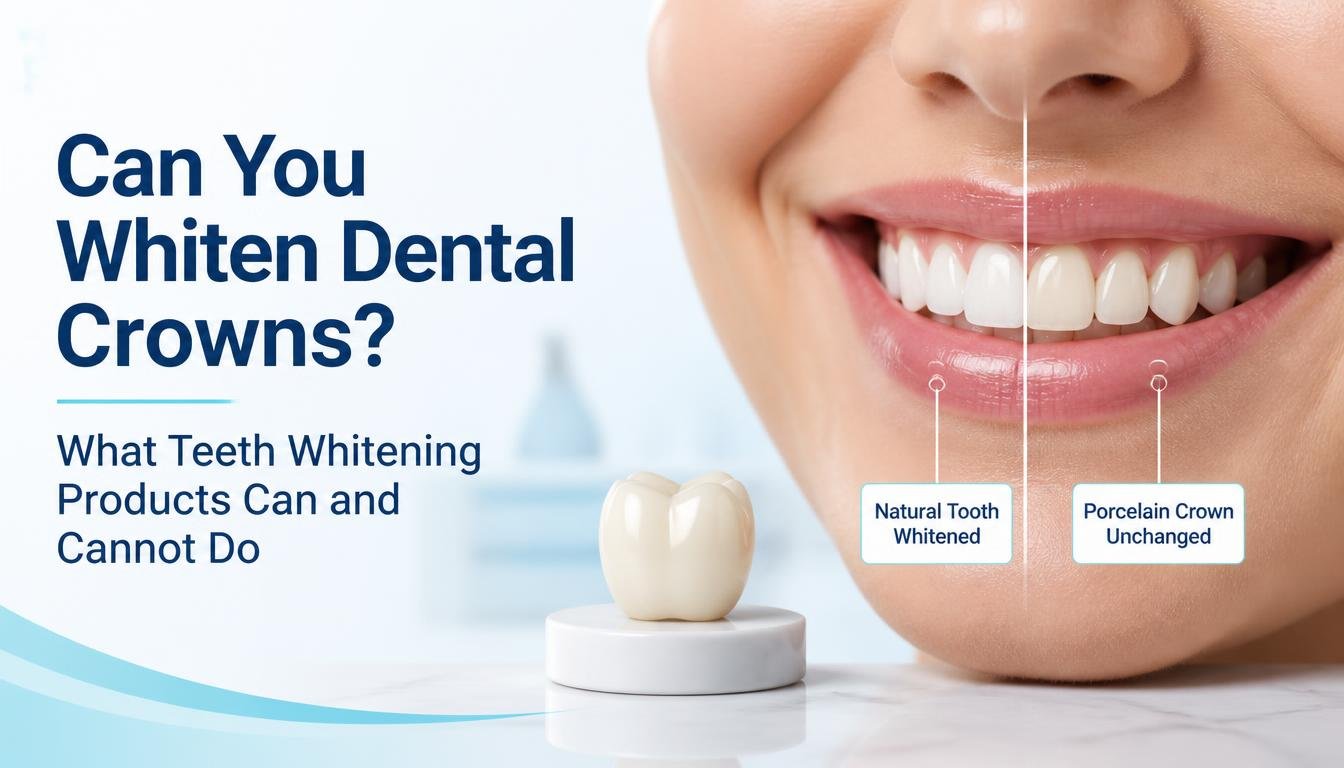
Can you whiten dental crowns with teeth whitening products? The short answer is no. Traditional teeth whitening products are designed to lighten natural tooth enamel. They do not change the underlying colour of dental crowns, veneers, or most tooth-coloured dental restorations.
However, that does not mean you have to live with a discoloured or uneven smile. Understanding why dental crowns do not respond to whitening treatments can help you choose the right solution for a brighter, more natural-looking smile.
In this guide, we explain how teeth whitening works, whether different types of dental crowns can be whitened, and what you can do if your crown looks yellow or darker than your natural teeth.
Can You Whiten Dental Crowns With Teeth Whitening Products?
No, you cannot whiten dental crowns using conventional teeth whitening products. Whitening strips, peroxide-based gels, and whitening toothpaste cannot bleach the material of a dental crown in the same way they lighten natural teeth.
Natural teeth contain enamel and dentin, which can respond to bleaching agents such as hydrogen peroxide and carbamide peroxide. Dental crowns, on the other hand, are made from restorative materials such as porcelain, ceramic, zirconia, or metal-based combinations.
These materials do not respond to conventional bleaching in the same way as natural tooth enamel.
According to the American Dental Association’s guidance on teeth whitening, tooth-coloured restorations, including crowns, do not change colour during standard tooth bleaching.
If your natural teeth become whiter after treatment, your crown may actually appear darker by comparison. This is particularly noticeable when a crown is placed on a front tooth.
Why Don’t Teeth Whitening Products Work on Dental Crowns?
Teeth whitening products are formulated to reduce or break down stains in natural teeth. Dental crowns have a different structure and surface, which explains why they respond differently to whitening treatments.
Here are the main reasons.
1. Dental Crowns Are Made From Different Materials
Crowns may be made from porcelain, zirconia, ceramic, metal-ceramic combinations, or other restorative materials. Their colour is selected during fabrication to match the surrounding teeth.
Unlike natural enamel, these materials do not undergo the same bleaching process when exposed to peroxide-based whitening products.
2. Whitening Products Cannot Change the Crown’s Original Shade
A dentist and dental laboratory select the crown’s shade before or during fabrication. Once the crown has been made, applying whitening gel or strips will not lighten its underlying colour.
If your crown was originally selected in a yellowish shade, whitening toothpaste will not turn it into a brighter white crown.
3. Surface Stains Are Different From the Crown’s Base Colour
Coffee, tea, tobacco, and certain foods can contribute to surface staining on dental restorations. These stains may sometimes be reduced through professional cleaning and appropriate polishing.
However, removing surface stains is not the same as bleaching the crown itself. If the crown’s underlying shade is too dark, cleaning alone will not change it.
Can Different Types of Dental Crowns Be Whitened?
Different crown materials have different properties, but conventional whitening products do not reliably lighten their original shade.
| Type of dental crown | Can whitening products change its colour? |
|---|---|
| Porcelain crowns | No |
| Zirconia crowns | No |
| All-ceramic crowns | No |
| Porcelain-fused-to-metal crowns | No |
| Metal crowns | No meaningful whitening effect |
Although these crowns differ in appearance, strength, and composition, standard teeth whitening treatments are not a solution for changing their established colour.
If your crown appears stained, dull, or mismatched, a dentist can assess whether professional cleaning, polishing, repair, or replacement is appropriate.
What Should You Do If Your Dental Crown Looks Yellow?
If your dental crown looks yellow or darker than your surrounding teeth, the right treatment depends on the cause of the discolouration.
1. Schedule a Professional Dental Cleaning
If the crown has accumulated plaque or external stains, a professional dental cleaning may improve its appearance. Your dentist can determine which cleaning and polishing methods are suitable for the particular crown material.
Avoid aggressive scrubbing or abrasive home remedies, as they may damage the surface of some restorations.
2. Consider Whitening Your Natural Teeth First
If your natural teeth have become yellow while your crown has retained its original shade, your dentist may recommend whitening your natural teeth.
The dentist can assess your existing crown and help you decide on a suitable target tooth shade before treatment.
Remember that whitening natural teeth will not whiten the crown itself. In some cases, this process can make the difference between the two more noticeable.
3. Discuss Crown Replacement if the Shade Is Incorrect
If your crown is permanently discoloured, damaged, poorly matched, or no longer meets your cosmetic needs, replacing it may be an option.
Your dentist can assess whether replacement is necessary and select a new shade that matches your desired appearance. An existing crown should not be replaced solely because it cannot be whitened without first discussing the benefits, risks, and alternatives.
4. Ask Your Dentist About a Smile Makeover
When several natural teeth and restorations have different shades, a comprehensive cosmetic dental assessment may help you achieve a more balanced smile.
Depending on your needs, the options may include professional teeth whitening, crown replacement, veneers, or other restorative treatments. Not everyone needs every treatment, so an individual assessment is essential.
Is It Safe to Use Whitening Toothpaste on Dental Crowns?
Whitening toothpaste can help remove certain external stains from natural teeth, but it cannot bleach the underlying material of a dental crown.
Some whitening toothpastes contain abrasive ingredients that help remove surface stains. Using an unsuitable or excessively abrasive product may affect the surface finish of some restorations, depending on the material and how it is used.
For this reason, follow your dentist’s advice about toothpaste and cleaning techniques, particularly if your crown is old, rough, chipped, or visibly stained.
Avoid using household bleach, acidic DIY remedies, or aggressive whitening treatments on dental crowns. These are not reliable methods of changing crown colour and may harm your oral tissues or restorations.
Can a Dentist Make Dental Crowns Whiter?
Yes, a dentist may be able to improve the appearance of a dental crown, but the appropriate treatment depends on the problem.
- Professional cleaning: May help when the issue is external staining or plaque buildup.
- Polishing: May improve surface appearance when suitable for the crown material.
- Crown repair: May be appropriate for certain minor defects, depending on their location and severity.
- Crown replacement: May be considered when the crown’s original shade is unsuitable, the restoration is damaged, or other clinical concerns justify replacement.
A dentist should examine the crown before recommending a procedure. Not every stained crown needs to be replaced, and not every crown can be restored to its original appearance through polishing.
How Can You Prevent Dental Crowns From Looking Stained?
Although dental crowns cannot be bleached like natural teeth, good oral hygiene can help keep them looking clean and support the health of the surrounding gums and teeth.
Follow these simple tips:
- Brush twice daily with a soft-bristled toothbrush and fluoride toothpaste.
- Clean between your teeth daily using floss or another suitable interdental cleaning aid.
- Limit frequent exposure to staining drinks such as coffee and tea if they contribute to visible stains.
- Avoid smoking or tobacco use, which can contribute to staining and affect oral health.
- Attend regular dental check-ups and professional cleanings as recommended.
- Contact your dentist if your crown becomes rough, chipped, loose, painful, or noticeably discoloured.
Good oral hygiene can help manage surface stains, but it cannot change the original shade of the crown.
Where Can You Get Advice About Dental Crowns in Noida?
If you have a dental crown that looks yellow, dull, or mismatched with your natural teeth, a professional assessment can help you understand your options.
At The Dental Crowns in Sector 79, Noida, patients can explore dental services including teeth whitening, porcelain crowns, smile makeovers, and other restorative treatments. The most suitable option depends on the condition of your existing crown, the colour of your natural teeth, and your oral health.
You can explore the clinic’s dental services in Noida to learn more about available treatments. If you also have a tooth that is painful or infected, you can read about root canal treatment in Noida.
For patients with missing teeth, the clinic also provides information about dental implant treatment.
Before deciding on whitening or replacing a crown, arrange a dental consultation to discuss your concerns and the options appropriate for your smile.
Frequently Asked Questions (FAQs)
1. Can I whiten my dental crown at home?
No. Home whitening strips, gels, and whitening toothpaste cannot bleach the original colour of a dental crown. A dentist can assess whether surface stains can be removed or whether another treatment is needed.
2. Will hydrogen peroxide whiten porcelain crowns?
No. Hydrogen peroxide can lighten natural teeth, but it does not bleach porcelain crowns in the same way. Avoid applying concentrated peroxide products to your restorations without professional guidance.
3. Can whitening toothpaste remove stains from dental crowns?
Whitening toothpaste may help remove some surface stains, depending on the crown material and the product used. It will not change the crown’s underlying shade. Ask your dentist which toothpaste is appropriate for your restoration.
4. Why does my crown look darker after teeth whitening?
Your natural teeth may have become lighter while the crown retained its original colour. This difference can make the crown appear darker or more yellow by comparison.
5. Should I whiten my teeth before getting a dental crown?
If you are planning to whiten your natural teeth and also need a new crown, discuss the order of treatment with your dentist. Whitening is often considered before selecting the final shade of a new cosmetic crown, allowing the restoration to be matched to the intended tooth colour once it has stabilised.
6. Can a dentist polish a yellow dental crown?
Sometimes. Professional cleaning or polishing may improve external staining, depending on the crown’s material and condition. It cannot reliably lighten the crown’s underlying shade.
7. Do zirconia crowns become yellow over time?
Zirconia crowns do not respond to bleaching like natural teeth. Their appearance may be affected by external deposits, surface condition, or changes around the restoration. A dentist can determine the likely cause of discolouration and recommend suitable care.
8. How can I make my natural teeth and dental crown match?
Your dentist may recommend professional whitening for natural teeth, cleaning or polishing the existing crown, or replacing the crown if the shade remains unsuitable. The best approach depends on your current tooth colour and the condition of the restoration.
Final Thoughts
Dental crowns cannot be whitened with conventional teeth whitening products. While whitening toothpaste and bleaching gels may improve the colour of natural teeth, they do not change the original shade of porcelain, zirconia, ceramic, or other crown materials.
If your crown looks yellow, stained, or darker than your natural teeth, professional cleaning, appropriate polishing, natural-tooth whitening, or crown replacement may be considered after a dental assessment.
For personalised guidance, consult a dentist before using whitening products on teeth with existing crowns. The right approach can help you maintain healthy teeth and gums while achieving a more even-looking smile.
Looking for dental crown or teeth whitening advice in Noida? Visit The Dental Crowns to explore dental care options and arrange a consultation.