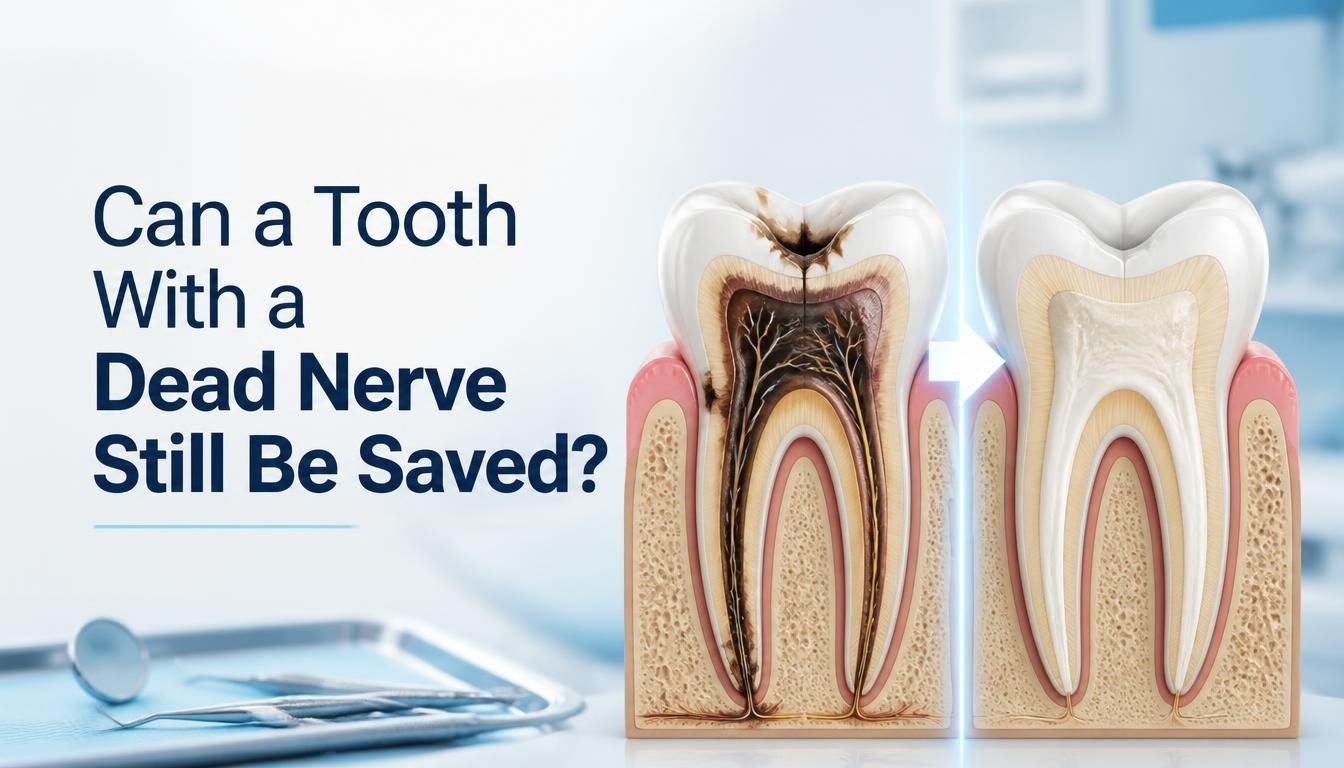
A persistent toothache, unusual tooth discolouration, or sudden relief from dental pain may indicate something more serious than an ordinary cavity. One possible reason is that the nerve inside your tooth has become damaged or died. But does that mean you will lose your natural tooth?
The good news is that a tooth with a dead nerve can often still be saved with timely dental treatment, particularly root canal treatment. The right treatment depends on the extent of infection, the condition of the tooth structure, and whether the surrounding bone and tissues are healthy enough to support it.
If you are wondering, “Can a tooth with a dead nerve still be saved?”, this guide explains the warning signs, available treatment options, and when you may need a dental crown or extraction.
What Does It Mean When a Tooth Nerve Dies?
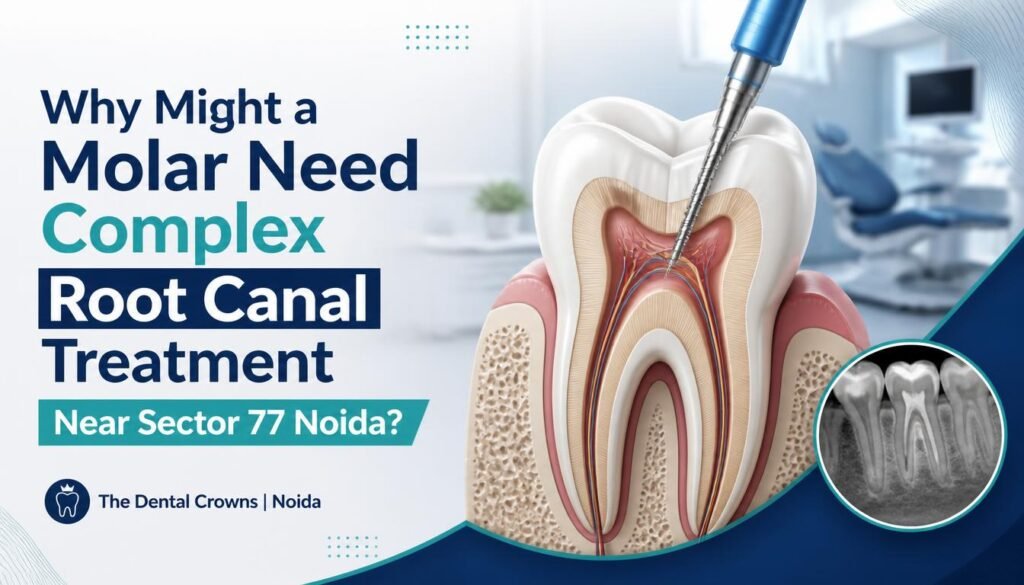
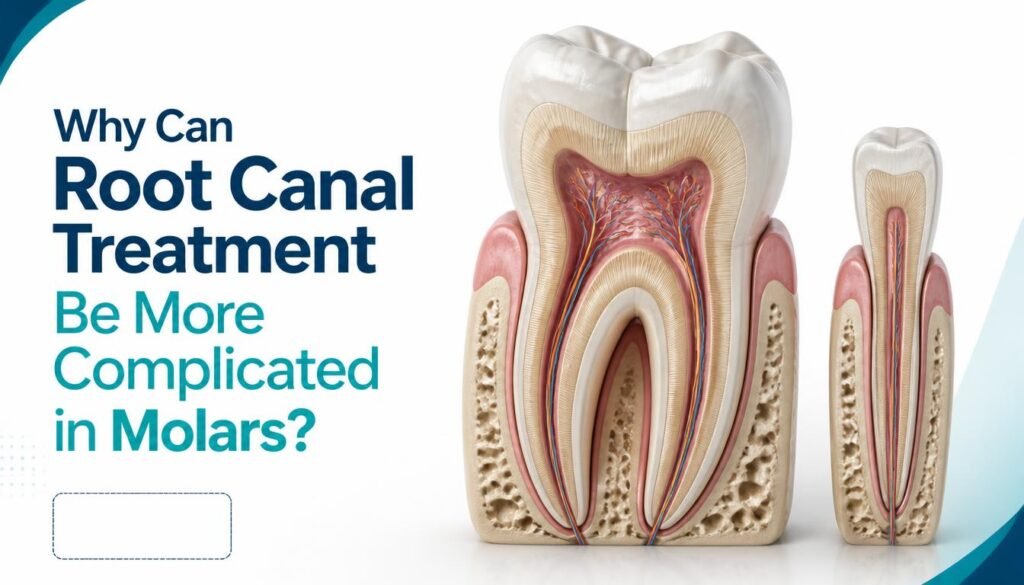
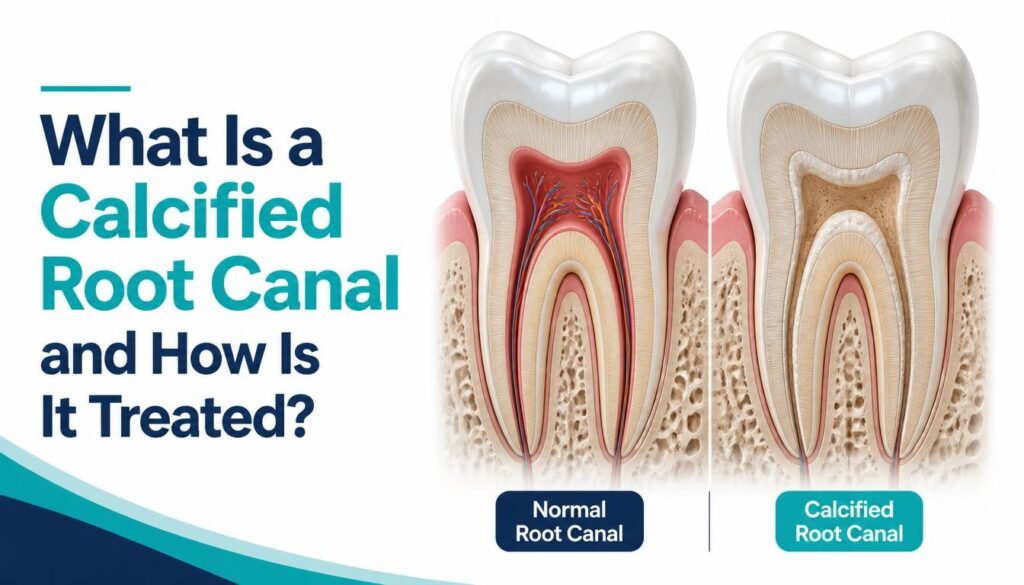
The centre of every tooth contains a soft tissue called dental pulp. It consists of nerves, blood vessels, and connective tissue that help nourish the developing tooth.
When bacteria enter the pulp due to deep tooth decay, cracks, repeated dental procedures, or physical injury, the tissue can become inflamed or infected. If the damage is severe and the pulp loses its vitality, it may eventually die. This condition is known as pulp necrosis.
A dead dental nerve does not necessarily mean the entire tooth is beyond repair. The outer structure of the tooth may remain strong enough to function after the infected pulp is removed and the root canals are cleaned, disinfected, and sealed.
This is why dentists often recommend root canal treatment instead of immediately extracting the affected tooth.
Can a Tooth With a Dead Nerve Still Be Saved?
Yes, in many cases, a tooth with a dead nerve can be saved through root canal treatment.
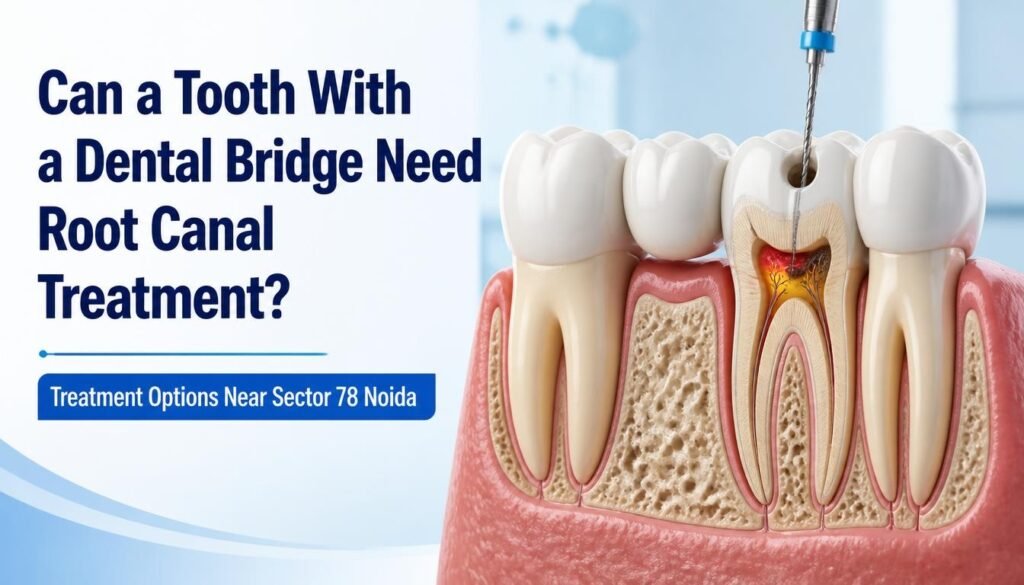
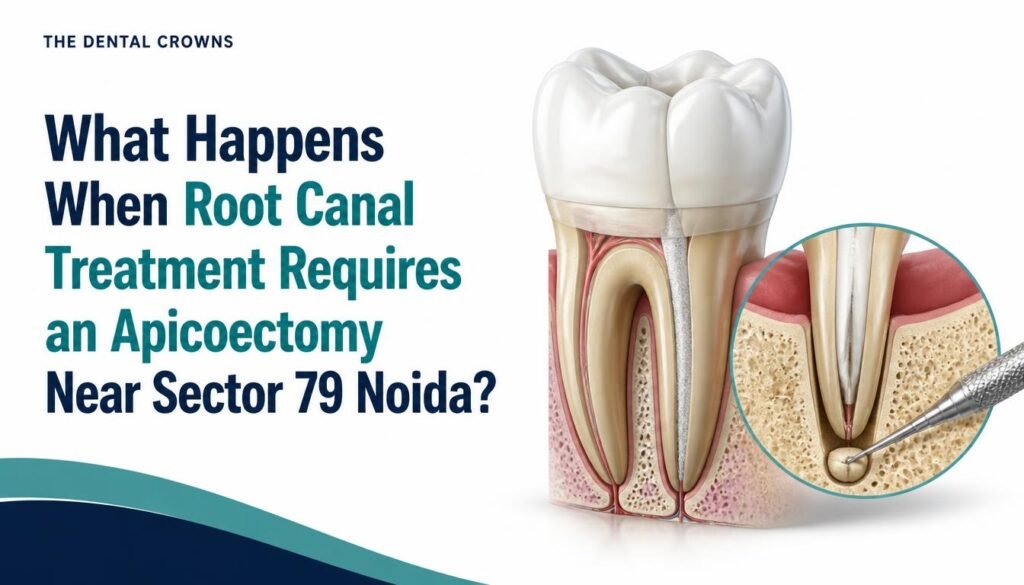
During this procedure, the dentist removes the dead or infected pulp from inside the tooth, carefully cleans the root canals, and seals the space to prevent further bacterial infection.
Once the treatment is completed, the tooth can continue functioning naturally for chewing and biting. A dental crown may also be recommended to protect the remaining tooth structure, particularly when a significant portion has been weakened by decay or previous damage.
However, not every dead tooth can be saved. If the tooth has a severe vertical root fracture, extensive structural destruction, or insufficient healthy tooth structure to support restoration, extraction may be the more appropriate option.
The final decision requires a clinical examination and dental X-rays.
7 Common Signs That Your Tooth Nerve May Be Dead
A dead tooth nerve does not always cause continuous pain. Sometimes, the infection progresses without obvious symptoms.
Here are seven warning signs to look out for:
1. Darkening or Discolouration of the Tooth
A tooth with a damaged or dead pulp may gradually turn grey, brown, or darker than the surrounding teeth. This happens because changes inside the tooth can affect its natural colour.
2. Persistent or Severe Toothache
You may experience throbbing pain, discomfort while biting, or pain that spreads towards the jaw. However, some teeth with dead nerves may stop hurting even when infection remains.
3. Swelling Around the Gums
Swelling near the affected tooth may indicate that infection has spread beyond the root into surrounding tissues.
4. Pimple-Like Bump on the Gums
A small bump on the gum, sometimes accompanied by pus or an unpleasant taste, may indicate a dental abscess or draining infection.
5. Sensitivity or Discomfort While Chewing
An infected tooth may become painful when pressure is applied during eating or biting.
6. Unpleasant Taste or Bad Breath
Bacterial infection and pus drainage can sometimes cause persistent bad breath or an unpleasant taste in the mouth.
7. No Pain Despite Visible Tooth Damage
One of the most misleading signs is the absence of pain. When the nerve dies, the tooth may no longer respond normally to temperature changes. However, infection can still spread around the root.
Important: These symptoms do not independently confirm pulp necrosis. A dentist needs to perform appropriate vitality tests, clinical examinations, and X-rays to establish the diagnosis.
How Does Root Canal Treatment Save a Tooth With a Dead Nerve?
Root canal treatment, also known as RCT, is one of the most common procedures used to preserve a severely infected natural tooth.
Here is how the treatment generally works:
Step 1: Dental Examination and Diagnosis
The dentist examines the affected tooth and may perform pulp vitality tests and dental X-rays to determine the extent of infection.
Step 2: Local Anaesthesia
Local anaesthesia is administered to keep the treatment area comfortable during the procedure.
Step 3: Removal of Infected Pulp
A small opening is made in the tooth to access the pulp chamber. The dead or infected tissue is carefully removed.
Step 4: Cleaning and Disinfection
The root canals are cleaned, shaped, and disinfected to eliminate bacteria and infected tissue.
Step 5: Sealing the Root Canals
The cleaned canals are filled with a biocompatible material, commonly gutta-percha, and sealed to reduce the risk of reinfection.
Step 6: Final Restoration
The tooth is restored using an appropriate filling or dental crown, depending on how much healthy tooth structure remains.
You can learn more about the procedure through our Root Canal Treatment in Noida service page.
Does a Dead Tooth Always Need a Dental Crown After Root Canal Treatment?
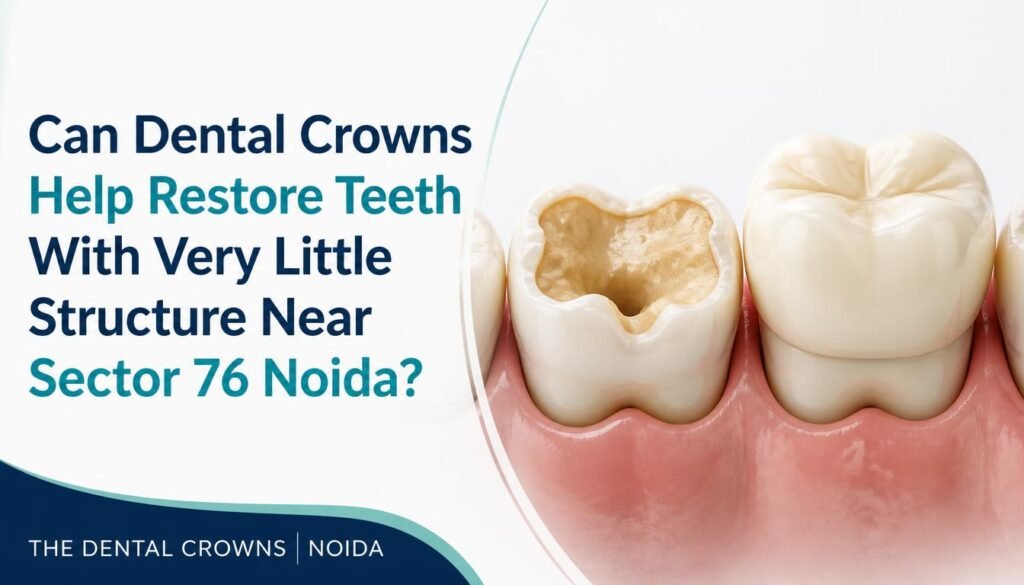
Not every root canal-treated tooth automatically requires a crown. However, a dental crown is frequently recommended when the tooth has lost considerable structure due to deep decay, large fillings, or fractures.
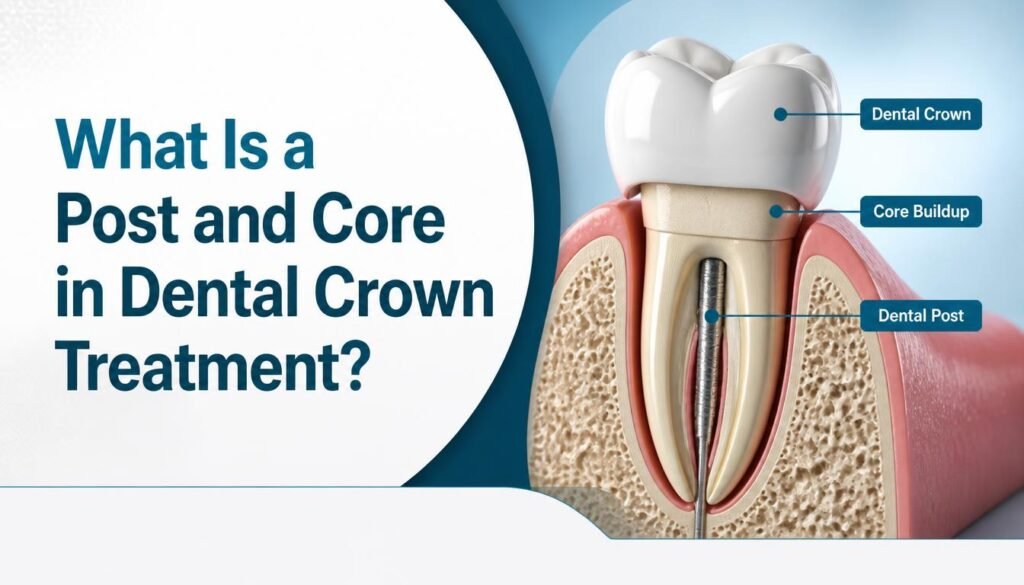
A crown acts like a protective covering around the remaining tooth. It helps restore its shape, strength, and chewing function.
The need for a crown depends on several factors:
- The amount of natural tooth structure remaining.
- The position of the affected tooth.
- The extent of existing cracks or damage.
- The pressure placed on the tooth during chewing.
- The dentist’s assessment of long-term restoration.
Molars and premolars often require additional protection because they experience significant chewing forces.
Explore our Dental Crown Treatment options to understand how damaged teeth can be restored.
When Can a Tooth With a Dead Nerve Not Be Saved?
Although root canal treatment can preserve many infected teeth, certain conditions may make successful restoration difficult or impossible.
Extraction may be recommended when:
- The tooth has a severe vertical root fracture.
- Decay extends too far below the gumline.
- There is insufficient healthy tooth structure for restoration.
- The tooth has extensive damage that cannot be predictably repaired.
- The supporting tissues have suffered severe damage.
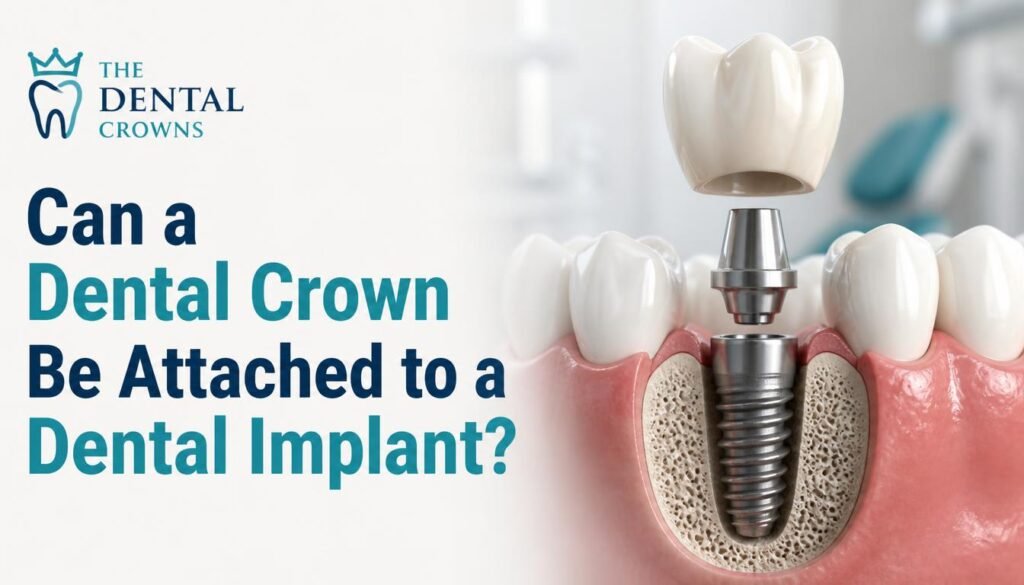
If extraction becomes necessary, your dentist may discuss replacement options such as dental implants or dental bridges.
However, extraction should not be considered the first option without evaluating whether the natural tooth can be preserved.
What Happens If You Leave a Dead Tooth Untreated?
Ignoring a dead tooth can allow bacteria to multiply and spread beyond the tooth’s root.
Possible complications include:
- Formation of a dental abscess.
- Swelling and pain in the surrounding gums.
- Infection spreading into the jawbone.
- Damage to surrounding tissues.
- Increased risk of losing the affected tooth.
In some cases, dental infections can cause facial swelling, fever, or difficulty swallowing. These symptoms require urgent medical or dental attention. Difficulty breathing or swallowing is an emergency.
Even if the tooth stops hurting, do not assume the infection has disappeared.
How Long Can a Tooth Last After Root Canal Treatment?
A root canal-treated tooth can last for many years and, in suitable circumstances, potentially for a lifetime.
Its longevity depends on factors such as:
- The quality of root canal treatment.
- The final restoration and crown, if needed.
- Daily oral hygiene.
- Regular dental check-ups.
- Avoiding habits such as chewing ice or biting hard objects.
Following your dentist’s instructions and completing the recommended restoration are important for protecting the treated tooth.
Where Can You Get Root Canal Treatment in Noida?
If you have noticed tooth discolouration, unexplained dental pain, gum swelling, or other signs of a possible dead tooth nerve, getting a professional dental assessment is important.
At The Dental Crowns, located at Civitech Stadia, Sector 79, Noida, patients can access dental care, including root canal treatment and restorative dental solutions.
The clinic focuses on patient-centred care, appropriate diagnosis, and treatment planning based on individual dental needs.
If you are looking for root canal treatment in Noida, schedule a consultation to understand whether your natural tooth can still be saved.
Clinic: The Dental Crowns, Shop No. 16, 1st Floor, Civitech Stadia, Sector 79, Noida, Uttar Pradesh 201301.
Contact: +91 89202 71787
Website: https://thedentalcrowns.in/
Frequently Asked Questions (FAQs)
1. Can a tooth with a dead nerve be saved without extraction?
Yes. Many teeth with dead nerves can be preserved through root canal treatment, provided there is sufficient healthy tooth structure and the surrounding tissues can support the tooth.
2. Does a dead tooth nerve cause pain?
It can cause severe pain during the infection process. However, once the nerve tissue dies, the tooth may stop responding to temperature changes. Infection around the root can still cause pain and swelling.
3. Can a dead tooth become alive again?
Once the pulp tissue has completely died, it cannot regenerate naturally. However, root canal treatment can remove the infected tissue and preserve the remaining natural tooth structure.
4. Is root canal treatment necessary for a dead tooth?
In many cases, yes. Root canal treatment removes the infected pulp and helps prevent the infection from spreading. Your dentist will determine whether the tooth is suitable for this procedure.
5. Does every dead tooth need a dental crown?
No. Some teeth may be restored with a filling, while others need a dental crown for additional protection. The decision depends on the amount of remaining tooth structure and the tooth’s location.
6. Can a dead tooth cause an infection in the jaw?
Yes. If left untreated, bacteria can spread from the root into the surrounding bone and tissues, potentially causing an abscess and other complications.
7. How do dentists confirm that a tooth nerve is dead?
Dentists may use pulp vitality tests, percussion tests, clinical examination, and dental X-rays to evaluate the condition of the pulp and tissues surrounding the tooth.
8. Can a black or grey tooth be saved?
Sometimes. Discolouration can be associated with pulp damage, trauma, or other dental conditions. A dentist must determine the cause and whether the tooth can be restored.
Final Thoughts
A dead tooth nerve does not automatically mean you need to lose your natural tooth. With early diagnosis and appropriate treatment, root canal therapy can often eliminate infection and preserve the remaining tooth.
The most important thing is not to ignore warning signs such as tooth discolouration, swelling, persistent discomfort, or an unusual gum bump.
If you suspect that your tooth nerve has died, consult a dentist as soon as possible.
The Dental Crowns in Sector 79, Noida, can help you understand your treatment options and determine whether your natural tooth can still be saved.