
When it comes to your child’s health, their smile deserves just as much attention as their overall growth and development. Regular dental care from an early age can help prevent cavities, identify developing dental problems, build healthy oral-hygiene habits and make children more comfortable with visiting a dentist.
If you are searching for a kids dentist in Noida, pediatric dentist in Noida, or children’s dentist near Sector 79, choosing a clinic that takes a child-friendly and preventive approach can make dental visits much easier for both parents and children.
At The Dental Crowns, Kids Dentistry is part of the clinic’s general dentistry services, with a focus on comfortable, personalized dental care. The clinic is located at Civitech Stadia, Sector 79, Noida. Explore our Kids Dentistry service or view all dental services.
What Is Pediatric Dentistry?
Pediatric dentistry focuses on the oral health needs of babies, children and teenagers. Children’s teeth are constantly changing as baby teeth erupt, permanent teeth develop and the jaw grows.
According to the American Academy of Pediatric Dentistry (AAPD), preventive pediatric dental care can include dental examinations, caries-risk assessment, fluoride, preventive counseling, sealants and treatment of dental problems according to the individual needs of the child.
This is why children’s dentistry is not simply about treating a cavity after it starts hurting. It is also about preventing dental problems before they become serious.
Parents can read the AAPD recommendations for preventive dental care for additional evidence-based guidance.
When Should a Child First Visit a Dentist?
Many parents wait until their child develops tooth pain before scheduling an appointment. Preventive dentistry is better than waiting for an emergency.
The ADA recommends establishing a dental home for a child by the time the first tooth appears and no later than the child’s first birthday.
An early dental visit allows a dentist to:
- Examine emerging teeth
- Identify early signs of tooth decay
- Assess cavity risk
- Discuss brushing and fluoride toothpaste
- Provide age-appropriate dietary advice
- Monitor tooth and jaw development
- Help parents understand their child’s oral-health needs
The AAPD also emphasizes early professional intervention and continuity of care based on a child’s individual needs.
Why Are Baby Teeth Important?
One of the most common misconceptions among parents is that baby teeth do not require much attention because they eventually fall out.
Baby teeth are important for several reasons. They help children chew food, support speech development and maintain space for permanent teeth.
Untreated dental decay can also cause pain and infection. The CDC notes that cavities in children can interfere with eating, speaking, playing and learning.
Therefore, a child’s baby teeth should be cared for just as carefully as their permanent teeth.
Common Dental Problems in Children
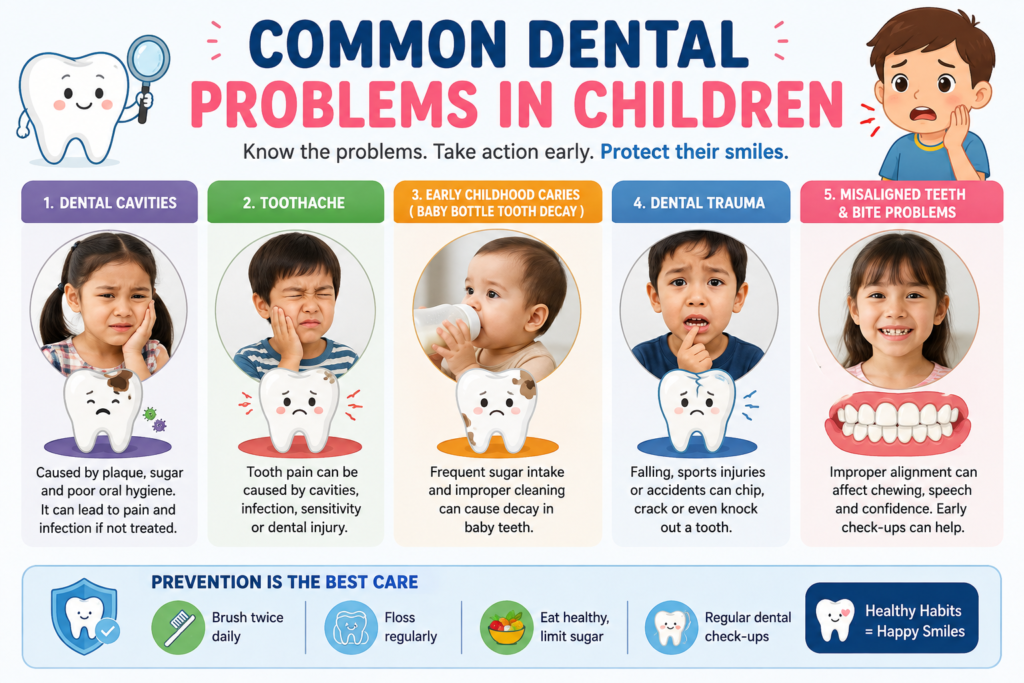
Children can experience many of the same oral-health problems as adults, but their developing teeth and changing oral environment require age-appropriate care.
1. Dental Cavities
Dental cavities are one of the most common problems affecting children’s teeth.
Frequent sugary snacks and drinks, inadequate brushing, poor oral hygiene and other risk factors can increase the chance of tooth decay.
The good news is that cavities are largely preventable with appropriate preventive care, fluoride toothpaste, healthy habits and professional dental guidance.
The CDC’s information on cavities provides additional information about prevention and treatment.
2. Toothache and Dental Infection
A child complaining of tooth pain should not simply be given temporary relief and ignored.
Toothache can have several causes, including tooth decay, dental infection, trauma or problems associated with developing teeth.
If your child experiences persistent toothache, swelling, sensitivity or difficulty eating, a dental examination can help identify the underlying problem.
3. Early Childhood Caries
Early childhood caries can progress quickly in young children.
The AAPD recommends preventive strategies such as appropriate oral hygiene, dietary counseling, fluoride and risk-based dental care for children who may be susceptible to early childhood caries.
Parents can review the AAPD’s guidance on early childhood caries.
4. Dental Trauma
Children are naturally active, which means falls, sports injuries and accidents can sometimes damage teeth.
If a child’s tooth is chipped, fractured, displaced or knocked out after an accident, parents should seek dental advice promptly.
5. Developing Bite and Alignment Problems
As children’s jaws and permanent teeth develop, dentists can monitor the position of the teeth and identify potential orthodontic concerns.
Early observation does not necessarily mean that every child requires braces. It simply allows dental professionals to monitor development and recommend treatment when appropriate.
Parents can also explore Braces and other cosmetic dentistry services at The Dental Crowns.
Preventive Dental Care for Children
The best children’s dentistry is not only about treating problems. It is about preventing them.
A preventive dental-care plan may include:
- Regular dental examinations
- Professional cleaning when clinically required
- Fluoride applications when recommended
- Dental sealants for appropriate teeth
- Oral-hygiene education
- Dietary counseling
- Monitoring tooth eruption
- Monitoring jaw and bite development
- Early treatment of dental problems
The AAPD recommends individualized caries-risk assessment because children’s risk factors can differ considerably.
You can read the AAPD’s caries-risk assessment guidance for more information.
Fluoride and Children’s Teeth
Fluoride is an important tool for preventing tooth decay.
The CDC explains that fluoride helps strengthen teeth and prevent cavities. The ADA recommends age-appropriate use of fluoride toothpaste, with parental supervision for young children.
For children under 3, the ADA generally recommends a smear or rice-grain-sized amount of fluoride toothpaste. For children aged 3–6, a pea-sized amount is generally recommended.
However, parents should follow their child’s dentist’s advice, particularly when there are individual risk factors or concerns.
For detailed information, see the CDC’s guide to fluoride and the ADA’s fluoride guidance.
Are Dental Sealants Useful for Children?
Dental sealants are thin protective coatings that may be placed on the chewing surfaces of teeth that are susceptible to decay.
Children’s back teeth contain grooves and pits where food particles and plaque can accumulate. Depending on the child’s cavity risk and the condition of the teeth, a dentist may recommend sealants.
The CDC reports that dental sealants can prevent many cavities on back teeth, while the AAPD recommends sealants for teeth judged to be at increased risk of caries.
This decision should always be made after a professional dental assessment.
How Can Parents Make Dental Visits Easier?
A child’s first dental experiences can influence how they feel about dentistry later.
Parents can make visits easier by:
Avoiding frightening language
Try not to use words such as “pain,” “injection,” “needle” or “drill” when explaining the appointment.
Staying positive
Tell your child that the dentist will count and check their teeth rather than creating anxiety about the appointment.
Starting early
Children who become familiar with dental visits at a young age may find routine checkups easier.
Maintaining good habits at home
Children learn from their parents. Make brushing part of the daily family routine.
Avoiding unnecessary pressure
If your child is anxious, tell the dental team before the appointment. The dental team can then adapt communication and the appointment according to the child’s needs.
How Often Should Children See a Dentist?
There is no single appointment schedule that is perfect for every child.
The appropriate frequency depends on factors such as:
- Age
- Cavity risk
- Oral hygiene
- Previous dental problems
- Diet
- Tooth development
- Orthodontic development
- Special healthcare needs
A dentist can recommend an individualized schedule after examining your child.
Why Choose The Dental Crowns for Kids Dentistry in Noida?
Finding the right kids dentist in Noida is about more than proximity.
At The Dental Crowns, the approach to pediatric dentistry includes a focus on:
Child-friendly care: Children may require a different communication style and a more patient approach during dental appointments.
Preventive dentistry: Regular examinations can help identify problems before they become more complicated.
Personalized treatment: Every child has different dental needs, and treatment should be based on an individual assessment.
Parent education: Helping parents understand brushing, diet, dental development and preventive care is an important part of maintaining a child’s oral health.
Comprehensive dental care: The Dental Crowns offers several dental services in addition to Kids Dentistry, allowing families to access different areas of dental care under one roof.
You can learn more about The Dental Crowns or explore the complete list of dental treatments.
Kids Dentist Near Sector 79, Noida
If you live in or around Sector 79, Noida, The Dental Crowns is located at:
The Dental Crowns
Shop No. 16, 1st Floor,
Civitech Stadia, Sector 79,
Noida, Uttar Pradesh 201301
Phone: +91 89202 71787
If you are searching online for terms such as “kids dentist near me,” “pediatric dentist in Noida,” “children’s dentist in Noida,” or “kids dentistry near Sector 79,” consider choosing a dental clinic based on professional care, preventive services, accessibility and your child’s individual needs rather than relying only on search rankings.
Book a dental appointment with The Dental Crowns or contact the clinic to discuss your child’s dental concerns.
Frequently Asked Questions About Kids Dentistry in Noida
At what age should my child visit a dentist?
The ADA recommends that a child establish a dental home by the first birthday or within the recommended early-childhood timeframe. Early visits allow dentists to identify potential problems and educate parents about preventive care.
Is pediatric dentistry only for children with cavities?
No. Pediatric dental care also includes preventive examinations, oral-hygiene education, fluoride guidance, dental development monitoring, caries-risk assessment and other age-appropriate preventive services.
Are baby teeth really important?
Yes. Baby teeth support chewing and speech and help maintain appropriate space while permanent teeth develop. Dental decay in baby teeth can also cause pain and infection.
How can I prevent cavities in my child’s teeth?
Help your child brush twice daily with age-appropriate fluoride toothpaste, supervise brushing when necessary, limit frequent sugary foods and drinks, encourage healthy habits and schedule regular dental examinations.
Does my child need dental sealants?
Not every child needs sealants. A dentist can evaluate the child’s teeth and cavity risk and determine whether sealants are appropriate.
What should I do if my child has a toothache?
Do not ignore persistent tooth pain. Arrange a dental examination so the underlying cause can be identified and treated appropriately.
Where can I find a kids dentist in Sector 79, Noida?
The Dental Crowns provides Kids Dentistry at Civitech Stadia, Sector 79, Noida. You can contact the clinic at +91 89202 71787 to discuss an appointment.
Final Thoughts
Healthy teeth start with healthy habits and timely professional care.
From a child’s first dental visit to monitoring permanent teeth, preventive pediatric dentistry can help families identify problems early and establish habits that support long-term oral health.
If you are looking for Kids Dentistry in Noida or a kids dentist near Sector 79, The Dental Crowns provides children’s dental care along with a broader range of general, cosmetic and surgical dental services.
Explore Kids Dentistry at The Dental Crowns or contact The Dental Crowns to schedule an appointment.
Medical Disclaimer
This article is intended for general educational purposes and does not replace an examination, diagnosis or treatment plan from a qualified dental professional. Children’s dental needs vary, so parents should consult a dentist for personalized advice.