If you live in Sector 76 Noida and have persistent tooth pain, sensitivity, swelling, or discomfort while chewing, your dentist may recommend root canal treatment (RCT). However, effective root canal treatment starts long before the procedure itself. A proper diagnosis and individualized treatment plan are essential for determining whether the tooth can be saved, what treatment it needs, and how it should be restored afterward.
For patients searching for root canal treatment planning for Sector 76 Noida, understanding the treatment process can make a dental consultation easier and help you know what questions to ask your dentist.
The Dental Crowns provides dental care for patients in Noida and nearby sectors, with its clinic located in Sector 79, making it accessible to patients from Sector 76 and surrounding areas. The clinic offers root canal treatment along with dental crowns, implants, laser dentistry and other dental services. Root Canal Treatment Near Sector 76 Noida
What Is Root Canal Treatment?
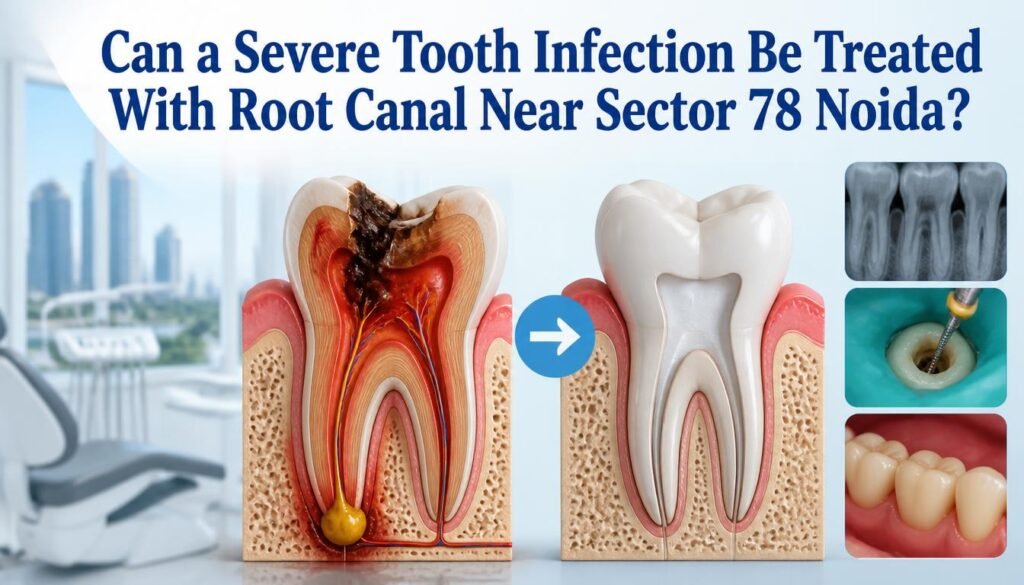
Root canal treatment is a dental procedure used when the pulp inside a tooth becomes inflamed or infected. During treatment, the diseased pulp is removed, the root canals are cleaned and disinfected, and the canals are filled and sealed.
The purpose is generally to control infection and preserve the natural tooth when it is clinically suitable to do so. The American Association of Endodontists explains that root canal treatment is intended to clean and seal an infected or inflamed tooth and help save the natural tooth.
A root canal may become necessary because of:
- Deep dental decay
- A cracked or fractured tooth
- Previous dental treatment
- Trauma or injury
- Repeated procedures on the same tooth
- Infection inside the tooth
- A damaged or faulty restoration
The exact cause and treatment approach can only be determined after a professional examination.
Why Is Root Canal Treatment Planning Important?
Every tooth is different. The number and shape of root canals, amount of remaining tooth structure, location of the tooth, previous dental work and surrounding tissues can all affect treatment planning.
The American Association of Endodontists emphasizes diagnosis, treatment planning and assessment of the tooth’s restorability when determining appropriate endodontic care.
For a patient from Sector 76 Noida, a root canal treatment plan may include:
- Dental examination
- Review of symptoms and dental history
- Appropriate dental imaging
- Assessment of the tooth and surrounding structures
- Evaluation of whether the tooth is restorable
- Discussion of treatment alternatives
- Root canal procedure when indicated
- Final restoration such as a filling or dental crown when required
- Follow-up and aftercare
This approach helps the dentist develop a treatment plan based on the individual tooth rather than using the same procedure for every patient.
When Should Patients From Sector 76 Noida Consider a Root Canal Consultation?
Not every toothache requires a root canal. However, persistent symptoms should not be ignored.
Possible warning signs include:
- Severe or persistent toothache
- Pain while chewing or biting
- Lingering sensitivity to hot or cold
- Swollen or tender gums
- A chipped or cracked tooth
- A pimple or abscess near the gum
- Deep tooth decay
- Tooth discoloration
The AAE lists severe pain during chewing, lingering temperature sensitivity, swollen or tender gums, cracked teeth and deep decay among symptoms that can be associated with a tooth requiring root canal evaluation.
If you are experiencing these symptoms in Sector 76 Noida, scheduling a dental examination is preferable to trying to determine the treatment yourself.
Step 1: Dental Examination and Diagnosis
The first stage of root canal treatment planning is diagnosis.
Your dentist will usually discuss:
- Where the pain is located
- When the pain started
- Whether hot or cold triggers it
- Whether chewing increases the pain
- Previous dental treatment
- Any history of trauma
- Existing fillings or crowns
- Swelling or other symptoms
The dentist may also examine the tooth and surrounding gums and recommend dental imaging where clinically appropriate.
A proper diagnosis is important because tooth pain can have several possible causes. The AAE notes that tooth pain can result from decay, cracks, infection and other dental problems.
Step 2: Assessing Whether the Tooth Can Be Saved
One of the most important parts of root canal treatment planning is determining whether the tooth is restorable.
A dentist may consider:
- Remaining healthy tooth structure
- Root condition
- Cracks or fractures
- Supporting bone and gum condition
- Previous treatment
- Location of the tooth
- Overall oral health
In some cases, root canal treatment can preserve a natural tooth. In other cases, extraction or an alternative treatment may need to be considered.
The decision should be made after a clinical examination rather than based solely on symptoms.
Step 3: Understanding Your Root Canal Treatment Plan
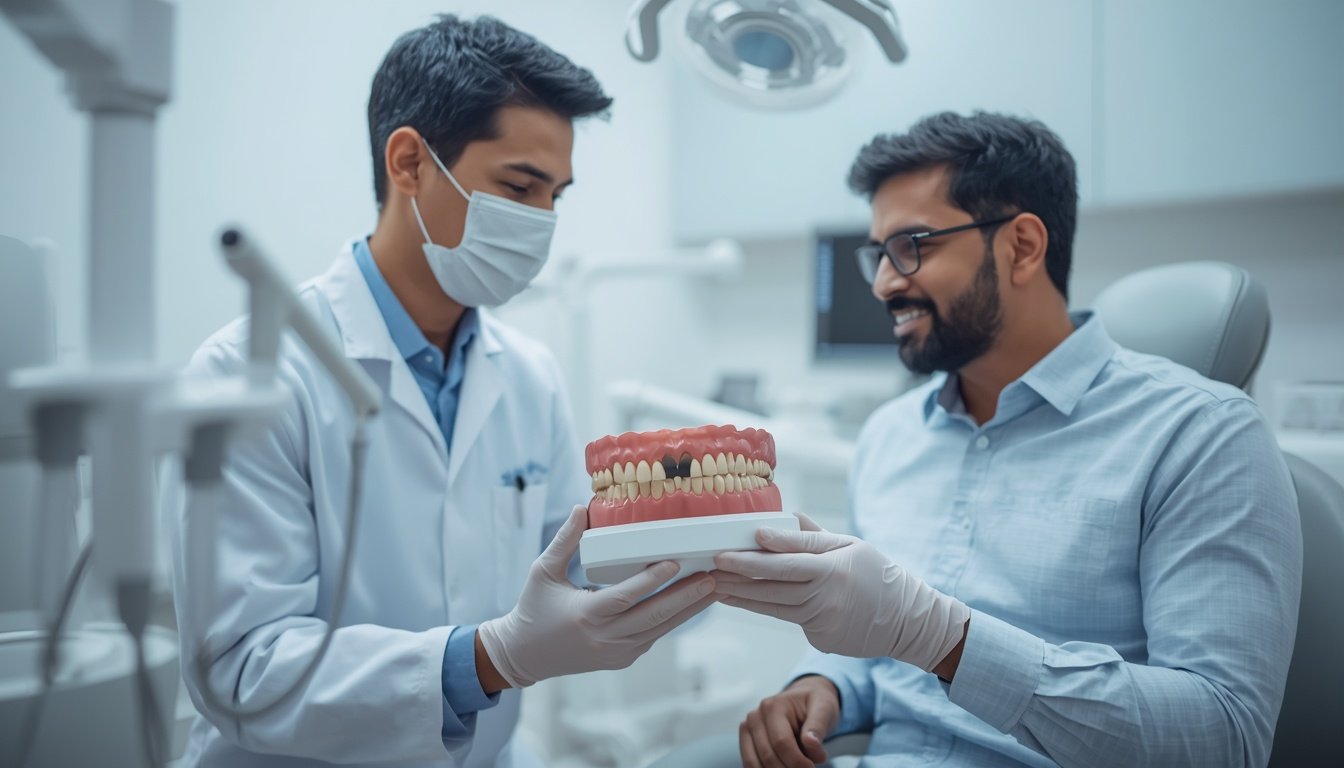
Once the diagnosis has been established, your dentist can explain the proposed treatment.
Depending on the individual case, this may involve:
Cleaning the infected or inflamed pulp
The diseased tissue inside the tooth is removed.
Cleaning and disinfecting the canals
The root canal system is cleaned and shaped to prepare it for sealing.
Filling and sealing the canals
After cleaning, the canals are filled and sealed to help prevent reinfection.
Restoring the tooth
Depending on the amount of tooth structure remaining and the tooth’s location, a permanent restoration may be required.
The NHS describes the main stages as removing infected pulp, cleaning and shaping the inside of the tooth, filling it and sealing it.
Does Root Canal Treatment Hurt?
Fear of pain is one of the most common reasons people delay dental treatment.
Modern root canal treatment is performed using local anaesthesia, and the goal is to keep the patient comfortable throughout the procedure. Some soreness or sensitivity may occur after treatment while the tissues recover.
The American Association of Endodontists states that modern root canal treatment is generally comfortable with appropriate anaesthesia, although temporary soreness can occur afterward.
If severe or increasing pain continues after treatment, patients should contact their dentist or endodontist for assessment.
Why a Dental Crown May Be Recommended After Root Canal Treatment
A root canal treats the inside of the tooth, but the tooth may still require appropriate restoration afterward.
For some teeth, especially those with substantial loss of tooth structure, a dental crown may be recommended to restore and protect the tooth.
The exact restoration depends on:
- Which tooth was treated
- How much tooth structure remains
- The amount of chewing force
- Existing restorations
- Your bite
- Your dentist’s clinical assessment
You can learn more about restorative options through our Dental Crown Treatment in Sector 76 Noida guide.
The NHS also notes that a crown may be required when a tooth has been badly affected and needs additional protection following root canal treatment.
Root Canal Treatment Planning for Patients Living in Sector 76 Noida
Patients living in Sector 76 Noida have access to several dental clinics in and around the local area. When choosing where to have a root canal consultation, location is only one factor to consider.
You may want to ask the dental team:
- Will my tooth definitely need a root canal?
- What is causing my symptoms?
- Is the tooth restorable?
- Will I need a dental crown afterward?
- How many appointments might be required?
- What type of restoration will I need?
- What should I do if pain continues afterward?
- Are there alternative treatment options?
A treatment plan should be based on your examination and individual dental condition.
What to Expect During a Root Canal Appointment
Although each case is different, a typical treatment pathway may include:
Consultation → Diagnosis → Imaging if required → Treatment planning → Local anaesthesia → Cleaning and shaping → Filling and sealing → Restoration → Follow-up
The number of appointments can vary depending on the tooth, infection, complexity and treatment approach. The AAE notes that root canal treatment may sometimes be completed in one or two appointments, depending on the patient’s circumstances and tooth condition.
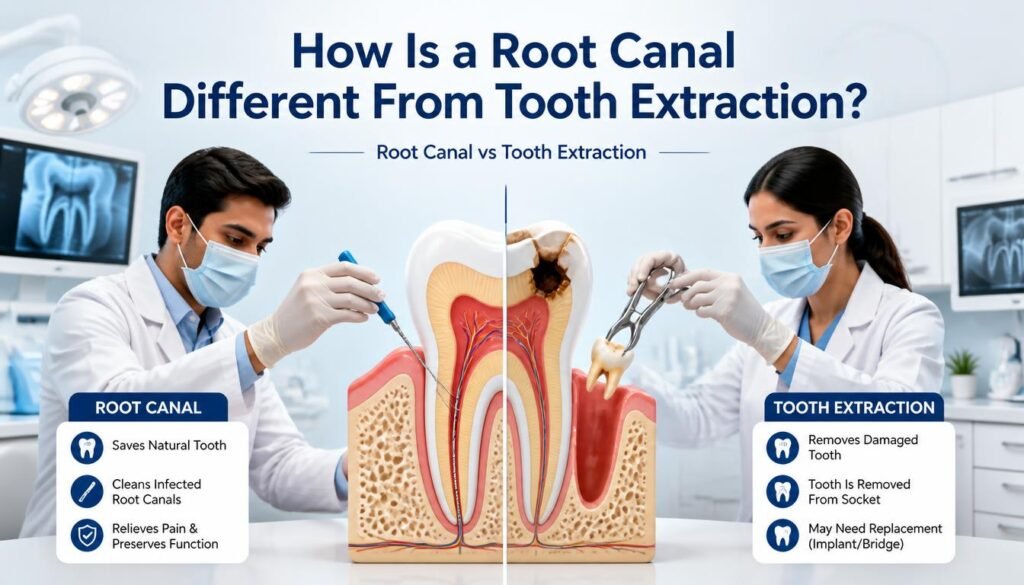
Root Canal Treatment vs Tooth Extraction
When a tooth has severe infection or damage, patients may wonder whether extraction is easier than root canal treatment.
The appropriate choice depends on whether the tooth can be predictably restored and the clinical circumstances.
When a natural tooth can be saved, root canal treatment may allow the patient to retain that tooth. The AAE specifically describes endodontic treatment as a way to save natural teeth when appropriate.
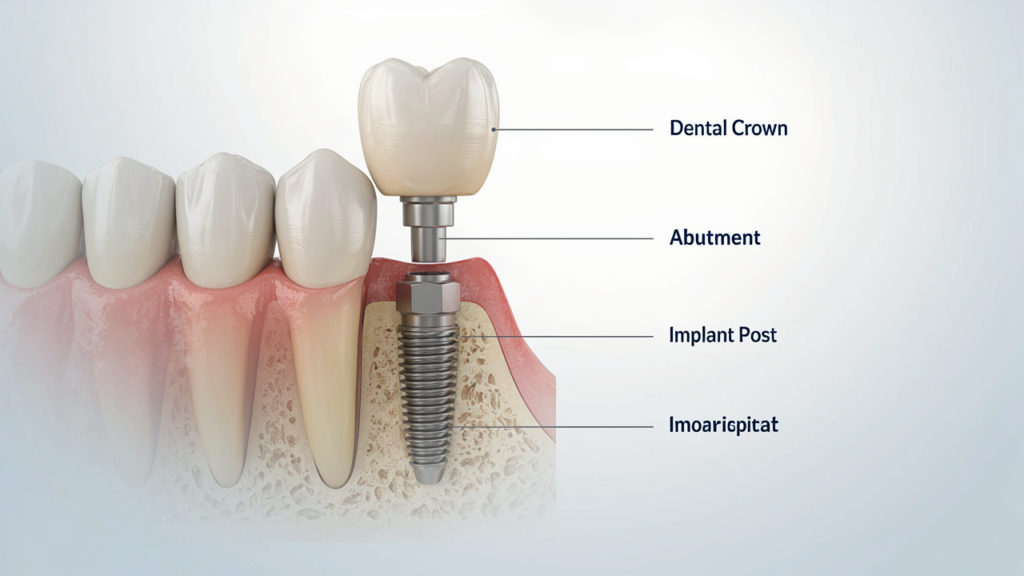
If a tooth cannot be restored, your dentist may discuss extraction and possible replacement options such as a dental implant or bridge.
You can also explore Dental Implant Treatment in Noida as part of understanding possible tooth-replacement options.
Root Canal Aftercare
After root canal treatment, follow the instructions provided by your dentist.
General considerations may include:
- Avoid putting excessive pressure on the treated tooth until it has been permanently restored.
- Maintain regular brushing and flossing.
- Attend recommended follow-up appointments.
- Take medication only as directed by your dental professional.
- Contact your dentist if severe pain, swelling or returning symptoms develop.
The AAE recommends contacting the treating dental professional if severe pain or pressure persists, swelling develops, the bite feels uneven, or previous symptoms return.
Why Patients From Sector 76 Noida May Choose The Dental Crowns
The Dental Crowns is located in Civitech Stadia, Sector 79, Noida, close to patients living in Sector 76 and nearby sectors.
The clinic provides a range of dental services, including:
- Painless root canal treatment
- Dental crowns
- Dental implants
- Laser dentistry
- Tooth-coloured restorations
- Dentures
- Dental bridges
- Cosmetic dental treatments
You can explore the complete Dental Services offered by The Dental Crowns before scheduling a consultation.
For patients specifically interested in comfort-focused RCT, you can also read Painless Root Canal Treatment in Noida for additional information.
Frequently Asked Questions About Root Canal Treatment Planning in Sector 76 Noida
1. How do I know if I need a root canal in Sector 76 Noida?
Persistent tooth pain, pain while chewing, lingering hot or cold sensitivity, swelling, deep decay or a cracked tooth can be reasons to seek a dental evaluation. Only a dentist can determine whether root canal treatment is appropriate.
2. Is root canal treatment painful?
Modern root canal treatment is performed with local anaesthesia. Mild soreness or sensitivity can occur after treatment, but severe or persistent pain should be evaluated by your dentist.
3. Will I need a crown after a root canal?
Some root-canal-treated teeth require a crown or another permanent restoration, particularly when substantial tooth structure has been lost. Your dentist will determine the appropriate restoration after examining the tooth.
4. How many visits are needed for root canal treatment?
The number of appointments varies depending on the tooth and its condition. Some treatments can be completed in one or two appointments, while more complicated cases may require additional visits.
5. Can a root canal save my natural tooth?
Root canal treatment is designed to treat infection or inflammation inside a tooth and preserve the natural tooth when it is restorable. However, not every tooth can be saved, so proper assessment is essential.
6. Where can Sector 76 Noida patients get root canal treatment?
Patients from Sector 76 can consult dental professionals at clinics in and around Noida. The Dental Crowns is located at Civitech Stadia, Sector 79, Noida, and provides root canal treatment among its dental services.
7. What should I ask before starting root canal treatment?
Ask about the diagnosis, treatment alternatives, whether the tooth is restorable, expected number of visits, restoration requirements, aftercare and follow-up.
Book a Root Canal Consultation Near Sector 76 Noida
If you are experiencing persistent tooth pain, sensitivity, swelling or pain while chewing, don’t rely on symptoms alone to decide whether you need a root canal.
A professional examination can help identify the cause of the problem and determine an appropriate treatment plan.
For patients searching for root canal treatment planning for Sector 76 Noida, The Dental Crowns in nearby Sector 79, Noida, offers root canal treatment and other dental services.
Book a dental consultation with The Dental Crowns to discuss your symptoms and treatment options.