Losing a back tooth can make everyday activities such as chewing food feel uncomfortable. Although missing molars are less noticeable than missing front teeth, they play an important role in grinding food and maintaining a balanced bite. If you have lost a molar or another back tooth, you may be wondering whether dental implants can restore your ability to chew comfortably.
Yes, dental implants can often replace missing back teeth, including molars and premolars. A dental implant acts as an artificial tooth root and supports a replacement tooth, usually a custom-made dental crown. However, suitability depends on factors such as jawbone quality, gum health, medical history and the position of the missing tooth.
For patients searching for dental implants near Sector 79 Noida, understanding the available options can help them make an informed decision with a qualified dental professional.
Why Are Back Teeth Important for Chewing?
Back teeth, particularly premolars and molars, help crush and grind food before it is swallowed. They withstand substantial chewing forces and contribute to the proper functioning of your bite.
When a back tooth is missing, you may experience:
- Difficulty chewing food comfortably on one side.
- Increased pressure on the remaining teeth.
- Changes in the way your upper and lower teeth meet.
- Shifting of neighbouring teeth into the empty space in some cases.
- Changes in the jawbone around the missing tooth over time.
Leaving a missing tooth untreated is not automatically harmful in every case, but it is worth discussing the potential consequences and replacement options with your dentist.
Can Dental Implants Replace Missing Molars?
Yes. Dental implants are commonly used to replace individual missing teeth, including back teeth, when a patient is clinically suitable.
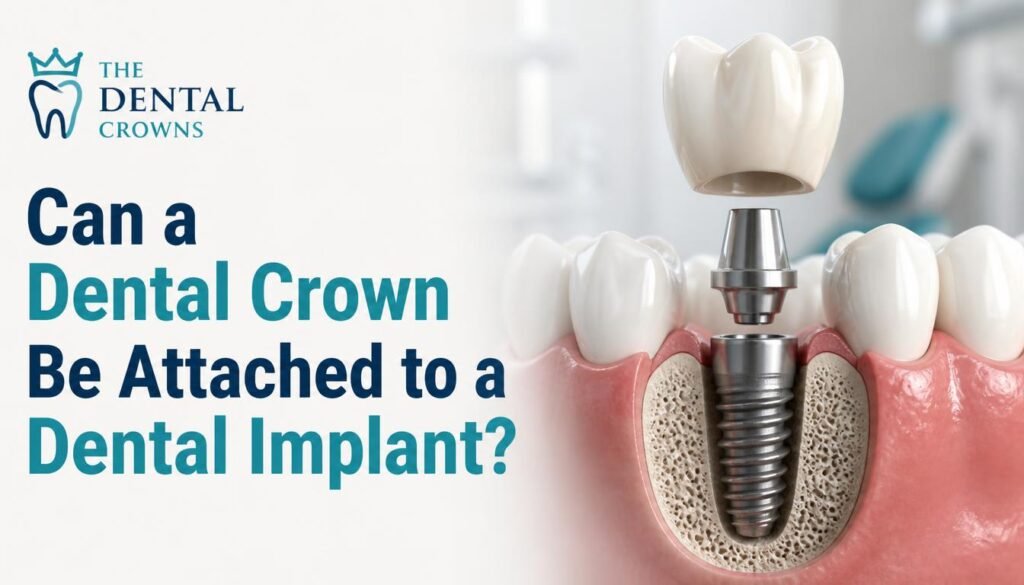
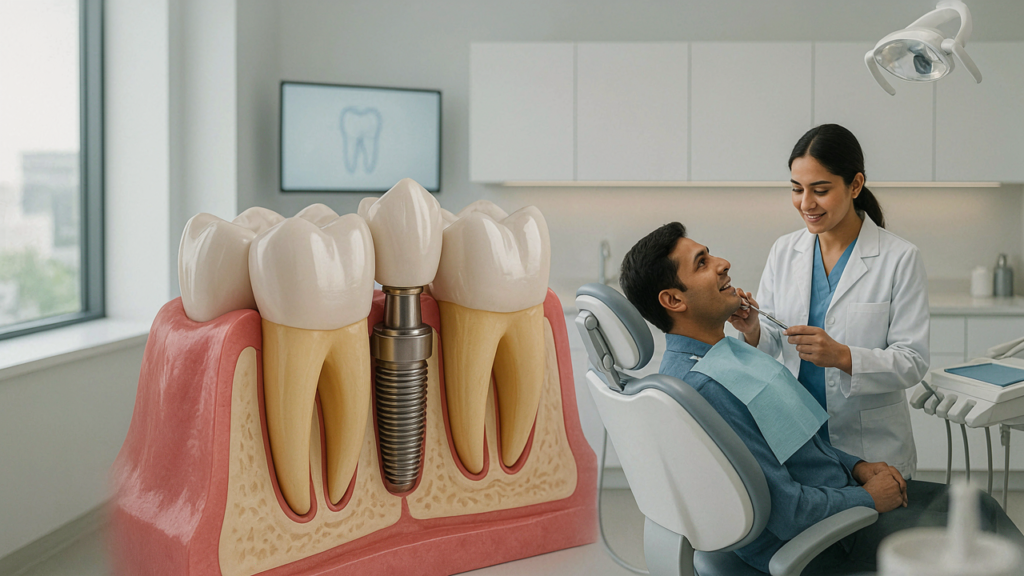
A single-tooth dental implant generally has three main components:
1. Dental implant: A small post placed in the jawbone to act as an artificial tooth root.
2. Abutment: A connector that attaches the replacement crown to the implant.
3. Dental crown: The visible replacement tooth, designed to restore the shape and function of the missing tooth.
Once the implant has integrated with the surrounding bone, the crown can be attached according to the treatment plan.
For patients with missing back teeth near Sector 79 Noida, a dental examination can establish whether an implant-supported crown is appropriate or whether another restoration would be more suitable.
What Are the Benefits of Dental Implants for Back Teeth?
1. Restoring Chewing Function
Molars are designed to withstand the pressure involved in chewing. Replacing a missing molar with an appropriately planned implant-supported crown may help restore chewing function and make eating more comfortable.
The final result depends on the implant position, crown design, bite and healing.
2. A Fixed Tooth Replacement
Unlike a removable denture, an implant-supported crown is fixed in place. Patients do not need to remove it for routine daily cleaning, although they must clean around it carefully.
3. Supporting the Jawbone
Natural tooth roots stimulate the surrounding jawbone. After tooth loss, the bone in that area may gradually reduce.
A dental implant can transmit functional forces to the surrounding bone, helping maintain bone in the treated area. However, it does not guarantee that all bone loss will be prevented.
4. Avoiding Preparation of Neighbouring Teeth
A conventional tooth-supported bridge usually relies on neighbouring teeth for support. A single-tooth implant can replace the missing tooth independently, potentially avoiding the need to reshape adjacent teeth.
Whether this advantage matters in your case depends on the condition of the surrounding teeth and your overall treatment plan.
5. A Natural-Looking Replacement
Although back teeth are less visible when you smile, they still contribute to your bite and dental function. A custom-made implant crown is designed to fit the space and work with the opposing teeth.
Are Dental Implants Suitable for Everyone?
Not everyone with a missing back tooth is automatically a suitable candidate for dental implant treatment.
Your dentist may assess the following factors before recommending an implant.
Jawbone Quantity and Quality
The implant needs sufficient bone for support. If the bone has reduced after tooth loss, additional procedures such as bone grafting may sometimes be considered.
For upper back teeth, the proximity of the maxillary sinus can also affect treatment planning. Some patients may require a sinus augmentation procedure before an implant can be placed.
Gum Health
Healthy gums are important for implant treatment. Active gum disease should be assessed and managed as part of the treatment plan.
General Health and Medical History
Certain medical conditions, medications and lifestyle factors can influence healing and treatment risks. Inform your dentist about your medical history and all medicines you take.
Smoking can also increase the risk of implant complications.
Bite and Remaining Teeth
Your dentist needs to consider how the proposed implant crown will meet the opposing teeth. Clenching, grinding and uneven bite forces may affect the restoration and its long-term maintenance.
A clinical examination and appropriate dental imaging help the dentist assess these factors before treatment.
What Is the Dental Implant Procedure for a Missing Back Tooth?
The exact procedure varies from patient to patient, but treatment generally involves several stages.
Step 1: Dental Examination and Imaging
Your dentist examines the missing-tooth area, surrounding gums, remaining teeth and bite. Dental X-rays or other appropriate imaging may be recommended to assess the available bone and nearby anatomical structures.
Step 2: Personalised Treatment Planning
Based on the findings, your dentist discusses whether an implant, dental bridge or denture is appropriate. The plan may include preparatory treatment if the gums or bone need attention.
Step 3: Implant Placement
If an implant is suitable, it is surgically placed into the jawbone using an appropriate anaesthesia plan.
Step 4: Healing and Bone Integration
The implant needs time to bond with the surrounding bone. This process is called osseointegration. Depending on the individual case, healing may take several months.
Step 5: Placement of the Dental Crown
Once the implant is sufficiently stable and the treatment plan permits, a custom-made crown is attached to restore the missing tooth.
The American Academy of Periodontology and Mayo Clinic describe dental implant treatment as a process that can involve multiple stages and healing periods. Not every patient follows exactly the same timeline.
What If You Have Been Missing a Back Tooth for Years?
You may still be able to receive a dental implant after several years without a tooth, but the condition of the jawbone needs to be assessed.
Bone reduction can occur following tooth loss, and the available bone may influence the implant’s position and stability.
Depending on the examination, your dentist may recommend:
- Implant placement without additional bone treatment.
- Bone grafting before or during implant placement, where appropriate.
- A different implant design or restoration plan.
- A dental bridge or denture if an implant is not the preferred option.
There is no single waiting period that determines whether an implant is possible. The condition of the site and your individual oral health are more important than the number of years alone.
Dental Implants vs Dental Bridges vs Dentures
Patients looking for missing back teeth replacement near Sector 79 Noida may have several treatment options.
Dental implants: A post is placed in the jawbone to support a crown or another restoration. This may be appropriate when bone, gum health and other clinical factors permit.
Dental bridges: A fixed replacement tooth is supported by adjacent teeth or implants. A conventional tooth-supported bridge may require preparation of neighbouring teeth.
Dentures: Removable appliances can replace one or multiple missing teeth. Their design, stability and suitability depend on the number of missing teeth and the condition of the mouth.
There is no universally best option for every patient. Your dentist can explain the advantages, limitations, expected maintenance and costs of each approach.
How Much Do Dental Implants for Back Teeth Cost in Sector 79 Noida?
The cost of a dental implant for a missing molar depends on the complexity of the case and the components included in the treatment plan.
Factors that may influence the overall cost include:
- The implant system and components used.
- The type and material of the dental crown.
- The need for X-rays or three-dimensional imaging.
- Bone grafting or other preparatory procedures.
- The condition of the gums and remaining teeth.
- Follow-up appointments and maintenance requirements.
When comparing dental implant treatment in Noida, ask for an itemised estimate that explains which procedures and components are included. The lowest advertised price does not necessarily represent the complete treatment cost.
For an individual estimate, arrange an examination with your dentist rather than relying on a general online price.
How Should You Care for a Back-Tooth Dental Implant?
An implant-supported crown requires regular cleaning and professional monitoring. Although the implant itself cannot develop tooth decay, the surrounding gum and bone tissues can develop problems.
To maintain your implant:
- Brush twice daily using a soft-bristled toothbrush.
- Clean between your teeth and around the implant using suitable cleaning aids.
- Attend regular dental check-ups as recommended.
- Follow your dentist’s instructions after surgery.
- Avoid chewing excessively hard objects that could damage the crown.
- Seek professional advice if you notice persistent pain, swelling, bleeding or movement of the crown or implant.
Good home care and regular professional maintenance are important for protecting the health of the implant and the tissues around it.
Dental Implants Near Sector 79 Noida: Where Can You Start?
If you have a missing molar or another back tooth, the first step is to understand the condition of the missing-tooth area and the options available to you.
The Dental Crowns is located at Shop No. 16, First Floor, Civitech Stadia, Sector 79, Noida, Uttar Pradesh 201301. Patients can contact the clinic to discuss dental implant treatment and arrange a consultation.
A dentist can evaluate your jawbone, gum health, bite and medical history before explaining whether an implant-supported crown, bridge or denture is suitable.
You can learn more about dental implant treatment at The Dental Crowns and explore the clinic’s complete dental services.
To enquire about an appointment, visit the contact page or call +91 89202 71787.
Frequently Asked Questions
1. Can a dental implant replace a missing molar?
Yes. A dental implant can support a replacement crown for a missing molar when the patient’s bone, gum health and other clinical factors are suitable.
2. Is a dental implant strong enough for back teeth?
An appropriately planned implant and crown can restore back-tooth function. The dentist must consider chewing forces, bite alignment, bone support and crown design.
3. Can I get a dental implant if my back tooth has been missing for years?
Possibly. Your dentist will assess the remaining bone and surrounding tissues. Some patients may need bone grafting or another treatment before implant placement.
4. How long does a back-tooth dental implant take?
The overall process can take several months because the implant may need time to integrate with the jawbone. The timeline depends on healing, bone condition and whether additional procedures are needed.
5. Is an implant better than a bridge for a missing molar?
Neither option is best for every patient. An implant may avoid preparing neighbouring teeth, while a bridge may be appropriate in other circumstances. Your dentist can compare the options for your particular case.
6. What happens if I do not replace a missing back tooth?
Possible consequences include reduced chewing efficiency, shifting of neighbouring teeth and changes in the surrounding bone. The effects vary, so ask your dentist whether replacement is advisable in your situation.
7. Can patients with insufficient jawbone receive dental implants?
Some patients with insufficient bone may become candidates after appropriate preparatory treatment, such as bone grafting. Suitability must be assessed individually.
8. Where can I consult a dentist about missing back teeth near Sector 79 Noida?
The Dental Crowns is located at Civitech Stadia, Sector 79, Noida. You can contact the clinic to arrange an examination and discuss available tooth-replacement options.
Conclusion
Dental implants can be an effective option for replacing missing back teeth, including molars, in appropriately selected patients. They can restore chewing function, support a custom-made crown and replace a missing tooth without relying on neighbouring natural teeth for support.
However, successful treatment planning requires careful assessment of the jawbone, gums, bite and overall health. Patients near Sector 79 Noida should discuss their options with a qualified dentist before deciding on an implant, bridge or denture.
If you have a missing back tooth, contact The Dental Crowns to arrange a consultation and learn which tooth-replacement option may suit your needs.
Medical disclaimer: This article provides general educational information and is not a substitute for a dental examination, diagnosis or personalised treatment advice.