

A toothache may seem like a minor problem at first, but persistent pain, sensitivity, swelling, or discomfort while chewing can sometimes indicate a deeper dental infection. If you are searching for root canal treatment near Noida Sector 75, understanding the early signs of a tooth infection can help you seek professional dental care at the right time.
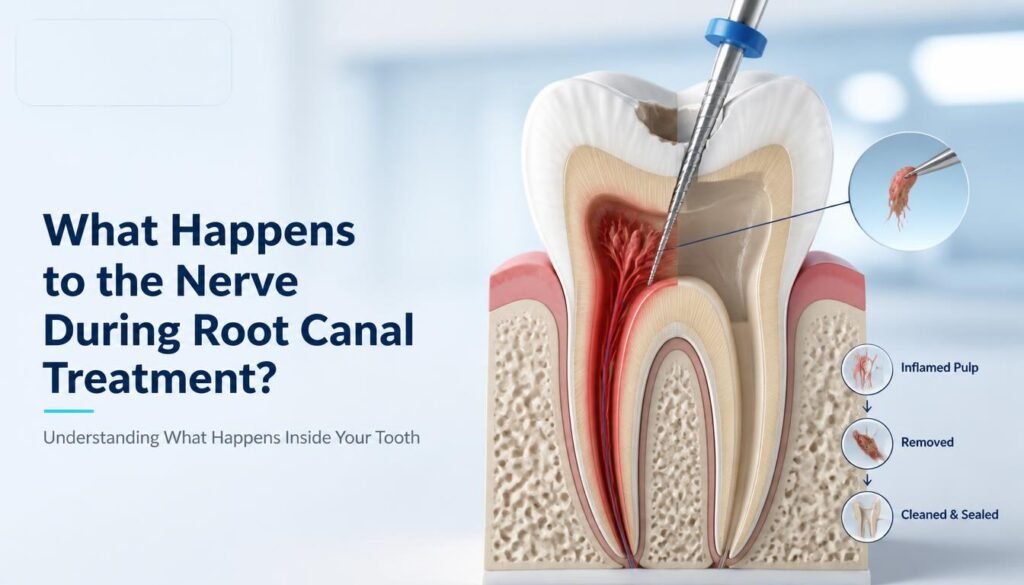
A root canal treatment, also known as endodontic treatment, is performed when the soft tissue inside a tooth becomes inflamed or infected. During the procedure, the infected or inflamed pulp is removed, the root canals are cleaned and disinfected, and the tooth is sealed to help prevent reinfection.
At The Dental Crowns, patients can consult a dental team for root canal treatment and other general, cosmetic and surgical dental procedures.
Explore: Dental Services at The Dental Crowns
Quick Answer: What Are the Signs of a Tooth Infection?
Common signs that may indicate a tooth infection include:
- Persistent or severe toothache
- Pain while biting or chewing
- Lingering sensitivity to hot or cold
- Swollen or tender gums
- Swelling around the tooth
- A pimple or bump on the gums
- Pus or drainage around the affected tooth
- Bad taste in the mouth
- Tooth discoloration
- Pain that spreads toward the jaw, ear or face
- Fever or facial swelling in more serious cases
However, symptoms alone cannot confirm that a root canal is necessary. Toothache can also result from cavities, gum disease, cracked teeth, dental sensitivity or other conditions. A dentist needs to examine the tooth and determine the cause.
The American Association of Endodontists lists severe pain while chewing, lingering hot or cold sensitivity, swollen or tender gums, gum pimples and cracked or chipped teeth among symptoms that can indicate the need for endodontic treatment.
What Is Root Canal Treatment?
Root canal treatment is a dental procedure designed to treat infection or inflammation inside a tooth while preserving the natural tooth whenever possible.
Inside every tooth is a soft tissue called the pulp, which contains nerves, blood vessels and connective tissue. Deep tooth decay, cracks, trauma, repeated dental procedures or problems with an existing restoration can damage the pulp and allow bacteria to enter.
If the pulp becomes infected or severely inflamed, the dentist may recommend root canal treatment.
During an RCT, the dentist generally:
- Examines the affected tooth.
- Uses dental imaging when required.
- Numbs the area with local anaesthesia.
- Creates an opening into the tooth.
- Removes the infected or inflamed pulp.
- Cleans and disinfects the root canals.
- Shapes the canals for filling.
- Fills and seals the cleaned canals.
- Restores the tooth with an appropriate filling or crown when required.
The goal is to remove infection, prevent reinfection and preserve the natural tooth.
For more information, you can explore the Painless Root Canal Treatment service offered by The Dental Crowns.
10 Signs You May Need Root Canal Treatment
1. Persistent Toothache
A toothache that keeps returning or does not improve should not be ignored.
The pain may feel:
- Sharp
- Throbbing
- Constant
- Worse at night
- Triggered by chewing
- Difficult to locate
Persistent tooth pain does not automatically mean you need an RCT. However, it can be a warning sign that requires a professional dental examination.
If you are experiencing recurring tooth pain in Sector 75, consider scheduling an evaluation rather than waiting for the pain to become severe.
2. Pain While Biting or Chewing
Pain that occurs every time you bite down can indicate inflammation affecting the tissues around a tooth.
It may also be associated with:
- Tooth infection
- Cracked tooth
- Deep decay
- Problems with an existing filling
- Inflammation around the tooth root
The American Association of Endodontists identifies severe pain while biting or chewing as one of the symptoms that may indicate the need for root canal treatment.
3. Lingering Sensitivity to Hot or Cold
Do you experience sharp pain after drinking hot tea or eating something cold?
Normal dental sensitivity usually disappears quickly. However, sensitivity that lingers after the hot or cold stimulus is removed can be a sign of an inflamed or damaged pulp.
This is particularly important when sensitivity is:
- Strong
- Repeated
- Limited to one tooth
- Increasing over time
- Accompanied by toothache
A dental examination can help determine whether the problem is simple sensitivity or something requiring endodontic treatment.
4. Swollen or Tender Gums
Swelling around a particular tooth can indicate inflammation or infection.
You may notice:
- Redness
- Tenderness
- Localized swelling
- Pain when touching the gum
- Swelling around the root area
An abscessed tooth can also cause swollen gums and pain while chewing.
If swelling is increasing or accompanied by fever or facial swelling, seek prompt dental care.
5. A Pimple or Bump on the Gums
A small pimple-like bump on your gum should not be ignored.
It can sometimes represent a drainage pathway associated with an infection around the tooth. Interestingly, an infected tooth does not always produce severe pain.
This is why a person can sometimes have a dental infection even when the toothache seems manageable.
6. Tooth Discoloration
A tooth that becomes noticeably darker or changes colour may require evaluation, particularly when discoloration follows dental trauma or is associated with other symptoms.
Tooth discoloration can have several causes, so it does not automatically mean that an RCT is required.
Your dentist can assess the tooth and determine whether the pulp has been affected.
7. Pus, Drainage or a Bad Taste
If you notice fluid or pus near a particular tooth, or repeatedly experience a bad taste coming from one area of your mouth, it could indicate an infection.
An abscess may develop when infection spreads from the pulp toward the tissues surrounding the root.
Do not attempt to squeeze or drain a dental abscess yourself. Professional examination and appropriate treatment are important.
8. Deep Tooth Decay
A small cavity may initially cause little or no discomfort.
However, untreated decay can progress deeper into the tooth. When decay reaches the pulp, inflammation or infection may develop.
Deep dental decay is one of the common reasons a dentist may recommend root canal treatment.
This is one reason why treating cavities early can help prevent more complicated dental procedures later.
9. Cracked or Chipped Tooth
A cracked or chipped tooth can allow bacteria to reach deeper parts of the tooth.
Dental trauma can also damage the pulp even when there is no obvious crack or chip on the visible surface.
If you have recently injured a tooth and later develop pain, sensitivity or discoloration, schedule a dental examination.
10. Facial or Jaw Swelling
Swelling around the jaw or face associated with a dental problem can indicate that an infection has progressed beyond the tooth.
This should be taken seriously, particularly when accompanied by:
- Fever
- Increasing pain
- Difficulty swallowing
- Difficulty breathing
- Rapidly increasing swelling
Severe dental infections can require urgent professional treatment. The Indian Dental Association also notes that dental infections can spread into surrounding tissues and that serious swelling and systemic symptoms require prompt attention.
Can a Tooth Infection Go Away on Its Own?
Dental infections generally should not be ignored simply because the pain becomes less noticeable.
Sometimes dental pain can temporarily decrease, but this does not necessarily mean the underlying problem has disappeared.
If bacteria have infected the pulp or tissues around the tooth, professional dental treatment may be necessary to address the source of infection.
The American Dental Association recommends dental treatment rather than relying on antibiotics alone for most pulpal and periapical dental pain and localized swelling. Antibiotics may be appropriate when systemic involvement, such as fever or malaise, is present and should be prescribed by a dental professional when indicated.
Root Canal Treatment vs Tooth Extraction
When a tooth is severely infected, patients sometimes immediately think about extraction.
However, extraction is not always the only option.
When a tooth can be predictably restored, root canal treatment may allow the natural tooth to be preserved. During RCT, the infected pulp is removed, the canals are cleaned and sealed, and the tooth is subsequently restored.
Preserving the natural tooth can help maintain normal chewing and avoid the need for replacement of the missing tooth.
If a tooth cannot be restored, however, extraction may sometimes be necessary. Your dentist can evaluate the tooth and discuss the appropriate treatment options.
What Happens During Root Canal Treatment?
Patients often worry that a root canal will be extremely painful.
Modern root canal treatment is performed using local anaesthesia to numb the affected area. The American Association of Endodontists notes that root canal treatment is generally comparable to other routine dental procedures in terms of discomfort during treatment.
A typical treatment may involve:
Step 1: Dental Examination
The dentist examines the tooth and may take an X-ray or perform other diagnostic tests.
Step 2: Local Anaesthesia
The treatment area is numbed to improve patient comfort.
Step 3: Accessing the Tooth
A small opening is made to access the pulp chamber and root canals.
Step 4: Removing Infected Pulp
The damaged or infected pulp is carefully removed.
Step 5: Cleaning and Disinfection
The root canals are cleaned, shaped and disinfected.
Step 6: Sealing the Canals
The cleaned canals are filled with a biocompatible material and sealed.
Step 7: Final Restoration
Depending on the tooth and remaining structure, a permanent filling or dental crown may be recommended to restore and protect it.
Do You Need a Dental Crown After Root Canal Treatment?
A root canal-treated tooth may require additional protection because the amount of remaining tooth structure and the location of the tooth can affect its strength and function.
A crown may be recommended when the tooth requires additional structural protection.
However, not every root canal-treated tooth automatically requires a crown. The dentist should assess the amount of remaining tooth structure, tooth location, biting forces and overall condition before recommending the appropriate restoration.
You can learn more about restorative options through the Dental Services page.
Why You Should Not Delay Treatment for an Infected Tooth
Ignoring an infected tooth can allow the problem to progress.
An untreated infection may result in:
- Increasing tooth pain
- Gum swelling
- Dental abscess
- Infection around the root
- Damage to surrounding tissues
- Possible tooth loss
The American Dental Association explains that untreated infection can lead to an abscess and potentially damage the bone supporting the tooth.
Early diagnosis does not necessarily mean you will need a root canal. It simply gives your dentist the opportunity to identify the actual cause and recommend the appropriate treatment.
Root Canal Treatment Near Noida Sector 75
If you live in Noida Sector 75 and are searching for root canal treatment near me, The Dental Crowns is located at Civitech Stadia, Sector 79, Noida, making it accessible for patients from Sector 75 and surrounding sectors.
The clinic’s listed dental services include:
- Painless root canal treatment
- Dental crowns
- Dental implants
- Dental bridges
- Tooth-coloured restorations
- Dentures
- Braces
- Veneers
- Teeth whitening
- Laser dentistry
- Tooth extraction
- Wisdom tooth extraction
Clinic: The Dental Crowns
Address: Shop No. 16, 1st Floor, Civitech Stadia, Sector 79, Noida, Uttar Pradesh 201301
For patients specifically interested in RCT, you can visit the Painless Root Canal Treatment in Noida page for more information.
Why Choose The Dental Crowns for Root Canal Treatment?
Choosing a dental clinic for root canal treatment involves more than simply looking for the closest clinic.
Important factors include:
Professional Diagnosis
A proper diagnosis helps determine whether your symptoms are actually caused by an infected pulp or another dental condition.
Patient Comfort
Modern anaesthesia and dental techniques are designed to make treatment more comfortable.
Tooth-Preserving Approach
When clinically appropriate, root canal treatment can help preserve the natural tooth instead of immediately removing it.
Comprehensive Dental Care
The Dental Crowns provides root canal treatment along with restorative, cosmetic and surgical dental services.
When Is a Dental Infection an Emergency?
Contact a dentist promptly if you experience persistent dental pain, swelling, pus or pain while chewing.
Seek urgent medical or dental attention if you develop:
- Difficulty breathing
- Difficulty swallowing
- Rapidly increasing facial swelling
- Severe swelling around the mouth or neck
- Fever associated with significant dental swelling
- Severe pain with substantial swelling
These symptoms may indicate that an infection is spreading and should not be managed by simply waiting for the pain to disappear.
Frequently Asked Questions About Root Canal Treatment Near Noida Sector 75
1. What are the first signs of a tooth infection?
Common signs include persistent toothache, sensitivity to hot or cold, pain while chewing, swollen gums, a pimple-like bump on the gum, pus or drainage and tooth discoloration. However, symptoms vary from person to person.
2. Does every toothache require a root canal?
No. Toothache can result from cavities, gum disease, cracked teeth, sensitivity and several other dental conditions. A dentist needs to examine the tooth before recommending RCT.
3. Can a tooth infection go away without treatment?
An infection inside a tooth generally requires professional evaluation and treatment. A reduction in pain does not necessarily mean the underlying infection has disappeared.
4. Is root canal treatment painful?
The treatment is performed under local anaesthesia. Some soreness or sensitivity may occur afterward, but modern RCT is designed to treat the source of infection and relieve dental pain.
5. Can root canal treatment save my natural tooth?
When a tooth is suitable for treatment and restoration, root canal therapy can help preserve the natural tooth.
6. How long does root canal treatment take?
Treatment time varies according to the tooth, complexity of the case and individual circumstances. Some cases can be completed in one appointment, while others may require additional visits.
7. Do I need a crown after RCT?
Not every patient automatically needs a crown. Your dentist will consider the tooth’s remaining structure, location, function and risk of fracture before recommending a restoration.
8. Can antibiotics cure a tooth infection?
Antibiotics are not a substitute for definitive dental treatment in most localized dental infections. Depending on the diagnosis and whether systemic symptoms are present, a dentist may or may not prescribe antibiotics.
9. What happens if I delay root canal treatment?
An untreated infection may progress, potentially causing an abscess, swelling, damage to surrounding tissues or tooth loss.
10. Where can I get root canal treatment near Noida Sector 75?
The Dental Crowns provides root canal treatment from its clinic at Civitech Stadia, Sector 79, Noida, for patients from Sector 75 and surrounding Noida sectors.
Final Takeaway
Persistent tooth pain should not be ignored.
If you experience toothache, prolonged hot or cold sensitivity, pain while chewing, gum swelling, a pimple on the gums, pus, tooth discoloration or facial swelling, schedule a dental examination.
Not every dental problem requires a root canal, but an infected tooth may need timely treatment to prevent the infection from progressing.
If you are looking for root canal treatment near Noida Sector 75, The Dental Crowns provides root canal and comprehensive dental care from its clinic in Sector 79, Noida.
The Dental Crowns
Shop No. 16, 1st Floor, Civitech Stadia
Sector 79, Noida, Uttar Pradesh 201301
Phone: +91 89202 71787