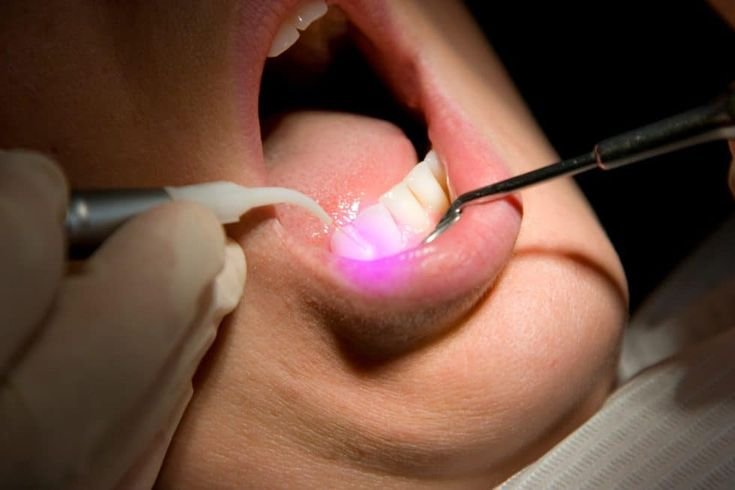

If you are considering laser dentistry, choosing the right dentist is just as important as choosing the treatment itself. Dental lasers can be used for selected procedures involving the gums, teeth, root canals and other oral tissues, but laser treatment is not automatically the best option for every dental problem.
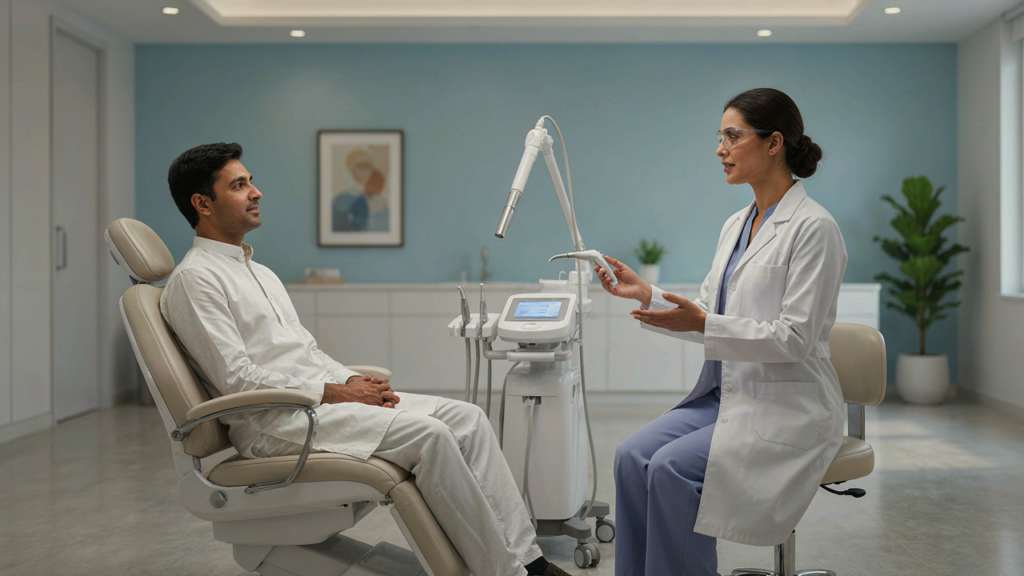
Before you agree to treatment, it is worth asking your dentist a few important questions about why laser dentistry has been recommended, which laser will be used, what results you can realistically expect, possible risks, alternatives, recovery and total cost.
For patients looking for laser dentistry in Noida, particularly around Sector 79, Sector 78, Sector 77, Sector 76 and nearby areas, this guide explains exactly what you should discuss during your consultation.
Quick answer: Before choosing laser dentistry, ask your dentist whether laser treatment is appropriate for your specific condition, which type of laser will be used, how experienced they are with the procedure, whether conventional treatment is an alternative, what the expected benefits and risks are, whether anesthesia is required, how much the treatment will cost and what aftercare you will need.
1. Is Laser Dentistry Suitable for My Dental Problem?
This should be your first question.
Laser dentistry is not one single treatment. Different dental lasers and settings can be used for different clinical applications.
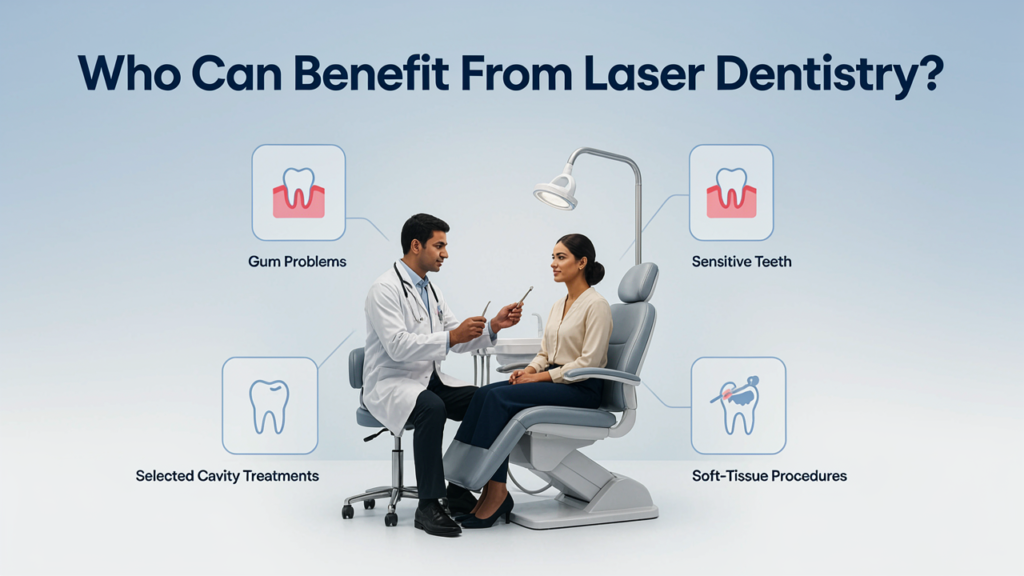
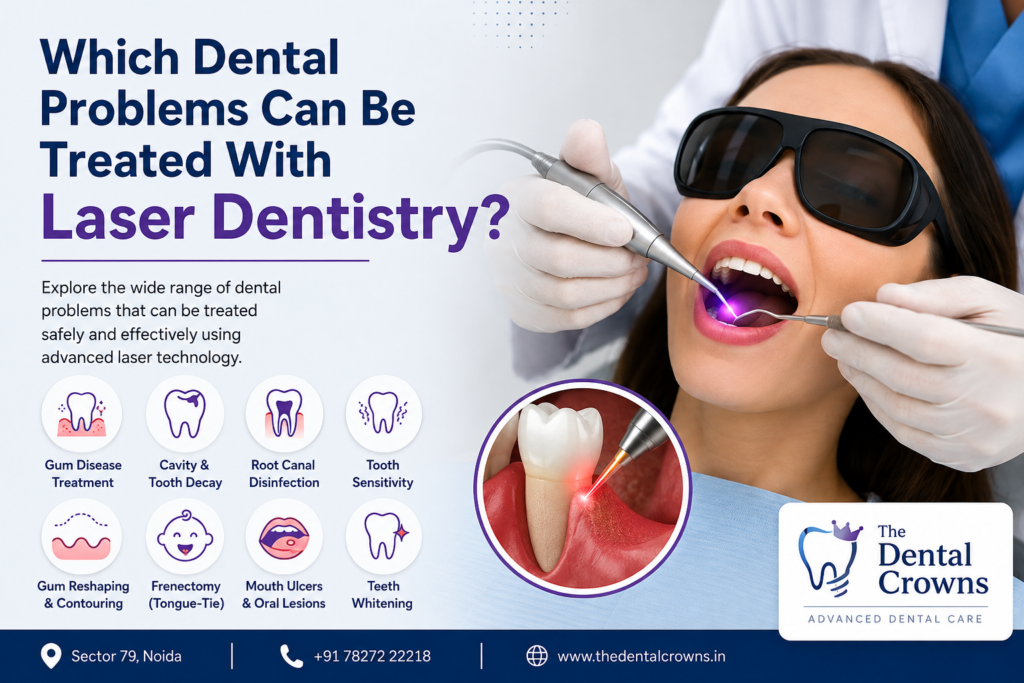
Depending on your diagnosis, a dentist may consider laser technology for procedures involving:
- Gum treatment
- Gum reshaping
- Selected cavity treatments
- Root canal disinfection
- Tooth sensitivity
- Soft-tissue procedures
- Frenectomy
- Selected periodontal procedures
- Certain cosmetic or restorative procedures
The Indian Dental Association describes several dental applications for lasers, including selected soft-tissue procedures and management of dentin sensitivity.
Therefore, don’t choose laser dentistry simply because it sounds more advanced.
Ask:
“What specific problem are you treating, and why is a laser appropriate for my case?”
Your dentist should be able to explain the diagnosis and the reasoning behind the proposed treatment.
2. Which Type of Dental Laser Will You Use?
Not every dental laser works in exactly the same way.
Different laser systems can have different applications, so asking about the type of laser can help you understand what your dentist is actually proposing.
Ask your dentist:
- Which laser will be used?
- Is it a soft-tissue or hard-tissue laser?
- Why is this particular laser suitable for my treatment?
- Will the laser be the primary treatment or an additional tool?
- How does it work on the tissue being treated?
This is especially important because “laser dentistry” is a broad term, not the name of one particular procedure.
3. What Experience Do You Have With Laser Dentistry?
The technology itself is only one part of successful treatment.
Your dentist’s clinical knowledge, diagnosis, treatment planning and experience with the specific procedure are also important.
Ask:
“How frequently do you perform this particular laser procedure?”
You can also ask:
- How long have you been using dental lasers?
- Have you treated cases similar to mine?
- What type of laser procedures do you routinely perform?
- What results can I realistically expect?
The Indian Dental Association recommends considering factors such as the dentist’s qualifications, clinic cleanliness, sterilization practices and whether treatment fees are explained beforehand when selecting a dental practitioner.
4. What Are the Benefits of Laser Dentistry for My Case?
Don’t settle for a general answer such as “laser treatment is better.”
Ask your dentist specifically:
“What advantage will the laser provide in my particular treatment?”
Depending on the procedure, potential advantages may include:
- Greater precision
- Reduced bleeding in certain soft-tissue procedures
- Less trauma to surrounding tissue
- Potentially improved comfort
- Reduced need for sutures in selected procedures
- Reduced bacterial contamination in certain applications
- Potentially easier recovery in appropriate cases
The Indian Dental Association lists benefits associated with selected laser procedures, including reduced bleeding, reduced tissue damage and potentially less need for anesthesia or stitches in certain situations.
However, benefits vary according to the procedure and individual patient.
5. Will I Still Need a Dental Drill?
This is a very common misconception about laser dentistry.
Laser dentistry does not necessarily mean that conventional dental instruments will never be used.
In some treatments, a dental laser may complement traditional instruments rather than completely replace them.
Ask:
“Will you use only the laser, or will conventional dental instruments also be required?”
Knowing this beforehand can help you understand exactly what your treatment will involve.
6. Will I Need Local Anesthesia?
Another question worth asking is:
“Will I need an injection or local anesthesia?”
Some selected laser procedures may require little or no anesthesia, while deeper or more invasive treatments may still require local anesthesia.
Your dentist should explain:
- Whether anesthesia is necessary
- How much anesthesia may be required
- Whether you will feel pressure or discomfort
- What you may experience during the procedure
Laser dentistry can be comfortable for many patients, but it should not automatically be advertised as completely painless for every procedure or patient.
7. Will Laser Dentistry Be Painful?
Your personal pain experience depends on several factors, including:
- The type of procedure
- The location being treated
- The extent of the dental problem
- Your individual sensitivity
- Whether anesthesia is used
- Whether conventional instruments are also needed
For more information, you can read our detailed guide:
Is Laser Dentistry Painful? A Complete Guide for Noida Patients
A good consultation should explain what you are likely to feel before, during and after treatment, rather than promising that every laser procedure will be completely painless.
8. What Are the Risks or Possible Side Effects?
Every dental procedure has potential risks.
Ask:
- What are the possible side effects?
- Is there a risk of bleeding?
- Could I experience swelling or sensitivity?
- What complications should I watch for?
- What should I do if I experience unexpected pain?
You should also ask what safety measures are followed during laser treatment.
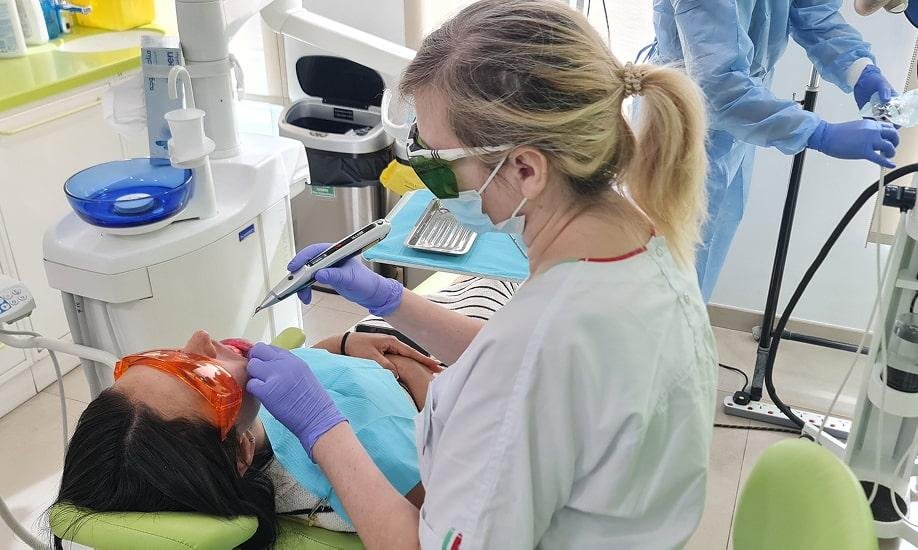
Laser safety is an important part of dental laser use. Professional dental guidance emphasizes appropriate safety practices and protective measures when lasers are used.
9. What Safety Precautions Do You Follow?
Don’t hesitate to ask about laser safety.
For example:
“What eye protection will I need during the procedure?”
Depending on the laser and procedure, appropriate protective eyewear and other safety protocols may be required.
You can also ask:
- Is protective eyewear provided?
- How is the laser equipment maintained?
- What safety protocols are followed?
- Is the treatment room appropriately prepared?
As a patient, you have every right to understand how your treatment will be performed safely.
10. Are There Alternatives to Laser Dentistry?
This is one of the most important questions you can ask.
Say:
“If I don’t choose laser treatment, what other treatment options do I have?”
You may have conventional treatment options depending on your diagnosis.
The American Dental Association emphasizes informed consent as a discussion involving the proposed treatment, potential benefits and risks, alternatives, and the benefits and risks of those alternatives.
Therefore, you should understand why laser treatment is being recommended rather than simply being told that it is available.
11. What Happens If I Don’t Get Laser Treatment?
Another useful question is:
“What happens if I delay treatment or choose another treatment option?”
This can help you understand the urgency of your dental problem.
Ask your dentist:
- Is treatment immediately necessary?
- Could the condition get worse?
- What happens if I wait?
- What are the risks of not treating it?
- Could conventional treatment provide a similar result?
This information can help you make a more informed decision instead of feeling pressured to choose a particular technology.
12. How Long Will the Laser Dental Procedure Take?
Treatment time depends on what is being performed.
Ask your dentist:
- How long will my appointment take?
- Will I need one appointment or multiple appointments?
- Will I need additional conventional treatment?
- Will follow-up appointments be necessary?
A simple soft-tissue procedure may take considerably less time than a complex treatment involving multiple teeth or deeper tissues.
13. What Will Recovery Be Like?
Before treatment, understand what happens afterward.
Ask:
- How long will recovery take?
- Will there be swelling?
- Will there be sensitivity?
- Can I return to work the same day?
- What foods should I avoid?
- When can I brush normally?
- When should I return for a follow-up?
Your recovery depends on the procedure, so your dentist should give you case-specific aftercare instructions.
14. What Should I Eat After Laser Dentistry?
Depending on the procedure, your dentist may recommend temporary dietary changes.
You may be advised to avoid foods that are:
- Very hot
- Very spicy
- Extremely hard
- Very acidic
- Difficult to chew
However, don’t follow generic aftercare instructions instead of your dentist’s advice. The appropriate diet depends on the specific treatment you receive.
15. How Much Does Laser Dentistry Cost?
Before starting treatment, ask for a clear estimate.
Ask:
“What is the total cost of my laser dental treatment?”
Also clarify:
- Consultation charges
- Diagnostic tests
- X-rays or scans
- Laser procedure charges
- Anesthesia charges
- Follow-up visits
- Medicines
- Additional conventional treatment
- Possible restoration costs
The Indian Dental Association specifically recommends that patients receive information about treatment fees before treatment.
Avoid choosing a dentist based solely on the lowest price. Instead, compare the diagnosis, treatment plan, dentist’s experience, technology, safety measures and total treatment cost.
16. Is Laser Treatment Covered by My Dental Insurance?
If you have dental insurance or a health insurance plan that includes dental benefits, ask whether your proposed treatment is covered.
Ask:
- Is the laser procedure covered?
- Is conventional treatment covered differently?
- Are diagnostic tests included?
- Are there exclusions?
- What will I have to pay personally?
Coverage varies between policies, so check directly with your insurer as well.
17. Will I Need a Dental Crown After Treatment?
This question is particularly important if laser dentistry is being used as part of root canal treatment or restorative dentistry.
A tooth that has undergone root canal treatment may require a permanent restoration depending on factors such as the amount of remaining tooth structure, tooth location and functional requirements.
If your dentist recommends a crown, you can also read:
Do You Need a Dental Crown After Root Canal Treatment?
You can also explore the clinic’s Dental Services page to review other available treatments.
Why Choosing the Right Laser Dentist Matters
When looking for laser dentistry in Noida, don’t choose a clinic solely because it has a laser machine.
A better approach is to evaluate:
Proper Diagnosis
The dentist should first identify the underlying dental problem.
Relevant Experience
Ask about experience with the exact procedure you need.
Appropriate Technology
The laser should be selected according to the treatment requirement.
Clear Communication
Your dentist should explain the benefits, risks and alternatives.
Transparent Pricing
You should understand the expected treatment cost before proceeding.
Safety Protocols
Appropriate laser safety measures should be followed throughout treatment.
Individualized Treatment Planning
There is no single laser treatment that is ideal for every dental condition.
Laser Dentistry in Noida: What Should You Look For?
If you are searching for laser dentistry near Noida Sector 79, laser dentistry near Sector 78, laser dentistry near Sector 77, laser dentistry near Sector 76 or nearby areas, consider choosing a clinic where you can discuss your treatment options with a dental professional before making a decision.
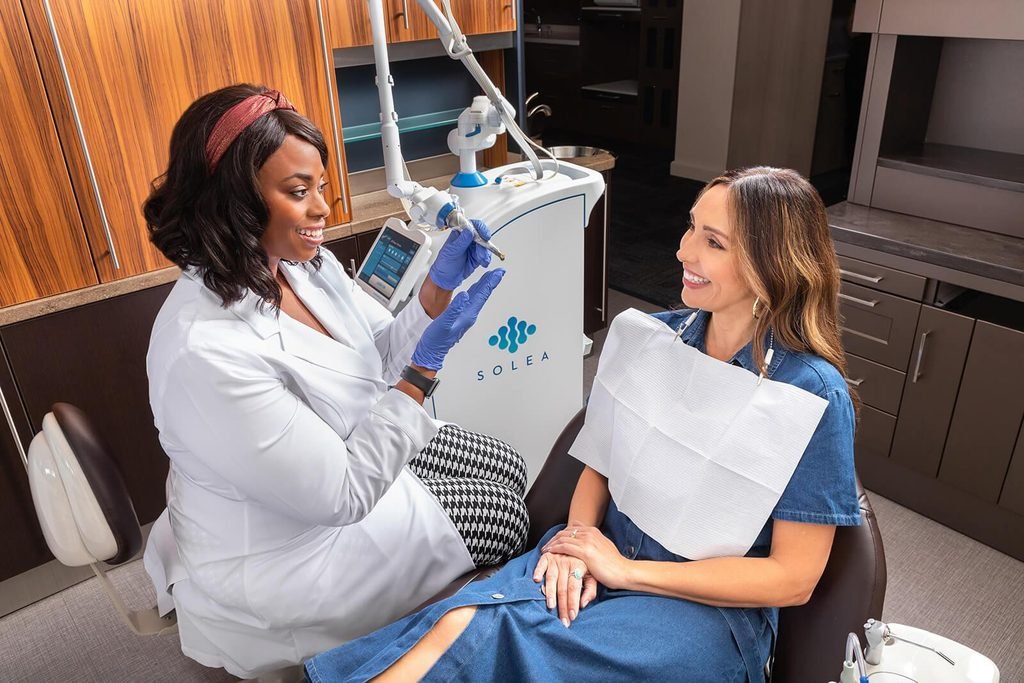
The Dental Crowns is located at Civitech Stadia, Sector 79, Noida and provides laser dentistry along with root canal treatment, dental implants, dental crowns, bridges and other dental services.
You can explore the clinic’s Laser Dentistry service through the services section of the website.
For patients considering laser-assisted root canal treatment, The Dental Crowns also explains how laser technology may be used as part of root canal treatment rather than necessarily replacing conventional endodontic procedures.
Frequently Asked Questions About Choosing Laser Dentistry
Is laser dentistry better than traditional dentistry?
Not necessarily for every patient or every procedure. Laser technology can be useful for selected dental treatments, but the best approach depends on your diagnosis and treatment requirements.
Is laser dentistry completely painless?
No. Some laser procedures can be very comfortable, but pain and discomfort vary according to the procedure, treatment area and individual patient.
Does laser dentistry require anesthesia?
Sometimes. Some procedures may require little or no anesthesia, while deeper procedures may still require local anesthesia.
Can laser dentistry replace a dental drill?
Not always. Dental lasers can complement conventional dental instruments, and your dentist may use both depending on the treatment.
Is laser dentistry safe?
Dental lasers can be used safely when appropriate equipment, settings and safety protocols are used by trained dental professionals. Patients should ask about protective measures and the specific procedure being performed.
Can lasers be used for gum disease?
Laser technology can be considered for selected periodontal and soft-tissue procedures. The appropriate treatment depends on the type and severity of gum disease.
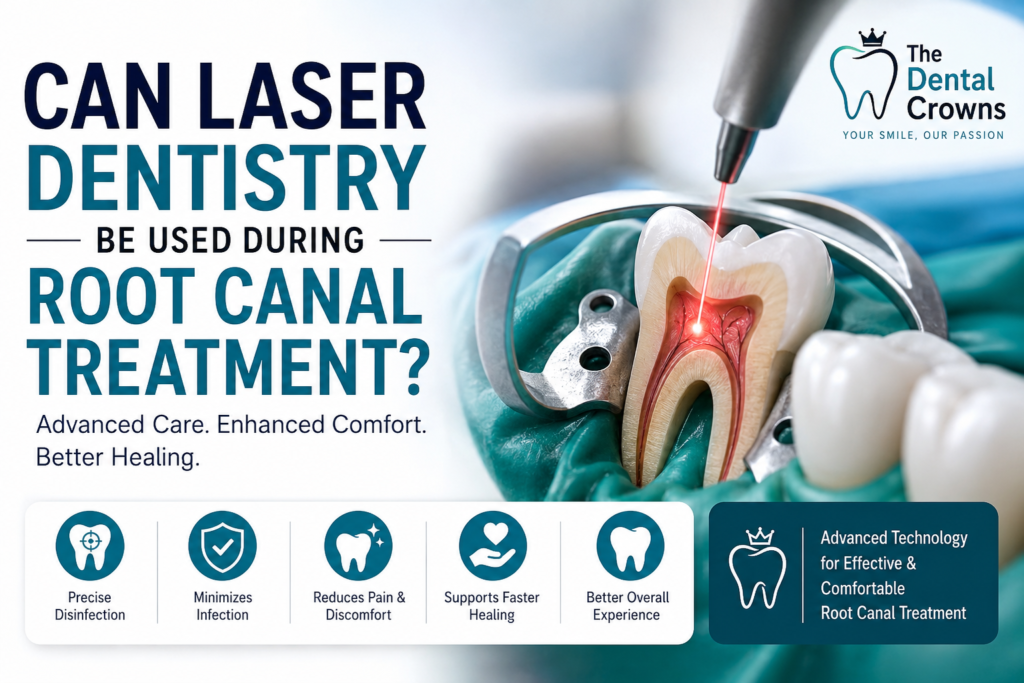
Can laser dentistry be used during root canal treatment?
Yes. Lasers may be used as an adjunct in selected root canal procedures, including applications related to disinfection. However, laser treatment does not necessarily replace conventional root canal treatment.
Is laser dentistry suitable for children?
It depends on the child’s dental condition, age, cooperation and the procedure being considered. A dentist should evaluate the child before recommending any treatment.
How much does laser dentistry cost in Noida?
There is no single price for laser dentistry because the cost depends on the procedure, complexity, number of teeth or tissues being treated, diagnostic requirements and whether additional treatment is necessary.
How do I choose a laser dentist in Noida?
Look for a qualified dental professional who provides a proper diagnosis, explains the treatment, discusses alternatives and risks, follows safety protocols and provides transparent information about treatment costs.
Final Takeaway
Choosing laser dentistry should not be based simply on the fact that laser technology sounds newer or more advanced.
Before treatment, ask your dentist:
Why do I need laser treatment? Which laser will you use? What benefit will it provide in my case? Are there alternatives? What are the risks? Will I need anesthesia? How experienced are you with this procedure? What will recovery involve? And what is the complete cost?
The right treatment is the one that is appropriate for your specific dental condition, not simply the treatment with the most advanced-sounding technology.
If you are considering laser dentistry in Noida, you can consult The Dental Crowns in Sector 79 to discuss your dental condition and available treatment options.