
A dental implant crown can often be unscrewed for repair, but only if it is designed as a screw-retained crown. If the crown is cement-retained, removing it can be more complicated and may require special techniques. The correct approach depends on the crown’s attachment system, the type of damage, and the condition of the dental implant underneath.
If your implant crown feels loose, has chipped, or causes discomfort while chewing, you may be wondering whether it can be repaired without replacing the entire implant. The good news is that many problems affecting an implant crown can be treated without removing the implant fixture itself.
In this guide, we explain when a dental implant crown can be unscrewed, how dentists repair it, what affects the cost, and when you should seek professional dental care.
What Is a Dental Implant Crown?
A dental implant crown is the visible, tooth-shaped restoration attached to a dental implant to replace a missing tooth. It is designed to restore the appearance of your smile and help you chew comfortably.
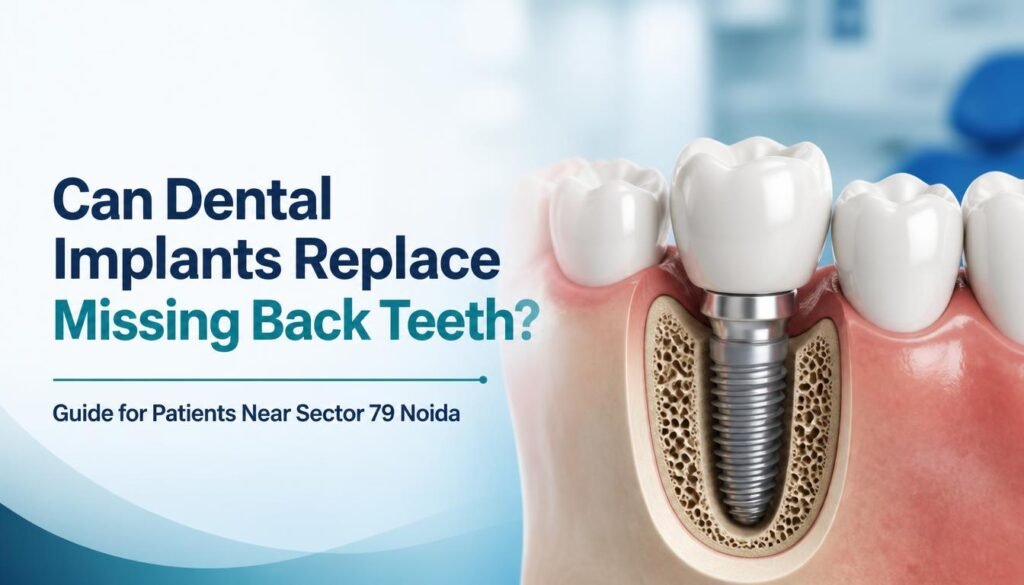
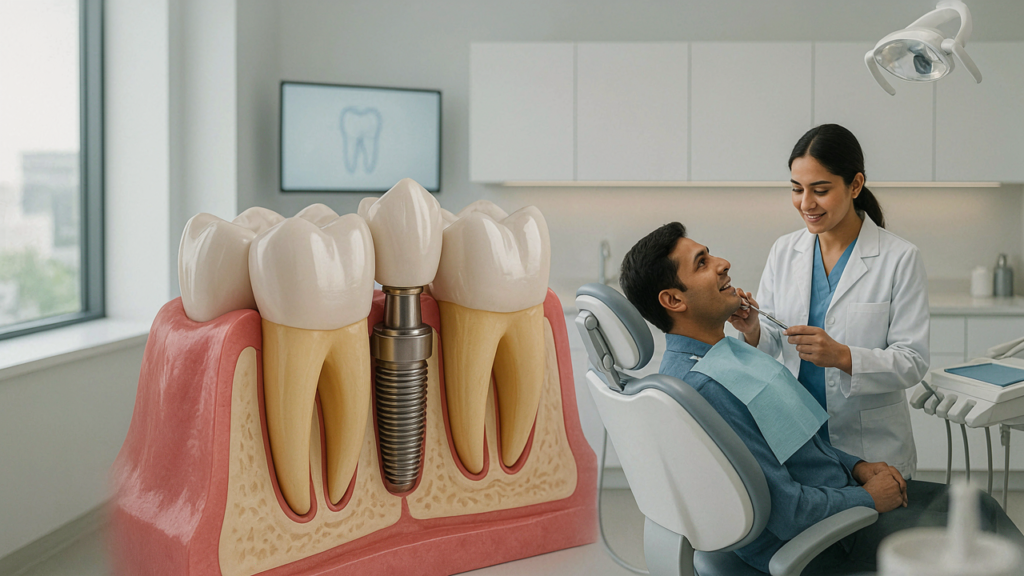
A typical dental implant restoration has three main components:
- Dental implant: A small fixture placed in the jawbone that acts as an artificial tooth root.
- Abutment: A connector that supports the crown.
- Implant crown: The visible replacement tooth, usually made from ceramic, porcelain, zirconia, or another suitable restorative material.
Understanding these components is important because a loose crown does not necessarily mean the dental implant has failed.
For more information about tooth replacement options, explore dental implant treatment at The Dental Crowns.
Can a Dental Implant Crown Be Unscrewed for Repair?
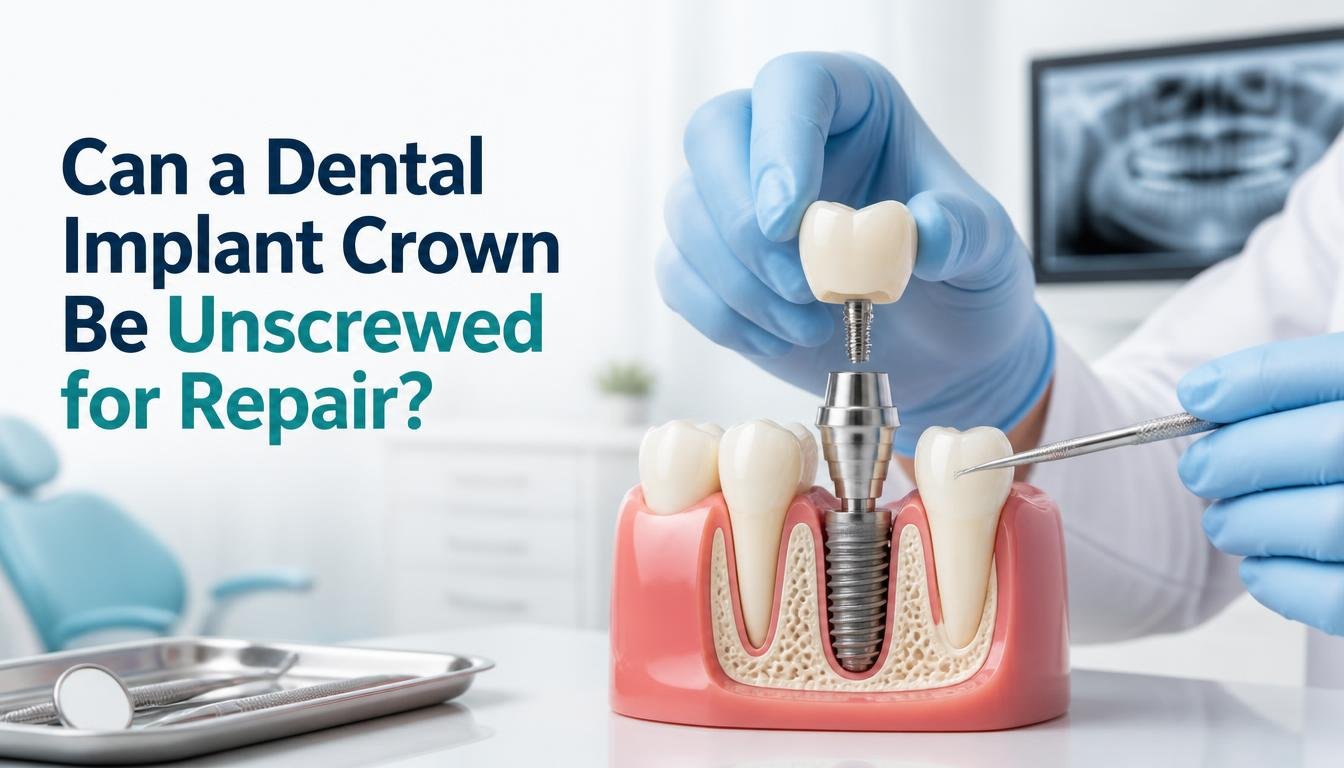
Yes, a dental implant crown can often be unscrewed for repair if it uses a screw-retained design.
A screw-retained crown is secured to the implant or its abutment using a small prosthetic screw. The dentist can access this screw through an opening in the crown, which is usually covered with a restorative filling material.
During a repair appointment, the dentist may remove the filling material, access the screw, and carefully detach the crown using appropriate dental instruments.
Once the crown is removed, the dentist can inspect the restoration, check the screw and abutment, clean the area if necessary, and determine whether the crown can be repaired or needs replacement.
However, not every dental implant crown can simply be unscrewed. Cement-retained crowns are attached using dental cement, making removal more challenging. Attempting to remove one may damage the crown or underlying components.
The American Dental Implant Association’s professional resources and published prosthodontic literature discuss the advantages of screw-retained restorations, including easier retrieval for maintenance and repair.
Screw-Retained vs Cement-Retained Implant Crowns
There are two common methods for attaching an implant crown. The attachment method influences how easily a dentist can remove it for maintenance.
1. Screw-Retained Dental Implant Crown
A screw-retained crown is held in place by a small screw. The access opening is usually sealed with tooth-coloured filling material.
Advantages include:
- Easier removal when repairs are needed.
- Access to the underlying implant components.
- Convenient maintenance if the retaining screw becomes loose.
- The potential to reuse the existing crown when its condition permits.
Possible limitations:
- The screw may loosen over time.
- The access opening can affect appearance in certain positions.
- The crown material around the opening may chip in some cases.
2. Cement-Retained Dental Implant Crown
A cement-retained crown is secured to an abutment using dental cement rather than a directly accessible crown-retaining screw.
Advantages include:
- A continuous-looking chewing surface without a visible screw-access filling.
- Greater flexibility in certain aesthetic situations.
- Suitability for selected implant positions where a screw-access opening would be unfavourable.
Possible limitations:
- Removal can be more difficult.
- The crown may need to be sectioned or replaced if it cannot be safely retrieved.
- Residual cement around the implant may contribute to gum inflammation.
Neither design is automatically best for every patient. The choice depends on implant position, aesthetics, clinical requirements, and the dentist’s treatment plan.
When Does a Dental Implant Crown Need to Be Unscrewed?
A dentist may recommend removing a screw-retained implant crown for several reasons.
1. Loose Dental Implant Crown
If your crown moves when you bite or chew, the retaining screw may have loosened. However, movement can also result from a damaged connection, a problem with the abutment, or an issue involving the implant itself.
A dentist must identify the source of movement before deciding on treatment.
2. Chipped or Cracked Implant Crown
Porcelain, ceramic, and zirconia restorations can chip or fracture under excessive biting forces, accidental trauma, or other conditions.
If the crown is screw-retained, the dentist may remove it to assess the damage and determine whether polishing, a suitable repair, or replacement is appropriate.
3. Damaged or Loose Abutment Screw
The screw connecting the implant components may loosen or become damaged. In some cases, the crown needs to be removed to access and assess the underlying screw.
The dentist may clean the connection, replace a damaged component, or tighten the screw according to the manufacturer’s specifications.
4. Food Trapping or Gum Irritation
Food trapping around an implant crown may indicate an issue with its shape, contact with neighbouring teeth, fit, or surrounding gum health.
Removing the crown may help the dentist inspect the area and correct an underlying problem when clinically appropriate.
5. Routine Maintenance or Implant Assessment
In selected situations, removing a retrievable crown allows the dentist to inspect implant components, evaluate the restoration, or carry out specific maintenance procedures.
Removal is not necessary at every routine check-up. It should be performed when there is a clinical reason to do so.
How Do Dentists Unscrew a Dental Implant Crown for Repair?
The procedure depends on the type of implant system and the problem being treated. A typical process may involve the following steps.
Step 1: Examination and Diagnosis
The dentist examines the crown, surrounding gums, bite, and implant area. Dental X-rays may be recommended if there is concern about the implant, supporting bone, or underlying components.
Step 2: Locating the Screw Access
For a screw-retained crown, the dentist identifies the access opening, which is commonly covered by a small filling material.
Step 3: Removing the Access Filling
The dentist carefully removes the filling material to expose the screw head without unnecessarily damaging the crown.
Step 4: Unscrewing the Crown
Using the correct driver for the implant system, the dentist loosens the retaining screw and removes the crown when the restoration permits safe retrieval.
Step 5: Inspecting the Components
The dentist checks the crown, screw, abutment, implant connection, and surrounding tissues to identify the cause of the problem.
Step 6: Repairing or Replacing the Damaged Part
Depending on the findings, treatment may involve tightening or replacing a screw, repairing a suitable crown, adjusting the bite, or fabricating a replacement crown.
Step 7: Reattaching the Crown
If the crown remains suitable for use, the dentist repositions it and tightens the screw according to the implant manufacturer’s recommended torque. The access opening is then resealed, and the bite is checked.
Not every crown can be reused. The dentist will determine whether repair or replacement offers the most appropriate result.
Can a Dental Implant Crown Be Repaired Without Removing the Implant?
Yes. In many cases, the crown can be repaired or replaced while the implant fixture remains in the jawbone.
The implant fixture and the crown are different components. A chipped crown, loose prosthetic screw, or damaged restoration does not automatically mean the implant itself has failed.
For example:
- A loose retaining screw may require professional tightening or replacement.
- A minor crown chip may be suitable for a repair or polishing procedure.
- A severely fractured crown may require a new crown.
- A damaged abutment may require replacement of that component.
- An implant that is genuinely mobile or affected by significant infection requires further assessment and a different treatment plan.
If the implant itself moves, seek prompt professional evaluation rather than assuming that only the crown is loose.
How Much Does Dental Implant Crown Repair Cost in India?
The cost of dental implant crown repair in India varies depending on the problem, implant system, crown material, and treatment required.
The following are illustrative planning categories, not verified quotations or fixed market prices.
| Treatment required | What may affect the cost |
|---|---|
| Screw tightening | Examination, access to the screw, and clinical adjustments |
| Prosthetic screw replacement | Implant brand, screw availability, and component compatibility |
| Minor crown repair | Extent of damage and repair materials |
| Abutment replacement | Component type and implant system |
| New implant crown | Crown material, laboratory work, and fitting |
| Complex implant treatment | Additional investigations and treatment of implant or gum problems |
A simple screw adjustment may cost substantially less than fabricating a new crown. However, the final fee can only be established after an examination.
Before agreeing to treatment, ask your dentist whether the existing crown can be reused, whether replacement components are available, and whether any additional treatment is necessary.
Patients considering restorative treatment can also explore dental crown treatment at The Dental Crowns.
What Should You Do If Your Implant Crown Becomes Loose?
If your dental implant crown feels loose, avoid chewing on that side until it has been assessed.
Follow these precautions:
- Do not attempt to unscrew or tighten the crown yourself.
- Avoid hard, sticky, or crunchy foods around the affected area.
- Keep the area clean by brushing gently.
- Do not use household glue or over-the-counter adhesives to secure the crown.
- Arrange a dental appointment promptly.
Seek urgent dental care if you experience significant pain, swelling, pus, fever, or rapidly worsening symptoms. If the crown comes off completely, keep it in a clean container and take it to your dentist. Do not attempt to force it back into place.
How Can You Reduce the Risk of Implant Crown Damage?
Although implant crowns can be durable, good oral care and regular dental reviews help identify problems early.
Consider these habits:
- Brush twice daily with fluoride toothpaste.
- Clean between your teeth and around the implant using a dentist-recommended method.
- Attend regular dental check-ups.
- Avoid biting ice, hard objects, or other items that can damage restorations.
- Discuss a protective night guard with your dentist if you grind or clench your teeth.
- Report any looseness, unusual bite changes, or persistent gum irritation early.
Regular maintenance cannot prevent every complication, but it can help your dentist identify and manage problems before they become more serious.
Frequently Asked Questions
1. Can a dental implant crown be unscrewed and put back?
Yes. A screw-retained crown can often be removed and reattached if the crown, screw, and implant components remain suitable. The dentist must check the components and secure the crown correctly.
2. Does unscrewing an implant crown hurt?
The procedure is generally well tolerated. Discomfort depends on the condition of the surrounding tissues and the reason for removal. Local anaesthesia may be used when clinically necessary.
3. Can a loose implant crown be tightened?
Often, yes. If the problem is a loosened retaining screw, a dentist may be able to tighten or replace it. However, the cause of loosening should be investigated before the crown is secured again.
4. Can a cement-retained implant crown be removed?
Sometimes. Removal depends on the cement, crown design, abutment, and available access. The dentist may need specialised techniques, and damage to the crown is possible.
5. Will my entire dental implant need to be replaced if the crown breaks?
Not necessarily. A broken crown can often be repaired or replaced while the implant remains in place. The implant itself must be examined to confirm its condition.
6. How long does implant crown repair take?
A straightforward adjustment may be completed during one appointment. Repairs requiring laboratory work, new components, or a replacement crown may require additional visits.
7. Can I eat with a loose implant crown?
It is best to avoid chewing on the affected side until a dentist has assessed it. Continued pressure may worsen the damage or loosen the restoration further.
8. Can a dentist replace only the implant crown?
Yes. If the implant fixture and supporting components are healthy, a new crown may be fitted without replacing the implant in the jawbone.
9. Why does my implant crown keep loosening?
Possible causes include bite-related forces, screw loosening, component fit, or other mechanical problems. Repeated loosening warrants a detailed examination rather than repeated tightening alone.
10. When should I see a dentist for implant crown repair?
Arrange an appointment if the crown moves, chips, cracks, causes discomfort, or changes your bite. Seek urgent care if significant pain, swelling, pus, or fever develops.
Final Thoughts
A dental implant crown can often be unscrewed for repair when it uses a screw-retained design. This can allow a dentist to access the underlying components, address a loose screw, assess crown damage, and potentially reuse the existing restoration.
Cement-retained crowns can also sometimes be removed, but the procedure is more complicated and may carry a greater risk of damage.
The most important step is to identify the actual cause of the problem. A loose or damaged crown does not automatically mean that the dental implant has failed.
If you are experiencing a loose, chipped, or uncomfortable implant crown, consult a qualified dentist for an examination and personalised treatment recommendations.
Need help with a damaged or loose dental crown? Contact The Dental Crowns to discuss your restorative dental concerns and arrange a consultation.
Medical disclaimer: This article provides general educational information and does not replace a professional dental examination, diagnosis, or treatment plan.