Have you noticed that your child’s tongue has limited movement, your baby struggles with breastfeeding, or a tight band of tissue connects your upper lip closely to your gums? These signs may sometimes be associated with a condition known as a tongue-tie or lip-tie.
A laser frenectomy is a dental procedure that uses focused laser energy to release or remove a restrictive band of tissue inside the mouth. Depending on the patient’s condition, it may help improve tongue or lip movement, support oral hygiene, or address certain gum and dental concerns.
But does everyone with a tongue-tie or lip-tie need treatment? Is laser frenectomy better than conventional surgery? And what should you expect during recovery?
In this guide, we explain what laser frenectomy is, when it may be needed, its potential benefits, the procedure, recovery, risks, and when to consult a dentist.
What Is Laser Frenectomy?
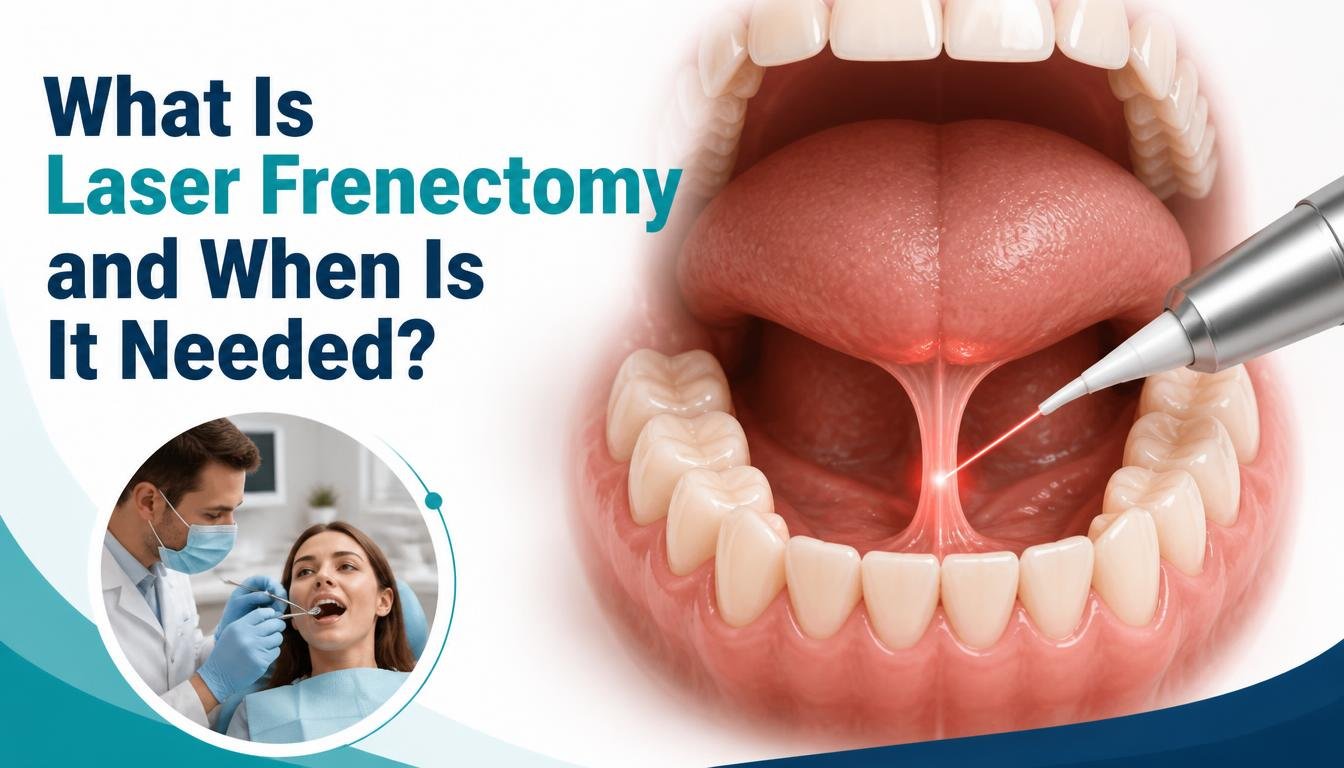
A laser frenectomy is a minor oral surgical procedure in which a dentist or appropriately trained oral healthcare professional uses a dental laser to release or remove a frenum, also called a frenulum.
A frenum is a small fold or band of soft tissue that connects parts of the mouth. These tissues are normal anatomical structures. However, in some people, their position, thickness, or tightness can restrict movement or contribute to dental and gum problems.
Depending on the diagnosis, a frenectomy may involve one of two areas:
- Lingual frenectomy: Treats a restrictive band of tissue beneath the tongue, commonly associated with tongue-tie.
- Labial frenectomy: Treats the band of tissue connecting the inside of the upper or lower lip to the gums, sometimes associated with lip restriction or a gap between the upper front teeth.
During laser frenectomy, the laser is used to cut or release the targeted soft tissue. The exact technique depends on the type of laser, the patient’s anatomy, and the treatment objective.
Unlike conventional scalpel surgery, laser-assisted treatment may provide better control of bleeding during the procedure. However, results and recovery vary, and laser treatment is not automatically the best option for every patient.
When Is Laser Frenectomy Needed?
Laser frenectomy may be recommended when a restrictive frenum causes a functional problem or contributes to a specific dental or gum concern. Simply having a visible frenum does not mean that surgery is necessary.
1. When Tongue-Tie Restricts Tongue Movement
Tongue-tie, also known as ankyloglossia, occurs when the tissue beneath the tongue restricts its movement.
Depending on its severity, tongue-tie may affect the ability to lift, extend, or move the tongue from side to side.
A dental or medical professional may recommend further evaluation if tongue movement is associated with:
- Difficulty latching during breastfeeding.
- Restricted tongue elevation or protrusion.
- Functional difficulties with eating or oral activities.
- Persistent speech-related concerns that require a professional assessment.
A frenectomy may be considered if the restriction is clinically significant and treatment is likely to improve function. Not every child with tongue-tie needs surgery, and speech difficulties should not automatically be attributed to the frenum.
2. When a Lip-Tie Causes Functional or Dental Concerns
A lip-tie refers to a restrictive upper or lower labial frenum that may interfere with lip movement or contribute to certain oral health concerns.
In selected cases, a dentist may consider labial frenectomy when the attachment causes clinically significant tension on the gum tissue or interferes with a dental treatment plan.
For infants, breastfeeding difficulties can have multiple causes. A visible upper lip frenum alone does not establish that a surgical release is necessary. A qualified clinician should assess feeding function and other possible explanations before recommending treatment.
3. When a Frenum Contributes to a Gap Between Front Teeth
A prominent upper labial frenum may be associated with a space between the upper front teeth, known as a midline diastema.
However, a gap can develop for several reasons, including normal dental development, tooth-size differences, and other orthodontic factors.
4. When Gum Tissue Is Being Pulled or Irritated
A frenum that attaches close to the gum margin may create tension in the surrounding tissues in some patients.
If the attachment contributes to gum recession, discomfort during lip movement, or difficulty maintaining oral hygiene, a dental professional may assess whether treatment is warranted.
The cause of the gum problem should be established before surgery. A frenectomy may be one part of treatment, but it does not replace appropriate periodontal care or daily oral hygiene.
5. When the Frenum Interferes With Dental Treatment
In certain cases, a restrictive frenum can interfere with dentures, other dental appliances, or planned orthodontic or restorative treatment.
A dentist may recommend frenectomy if releasing the tissue is expected to improve comfort, function, or treatment outcomes.
The decision should be based on an individual examination and a clear clinical reason for the procedure.
What Are the Benefits of Laser Frenectomy?
Laser-assisted frenectomy can offer several potential advantages over conventional scalpel surgery.
1. Better Bleeding Control
Dental lasers can help seal small blood vessels during soft-tissue procedures. This may reduce bleeding during treatment compared with a conventional scalpel technique.
2. Potentially Less Postoperative Discomfort
Some comparative studies suggest that laser-assisted frenectomy may reduce postoperative pain. However, discomfort depends on the laser type, procedure, tissue involved, and individual healing response.
3. Precision in Soft-Tissue Treatment
A dental laser allows the clinician to target specific soft tissues carefully. The extent of treatment must still be determined by the patient’s anatomy and clinical needs.
4. Possible Reduction in the Need for Sutures
Some laser frenectomy procedures may not require stitches. This depends on the procedure, wound characteristics, and the clinician’s preferred technique; sutures may still be necessary in certain cases.
5. A Convenient Treatment Experience
Many frenectomy procedures can be completed in a single appointment. The total appointment time depends on the complexity of the case, the patient’s age and cooperation, and whether additional assessment or treatment is needed.
Important: Laser frenectomy is not completely painless or risk-free. Local anaesthesia may be required, and appropriate postoperative care remains essential.
Laser Frenectomy vs. Conventional Frenectomy
Both laser-assisted and conventional scalpel frenectomy can be effective when correctly indicated. The choice depends on the patient’s condition and the treating clinician’s experience.
| Feature | Laser frenectomy | Conventional frenectomy |
|---|---|---|
| Instrument | Dental laser | Surgical scalpel |
| Bleeding | May be reduced | Bleeding is controlled using conventional surgical methods |
| Postoperative pain | May be lower in some cases | Varies with the procedure and patient |
| Sutures | May not be needed | May be needed, depending on the procedure |
| Healing | Depends on technique and individual factors | Depends on technique and individual factors |
| Suitability | Depends on diagnosis and laser availability | Depends on diagnosis and clinical circumstances |
Research comparing diode laser and scalpel techniques suggests that laser treatment may reduce postoperative pain and bleeding in certain situations. However, the quality and scope of evidence vary, so neither method should be considered universally superior.
The most suitable approach is the one that safely addresses the patient’s specific problem.
How Is a Laser Frenectomy Performed?
The procedure usually involves the following steps.
Step 1: Dental Examination
The dentist examines the frenum, checks tongue or lip movement, and assesses the concern that brought the patient to the clinic.
For infants and children, the evaluation may include a review of feeding or functional concerns and referral to other professionals when appropriate.
Step 2: Treatment Planning
The clinician explains whether frenectomy is indicated and discusses the expected benefits, possible risks, alternative treatments, and aftercare.
Step 3: Anaesthesia, If Required
Local anaesthesia may be used to keep the procedure comfortable. The approach depends on the patient’s age, clinical needs, and the planned treatment.
Step 4: Laser Release of the Frenum
The dentist uses an appropriate dental laser to release or remove the restrictive tissue. Protective eyewear and suitable laser safety precautions are important during treatment.
Step 5: Post-Treatment Instructions
The clinician provides guidance on oral hygiene, food choices, pain management, and follow-up. Specific exercises may be advised in selected cases, but they should be recommended by the treating professional rather than performed routinely without guidance.
How Long Does Laser Frenectomy Take?
A straightforward laser frenectomy may take only a short time to perform, but the total appointment can be longer because of examination, preparation, anaesthesia, and post-treatment instructions.
The duration depends on factors such as:
- Whether the procedure involves the tongue or lip.
- The extent and position of the tissue restriction.
- The patient’s age and ability to cooperate.
- Whether additional treatment or specialist input is required.
Your dentist can give you a more realistic estimate after assessing the specific condition.
Laser Frenectomy Recovery: What Should You Expect?
Recovery varies between patients. Some people experience mild tenderness or swelling, while others may need a little longer to feel comfortable.
During the First 24–48 Hours
Follow the treating dentist’s instructions. Depending on the procedure, these may include:
- Choosing soft, comfortable foods.
- Avoiding foods that irritate the surgical area.
- Maintaining gentle oral hygiene without disturbing the healing tissue.
- Using prescribed or recommended pain relief as directed.
- Avoiding unnecessary manipulation of the wound.
During the Following Days
The treated area gradually heals. A temporary pale or whitish appearance can occur during normal wound healing, but you should contact your clinician if you are unsure whether the area is healing normally.
Attend the recommended follow-up appointment, particularly if the procedure was performed on a child or if tongue movement and feeding function need reassessment.
When Should You Contact a Dentist?
Seek professional advice if you experience persistent or increasing pain, worsening swelling, fever, pus, difficulty swallowing, or bleeding that does not stop with the instructions provided by your clinician.
Severe bleeding or breathing difficulty requires urgent medical attention.
Are There Any Risks or Side Effects of Laser Frenectomy?
Laser frenectomy is generally considered a minor oral surgical procedure, but complications are possible.
Potential risks include:
- Temporary pain, swelling, or tenderness.
- Bleeding or infection.
- Delayed healing or wound irritation.
- Scarring or reattachment of tissue in some cases.
- Injury to nearby structures if the procedure is not performed appropriately.
- Limited improvement in the original symptoms if the frenum was not the main cause of the problem.
For children with tongue-tie, treatment should be recommended after considering the functional problem, the available evidence, and non-surgical support where appropriate.
Discuss your medical history, medications, concerns, and expectations with the treating professional before the procedure.
Is Laser Frenectomy Safe for Babies and Children?
Laser frenectomy may be appropriate for selected infants and children, but age alone does not determine whether treatment is necessary.
For babies experiencing breastfeeding difficulties, assessment should consider feeding function, latch, milk transfer, and other potential causes. A visible frenulum is not, by itself, proof that a procedure is needed.
For older children, tongue movement, oral function, and any speech concerns should be assessed individually. A speech-language professional may be involved when speech is a concern.
Parents should discuss the likely benefits, alternatives, aftercare, and potential risks with a qualified clinician before making a decision.
What Is the Cost of Laser Frenectomy in Noida?
The cost of laser frenectomy in Noida varies according to the clinical complexity, the type of laser used, the professional performing the procedure, anaesthesia requirements, and follow-up care.
There is no single price that applies to every patient. A straightforward release and a more complex procedure may require different treatment plans.
Before proceeding, ask the dental clinic about the consultation fee, procedure charges, anaesthesia, follow-up visits, and any additional treatment that may be required.
If you are considering laser treatment, a dental examination is the best way to understand your options and receive an appropriate estimate.
Where Can You Get Laser Frenectomy Evaluation in Noida?
If you are concerned about tongue-tie, lip-tie, restricted tongue movement, or a frenum that may be affecting your gums, a dental consultation can help determine whether treatment is necessary.
At The Dental Crowns in Sector 79, Noida, patients can enquire about available laser dentistry services and whether a laser-assisted procedure is appropriate for their needs.
The clinic is located at Shop No. 16, 1st Floor, Civitech Stadia, Sector 79, Noida, Uttar Pradesh 201301.
To learn more about available treatments, visit the clinic’s Laser Dentistry in Noida page or contact the clinic to arrange an assessment.
A proper examination is important because not every tongue-tie or lip-tie requires surgery, and treatment should be recommended only when there is a clear clinical indication.
Frequently Asked Questions About Laser Frenectomy
1. What is laser frenectomy used for?
Laser frenectomy is used to release or remove a restrictive band of tissue under the tongue or inside the lip when it causes a clinically significant functional or dental problem.
2. Is laser frenectomy painful?
Local anaesthesia may be used to improve comfort during treatment. Some tenderness or discomfort can occur afterward, although certain studies suggest that laser-assisted techniques may reduce postoperative pain.
3. Is laser frenectomy better than conventional surgery?
Laser frenectomy may offer advantages such as reduced bleeding and less postoperative pain in selected cases. However, conventional surgery is also an effective option, and the best approach depends on the clinical situation.
4. How long does it take to recover from laser frenectomy?
Recovery varies depending on the procedure, the patient’s age, and individual healing. Follow your dentist’s instructions and attend any recommended follow-up appointments.
5. Does every tongue-tie need laser frenectomy?
No. Treatment is generally considered when tongue restriction causes a meaningful functional problem. A professional assessment helps determine whether surgery is appropriate.
6. Can laser frenectomy help close a gap between the front teeth?
A labial frenectomy may be recommended in selected cases as part of an orthodontic treatment plan. It does not automatically close a gap, and the timing of treatment is important.
7. Is laser frenectomy safe for babies?
It may be appropriate for selected babies after a thorough assessment. Feeding difficulties should be evaluated carefully, and a visible frenulum alone is not sufficient reason for surgery.
8. What should I eat after laser frenectomy?
Follow the advice provided by your clinician. Soft foods that do not irritate the surgical area are often more comfortable during early recovery.
9. Can a frenum grow back after laser frenectomy?
Tissue reattachment or recurrence can occur in some cases. Follow-up care helps the clinician monitor healing and assess whether additional management is necessary.
10. How can I find out whether I need laser frenectomy in Noida?
Arrange a dental examination with a qualified professional who can assess the frenum, evaluate your symptoms, and explain the available treatment options.
Conclusion
Laser frenectomy is a minimally invasive option for releasing a restrictive oral frenum when treatment is clinically indicated. It may help address selected problems involving tongue movement, lip restriction, gum tension, or planned dental treatment.
Potential benefits include improved bleeding control and reduced postoperative discomfort in some patients. However, laser treatment is not necessary for everyone, and the decision should be based on an individual clinical assessment.
If you are experiencing symptoms related to tongue-tie or lip-tie, consult a qualified dental professional to understand the cause and determine whether laser frenectomy or another treatment is appropriate.
Looking for laser dentistry in Noida? Visit The Dental Crowns to learn about available services and enquire about a consultation.
Disclaimer: This article is intended for general educational purposes and is not a substitute for professional dental or medical advice, diagnosis, or treatment.