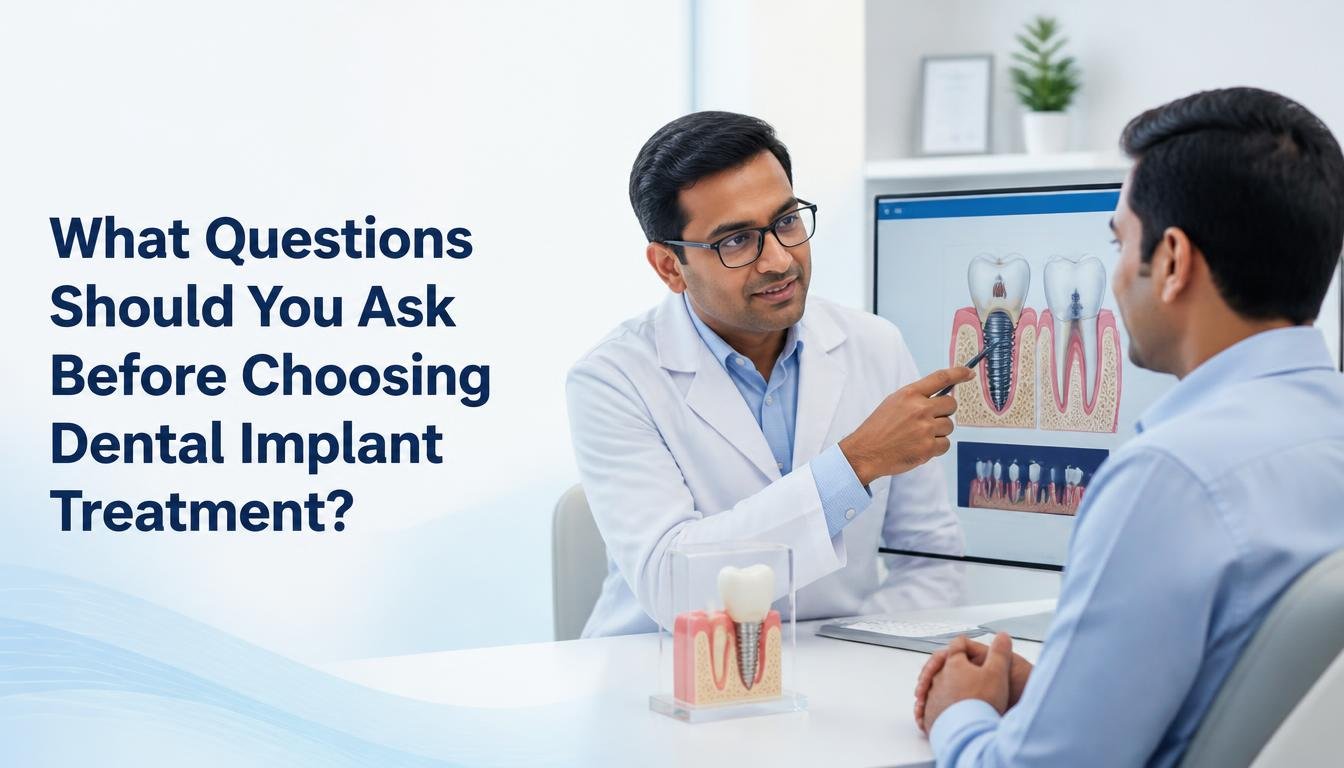
Choosing dental implant treatment is an important decision, particularly when you are replacing a missing tooth and want to understand the treatment, expected timeline, costs and long-term maintenance. Before starting treatment, asking the right questions can help you understand whether dental implants are appropriate for your individual dental condition and what the complete treatment process involves.
If you are searching for dental implants in Noida, it is useful to have a detailed discussion with your dentist before committing to treatment. A dental implant is placed into the jawbone and can support a dental crown, bridge or denture. The treatment generally involves assessment and planning followed by implant placement and restorative treatment.
At The Dental Crowns, patients can discuss their individual requirements and understand the available dental implant treatment options in Noida.
Quick Answer: What Should You Ask Before Choosing Dental Implants?
Before choosing dental implant treatment, ask your dentist:
- Am I a suitable candidate for dental implants?
- How will you assess my jawbone and gum health?
- Do I need a dental X-ray or 3D scan?
- Do I need a bone graft before implant placement?
- How many implants do I need?
- Which implant system or implant material is being recommended?
- Why is this particular implant suitable for my case?
- What type of crown will be placed over the implant?
- How long will the complete treatment take?
- What happens during each stage of treatment?
- What is included in the total dental implant cost?
- Are consultation, scans, implant, abutment and crown included?
- What are the possible risks and complications?
- What should I expect during recovery?
- How should I maintain my dental implant after treatment?
- How often will I need follow-up appointments?
- What alternatives to dental implants are suitable for me?
Getting clear answers to these questions can make the consultation more useful and help you understand your treatment plan before the procedure begins.
1. Am I a Suitable Candidate for Dental Implants?
This should be one of your first questions.
Dental implants are not automatically suitable for every person with a missing tooth. Your dentist needs to assess factors such as the condition of your gums, available jawbone, remaining teeth, oral hygiene and overall dental condition.
Active dental infection, untreated gum problems or insufficient bone may need to be addressed before implant placement. The NHS also notes that dental implant suitability depends on individual factors, including oral health and the condition of the supporting tissues.
Ask:
“Based on my examination, am I a suitable candidate for dental implants?”
Your dentist should explain the reasons behind the recommendation rather than simply telling you that implants are an option.
2. Do I Need X-Rays or 3D Imaging?
Implant placement requires careful planning.
Your dentist may recommend dental X-rays or other imaging to evaluate the available bone and the position of important anatomical structures. For example, the NHS describes X-rays and impressions as part of the planning process before implant treatment.
Ask:
- What imaging do I need?
- Is a 3D scan necessary for my case?
- What will the scan help you determine?
- Will the imaging affect the position or type of implant selected?
Understanding the purpose of diagnostic imaging can help you understand how your treatment is being planned.
3. Is My Jawbone Strong Enough for an Implant?
A dental implant is placed into the jawbone, so adequate supporting bone is an important part of treatment planning.
If there is insufficient bone, your dentist may discuss a bone graft or another procedure before implant placement. However, not every implant patient needs bone grafting.
Ask:
“Do I have enough bone to support the implant, or will I need additional treatment first?”
If bone grafting is recommended, ask why it is required, what the procedure involves and whether it changes the expected treatment timeline.
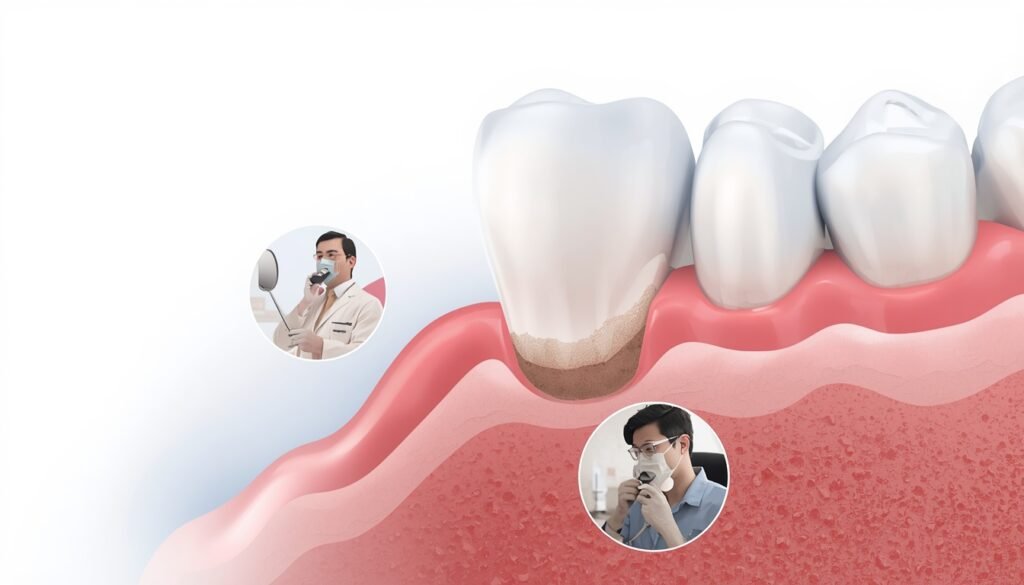
4. Do I Need Treatment for My Gums or Existing Teeth First?
A dental implant consultation should not focus only on the missing tooth.
Your dentist may also evaluate the condition of your gums and remaining teeth. Existing dental problems may need to be treated before implant placement.
Ask:
- Do I have gum disease?
- Do I have any active infection?
- Do my neighbouring teeth need treatment?
- Should any tooth decay or other dental problem be treated before implant surgery?
Maintaining good oral health is important for the long-term care of implant-supported teeth.
5. Which Implant System Will You Use?
There are different implant systems and components available.
Rather than choosing an implant simply because a clinic advertises a particular brand, ask your dentist:
“Which implant system are you recommending for me, and why?”
You can also ask about:
- Implant manufacturer
- Implant material
- Implant design
- Components used with the implant
- Warranty or manufacturer documentation, where applicable
- Availability of replacement components in the future
The goal is to understand what is being used in your treatment and why it has been selected.
6. How Many Implants Will I Need?
The number of implants depends on what you are trying to replace.
A single missing tooth may require a single implant supporting a crown. Multiple missing teeth may be restored using different combinations of implants, bridges or dentures.
Ask:
“How many implants will I need, and what restoration will they support?”
Your dentist can explain whether your treatment involves a single implant, multiple implants or an implant-supported restoration.
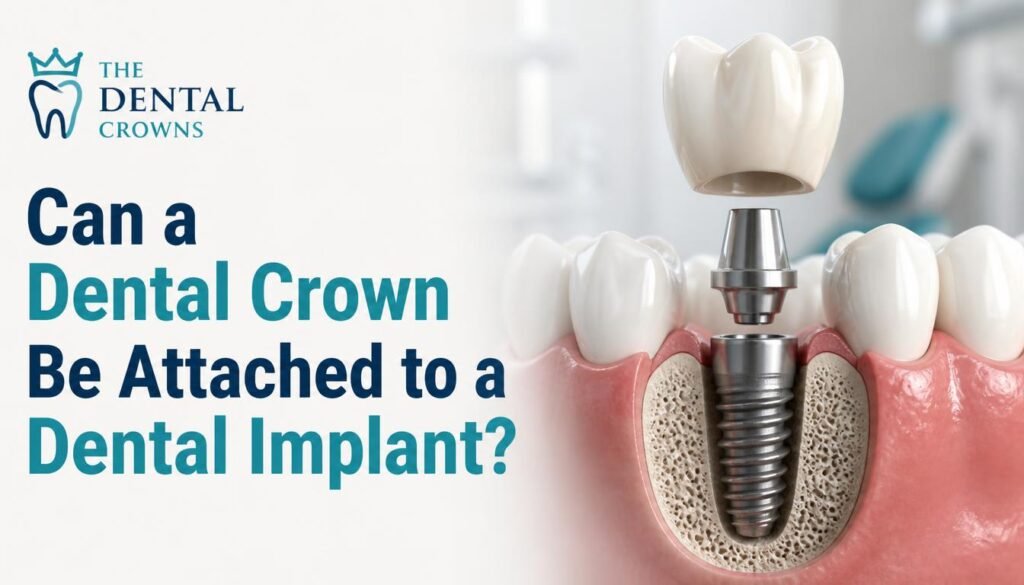
7. What Type of Crown Will Be Placed on the Implant?
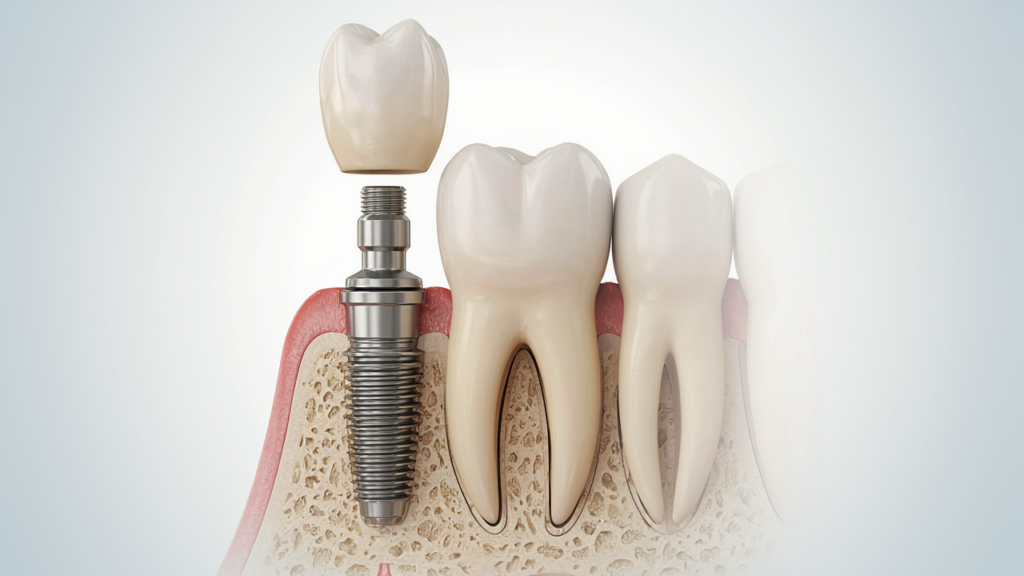
An implant itself is not the visible replacement tooth.
A dental implant acts as an artificial tooth root, while a restoration such as a crown is placed above it. The American Dental Association’s dental terminology also recognizes crowns as restorations that can be placed on dental implants.
Ask:
- What crown material is recommended?
- Why is this material suitable for my tooth?
- How will the crown colour be matched?
- How will the shape and bite be designed?
- Will the crown be screw-retained or cemented?
If you are also researching crowns, you can explore dental crown treatment in Noida to understand the factors involved in choosing a crown.
8. How Long Will the Dental Implant Treatment Take?
Do not assume that every dental implant treatment follows the same timeline.
The treatment can involve several stages, including assessment, possible bone grafting, implant placement, healing and placement of the final crown or other restoration. The NHS notes that treatment duration can vary substantially depending on the patient’s requirements and whether additional procedures are needed.
Ask:
“How long should I expect the complete treatment to take in my case?”
Also ask whether the timeline includes:
- Initial consultation
- Imaging
- Tooth extraction, if required
- Bone grafting, if required
- Implant placement
- Healing period
- Abutment placement
- Crown fabrication
- Final crown placement
- Follow-up appointments
9. Will I Have a Temporary Tooth During Treatment?
Depending on your case, you may need a temporary crown, bridge or denture while the implant area heals and the final restoration is prepared.
The American Dental Association’s patient information explains that temporary replacement teeth may sometimes be used while the permanent restoration is being made.
Ask your dentist:
“Will I have a temporary tooth while my implant is healing?”
This is particularly important if the missing tooth is visible when you smile.
10. What Is Included in the Total Dental Implant Cost?
One of the most important questions to ask is not simply:
“How much does a dental implant cost?”
Instead ask:
“What is the complete cost of my planned treatment, and what does that amount include?”
Depending on your treatment plan, the total cost may involve:
- Consultation
- Dental X-rays or scans
- Tooth extraction
- Bone grafting
- Implant fixture
- Abutment
- Temporary restoration
- Final crown
- Laboratory charges
- Follow-up appointments
Different patients may require different procedures, which is why a personalized treatment estimate is more useful than relying only on an advertised starting price.
For more information about treatment planning, you can also read How to Choose the Right Dental Implant Treatment in Noida Sector 79.
11. What Are the Possible Risks or Complications?
Every surgical treatment has potential risks, and dental implants are no exception.
Ask your dentist to explain the potential complications relevant to your individual case.
You can ask:
- What complications should I know about?
- What factors could affect healing?
- What symptoms should make me contact the clinic?
- What happens if the implant does not integrate properly?
- How are complications managed?
A proper consultation should include a discussion of both the expected benefits and potential risks rather than focusing only on the advantages.
12. What Should I Expect During Recovery?
Before treatment, ask for clear post-operative instructions.
Your dentist may advise you about:
- Food and drinks
- Brushing and cleaning
- Physical activity
- Smoking or tobacco
- Medication
- Swelling
- Pain management
- Follow-up appointments
The American Dental Association notes that healing around an implant, known as osseointegration, takes time and that the timing of restoration can vary between patients.
Understanding the recovery period beforehand can help you plan your work, travel and daily activities.
13. How Should I Maintain My Dental Implant?
A dental implant does not mean you can stop caring for your oral health.
Ask:
“What daily cleaning routine will you recommend after my implant treatment?”
Your dentist may discuss brushing, interdental cleaning and professional examinations based on your individual needs.
Regular follow-up is also important. The American Academy of Implant Dentistry emphasizes ongoing maintenance and professional monitoring of implant-supported teeth and surrounding tissues.
14. How Often Will I Need Follow-Up Appointments?
Before treatment begins, ask how your follow-up schedule will work.
You can ask:
- When is my first follow-up?
- When will the implant be checked?
- When will my final crown be placed?
- How often should I return after treatment?
- Will I need periodic X-rays?
Having a clear maintenance plan can help you understand what happens after the initial treatment is complete.
15. What Alternatives Do I Have to Dental Implants?
Dental implants are not the only possible solution for replacing missing teeth.
Depending on your dental condition, alternatives may include:
- Dental bridge
- Removable denture
- Implant-supported bridge
- Implant-supported denture
- Other restorative options
Ask:
“What are my alternatives, and why are you recommending an implant for my situation?”
For example, a dental implant replaces the root portion of a missing tooth, whereas a conventional bridge generally uses neighbouring teeth as support. The appropriate option depends on factors such as your oral health, bone condition, number of missing teeth, neighbouring teeth and treatment goals.
5 Questions That Can Help You Compare Dental Implant Clinics
If you are comparing dental implant clinics in Noida, ask each clinic the same core questions.
1. Who will plan and perform my implant treatment?
Ask about the dentist’s qualifications and experience with implant treatment.
2. How will my case be evaluated?
Ask whether clinical examination and appropriate imaging will be used for treatment planning.
3. What exactly is included in the quoted price?
Request a complete treatment estimate rather than comparing only an advertised implant price.
4. What happens if additional treatment is required?
Ask about possible bone grafting, extraction, gum treatment or other preliminary procedures.
5. What follow-up care is provided?
Understand what happens after implant placement and after the final crown is fitted.
The American Academy of Implant Dentistry also recommends that patients ask questions about an implant dentist’s experience, treatment planning and the different stages of implant care.
Dental Implant Consultation in Noida: A Simple Checklist
Before visiting your dentist, save this checklist:
| Question | Why Ask It? |
|---|---|
| Am I suitable for implants? | Establishes whether implants may be appropriate |
| Do I need X-rays or 3D imaging? | Helps understand treatment planning |
| Is my bone sufficient? | Bone condition can affect implant placement |
| Do I need a bone graft? | Identifies possible additional treatment |
| Are my gums healthy? | Gum health is important for implant care |
| Which implant system will be used? | Helps you understand the treatment |
| How many implants do I need? | Clarifies the proposed restoration |
| Which crown will I receive? | The crown is the visible replacement tooth |
| How long will treatment take? | Helps you plan around appointments |
| What is the complete cost? | Helps avoid unexpected expenses |
| What are the alternatives? | Lets you compare appropriate options |
| What are the risks? | Helps you understand potential complications |
| What happens after surgery? | Prepares you for recovery |
| How do I maintain the implant? | Supports long-term oral care |
| How often are follow-ups needed? | Establishes a maintenance schedule |
Dental Implants in Noida: Why the Consultation Matters
If you are searching for dental implants in Noida, choosing a clinic should involve more than comparing prices or promotional claims.
A dental implant treatment plan should be based on your individual dental condition. Your dentist should assess the missing tooth area, gums, jawbone and surrounding teeth before recommending the appropriate treatment.
The Dental Crowns is located at Civitech Stadia, Sector 79, Noida, and provides dental implant treatment as part of its dental services. You can review the clinic’s Dental Implants service before arranging a consultation.
Patients from nearby areas such as Sector 74, Sector 75, Sector 76, Sector 77, Sector 78 and Sector 79 Noida can discuss their individual implant requirements during a professional dental consultation.
For patients who are still comparing options, the clinic also has a Dental Implant Consultation Near Sector 79 Noida checklist that covers important questions about implant suitability, imaging, bone condition, implant systems, crowns, cost and treatment duration.
Frequently Asked Questions About Choosing Dental Implant Treatment
What is the most important question to ask before getting a dental implant?
Ask whether you are a suitable candidate and why the dentist recommends an implant for your particular dental condition. The decision should follow an appropriate examination and treatment plan.
Do dental implants require a bone graft?
Not everyone needs a bone graft. If there is insufficient bone to support the implant, additional bone-grafting treatment may be recommended.
How long does dental implant treatment take?
The timeline varies depending on the patient’s condition, healing requirements and whether additional procedures such as bone grafting are needed. Some cases can take several months, while more complex treatment can take longer.
What crown is placed on a dental implant?
A dental crown can be used as the visible replacement for a single missing tooth supported by an implant. The dentist will select and design the restoration according to the patient’s clinical and aesthetic requirements.
Should I ask about alternatives to dental implants?
Yes. Ask what other tooth-replacement options may be appropriate and why an implant is being recommended for your situation.
Is dental implant treatment painful?
Implant placement is normally performed using anaesthesia, but discomfort and recovery vary between patients and procedures. Your dentist should explain the expected experience and appropriate aftercare for your case.
How do I care for dental implants after treatment?
Follow the cleaning and maintenance instructions provided by your dental team and attend recommended follow-up appointments. Implant-supported teeth require ongoing oral hygiene and professional monitoring.
Final Checklist Before Choosing Dental Implant Treatment
Before saying yes to dental implant treatment, make sure you understand:
- Your diagnosis
- Whether you are suitable for implants
- Your jawbone condition
- Your gum health
- Whether you need additional treatment
- The recommended implant system
- The number of implants required
- The type of crown or restoration
- The expected treatment timeline
- The recovery process
- The possible risks
- The complete treatment cost
- What is included in the quoted price
- Your alternative treatment options
- Your long-term maintenance plan
- Your follow-up schedule
The goal is not simply to find the cheapest dental implant treatment. The goal is to understand the proposed treatment and make a decision based on your individual dental needs, clinical assessment, expected treatment process and long-term maintenance.
If you are considering dental implant treatment in Noida, schedule a professional consultation so your dentist can assess your condition and explain the options appropriate for you.
Disclaimer: This article is for general educational information and does not replace a professional dental examination, diagnosis or personalized treatment plan. Dental implant suitability, treatment duration, risks and costs vary from patient to patient.