Missing teeth can affect much more than the appearance of your smile. They may make chewing difficult, change the way you speak, and create challenges when you want to enjoy everyday foods. If you live in Sector 77 Noida and are considering a long-term tooth replacement option, you may have come across implant-supported teeth.
Implant-supported teeth use dental implants as a stable foundation for a replacement tooth, bridge, or denture. Unlike a conventional removable denture, an implant is placed into the jawbone and can provide support for a fixed or removable dental restoration.
If you are considering dental implants in Sector 77 Noida, understanding how implant-supported teeth work, who may be suitable for treatment, what the process involves, and how to care for the result can help you have a more informed conversation with your dentist.
What Are Implant-Supported Teeth?
Implant-supported teeth are replacement teeth that are supported by one or more dental implants.
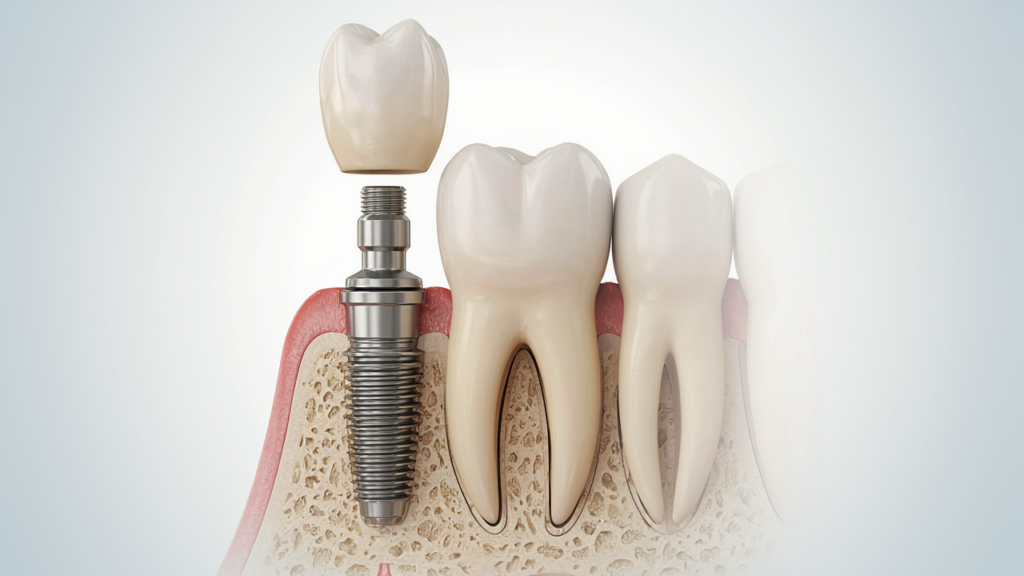
A dental implant generally consists of three main components:
- Implant: A post placed into the jawbone to act as an artificial tooth root.
- Abutment: A connector attached to the implant.
- Crown, bridge, or denture: The visible replacement teeth attached to the implant system.
Dental implants can be used to replace a single missing tooth, several missing teeth, or to provide support for certain types of dentures. The NHS describes implants as a fixed alternative to removable dentures, with a titanium implant placed into the jawbone to support a crown, bridge, or denture.
For patients interested in treatment, you can learn more about the clinic’s Dental Implant Treatment at The Dental Crowns to understand the services available in Noida.
How Do Implant-Supported Teeth Work?
The basic concept is straightforward: the implant provides a foundation inside the jaw, while the artificial tooth or teeth provide the visible chewing surface.
After an implant is placed, the surrounding bone needs time to heal and form a stable connection with the implant. This biological process is called osseointegration. The healing period varies from patient to patient and depends on factors such as bone quality, overall oral health, the treatment plan, and whether additional procedures are required.
Once the implant has adequately integrated with the bone, the dentist can plan the final restoration.
This may involve:
- Examination and treatment planning
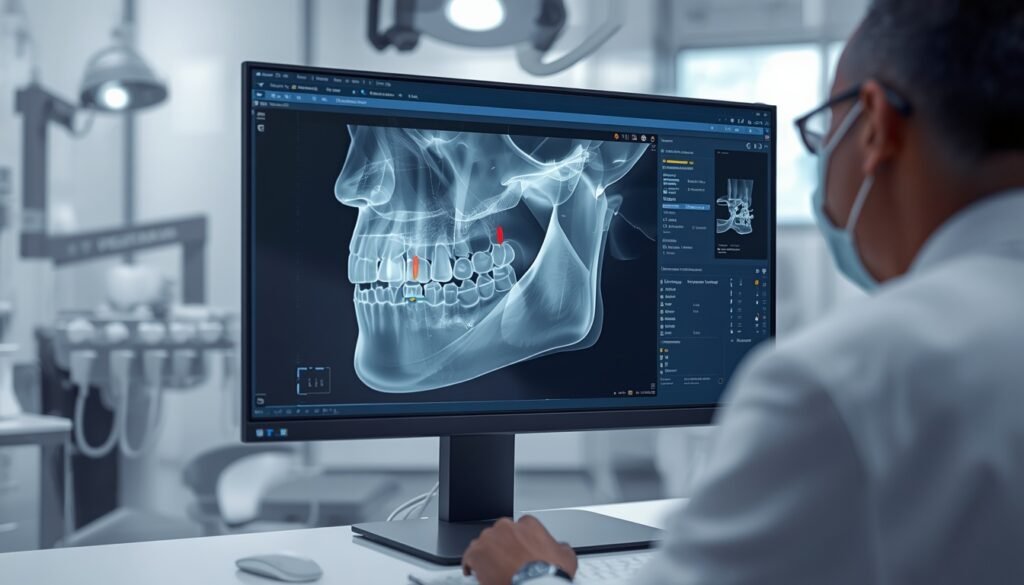
- Dental imaging
- Implant placement
- Healing and osseointegration
- Abutment placement when required
- Fabrication of the final crown, bridge, or denture
- Placement and adjustment of the restoration
- Ongoing maintenance and dental check-ups
Mayo Clinic also explains that dental implant treatment can involve multiple stages and that bone healing around the implant takes time.
Who May Be a Candidate for Implant-Supported Teeth?
Not everyone will have exactly the same implant treatment plan. A dentist needs to assess your teeth, gums, jawbone, and general oral condition before recommending implants.
You may be considered for implant treatment if you:
- Have one or more missing teeth
- Have sufficient jawbone to support an implant, or may be able to undergo bone augmentation if required
- Have reasonably healthy gums
- Are able to maintain good oral hygiene
- Have no untreated dental infection that needs to be addressed first
- Are willing to attend follow-up appointments
- Understand that implant treatment can take several months from planning to final restoration
Bone and gum health are particularly important because an implant needs a stable environment around it. Existing dental problems may therefore need to be treated before implant placement.
Your dentist may recommend imaging and a detailed examination before deciding whether an implant-supported restoration is appropriate.
What Are the Benefits of Implant-Supported Teeth?
1. A Stable Tooth Replacement
One of the major reasons people consider implants is stability. Because the implant is anchored in the jawbone, it can provide a firm foundation for the replacement tooth or restoration.
2. Natural-Looking Results
A custom-made implant crown can be designed to complement your surrounding teeth in shape, colour, and size. The goal is to create a restoration that fits naturally within your smile.
3. Support for Chewing
Replacing missing teeth can help restore chewing function. The exact outcome depends on the number of missing teeth, the type of restoration, implant position, and your individual oral condition.
4. No Need to Rely on an Adjacent Natural Tooth for Every Single-Tooth Replacement
A traditional dental bridge typically uses neighbouring teeth as supports. With an implant-supported single tooth, the implant itself provides the foundation for the replacement tooth.
5. Support for Some Denture Options
Implants can also be used to support certain removable or fixed full-arch solutions. This may be particularly relevant for patients who have several missing teeth.
The Cambridge University Hospitals patient guidance notes that implants can support crowns, bridges, or dentures and may replace one or more teeth.
Are Implant-Supported Teeth Better Than Dentures or Bridges?
There is no single tooth-replacement option that is ideal for every patient.
Depending on your situation, a dentist may discuss:
- Dental implants
- Implant-supported bridges
- Implant-supported dentures
- Conventional bridges
- Removable dentures
The appropriate option depends on factors such as how many teeth are missing, the condition of your remaining teeth, gum health, available bone, your expectations, and your overall treatment requirements.
For example, a patient missing one tooth may be considered for an individual implant and crown, while someone missing several teeth may have completely different restoration options.
The NHS describes dental implants as one option for replacing missing teeth, while bridges and dentures are also used for tooth replacement.
What Happens During Dental Implant Treatment?
If you are searching for dental implants near Sector 77 Noida, it is useful to understand that implant treatment is usually planned rather than completed in a single routine appointment.
Step 1: Consultation
Your dentist evaluates your missing tooth or teeth, remaining teeth, gums, bite, and oral health.
Step 2: Imaging and Treatment Planning
Dental imaging may be required to assess the jawbone and determine where the implant should be positioned.
Step 3: Implant Placement
The implant is surgically placed into the jawbone. Local anaesthesia is commonly used, although the anaesthesia or sedation approach depends on the procedure and patient.
Step 4: Healing
The implant needs time to integrate with the surrounding bone. This stage is important for creating a stable foundation.
Step 5: Restoration
Once healing and clinical assessment indicate that the implant is ready, the final restoration can be fitted.
Step 6: Follow-Up
Your dentist checks the restoration, bite, gum health, and implant area and provides instructions for ongoing maintenance.
Mayo Clinic describes dental implant treatment as a staged process that can include implant placement, healing, abutment placement, and attachment of the final artificial tooth.
Does Dental Implant Treatment Take a Long Time?
It can. The total duration depends on the patient’s individual treatment plan.
Some patients may require additional procedures before an implant can be placed. Others may have sufficient bone and healthy tissues to proceed more directly.
The implant also needs time to integrate with the jawbone before the final restoration is placed in appropriate cases.
Therefore, patients searching for implant-supported teeth in Sector 77 Noida should be cautious about assuming that every implant treatment can be completed within the same number of days.
Your dentist can provide a more meaningful timeline after evaluating your specific condition.
Is Bone Grafting Always Necessary?
No. Bone grafting is not automatically required for every dental implant patient.
Whether additional bone treatment is needed depends on the amount and quality of available bone at the proposed implant site.
If there is insufficient bone to provide the necessary support, your dentist may discuss a bone-grafting or other bone-augmentation procedure before or as part of implant treatment.
Mayo Clinic notes that bone grafting may be used when there is not enough bone to secure a dental implant.
What Should Sector 77 Noida Patients Know About Implant Maintenance?
Getting an implant is not the end of dental care. Proper maintenance is important for the implant, restoration, gums, and remaining natural teeth.
Patients should generally:
- Brush regularly using an appropriate technique
- Clean between teeth and around the implant as advised
- Follow the dentist’s recommendations for interdental cleaning
- Attend regular dental examinations
- Have professional cleaning when recommended
- Avoid using teeth to open packages or bite very hard objects
- Inform the dentist about persistent discomfort, swelling, bleeding, or changes around the implant
Mayo Clinic recommends maintaining oral hygiene around implants and attending regular dental check-ups.
Can Smoking Affect Dental Implant Treatment?
Smoking is an important factor to discuss with your dentist before implant treatment.
Smoking can affect healing and is associated with increased complications around dental implants. Your dentist may therefore recommend stopping smoking before and during relevant stages of treatment.
This is one reason why your dental and medical history should be discussed honestly during the initial implant consultation.
What Problems Can Occur With Dental Implants?
Dental implant treatment has a high level of clinical use, but, like any surgical procedure, it is not completely risk-free.
Possible complications can include:
- Infection
- Pain or swelling
- Implant failure to integrate with bone
- Damage to nearby structures
- Nerve-related symptoms in certain situations
- Sinus-related complications for some upper-jaw implants
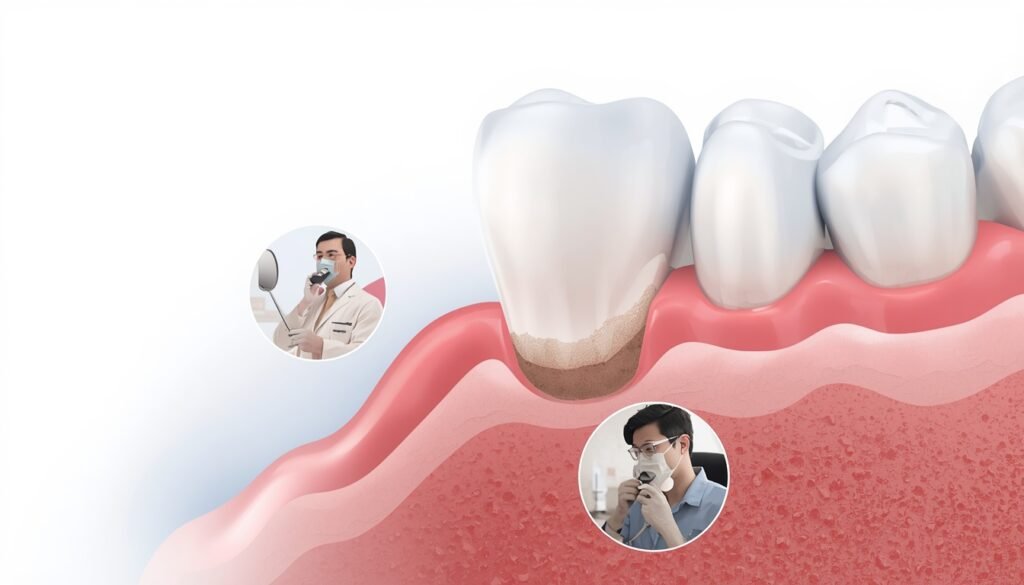
- Problems involving the gums or tissues around an implant
The individual risk depends on the patient’s anatomy, oral health, implant location, surgical procedure, habits, and other clinical factors. Mayo Clinic lists infection, damage to surrounding structures, nerve damage, and sinus problems among potential complications.
This is why an implant consultation should include an assessment of your individual suitability rather than relying only on general information found online.
How Much Do Implant-Supported Teeth Cost in Sector 77 Noida?
The cost of implant-supported teeth cannot be accurately determined from the location alone.
Treatment costs can vary depending on:
- Number of implants required
- Type of implant system
- Type of crown or restoration
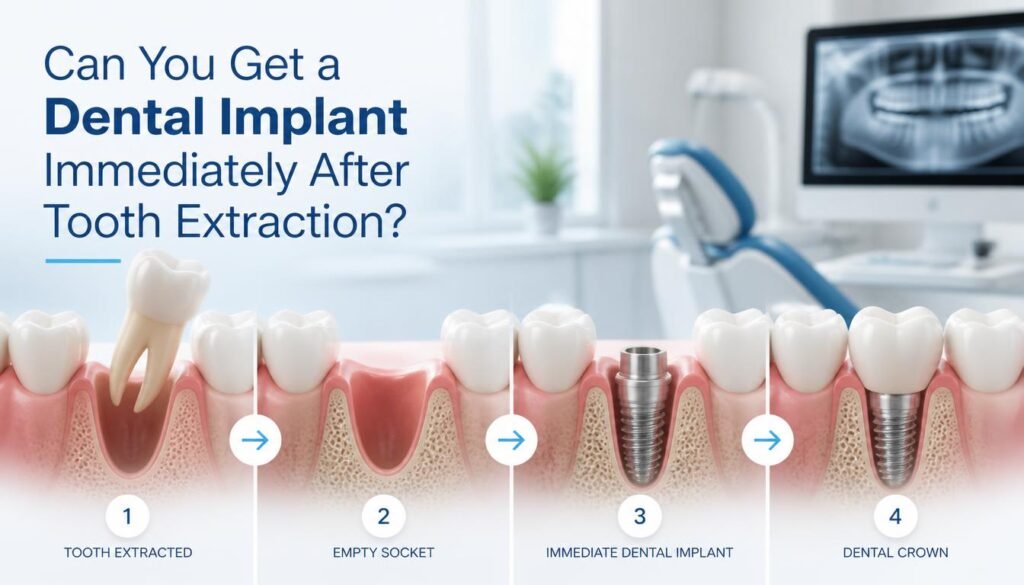
- Need for extraction
- Bone grafting requirements
- Imaging and diagnostic procedures
- Temporary restorations
- Complexity of the case
- Follow-up requirements
Instead of choosing an implant treatment solely on an advertised starting price, ask your dentist for a complete treatment plan that explains what is included.
Patients in Sector 77 Noida can contact The Dental Crowns to discuss their individual dental implant requirements and arrange a consultation.
Why Choose a Local Dental Clinic in Noida?
For implant treatment, convenience can matter because the process may involve multiple appointments.
The Dental Crowns is located at Civitech Stadia, Sector 79, Noida, making it accessible for patients from nearby Noida sectors, including Sector 77. The clinic’s services include dental implants as part of its surgical dentistry offerings.
You can also explore other dental services offered by the clinic, including Painless Root Canal Treatment, Dental Bridges, Dentures, and Porcelain Crowns, depending on your dental needs.
Questions to Ask Before Choosing Implant-Supported Teeth
If you are considering dental implants, take a few questions with you to your consultation:
- Am I a suitable candidate for dental implants?
- How many implants will I need?
- Do I have enough bone for implant placement?
- Will I need bone grafting?
- What type of restoration will be used?
- How long is my expected treatment timeline?
- What care will I need after treatment?
- What are the possible risks in my particular case?
- What will the complete treatment cost include?
- How often will I need follow-up appointments?
Getting clear answers can help you understand your treatment rather than making a decision based only on online advertisements.
Frequently Asked Questions About Implant-Supported Teeth in Sector 77 Noida
What are implant-supported teeth?
Implant-supported teeth are replacement teeth supported by dental implants placed in the jawbone. Depending on the situation, implants can support individual crowns, bridges, or dentures.
Can one dental implant replace one missing tooth?
In many cases, an individual dental implant can support a replacement crown for a missing tooth. Your dentist needs to evaluate your bone, gums, bite, and surrounding teeth before recommending this approach.
Are implant-supported teeth permanent?
The implant is intended to provide long-term support, but the crown or other restoration may eventually require maintenance, repair, or replacement. Long-term results depend on oral hygiene, professional care, general health, habits, and the condition of the implant and surrounding tissues.
Are dental implants painful?
Dental implant placement is performed with anaesthesia to control discomfort during the procedure. Some soreness, swelling, or discomfort can occur during recovery. Your dentist can explain what to expect for your specific procedure.
How long does dental implant treatment take?
The timeline varies. Some patients require additional procedures or longer healing periods, while others have simpler treatment plans. Your dentist can estimate the timeline after examination and imaging.
Are dental implants suitable for older adults?
Age alone does not determine implant suitability. A dental professional needs to assess bone health, gum health, oral hygiene, medical history, and other factors.
Can smokers get dental implants?
Smoking can increase risks associated with healing and implant treatment. If you smoke, discuss it openly with your dentist before treatment so the appropriate precautions and recommendations can be made.
What happens if there is not enough jawbone?
Your dentist may discuss bone augmentation or grafting where appropriate. Whether this is required depends on the implant site and the amount of available bone.
Can implants replace several missing teeth?
Yes, implants can be used in treatment plans involving several missing teeth. Depending on the case, implants may support individual crowns, a bridge, or a denture.
Where can Sector 77 Noida patients get dental implant consultation?
Patients from Sector 77 Noida can consult The Dental Crowns, located at Civitech Stadia, Sector 79, Noida. The clinic provides dental implant treatment and other general, cosmetic, and surgical dental services.
Final Thoughts
For patients in Sector 77 Noida, implant-supported teeth can be an option for replacing missing teeth with a stable, carefully planned restoration. However, implant treatment is not identical for everyone.
The most important first step is a professional evaluation of your missing tooth or teeth, gums, jawbone, bite, and overall oral condition. Your dentist can then explain whether an implant, bridge, denture, or another restoration is appropriate for your situation.
If you are considering dental implants in Sector 77 Noida, you can explore the Dental Implants service at The Dental Crowns and schedule a consultation to discuss your individual requirements.
The Dental Crowns
Shop No. 16, 1st Floor, Civitech Stadia, Sector 79, Noida, Uttar Pradesh 201301
Phone: +91 89202 71787