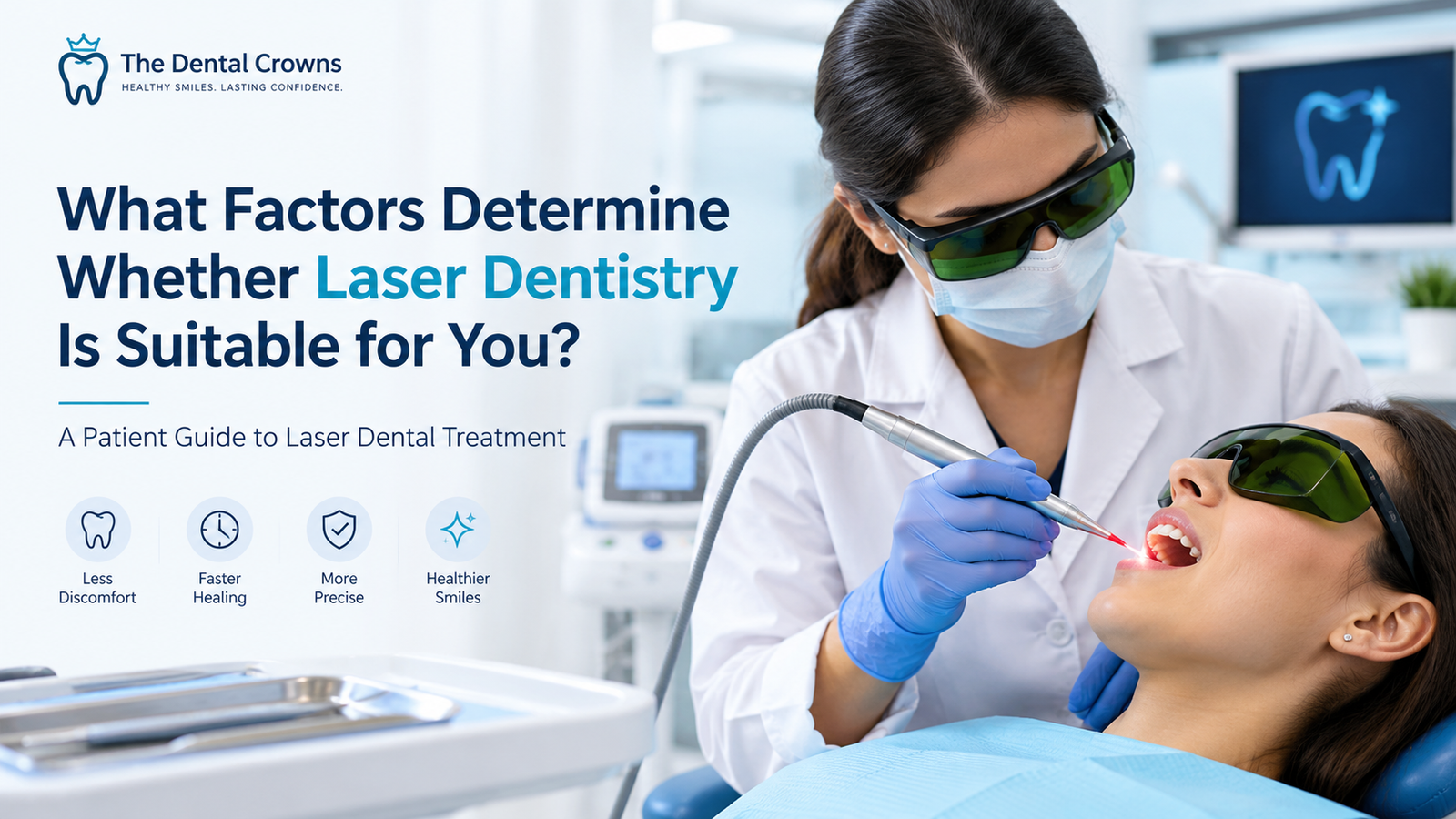
If you are searching for laser dentistry in Noida, you may have heard that dental lasers can make certain treatments more precise and comfortable. But an important question comes first: what factors determine whether laser dentistry is suitable for you?
The answer depends on more than simply wanting a modern or minimally invasive treatment. Your dental condition, treatment objective, type of laser, severity of the problem, overall oral health, dentist’s experience and available treatment alternatives all play a role.
Dental lasers can be used for selected procedures involving the gums, teeth and other oral tissues. However, they do not replace conventional dental instruments for every procedure. Cleveland Clinic explains that lasers can complement standard dental instruments and may be useful for selected gum, tooth, root canal and restorative applications.
What Is Laser Dentistry?
Laser dentistry uses concentrated light energy to interact with oral tissues. Depending on the laser system and its wavelength, lasers may be used on soft tissues such as gums or for selected procedures involving hard dental tissues.
According to Cleveland Clinic, dental lasers can be used in applications such as gum treatment, selected cavity procedures, root canal disinfection, preparation for restorations and some soft-tissue procedures.
The important point is that laser dentistry is not one single treatment. Different laser systems have different applications, and your dentist should select the appropriate approach based on your diagnosis.
For example, a laser may be considered for:
- Selected gum procedures
- Gum reshaping
- Certain soft-tissue treatments
- Selected cavity-related procedures
- Root canal disinfection as an adjunct
- Tooth sensitivity management
- Frenectomy and selected oral procedures
- Certain restorative or cosmetic applications
The Indian Dental Association also describes dental laser applications for dentin sensitivity and selected soft-tissue surgical procedures.
What Factors Determine Whether Laser Dentistry Is Suitable for You?
1. Your Exact Dental Problem
The first and most important factor is your diagnosis.
Laser dentistry may be useful for certain dental problems, but it is not automatically appropriate for every cavity, gum condition, toothache or dental emergency.
For example, a dentist may consider laser technology for selected gum treatments or as an adjunct during root canal treatment. In other situations, conventional instruments may be more appropriate.
This is why a proper dental examination should come before choosing laser treatment.
If you are experiencing symptoms such as persistent tooth pain, gum bleeding, swelling or sensitivity, your dentist needs to identify the underlying cause before deciding on a treatment.
2. The Type and Severity of the Condition
The severity and location of the dental problem can influence whether a laser is appropriate.
A relatively localized soft-tissue problem may be managed differently from a deeply infected or structurally damaged tooth.
For cavities, for example, treatment planning depends on factors such as the location and extent of the lesion. The American Dental Association emphasizes that caries management should involve detection, assessment and individualized risk evaluation rather than relying on a single treatment approach.
Therefore, the question should not simply be:
“Can a laser treat this?”
A better question is:
“Will using a laser provide a meaningful clinical benefit for my particular condition?”
3. The Type of Laser Available
Not all dental lasers work in the same way.
Some laser systems are primarily designed for soft tissue, while others can be used for selected hard-tissue applications. The wavelength, power, settings and delivery system can influence what the laser can safely accomplish.
During your consultation, ask:
- What type of laser will be used?
- Is it designed for soft tissue or hard tissue?
- Why is this laser appropriate for my treatment?
- Will the laser be the primary treatment or an additional tool?
- Will conventional dental instruments also be required?
This distinction is important because “laser dentistry” describes a technology, not one universal procedure.
4. Your Gum and Oral Health
Your existing gum health can also influence treatment planning.
Patients with gum disease, gum recession, inflammation or other periodontal concerns may require a comprehensive assessment before any laser-assisted treatment is considered.
Laser technology can be used for selected periodontal and soft-tissue procedures, but it should be incorporated into an overall treatment plan rather than viewed as an automatic replacement for established periodontal care.
The ADA’s evidence-based resources emphasize integrating clinical evidence, the patient’s oral condition, dentist expertise and the patient’s treatment needs and preferences when making treatment decisions.
5. Whether You Need a Root Canal
Laser technology may have a role during certain root canal procedures, particularly as an adjunct for disinfection.
However, a laser does not mean that the entire root canal procedure is necessarily performed with a laser.
Cleveland Clinic notes that lasers can be used to help disinfect the inside of a tooth during root canal treatment.
If you have deep decay, persistent tooth pain or an infected pulp, your dentist may recommend a root canal after examining the tooth and reviewing appropriate diagnostic information.
You can also learn more about root canal treatment at The Dental Crowns.
6. Whether Your Tooth Needs a Restoration
Laser technology may sometimes be used when preparing a tooth or surrounding gum tissue for a restoration.
For example, laser technology can be used in selected situations involving crowns, fillings or other restorative procedures. Cleveland Clinic notes that lasers may help reshape teeth or gums so that restorations such as crowns fit appropriately.
However, the suitability of laser treatment depends on the condition of the tooth and the restoration required.
If the tooth has significant structural damage, your dentist may need to consider conventional restorative procedures, a dental crown, root canal treatment or another approach.
7. Your Medical and Dental History
Your dentist should know about relevant medical conditions, medications, allergies, previous dental procedures and any history that could affect treatment planning.
This does not necessarily mean that having a medical condition automatically prevents laser dentistry.
Instead, your complete history helps the dental professional determine:
- Whether treatment is appropriate
- Which procedure is safest
- Whether additional precautions are required
- Whether another treatment may be more suitable
- What type of anesthesia or pain management may be appropriate
A personalized assessment is therefore more useful than assuming that laser treatment is suitable simply because it is marketed as minimally invasive.
8. Your Comfort and Anxiety Levels
Some patients are particularly concerned about dental drills, vibration, bleeding or the sound of dental instruments.
Laser treatment can sometimes reduce vibration and may provide a more comfortable experience for selected procedures. However, it is important not to assume that every laser procedure is completely painless.
Cleveland Clinic notes that patients may still receive numbing medicine depending on the treatment being performed.
If dental anxiety is one of your concerns, tell your dentist before treatment. Your dentist can discuss whether laser technology offers a meaningful comfort advantage in your particular case.
9. Your Treatment Goals
Your expectations matter.
You may want:
- Less discomfort
- Reduced bleeding
- A minimally invasive approach
- Faster recovery
- Precise soft-tissue treatment
- Treatment for dental sensitivity
- A more comfortable dental experience
These preferences can be discussed with your dentist, but they should be balanced against clinical requirements.
The Indian Dental Association lists potential benefits of selected laser procedures such as reduced bleeding, reduced tissue damage and, in some situations, less need for anesthesia or sutures.
However, these benefits vary according to the procedure and individual patient.
10. Whether Conventional Treatment Would Work Better
One of the most important factors is whether a conventional treatment can provide the same or a better clinical outcome.
Laser dentistry should not be selected simply because the technology is newer.
Cleveland Clinic specifically notes that dental lasers do not replace traditional dental instruments and that many dental procedures do not require lasers.
Your dentist should therefore explain:
- Why laser treatment is being considered.
- What benefit it provides in your case.
- What conventional alternatives are available.
- Whether both laser and conventional instruments will be used.
- What risks and limitations apply.
This helps you make a decision based on your actual dental needs rather than marketing claims.
Can Laser Dentistry Be Used for Everyone?
No.
Laser dentistry is not suitable for every patient or every dental procedure.
A dentist must first evaluate the condition being treated, the location and severity of the problem, the appropriate laser technology and whether laser treatment offers a meaningful advantage.
For some patients, laser treatment may be useful. For others, conventional dentistry may be more appropriate. In many cases, the dentist may combine laser technology with conventional dental instruments.
The U.S. FDA recognizes dental applications for medical lasers, including certain endodontic, periodontal, oral surgical and tooth-whitening procedures, while also emphasizing that laser procedures carry potential risks if improperly used.
Is Laser Dentistry Safe?
Dental lasers can be used safely when the appropriate equipment, settings, training and safety protocols are followed.
One important consideration is eye protection. Laser energy can potentially damage the eyes, which is why appropriate protective eyewear and safety procedures are important.
The FDA explains that laser beams can create eye hazards because the eye can focus laser energy onto a small area of the retina.
Your dental clinic should therefore follow appropriate laser safety procedures and provide suitable protective eyewear when required.
What Happens Before Laser Dental Treatment?
A typical consultation may include:
Step 1: Dental Examination
The dentist evaluates your teeth, gums and oral tissues.
Step 2: Diagnosis
The dentist identifies the underlying dental problem.
Step 3: Diagnostic Imaging When Clinically Needed
Depending on your symptoms and treatment requirements, dental X-rays or other imaging may be recommended.
The ADA’s current guidance emphasizes that dental imaging should be selected according to the individual patient’s clinical needs rather than using a one-size-fits-all approach.
Step 4: Treatment Planning
The dentist determines whether laser technology is appropriate and whether it will be used alone or together with conventional treatment.
Step 5: Discussion of Benefits and Alternatives
You should understand the expected benefits, limitations, risks, recovery and alternatives before proceeding.
The ADA describes informed consent as a process that includes discussion of the dental problem, proposed treatment, potential benefits and risks.
What Are the Potential Benefits of Laser Dentistry?
Depending on the procedure, potential benefits may include:
- Precise treatment of selected tissues
- Reduced bleeding in certain soft-tissue procedures
- Reduced tissue trauma in appropriate cases
- Potentially improved comfort
- Reduced need for sutures in selected procedures
- Bacterial reduction in certain applications
- Potentially easier recovery for appropriate procedures
However, these benefits should not be treated as guarantees.
The exact outcome depends on your dental condition, the procedure, the laser system and the clinician performing the treatment.
Laser Dentistry in Noida: What Should Patients Consider?
If you are searching for laser dentistry in Noida, location is only one factor to consider.
Patients in Sector 74, Sector 75, Sector 76, Sector 77, Sector 78 and Sector 79 Noida can consider the following when choosing a clinic:
- Dentist’s qualifications and experience
- Experience with the specific laser procedure
- Proper diagnosis before treatment
- Availability of appropriate laser technology
- Safety and infection-control procedures
- Clear explanation of treatment alternatives
- Transparent treatment planning
- Appropriate follow-up care
The Dental Crowns is located at Civitech Stadia, Sector 79, Noida, and offers laser dentistry alongside root canal treatment, dental implants, dental crowns and other dental services.
You can explore the clinic’s Advanced Clinical Laser Dentistry service.
Questions to Ask Your Dentist Before Choosing Laser Dentistry
Before starting treatment, ask:
- Why do I need laser dentistry?
- What specific dental problem will the laser treat?
- Which type of laser will you use?
- Will I also need conventional dental instruments?
- What benefits should I realistically expect?
- What are the risks and limitations?
- Will I need local anesthesia?
- How long will the treatment take?
- What will recovery be like?
- What alternatives are available?
- How experienced are you with this particular laser procedure?
- What aftercare will I need?
These questions can help you understand whether laser dentistry is being recommended for a genuine clinical reason.
Frequently Asked Questions
Is laser dentistry suitable for everyone?
No. Laser dentistry is suitable for selected dental procedures and patients. Your dentist must evaluate your diagnosis, oral health, treatment requirements and available alternatives.
Is laser dentistry better than traditional dental treatment?
Not necessarily. Laser technology can be useful for selected procedures, but conventional instruments remain appropriate for many dental treatments. Cleveland Clinic describes dental lasers as a complement to, rather than a complete replacement for, traditional instruments.
Is laser dentistry completely painless?
Not always. Some procedures may be very comfortable, but the amount of discomfort depends on the treatment, treatment area and individual patient.
Can lasers treat cavities?
Certain dental lasers can be used for selected hard-tissue applications, but whether a laser is appropriate depends on the type, location and extent of tooth decay.
Can laser dentistry be used during a root canal?
Laser technology may be used as an adjunct for root canal disinfection in selected cases. It does not necessarily replace conventional root canal treatment.
Can laser dentistry treat gum problems?
Selected laser systems can be used for certain gum and soft-tissue procedures. The appropriate treatment depends on the diagnosis and severity of the gum condition.
Do I still need an X-ray before laser treatment?
Sometimes. Diagnostic imaging is recommended when clinically necessary to support diagnosis and treatment planning. The ADA recommends individualized selection of dental imaging based on the patient’s clinical situation.
Is laser dentistry available near Sector 79 Noida?
Yes. The Dental Crowns offers laser dentistry at Civitech Stadia, Sector 79, Noida. Patients from surrounding sectors can discuss whether laser treatment is appropriate for their particular dental condition.
Final Thoughts
So, what factors determine whether laser dentistry is suitable for you?
The decision depends on your diagnosis, severity of the dental problem, type of laser, oral health, treatment goals, medical and dental history, dentist’s expertise and available alternatives.
Laser dentistry can be a useful technology for selected dental procedures, but it should not be considered automatically superior to conventional treatment.
The most important step is a professional dental evaluation. Your dentist can explain whether laser technology offers a meaningful benefit for your particular situation and how it compares with other available treatment options.
If you are considering laser dentistry in Noida, you can explore The Dental Crowns’ dental services or discuss your treatment requirements with a dental professional before making a decision.
Medical Disclaimer
This article is intended for general educational purposes and does not replace a professional dental examination, diagnosis or treatment plan. Laser dentistry may not be appropriate for every patient or procedure. Always consult a qualified dental professional regarding your individual oral health needs.