
Losing a tooth can be frustrating. Apart from creating a visible gap, a missing tooth may make chewing or speaking less comfortable and can affect the way your remaining teeth fit together. Fortunately, there are several ways to replace missing teeth, with dental implants and dental bridges being two of the most commonly considered options.
But are dental implants better than bridges for missing teeth?
The answer is not the same for everyone.
A dental implant replaces the missing tooth root and can support a dental crown, while a traditional dental bridge fills the gap using neighboring teeth for support. Both treatments can restore appearance and function, but they differ in treatment time, cost, maintenance, impact on neighboring teeth and long-term considerations.
If you are considering dental implants or dental bridges in Noida, understanding these differences can help you have a more informed conversation with your dentist.
Dental Implants vs Bridges: Quick Answer
For many suitable patients, dental implants can offer important long-term advantages over traditional bridges, particularly because an implant replaces the missing tooth root and generally does not require healthy neighboring teeth to be prepared as bridge supports.
However, that does not mean implants are automatically better for every patient.
A traditional dental bridge may be more appropriate when you want a faster restoration, want to avoid implant surgery, have suitable supporting teeth or have other dental or financial considerations.
The American Dental Association recommends discussing the available treatment options with a dentist after a comprehensive examination because the best choice depends on the individual patient’s oral health and needs.
What Is a Dental Implant?
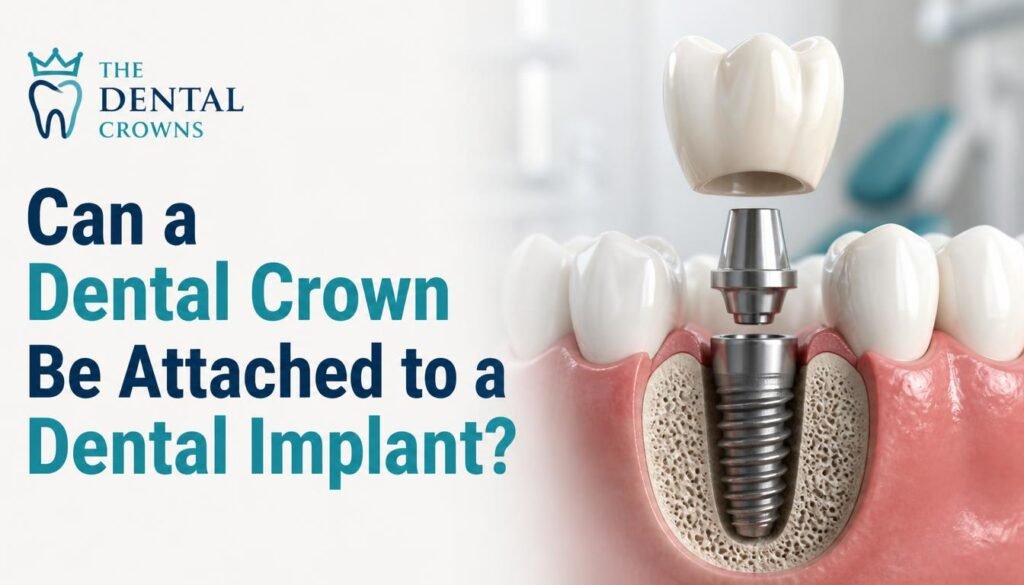
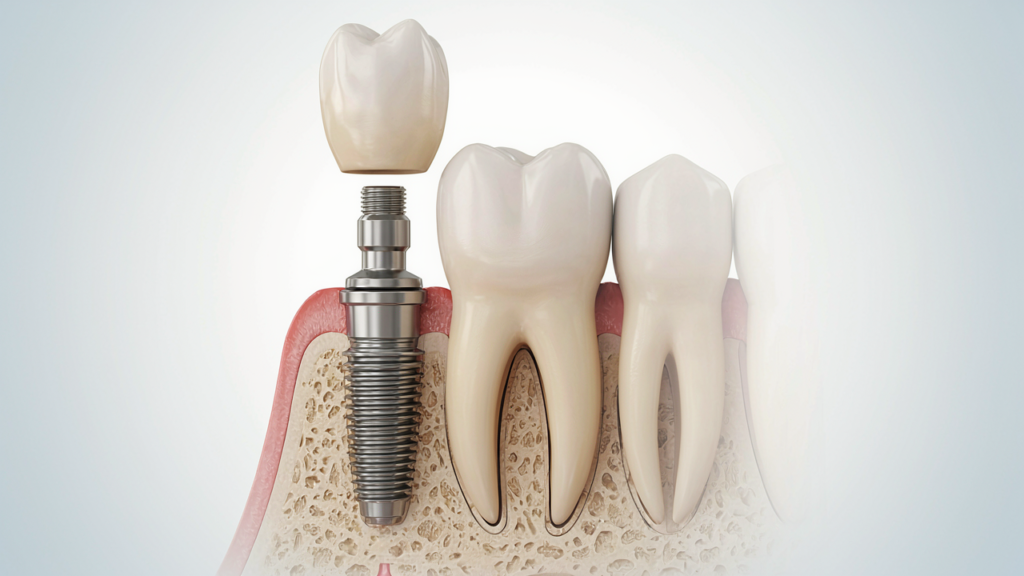
A dental implant is a small post placed into the jawbone to replace the root of a missing tooth. Once the implant has healed and integrated with the surrounding bone, it can support a dental crown that replaces the visible portion of the tooth.
A typical single-tooth implant consists of:
- Implant post
- Abutment
- Dental crown
Dental implants are designed to function similarly to natural teeth once treatment and healing are complete. Cleveland Clinic notes that implants can provide support for crowns, bridges and dentures and may last a lifetime with appropriate care.
If you want to learn more about the treatment offered by the clinic, see Dental Implants Treatment at The Dental Crowns.
What Is a Dental Bridge?
A dental bridge replaces a missing tooth or teeth by placing an artificial tooth between supporting structures.
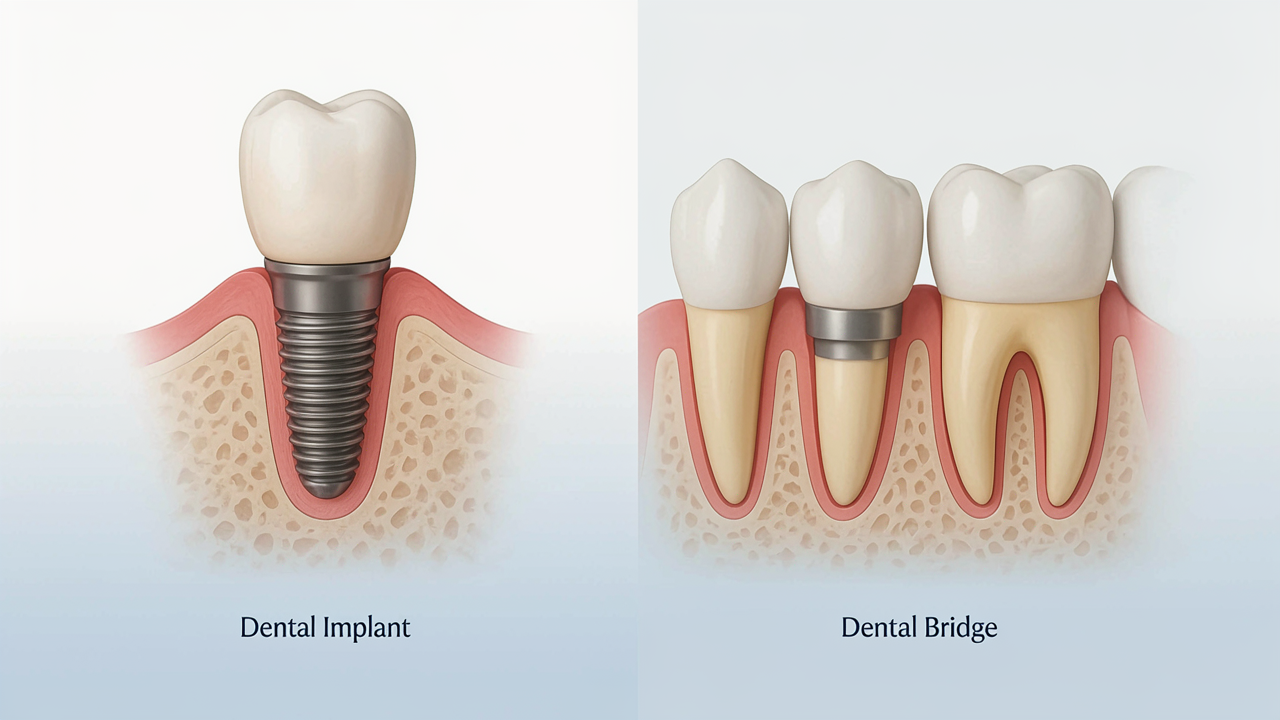
In a traditional dental bridge, the teeth next to the gap are prepared to support dental crowns, while the artificial tooth, called a pontic, fills the empty space.
Dental bridges can restore chewing function, improve appearance and help prevent neighboring teeth from moving into the gap.
You can explore the clinic’s dedicated Dental Bridges Treatment in Noida page for more information.
Dental Implants vs Bridges: 7 Important Differences
1. How They Replace the Missing Tooth
The biggest difference between an implant and a traditional bridge is the way they replace the missing tooth.
A dental implant replaces the tooth root. The implant is placed in the jawbone and later supports a crown.
A traditional dental bridge replaces the visible tooth but does not replace the missing root. It relies on neighboring teeth or other supporting structures.
This makes a dental implant a more independent solution for replacing a single missing tooth.
2. Effect on Neighboring Teeth
If you have healthy teeth beside the missing tooth, this factor can be particularly important.
With a traditional bridge, the neighboring teeth are generally prepared to support the restoration.
With a single dental implant, the neighboring natural teeth generally do not need to be reduced to support the replacement tooth.
Cleveland Clinic explains that a tooth-supported bridge requires preparation of teeth on either side of the gap, whereas an implant can replace the missing tooth without altering neighboring teeth.
Which is better for healthy neighboring teeth?
If preserving healthy neighboring teeth is an important priority, a dental implant may have an advantage.
However, every case is different, so your dentist should examine the surrounding teeth before making a recommendation.
3. Treatment Time
Treatment time is another major difference between dental implants and bridges.
A traditional bridge can often be completed more quickly because it does not require the implant to integrate with the jawbone.
Dental implants usually involve a longer treatment process. After implant placement, the jawbone needs time to heal and integrate with the implant before the final restoration is attached.
According to Cleveland Clinic, bone integration can take several months depending on the patient and treatment circumstances.
If you need a faster solution
A dental bridge may be attractive if your priority is completing tooth replacement relatively quickly.
If you want a long-term root-replacement solution
You may prefer to consider a dental implant if you are comfortable with a longer treatment timeline.
4. Jawbone Preservation
Jawbone health is one of the most important differences between dental implants and traditional bridges.
When a natural tooth is lost, the bone around the missing tooth no longer receives stimulation from the tooth root.
Because an implant replaces the missing root, it can help maintain the bone in the implant area.
A traditional bridge fills the visible space but does not replace the tooth root.
Cleveland Clinic identifies jawbone preservation as one of the benefits associated with dental implants.
However, not everyone is automatically suitable for implant treatment. Your dentist may need to assess your bone volume, gum health and overall oral condition before recommending an implant.
5. Durability and Long-Term Results
When comparing dental implants vs bridges, longevity is another important consideration.
Dental implants are designed as a long-term tooth replacement option. With good oral hygiene, regular dental visits and proper maintenance, an implant can potentially last for many years and may last a lifetime.
The crown attached to the implant can still require maintenance or replacement over time.
Dental bridges can also provide reliable tooth replacement, but they may eventually require replacement depending on factors such as oral hygiene, supporting teeth and overall dental health.
Cleveland Clinic reports that dental implants can often last a lifetime with proper care, while the restoration attached to an implant may eventually need replacement.
Long-term winner?
For many suitable candidates, dental implants can offer an excellent long-term option.
But longevity depends heavily on proper treatment planning, oral hygiene and regular dental care.
6. Appearance and Comfort
Both dental implants and modern dental bridges can be designed to look natural.
A dental implant with a customized crown can be matched to the color, shape and appearance of your surrounding teeth.
A dental bridge can also provide an attractive smile when it is properly designed and fitted.
The final result can depend on:
- Tooth location
- Shade matching
- Gum condition
- Quality of restoration
- Bite
- Dentist’s treatment planning
- Oral hygiene
Once an implant has healed successfully, many patients find that it feels stable and functions much like a natural tooth.
7. Cleaning and Maintenance
Good oral hygiene is essential regardless of whether you choose an implant or bridge.
With an implant-supported crown, you still need to:
- Brush your teeth regularly
- Clean around the implant
- Maintain healthy gums
- Attend routine dental check-ups
- Follow your dentist’s maintenance instructions
Dental bridges also require careful cleaning, particularly underneath the artificial tooth and around the supporting teeth.
If plaque and food accumulate around a bridge, it can increase the risk of gum problems or decay affecting the supporting teeth.
So, neither option should be considered completely maintenance-free.
Dental Implants vs Bridges: Comparison Table
| Factor | Dental Implant | Traditional Dental Bridge |
|---|---|---|
| Replaces tooth root | Yes | No |
| Uses neighboring teeth | Generally no | Yes |
| Surgery required | Yes | Usually no implant surgery |
| Treatment time | Usually longer | Usually faster |
| Initial cost | Often higher | Often lower |
| Jawbone preservation | Helps preserve bone | Does not replace the root |
| Cleaning | Requires normal implant care | Requires cleaning under the bridge |
| Long-term potential | Excellent with proper care | Reliable but may need replacement |
| Best for | Independent long-term tooth replacement | Faster tooth replacement in suitable cases |
Are Dental Implants Better Than Bridges for One Missing Tooth?
For many people with one missing tooth, a dental implant can be an excellent option.
Why?
Because the implant can replace the missing tooth without using the neighboring teeth as supports.
This can be particularly attractive when the teeth on either side of the gap are healthy.
However, a dental bridge can still be a good treatment option.
A bridge may be considered when:
- You want a faster solution.
- You prefer to avoid implant surgery.
- The neighboring teeth already need crowns.
- Your dentist believes the supporting teeth are suitable.
- Your bone condition makes implant placement difficult.
- Your treatment goals or budget favor a bridge.
There is no single treatment that is ideal for every patient.
Who Is a Good Candidate for Dental Implants?
A dentist may consider dental implants for patients who have:
- One or more missing teeth
- Adequate bone to support an implant
- Healthy or treatable gums
- Good oral hygiene
- Suitable overall dental health
- Realistic expectations
- A willingness to follow post-treatment care instructions
A dental examination and appropriate imaging may be required before implant placement.
If bone volume is insufficient, additional procedures may sometimes be recommended before an implant can be placed.
Who Is a Good Candidate for a Dental Bridge?
A dental bridge may be suitable when:
- One or more teeth are missing in a suitable location.
- Neighboring teeth can support the bridge.
- You want a relatively quick restoration.
- You do not want implant surgery.
- Your dentist determines that a bridge is appropriate for your bite and oral health.
The type of bridge matters too.
Common options include:
- Traditional bridges
- Cantilever bridges
- Maryland bridges
- Implant-supported bridges
The appropriate option depends on the location and number of missing teeth and the condition of the supporting teeth.
What Is More Affordable: Dental Implant or Bridge?
In many cases, a traditional dental bridge has a lower initial treatment cost than a dental implant.
However, comparing only the initial price may not give you the complete picture.
You should also consider:
- Expected lifespan
- Future maintenance
- Possible repairs
- Replacement costs
- Number of teeth being replaced
- Additional procedures
- Condition of surrounding teeth
A dental implant may have a higher upfront cost but can offer long-term benefits for suitable patients.
Your dentist can provide a personalized estimate after examining your teeth and discussing your treatment options.
Dental Implant or Bridge: Which One Should You Choose?
There is no universal answer.
A dental implant may be preferable if:
- You want an independent tooth replacement.
- Your neighboring teeth are healthy.
- You want to replace the missing tooth root.
- You are interested in long-term tooth replacement.
- You have adequate bone and healthy oral tissues.
- You are comfortable with a longer treatment process.
A dental bridge may be preferable if:
- You want faster tooth replacement.
- You want to avoid implant surgery.
- The neighboring teeth already require crowns.
- Your dentist recommends a bridge based on your oral condition.
- Your budget favors a lower initial treatment cost.
The American Dental Association emphasizes that treatment decisions should be based on a comprehensive dental examination, diagnosis and discussion of available alternatives.
What Happens If You Don’t Replace a Missing Tooth?
A missing tooth should not simply be ignored.
Tooth loss can affect chewing and speech, and neighboring teeth may shift into the empty space. Tooth loss is also associated with bone loss in the affected area.
Depending on your situation, your dentist may discuss:
- Dental implants
- Dental bridges
- Dentures
- Implant-supported restorations
The best solution depends on the number of missing teeth, gum health, jawbone condition, bite and overall dental health.
Frequently Asked Questions
Are dental implants better than bridges?
For many suitable patients, dental implants offer advantages such as replacing the missing tooth root, avoiding preparation of neighboring healthy teeth and supporting jawbone preservation. However, bridges can be preferable when faster treatment or avoidance of implant surgery is important.
Is a dental bridge cheaper than an implant?
Generally, a traditional dental bridge has a lower initial cost than a dental implant. However, the total long-term cost can vary based on treatment complexity, maintenance and future replacement.
Which lasts longer, a dental implant or bridge?
Dental implants can potentially last a lifetime with proper care, although the crown or other restoration may eventually need replacement. Dental bridges can also last for years but may require replacement over time.
Is getting a dental implant painful?
Implant placement is performed using appropriate anesthesia. Some discomfort and swelling can occur during recovery, but your dentist will provide specific aftercare instructions based on your procedure.
Can a bridge replace one missing tooth?
Yes. A traditional dental bridge can replace a single missing tooth when the neighboring teeth are suitable for support.
Do dental implants look natural?
Yes. An implant is normally restored with a customized crown designed to match the surrounding teeth in shape and shade.
Can dental implants prevent bone loss?
Dental implants can help preserve bone in the area of the missing tooth because they replace the tooth root and provide stimulation to the surrounding bone.
Which is faster: an implant or bridge?
A traditional dental bridge is generally faster because it does not require the implant healing and integration period.
Are dental implants worth it?
For suitable patients seeking a long-term replacement for missing teeth, dental implants can be a valuable option. However, suitability depends on bone health, gum health, overall oral condition, treatment goals and budget.
What if I don’t have enough bone for an implant?
Your dentist may discuss additional procedures such as bone grafting if there is insufficient bone to support an implant. Whether this is necessary depends on your individual anatomy and treatment plan.
Final Verdict: Are Dental Implants Better Than Bridges?
So, are dental implants better than bridges for missing teeth?
For many suitable patients, dental implants can be the better long-term option, particularly when preserving healthy neighboring teeth and replacing the missing tooth root are important priorities.
However, dental bridges remain a practical and effective tooth-replacement option. They can be especially useful when a patient wants a faster restoration, wants to avoid implant surgery or already has neighboring teeth that require crowns.
The right choice depends on your:
- Jawbone condition
- Gum health
- Neighboring teeth
- Number of missing teeth
- Bite
- Budget
- Treatment timeline
- Long-term dental goals
Rather than choosing based solely on price or online comparisons, schedule a dental examination and discuss both options with a qualified dentist.
Looking for Dental Implants or Dental Bridges in Noida?
The Dental Crowns provides restorative and surgical dental services in Noida, including dental implants, dental bridges, dental crowns, root canal treatment and dentures.
You can explore the clinic’s:
- Dental Implants Treatment
- Dental Bridges Treatment
- Painless Root Canal Treatment
- Complete Dental Services
For general information about dental implants, you can also refer to Cleveland Clinic’s dental implant guide and its medically reviewed information about dental bridges.
Important Note
This article is intended for general educational purposes and should not replace a professional dental examination or diagnosis. Dental implant and bridge recommendations vary from patient to patient.