A worn-down tooth can affect much more than the appearance of your smile. As tooth structure gradually wears away, you may notice increased sensitivity, difficulty chewing, changes in your bite or a tooth that looks shorter than the others. For patients searching for dental crown treatment in Sector 77 Noida, one common question is: Can a dental crown restore a worn tooth?
In many cases, a dental crown can be used to restore a significantly worn, weakened or damaged tooth. A crown is a custom-made restoration that covers the visible portion of a tooth and can help restore its shape, strength and function. However, whether a crown is appropriate depends on how much healthy tooth structure remains and why the tooth has become worn.
If you live in or around Sector 77, Noida, a dental examination can help determine whether a dental crown, filling, bonding, inlay, onlay or another treatment is more suitable for your tooth.
What Does It Mean When a Tooth Is Worn?
Tooth wear occurs when the hard outer structure of a tooth gradually becomes thinner or is lost. It can happen because of several factors, including mechanical wear, tooth grinding, acidic foods and drinks, acid reflux or other oral health conditions.
Some people may not notice tooth wear until it becomes more advanced. Common signs can include:
- Teeth appearing shorter or flatter
- Increased sensitivity to hot or cold foods
- Flattened biting surfaces
- Small chips or cracks
- Changes in the way the upper and lower teeth meet
- Difficulty chewing certain foods
- Visible loss of tooth structure
- Increased sensitivity when eating acidic or sweet foods
Tooth erosion, for example, can weaken enamel and make teeth more vulnerable to sensitivity and cavities.
Can a Dental Crown Restore a Worn Tooth?
Yes, a dental crown can restore some significantly worn teeth, particularly when enough healthy tooth structure remains to support the restoration.
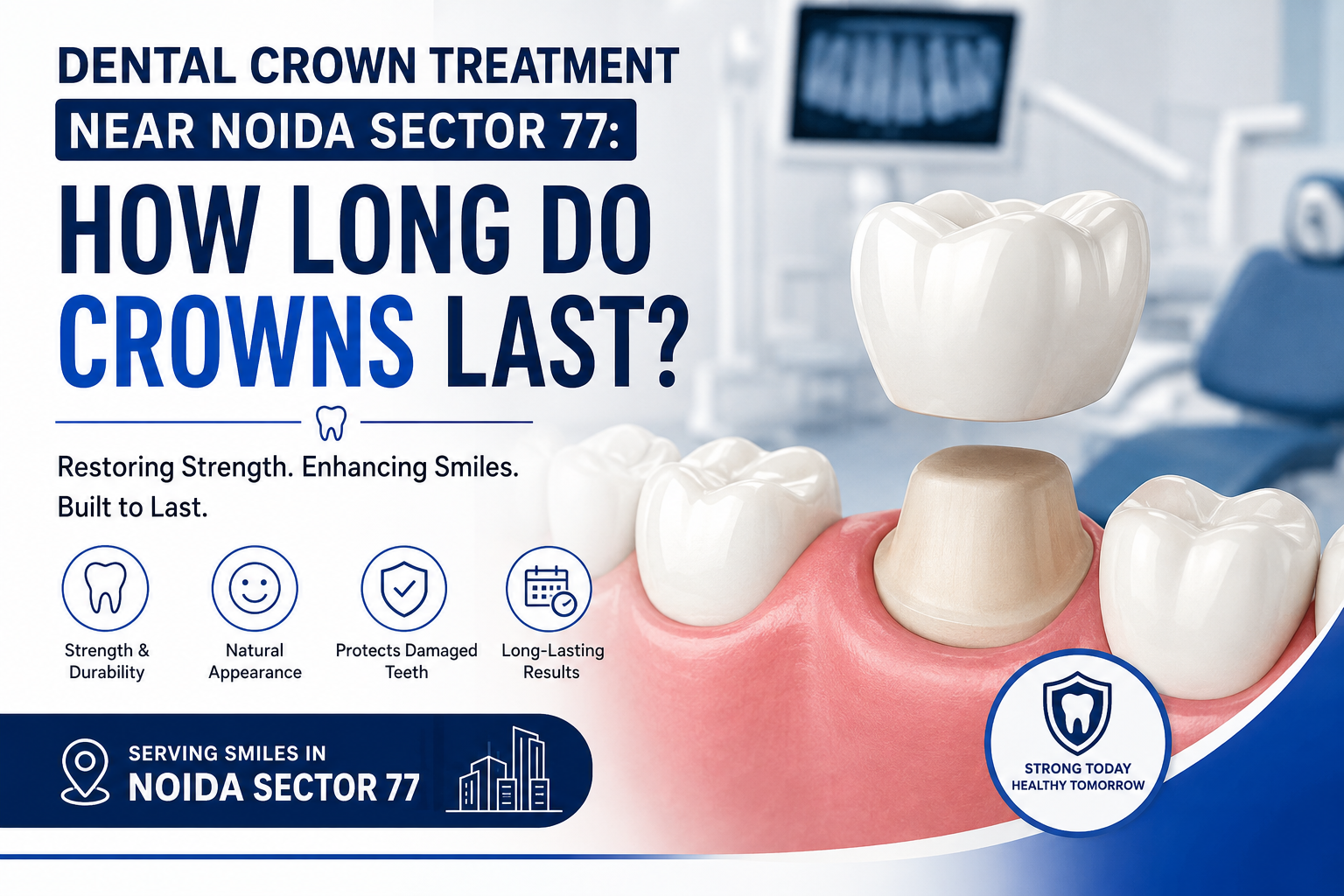
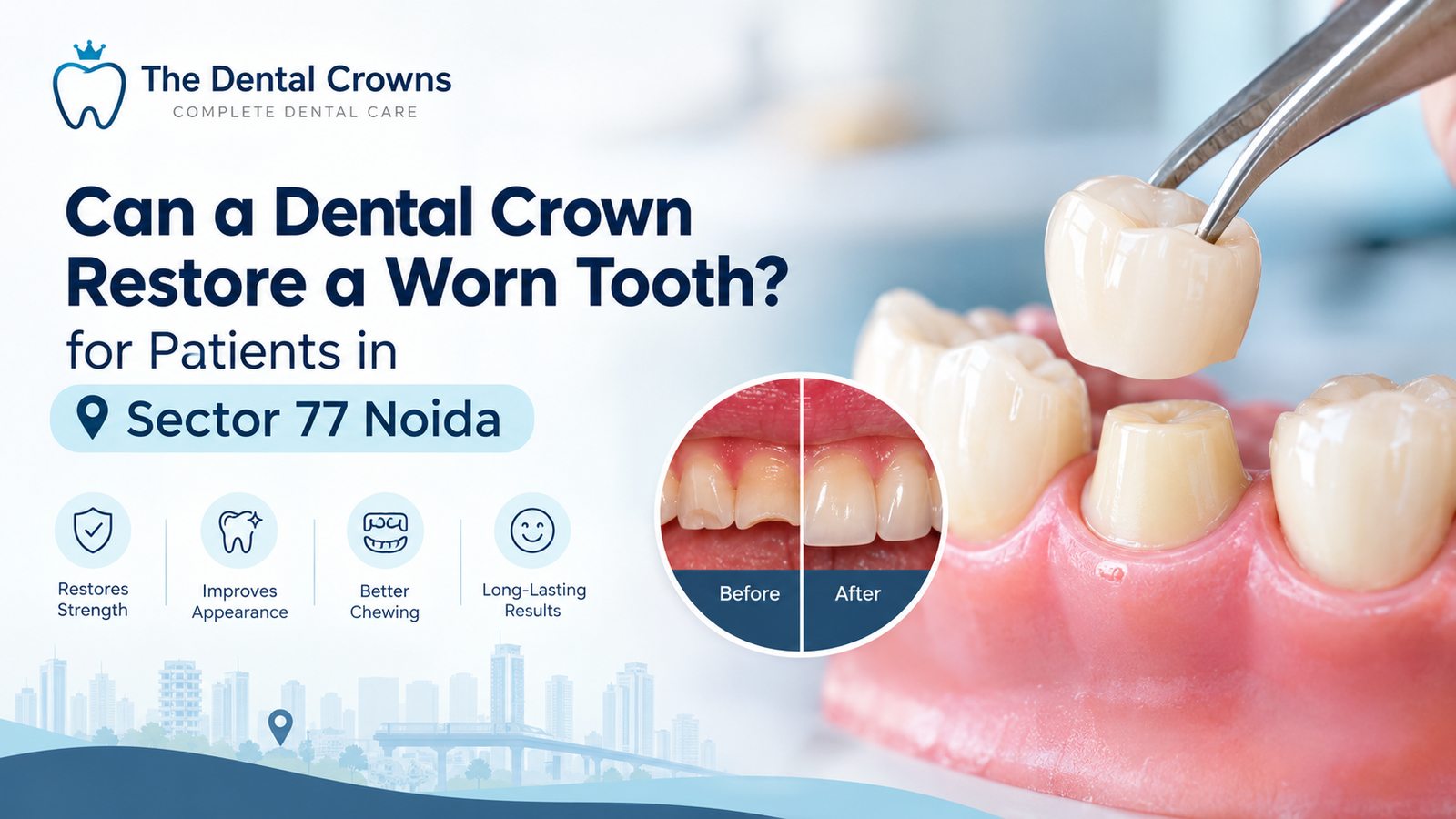
A dental crown is a tooth-shaped cap that covers the prepared tooth. It can restore the tooth’s overall shape and help improve chewing function. Crowns are commonly used for teeth that are weak, broken, decayed or worn down.
However, a crown is not automatically the right treatment for every worn tooth.
The dentist needs to evaluate:
- How much natural tooth structure remains
- The severity and location of the wear
- Whether the tooth has decay
- Whether the tooth is cracked
- The condition of the gums
- The health of the tooth’s pulp
- Your bite and chewing forces
- Whether you grind or clench your teeth
- The cause of the tooth wear
This assessment is particularly important because treating the underlying cause of tooth wear can be just as important as restoring the tooth itself.
Why Do Teeth Become Worn?
Understanding the cause of tooth wear can help prevent further damage after treatment.
1. Teeth Grinding and Clenching
Bruxism, or grinding and clenching the teeth, can place repeated pressure on the teeth. Over time, this may contribute to flattened or worn biting surfaces.
The Indian Dental Association notes that tooth grinding can cause enamel to wear away and may contribute to sensitivity.
If you grind your teeth, your dentist may discuss protective measures such as a custom mouthguard.
2. Acidic Foods and Drinks
Frequent exposure to acidic foods and beverages can contribute to enamel erosion. Once enamel is significantly lost, it does not naturally grow back.
Acid reflux can also expose teeth to stomach acid and contribute to erosion in some individuals.
3. Normal Wear Over Time
Teeth experience chewing forces every day. Some degree of wear can occur naturally with age, but excessive or rapid wear may require professional evaluation.
4. Incorrect Bite or Heavy Bite Forces
When certain teeth receive excessive pressure during chewing, they may experience increased wear. A dentist can examine the way your teeth come together and determine whether your bite is contributing to the problem.
5. Other Dental Problems
Existing cracks, decay or weakened tooth structure can make a tooth more vulnerable to further damage.
If the tooth has extensive structural damage, a restoration such as a crown may be considered after the dentist evaluates whether the tooth can be predictably restored.
When Is a Dental Crown Recommended for a Worn Tooth?
A dentist may consider a crown when the tooth has lost enough structure that a smaller restoration may not provide adequate protection.
For example, a crown may be considered when:
- A large portion of the tooth has worn away
- The remaining tooth structure is weak
- The tooth has significant structural damage
- A previous large restoration has failed
- The tooth has been severely affected by erosion
- The tooth requires full-coverage protection
The Indian Dental Association describes full-coverage crowns as a treatment option in certain cases involving severe tooth wear and enamel breakdown.
However, a crown should not be viewed as a universal solution. In less severe cases, a dentist may recommend a more conservative restoration.
Dental Crown vs Filling for a Worn Tooth
The appropriate restoration depends on the amount of tooth structure that has been lost.
A dental filling may be suitable when the damaged area is relatively small and sufficient healthy tooth structure remains.
A dental crown covers a much larger portion of the tooth and may be considered when the tooth is significantly weakened or damaged.
Other options can include inlays and onlays, which can restore teeth that are too damaged for a simple filling but may not require a full crown.
This is why an examination is important before deciding on treatment.
What Happens During Dental Crown Treatment?
If your dentist determines that a crown is appropriate, the treatment generally involves several stages.
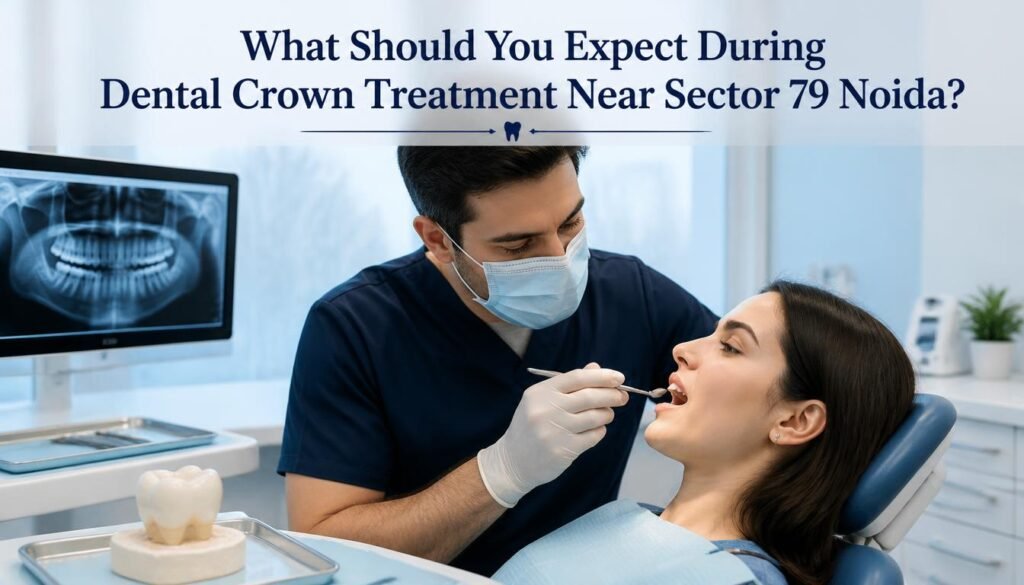
Step 1: Dental Examination
Your dentist examines the worn tooth and surrounding teeth. Depending on the situation, dental X-rays may also be required.
The goal is to understand the condition of the tooth and determine whether it can support a crown.
Step 2: Tooth Preparation
The dentist prepares the tooth so there is enough space for the crown.
Some damaged or weakened areas may also need to be restored before the crown is placed.
Step 3: Dental Impression or Digital Scan
An impression or digital scan is used to create a crown that fits the tooth and works with your bite.
Step 4: Temporary Protection
Depending on the treatment process, a temporary crown may be placed while the permanent restoration is being prepared.
Step 5: Permanent Crown Placement
When the final crown is ready, the dentist checks its shape, colour, fit and bite before permanently bonding it to the prepared tooth.
The exact process can vary depending on the tooth, crown material and clinical situation.
What Types of Dental Crowns Can Be Used?
Different crown materials have different characteristics.
Common options include:
- Ceramic crowns
- Porcelain crowns
- Zirconia crowns
- Porcelain-fused-to-metal crowns
- Metal crowns
- Resin-based crowns in selected situations
The appropriate material depends on factors such as the location of the tooth, biting forces, aesthetics and the amount of remaining tooth structure.
For patients concerned about appearance, tooth-coloured options may be considered. For teeth exposed to heavy chewing forces, durability may receive greater consideration.
There is no single crown material that is suitable for every patient.
Can a Crown Improve Chewing After Tooth Wear?
A severely worn tooth may no longer have its original shape, which can affect chewing.
Restoring the tooth with an appropriately designed crown can help rebuild its shape and function when the tooth is suitable for crown treatment. Dental crowns are among the restorations used to restore damaged teeth and improve chewing function.
Your dentist also needs to consider your overall bite. Simply placing a crown without addressing excessive forces or the underlying cause of wear may not provide the desired long-term result.
What If the Worn Tooth Needs a Root Canal?
Sometimes severe tooth damage or wear can affect the inner part of a tooth.
If the pulp becomes infected or significantly damaged, root canal treatment may be necessary before the tooth is restored with a crown.
The Indian Dental Association explains that when a broken tooth has serious pulp damage, root canal treatment may be required before protective crown restoration.
This is why a proper dental assessment is important before deciding on crown treatment.
Patients in Sector 77 Noida can discuss their symptoms and treatment options with a dentist rather than trying to determine the appropriate restoration based only on the appearance of the tooth.
Can Every Worn Tooth Be Saved With a Crown?
No. A dental crown cannot restore every severely damaged tooth.
A crown needs an adequate foundation. If too little healthy tooth structure remains, or if the tooth has a fracture extending below the gumline or other serious problems, a crown may not provide a predictable solution.
In some situations, the dentist may discuss alternative treatment, including tooth extraction and replacement options.
The goal is not simply to place a crown. The goal is to determine the most appropriate treatment for the health and function of the tooth.
How Can You Protect a Crown After Treatment?
Once a dental crown has been placed, good oral hygiene and regular dental examinations remain important.
You should:
- Brush twice a day with fluoride toothpaste
- Clean between your teeth daily
- Avoid biting extremely hard objects
- Avoid using your teeth to open packages
- Follow your dentist’s advice regarding grinding or clenching
- Attend regular dental check-ups
- Contact your dentist if the crown becomes loose, chipped or painful
A crown covers the visible portion of the tooth, but the natural tooth underneath still requires proper care.
Cleveland Clinic recommends good oral hygiene, regular dental care and avoiding extremely hard or sticky foods to help maintain a crown.
When Should Patients in Sector 77 Noida See a Dentist?
Consider scheduling a dental examination if you notice:
- A tooth becoming noticeably shorter
- New tooth sensitivity
- Flattened teeth
- Cracks or chips
- Pain while chewing
- A change in your bite
- Frequent tooth grinding
- A crown that feels loose
- A previously restored tooth becoming uncomfortable
Early assessment can help identify why the tooth is wearing and whether the problem can be managed with a conservative treatment or requires a more extensive restoration.
Dental Crown Treatment Near Sector 77 Noida
If you are searching for dental crown treatment in Sector 77 Noida, The Dental Crowns provides a range of dental services, including porcelain crowns, root canal treatment, tooth-coloured restorations, implants and laser dentistry. The clinic is located at Civitech Stadia, Sector 79, Noida, which is close to Sector 77 and surrounding Noida sectors.
You can explore the clinic’s available dental services to understand which treatments may be relevant to your dental concerns.
Frequently Asked Questions
Can a dental crown restore a worn tooth?
Yes, a crown can restore a significantly worn tooth when sufficient healthy tooth structure remains to support the restoration. A dentist must first evaluate the tooth and determine the cause and severity of the wear.
Is a crown better than a filling for a worn tooth?
Not necessarily. A filling may be appropriate for limited damage, while a crown may be considered when a tooth has lost substantial structure. Inlays and onlays may also be options in selected cases.
Can teeth grinding damage a dental crown?
Excessive grinding and clenching can place heavy forces on crowns and natural teeth. Patients who grind their teeth should discuss protective options with their dentist.
How long can a dental crown last?
The lifespan of a crown varies depending on the material, oral hygiene, bite forces, habits and other factors. Cleveland Clinic reports that crowns commonly last around five to 15 years with proper care, although individual results vary.
Does a worn tooth always need a crown?
No. Treatment depends on the severity and cause of the wear. Some teeth can be managed with preventive care, bonding, fillings, inlays or onlays, while more significantly damaged teeth may require a crown.
Can a worn tooth become sensitive?
Yes. As enamel becomes thinner or is lost, underlying tooth structures may become more exposed, potentially increasing sensitivity to temperature and certain foods.
Can a crown restore the original shape of a worn tooth?
A properly designed crown can restore the visible shape and function of a significantly worn tooth. The dentist will design the restoration according to the tooth, surrounding teeth and bite.
Should I get a crown if I grind my teeth?
Not automatically. Your dentist should first evaluate the condition of the tooth and the severity of your grinding or clenching. If a crown is required, managing excessive bite forces may also be important.
Conclusion
Can a dental crown restore a worn tooth for patients in Sector 77 Noida? In appropriate cases, yes. A dental crown can restore the shape, strength and function of a tooth that has experienced significant wear or structural damage.
However, the right treatment depends on the amount of remaining tooth structure, the cause of the wear, the health of the tooth and your bite. A filling, bonding, inlay, onlay or other treatment may be more appropriate for less extensive wear.
If you are experiencing worn, flattened, sensitive or damaged teeth in or around Sector 77 Noida, a professional dental examination can help identify the cause and determine whether dental crown treatment is appropriate for you.
The Dental Crowns in Noida offers dental services including porcelain crowns, root canal treatment, tooth-coloured restorations, implants and other dental treatments. Speak with a dentist to receive an assessment based on your individual dental condition rather than choosing a restoration based solely on symptoms.
Disclaimer: This article is intended for general educational purposes and does not replace an examination or diagnosis by a qualified dental professional.