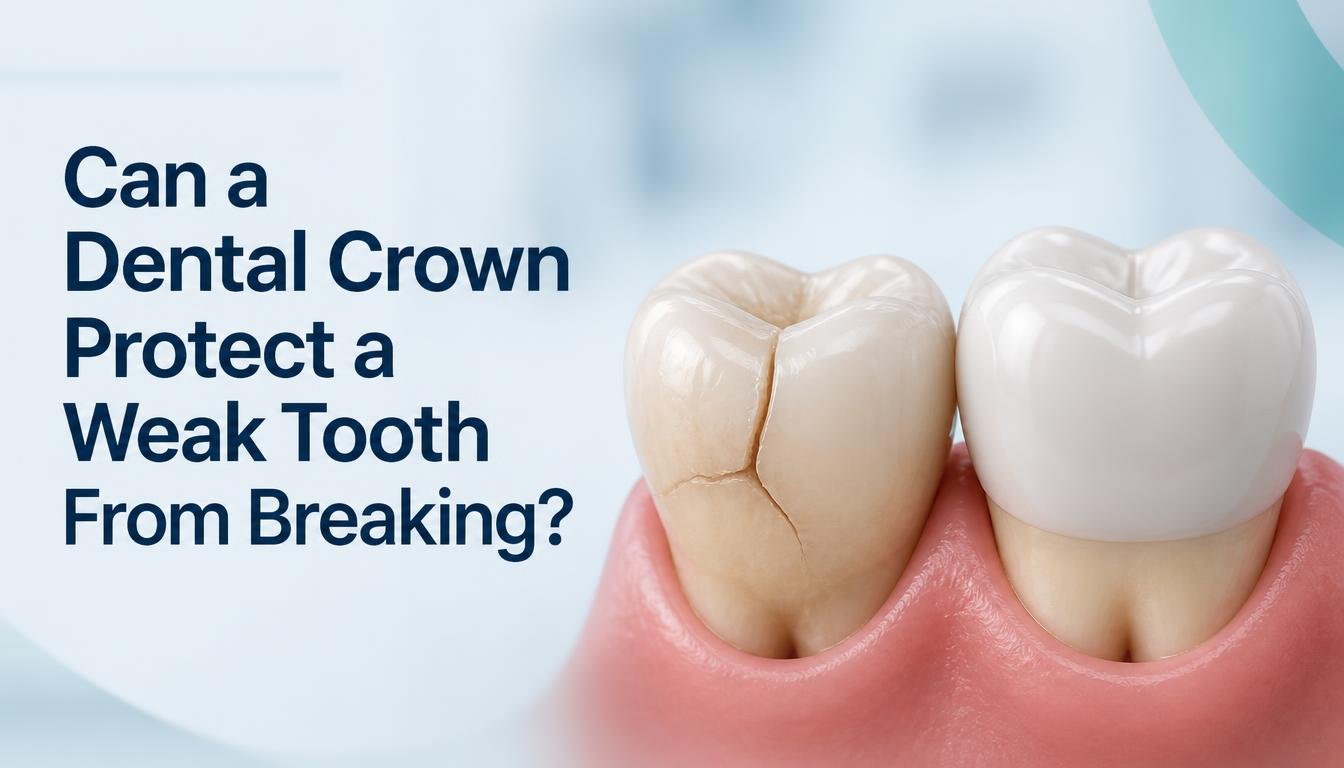
A weak tooth can become a serious dental concern if it is exposed to constant chewing pressure, untreated decay, or an existing crack. If your tooth has a large filling, has been damaged by tooth decay, or has lost a significant amount of its natural structure, you may wonder whether a dental crown can prevent it from breaking.
Yes, a dental crown can help protect a weak tooth from breaking further. A crown covers the visible portion of the tooth, restores its shape and function, and provides additional support when the remaining tooth structure is vulnerable. However, its effectiveness depends on the extent of the damage and whether the tooth can be restored successfully.
In this guide, we explain how dental crowns protect weakened teeth, when a dentist may recommend one, and what you can do to prevent further tooth damage.
What Is a Dental Crown?
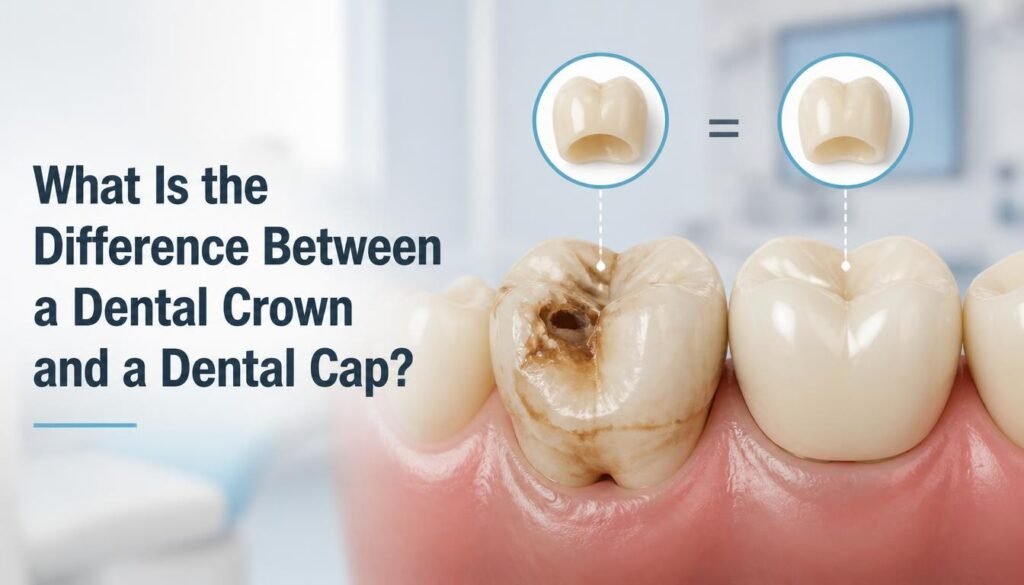
A dental crown is a custom-made cap placed over a prepared tooth to restore its shape, strength, size, and function. It is commonly recommended for teeth that have been severely damaged by decay, weakened by large fillings, cracked, or affected by substantial wear.
According to the American Dental Association (ADA), crowns can help strengthen teeth with large fillings, protect weak teeth from breaking, and restore teeth that are already broken.
A crown covers the damaged tooth rather than simply filling the affected area. This can be particularly helpful when too little healthy tooth structure remains to support a conventional filling.
If you want to understand your options, explore our dental crown treatment services.
Can a Dental Crown Protect a Weak Tooth From Breaking?
Yes. A dental crown can provide additional protection to a structurally weakened tooth by covering its exposed surfaces and helping it withstand everyday chewing forces.
Natural teeth can become weak for several reasons, including extensive cavities, large fillings, cracks, excessive grinding, and previous dental procedures. When a significant amount of tooth structure has been lost, the remaining walls may be more vulnerable to fractures.
A dentist may recommend a crown to help:
- Protect weakened tooth structure: A crown covers the remaining tooth and can reduce the risk of further damage when appropriately designed and fitted.
- Restore chewing function: It recreates the tooth’s shape so you can chew more comfortably.
- Protect a tooth with a large filling: When insufficient healthy tooth structure remains to support a filling, a crown may provide more suitable coverage.
- Restore a damaged tooth: A crown can rebuild the visible portion of a tooth when enough healthy structure remains to support it.
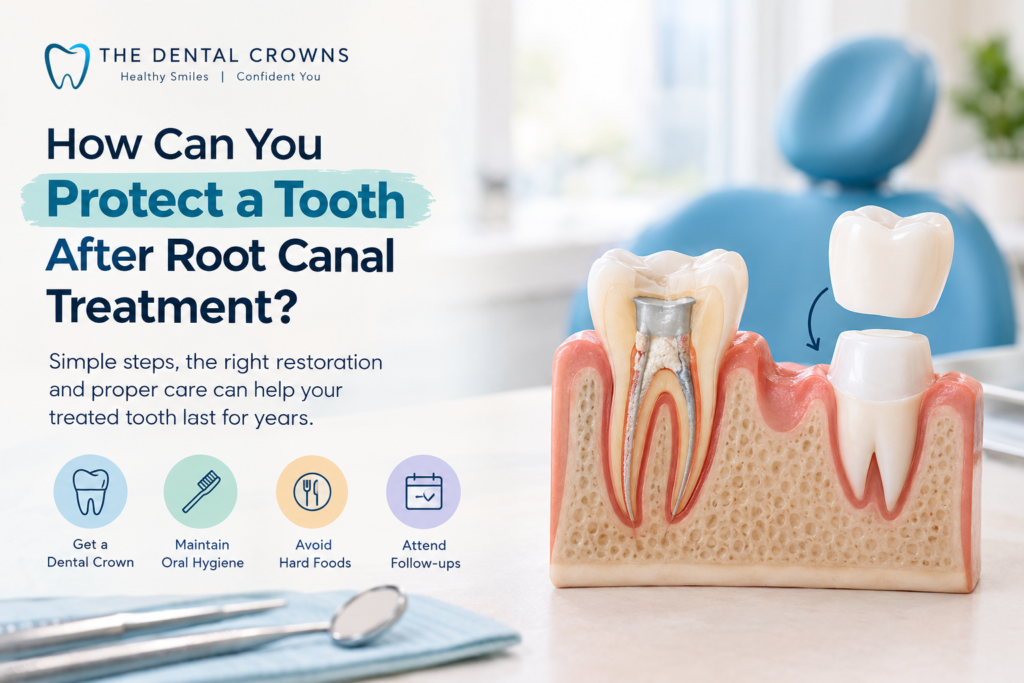
- Support selected teeth after root canal treatment: Some root-canal-treated teeth need a crown to protect them from fracture, depending on the tooth’s location and remaining structure.
However, a crown does not guarantee that a tooth will never break. A severe crack, inadequate remaining tooth structure, untreated decay, or excessive biting forces can still compromise the tooth.
Why Do Teeth Become Weak and More Likely to Break?
Understanding the cause of tooth weakness helps your dentist choose the right treatment.
1. Large Cavities and Tooth Decay
Tooth decay gradually destroys the hard tissues that support a tooth. If the cavity becomes extensive, the remaining structure may not be strong enough to withstand normal chewing pressure.
A filling may be sufficient for a small cavity, but extensive decay may require a crown after the affected tissue has been treated.
2. Large or Repeated Dental Fillings
A tooth that has undergone multiple fillings may have less natural structure remaining. Its weakened walls may be more susceptible to fractures, particularly when exposed to repeated biting forces.
In these cases, a dentist may recommend a crown or another protective restoration based on the amount of healthy tooth structure left.
3. Cracked or Chipped Teeth
A small crack may worsen if the tooth continues to experience pressure during chewing. Some cracks can be treated with a crown, while others require different treatment.
A crown cannot reliably save every cracked tooth, especially if the fracture extends deeply below the gumline or into the root.
4. Teeth After Root Canal Treatment
Root canal treatment removes infected or inflamed tissue from inside the tooth. However, it does not automatically make every treated tooth weak. The amount of tooth structure lost through decay, fracture, or previous treatment is an important factor.
For certain teeth, especially back teeth that experience substantial chewing forces, a crown may be recommended to reduce the risk of fracture.
Learn more about root canal treatment and related dental care.
5. Teeth Grinding and Clenching
Habitual grinding or clenching, also known as bruxism, can place excessive pressure on teeth and restorations. Over time, this may contribute to wear, cracks, or damage to a crown.
If grinding is contributing to your tooth weakness, your dentist may recommend additional measures, such as a custom night guard, alongside restorative treatment.
When Should You Consider a Dental Crown?
A dental crown may be appropriate when a tooth has lost a substantial amount of its natural structure and requires more protection than a filling can provide.
Your dentist may consider a crown if:
- Your tooth has a large cavity or a failing, extensive filling.
- You have a damaged tooth that needs structural support.
- A crack has weakened the tooth but the tooth remains restorable.
- Your tooth has significant wear.
- Your tooth requires full-coverage restoration following root canal treatment.
- A previous restoration has failed and the remaining tooth needs additional protection.
Not every weak tooth needs a crown. Smaller areas of damage may be treated with a filling, bonding, an inlay, or an onlay. Your dentist will examine the tooth and may take dental X-rays to determine the extent of the damage.
Dental Crown vs Filling: Which Is Better for a Weak Tooth?
The best treatment depends on how much healthy tooth structure remains.
| Feature | Dental Filling | Dental Crown |
|---|---|---|
| Coverage | Repairs a specific damaged area | Covers most or all of the visible tooth |
| Common use | Small to moderate cavities | Significantly weakened or damaged teeth |
| Tooth structure | More healthy structure generally remains | More extensive structural support may be needed |
| Main purpose | Restore a damaged area | Restore the tooth and provide additional coverage |
| Suitability | Depends on the size and location of damage | Depends on whether the tooth can support a crown |
A filling is often the more conservative option when enough healthy tooth structure remains. A crown may be more appropriate when a tooth is extensively damaged or its remaining walls need additional protection.
Your dentist should recommend the least invasive treatment that can reliably address your tooth’s condition.
Can a Dental Crown Save a Tooth That Is Already Cracked?
Sometimes. A crown may help restore a cracked tooth if the fracture is limited and enough healthy structure remains to support the restoration.
However, the outcome depends on the location, depth, and direction of the crack. A crack that extends into the root or below the gumline may make the tooth difficult or impossible to restore predictably.
Your dentist may use an examination, bite tests, and dental imaging where appropriate to assess the damage.
Do not ignore pain when biting, sudden sensitivity, or a visible crack. Early assessment may help identify suitable treatment before the damage becomes more extensive.
How Can You Prevent a Weak Tooth From Breaking?
Whether or not you have a dental crown, everyday oral care can help protect your teeth.
- Schedule regular dental check-ups. Early detection of decay and cracks can help prevent more extensive damage.
- Brush twice daily. Use fluoride toothpaste to help protect your teeth against decay.
- Clean between your teeth daily. Floss or use an appropriate interdental cleaner to remove plaque.
- Avoid chewing hard objects. Do not bite ice, hard sweets, pens, or other objects that may damage teeth.
- Address teeth grinding. Ask your dentist whether a night guard is appropriate if you clench or grind your teeth.
- Get damaged teeth assessed promptly. Delaying treatment may allow decay or cracks to worsen.
- Maintain your dental crown. Continue brushing, cleaning between teeth, and attending dental appointments because the natural tooth underneath a crown can still develop decay.
If you notice a loose crown, a sharp edge, new sensitivity, or pain around a restored tooth, arrange a dental examination.
What Happens During Dental Crown Treatment?
Although the exact procedure varies, dental crown treatment generally involves the following steps:
Step 1: Dental examination
Your dentist assesses the tooth, gums, bite, and extent of damage. X-rays may be required to evaluate the root and surrounding structures.
Step 2: Preparing the tooth
The dentist removes decay where necessary and shapes the tooth so that the crown can fit properly. If the tooth needs root canal treatment, this may be performed before its final restoration.
Step 3: Taking impressions or a digital scan
The dentist records the tooth’s shape so the crown can be fabricated to fit your bite and surrounding teeth.
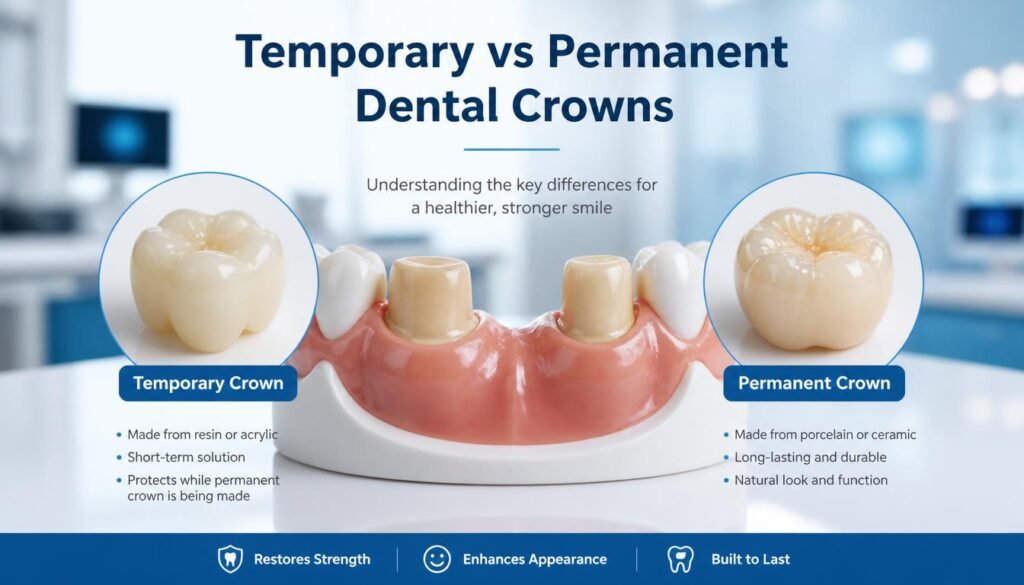
Step 4: Placing a temporary crown, if needed
A temporary crown may protect the prepared tooth while the permanent restoration is made.
Step 5: Fitting the permanent crown
The dentist checks the fit, appearance, and bite before securing the crown in place.
The number of visits and the type of crown depend on the treatment plan and the clinical circumstances.
When Should You See a Dentist?
Arrange a dental appointment if you notice a cracked tooth, pain while biting, persistent sensitivity, a broken filling, or a tooth that appears to be losing structure.
Seek urgent dental advice for a badly broken tooth or severe, worsening pain. Facial swelling, fever, or difficulty swallowing or breathing may require urgent medical attention.
A dental crown can be an effective way to protect a suitable weakened tooth, but early assessment is important. The sooner the underlying problem is identified, the better your dentist can determine whether a crown or another treatment is appropriate.
Frequently Asked Questions
1. Can a dental crown prevent a weak tooth from breaking?
Yes. A properly fitted crown can cover and protect a weakened tooth, helping it withstand chewing forces. However, protection depends on the tooth’s condition, the extent of any cracks, and the quality of the restoration.
2. Is a crown better than a filling for a weak tooth?
A crown may be preferable when substantial tooth structure has been lost. A filling may be sufficient for smaller areas of damage. Your dentist can determine the appropriate option after examining the tooth.
3. Can a crowned tooth still break?
Yes. A crown can become damaged, loosen, or fail, and the natural tooth underneath can fracture. Good oral hygiene, regular check-ups, and managing grinding habits can help reduce some risks.
4. Does every root-canal-treated tooth need a crown?
No. The need for a crown depends on the tooth’s location, how much natural structure remains, and the type of damage. Many significantly weakened back teeth benefit from protective cuspal coverage, but the decision should be individualized.
5. How long can a dental crown last?
A crown’s lifespan varies with its material, fit, oral hygiene, bite forces, and other factors. Regular dental visits and good home care help your dentist monitor the crown and the tooth underneath it.
6. Is getting a dental crown painful?
The tooth is generally numbed during preparation, so significant pain should not be expected during the procedure. Some temporary sensitivity or gum soreness may occur afterward. Contact your dentist if discomfort is severe or persistent.
Protect Your Weak Tooth Before the Damage Gets Worse
A weakened tooth does not always need to be removed. When enough healthy structure remains, a dental crown may help restore its strength, shape, and chewing function while reducing the risk of further damage.
The right treatment depends on the cause of the weakness, the extent of any crack or decay, and the amount of healthy tooth structure remaining.
If you are concerned about a weak, cracked, or heavily filled tooth, consult a qualified dentist for an examination and a personalized treatment plan.
Explore The Dental Crowns’ dental services to learn more about restorative dental care and the options available for damaged teeth.
Disclaimer: This article is for general educational purposes only and is not a substitute for professional dental advice, diagnosis, or treatment.