A damaged tooth can be stressful, especially when you are worried about losing your natural tooth. Whether it is caused by deep tooth decay, an accidental injury, a crack, or a broken filling, many people wonder: Can a damaged tooth be restored without extraction?
The good news is that, in many cases, a damaged tooth can be saved with the right dental treatment. Depending on the severity of the damage, a dentist may recommend a dental filling, dental bonding, root canal treatment, or a dental crown to restore the tooth’s strength, function, and appearance.
If you are searching for tooth restoration without extraction in Sector 76 Noida, understanding the available treatment options can help you make an informed decision about your dental health.
At The Dental Crowns, located at Civitech Stadia, Sector 79, Noida, patients from Sector 76 and nearby areas can consult a dental professional to understand suitable restorative treatments.
Can a Damaged Tooth Be Saved Without Removing It?
Yes, a damaged tooth can often be restored without extraction if sufficient healthy tooth structure remains and the tooth can be treated successfully.
The treatment depends on several factors, including:
- The extent of tooth decay or damage
- The depth and location of a crack
- Whether the dental pulp is infected
- The amount of healthy tooth structure remaining
- The condition of the tooth root
- The health of surrounding gums and bone
According to the American Association of Endodontists, modern dental treatments can help preserve natural teeth that might otherwise require extraction.
However, not every damaged tooth can be saved. A professional dental examination is necessary to determine whether restorative treatment is a predictable option.
What Are the Common Causes of Tooth Damage?
A tooth can become damaged for several reasons. Identifying the underlying cause is important because treatment should address both the damage and the factors contributing to it.
1. Deep Tooth Decay
Untreated cavities can gradually destroy the enamel and dentin of a tooth. When decay becomes extensive, the tooth may weaken and become vulnerable to fracture.
2. Cracked or Broken Tooth
Biting hard foods, accidental injuries, falls, or trauma can cause a tooth to crack or break. Depending on the depth of the fracture, the tooth may be restored using bonding, a filling, or a dental crown.
3. Large or Damaged Dental Fillings
An old filling may become loose, worn, or damaged. If the surrounding tooth structure is also weakened, a more extensive restoration may be necessary.
4. Tooth Infection
When bacteria reach the pulp inside a tooth, infection or inflammation can develop. In suitable cases, root canal treatment can help remove the infection and preserve the natural tooth.
5. Excessive Tooth Wear
Grinding or clenching your teeth can gradually wear down their surfaces. Severe wear may require restorative treatment to rebuild the tooth’s shape and function.
5 Dental Treatments That Can Restore a Damaged Tooth Without Extraction
The appropriate treatment depends on your individual dental condition. Here are some commonly used restorative options.
1. Dental Filling
A dental filling may be recommended when tooth decay or damage is limited and enough healthy tooth structure remains.
During treatment, the dentist removes the affected tissue and restores the tooth using a suitable filling material.
Best suited for: Small to moderate cavities and certain minor areas of tooth damage.
2. Dental Bonding
Dental bonding uses tooth-coloured composite resin to repair selected chips, cracks, and minor fractures.
The material is applied to the damaged area, shaped, and hardened to restore the tooth’s appearance and function.
Best suited for: Minor chips, small fractures, and selected cosmetic or structural defects.
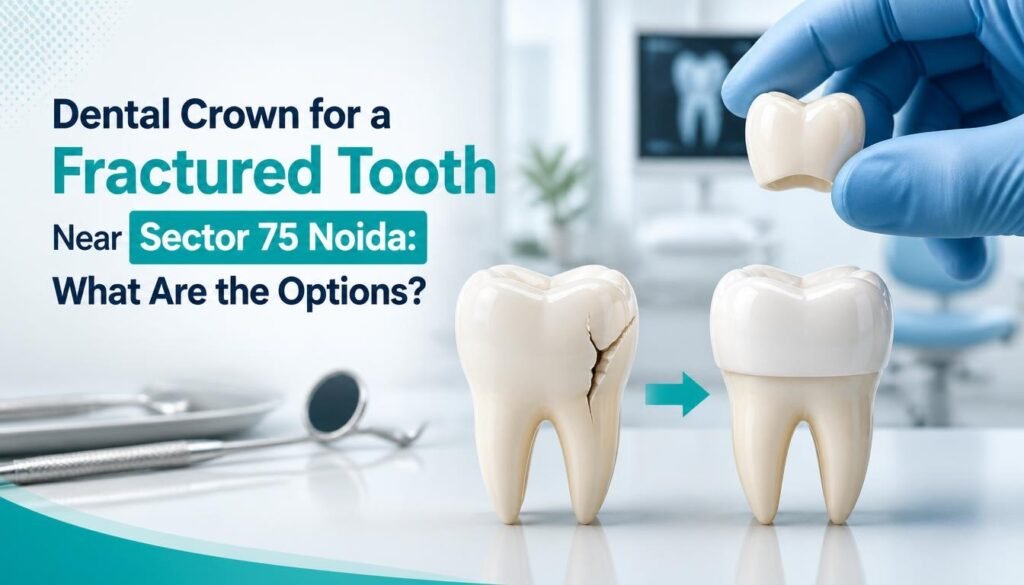
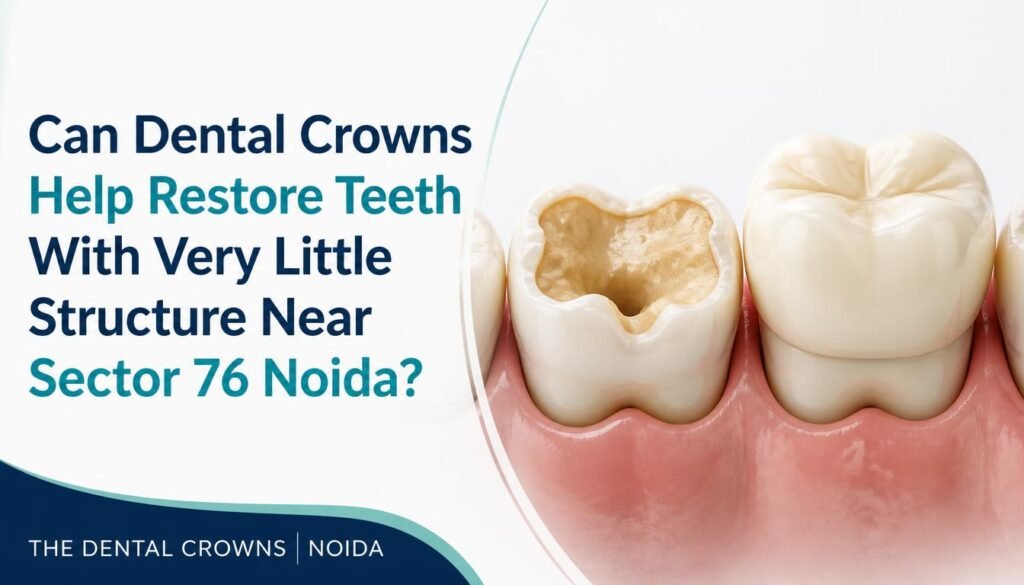
3. Dental Crown Treatment
A dental crown is a custom-made cap that covers the visible portion of a damaged or weakened tooth.
It can help restore the tooth’s shape, strength, chewing function, and appearance. Crowns may be recommended when a tooth has lost substantial structure because of decay, fracture, or a large existing filling.
Best suited for: Severely weakened, extensively damaged, cracked, or heavily restored teeth that can still be predictably saved.
Learn more about Dental Crown Treatment in Sector 76 Noida.
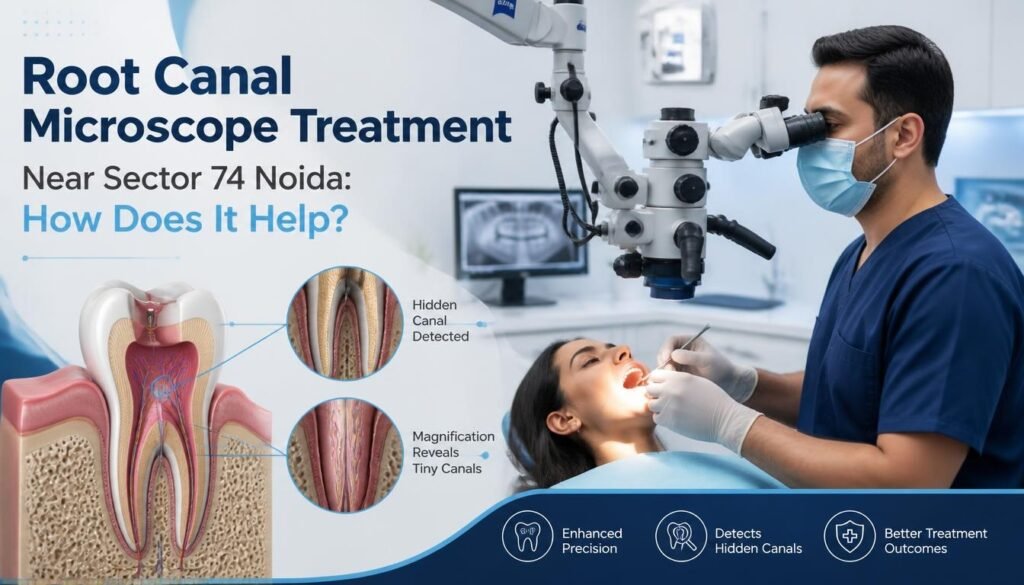
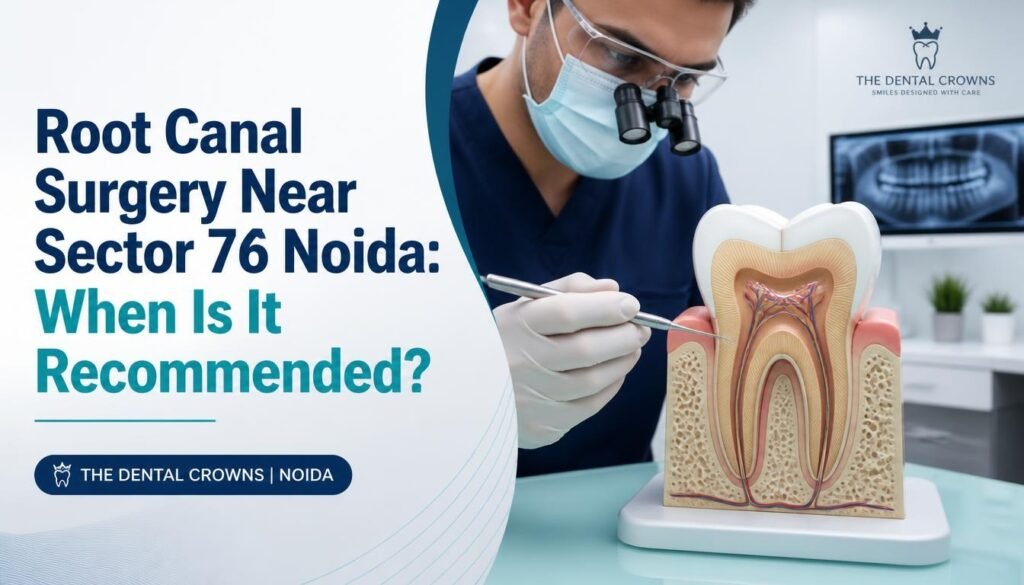
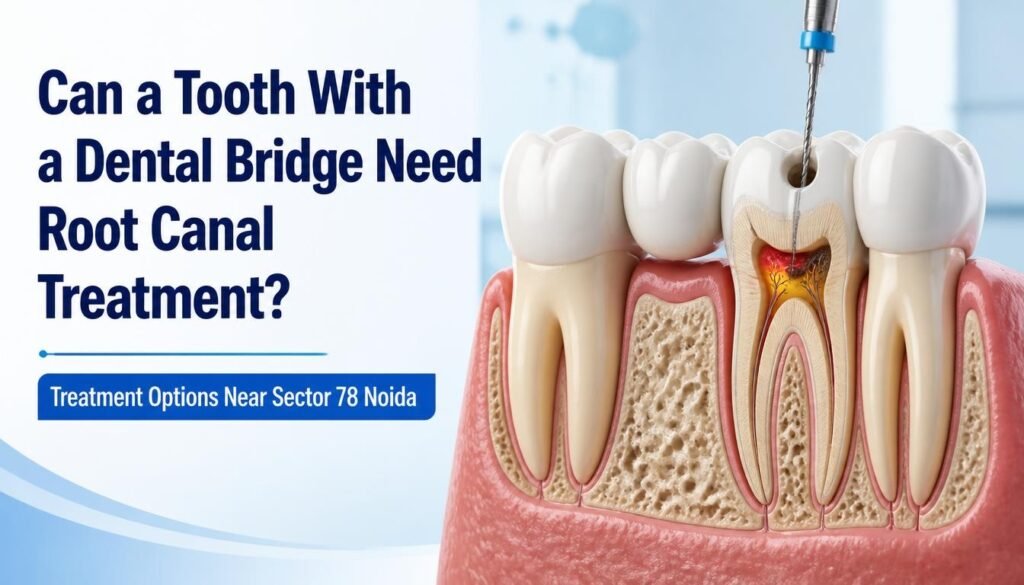
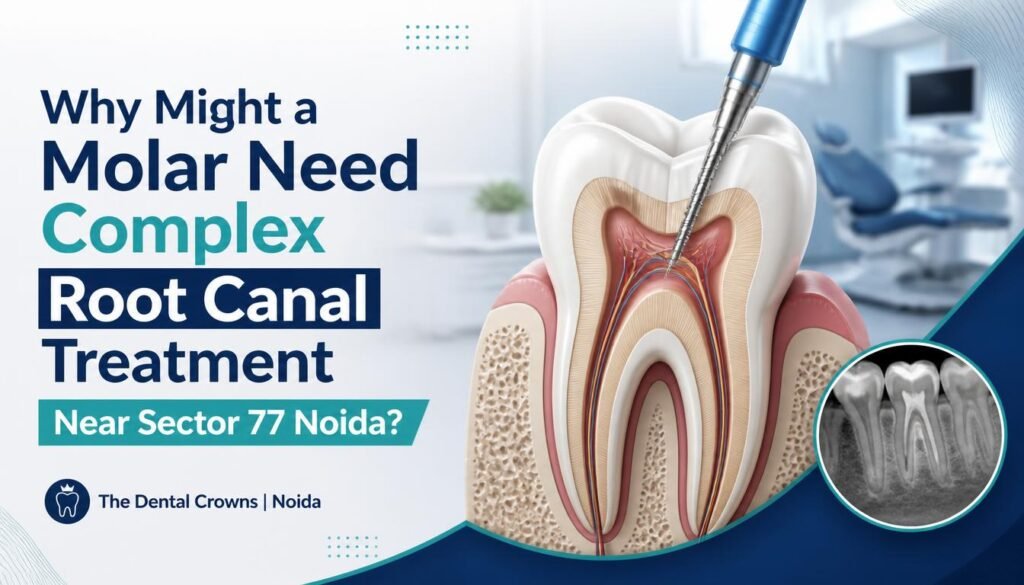
4. Root Canal Treatment
If tooth damage has affected the pulp, root canal treatment may be necessary.
During the procedure, the dentist removes the infected or inflamed pulp, cleans and disinfects the root canals, and seals them.
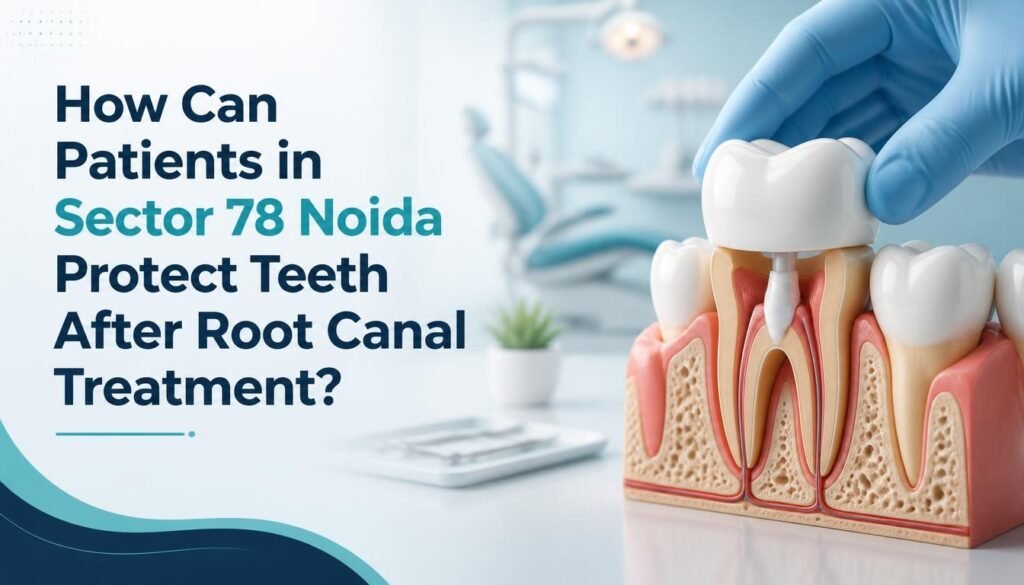
A suitable permanent restoration, such as a dental crown, may subsequently be recommended to protect the remaining tooth structure.
Best suited for: Teeth with pulp infection or inflammation that remain restorable.
Explore Root Canal Treatment Planning for Patients From Sector 76 Noida.
5. Inlays and Onlays
Inlays and onlays are indirect restorations that can repair certain damaged teeth.
An inlay restores a specific area within the tooth, while an onlay covers a larger portion and may extend over one or more cusps.
These restorations can sometimes be considered when a regular filling is insufficient but a full dental crown may not be necessary.
Best suited for: Selected teeth with moderate to extensive damage and sufficient remaining healthy structure.
When Is a Dental Crown Recommended for a Damaged Tooth?
A dental crown is often considered when a tooth has lost significant structural strength.
Your dentist may recommend a crown if:
- A large cavity has weakened the tooth.
- The tooth has a substantial fracture.
- An old filling occupies a large portion of the tooth.
- The tooth has undergone root canal treatment and needs protection.
- The tooth has become severely worn.
- The remaining tooth structure requires additional coverage.
A dental crown can cover and protect the remaining tooth structure while helping restore normal chewing function.
However, a crown is not automatically the right treatment for every damaged tooth. Your dentist should first assess whether the tooth can support the restoration.
For more information, read Dental Crown Treatment Near Noida Sector 76: What to Expect.
Can a Severely Decayed Tooth Be Saved?
Sometimes, even a severely decayed tooth can be restored without extraction.
If the decay has reached the pulp, root canal treatment may be required to remove infected tissue. Afterward, the dentist may rebuild the tooth and recommend a crown to provide additional protection.
The possibility of saving the tooth depends on:
- Whether the decay extends below the gum line
- The condition and integrity of the tooth root
- The amount of healthy tooth structure remaining
- Whether the tooth has a vertical root fracture
- The condition of the surrounding bone and gums
- Whether a stable restoration can be placed
If the tooth cannot be restored predictably, extraction may become necessary. Your dentist should explain the reasons and discuss alternative treatment options before proceeding.
Root Canal Treatment vs Tooth Extraction: Which Is Better?
One of the most common concerns among patients is whether root canal treatment is better than removing a damaged tooth.
| Root Canal Treatment | Tooth Extraction |
|---|---|
| Preserves the natural tooth | Removes the affected tooth |
| Treats infection inside the tooth | Removes the tooth from its socket |
| May require a crown afterward | May require a bridge or implant for replacement |
| Maintains the natural tooth in function | Requires planning for the missing tooth, depending on its location |
When a natural tooth can be successfully restored, preserving it may offer important functional benefits.
The American Association of Endodontists explains why saving natural teeth should be considered whenever clinically appropriate.
Read more: Saving Your Natural Tooth – American Association of Endodontists.
Ultimately, the best treatment depends on your dental condition and professional diagnosis.
Signs You Should Not Ignore in a Damaged Tooth
If you notice any of the following symptoms, consider arranging a dental examination promptly:
- Persistent toothache
- Pain while chewing or biting
- Sensitivity to hot or cold foods
- A visible crack or broken tooth
- Swelling around the gums
- Bleeding or inflamed gums
- Bad taste or discharge near the affected tooth
- Sudden tooth discoloration
- Pain that interrupts sleep
Facial swelling, fever, or difficulty swallowing or breathing may indicate a more serious problem and requires urgent medical or dental attention.
Early diagnosis can help identify suitable treatment options before the damage becomes more extensive.
How Is a Damaged Tooth Restored? Step-by-Step Procedure
If your tooth can be saved, the treatment process generally involves the following stages.
Step 1: Dental Examination
The dentist examines the damaged tooth, checks your symptoms, and reviews your dental history.
Step 2: Diagnostic Imaging
Dental X-rays may be recommended to evaluate the extent of decay, the root structure, and surrounding tissues.
Step 3: Treatment Planning
Based on the findings, the dentist discusses whether you need a filling, bonding, root canal treatment, a crown, or another restoration.
Step 4: Treating the Damage
The affected tissue is treated or removed as appropriate. If the pulp is infected, root canal treatment may be performed.
Step 5: Restoring the Tooth
The tooth is restored using a suitable material or custom-made restoration to improve its strength, function, and appearance.
Step 6: Follow-Up and Aftercare
Follow-up visits help assess healing, restoration stability, and overall oral health.
The number of appointments depends on the type and complexity of treatment.
How to Prevent Further Damage to Your Teeth
Taking care of your teeth after restorative treatment is important for maintaining their long-term health.
Here are some practical tips:
- Brush twice daily using fluoride toothpaste.
- Clean between your teeth every day using floss or an appropriate interdental cleaner.
- Avoid biting extremely hard objects such as ice or hard shells.
- Limit frequent sugary snacks and drinks.
- Visit your dentist regularly for preventive examinations.
- Seek treatment for cavities before they become extensive.
- Discuss a night guard with your dentist if you grind or clench your teeth.
- Follow the aftercare instructions provided after dental treatment.
For additional guidance, visit the American Dental Association’s oral health resources.
Why Choose The Dental Crowns for Tooth Restoration in Noida?
If you are searching for damaged tooth treatment near Sector 76 Noida, The Dental Crowns offers dental consultations and restorative treatment options at Civitech Stadia, Sector 79, Noida.
The clinic provides various dental services, including:
- Dental crown treatment
- Root canal treatment
- Dental implants
- Tooth-coloured restorations
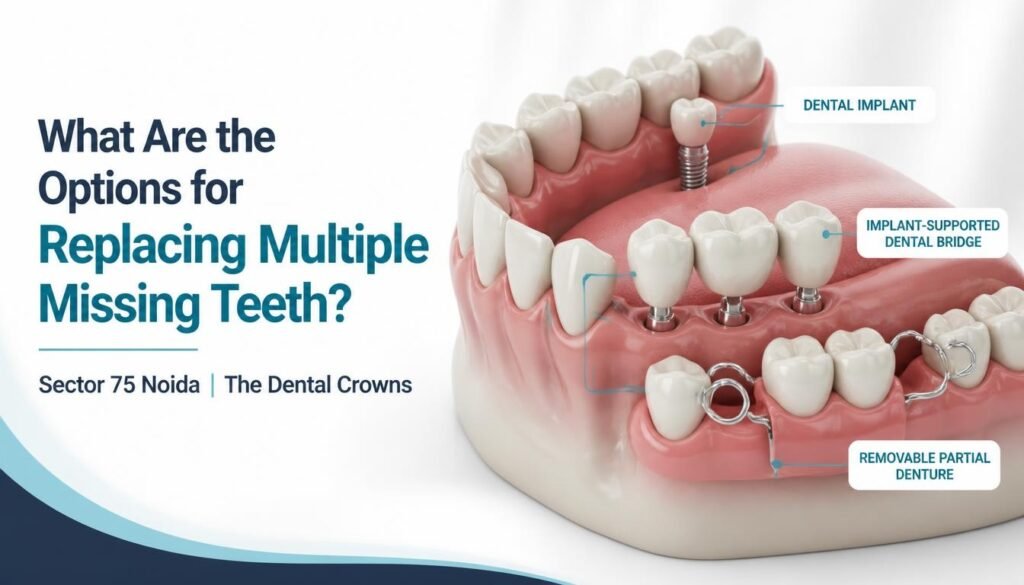
- Dental bridges
- Other restorative and general dental treatments
Patients from Sector 76 and surrounding areas can consult a dental professional to understand their options for restoring damaged teeth.
Explore the complete range of Dental Services at The Dental Crowns.
Frequently Asked Questions (FAQs)
1. Can a damaged tooth be restored without extraction?
Yes. Many damaged teeth can be restored using fillings, bonding, dental crowns, or root canal treatment, depending on the severity of the damage and the remaining healthy tooth structure.
2. Can a broken tooth be repaired without removing it?
Yes. A broken tooth may be repaired using dental bonding, a filling, or a dental crown. The treatment depends on the location and extent of the fracture.
3. Can a severely decayed tooth be saved?
In some cases, yes. If the tooth remains structurally restorable, root canal treatment followed by an appropriate restoration may help preserve it.
4. Is root canal treatment better than tooth extraction?
When a tooth can be predictably restored, root canal treatment may help preserve the natural tooth. However, extraction may be necessary if the tooth is too severely damaged to save.
5. Can a dental crown restore a cracked tooth?
A dental crown may be recommended for certain cracked teeth to provide coverage and protection. However, the depth and location of the crack must be assessed first.
6. Can I get a dental crown without a root canal?
Yes. A crown may be placed on a tooth that does not require root canal treatment if the tooth has sufficient healthy structure and the pulp is not irreversibly damaged.
7. How long does a restored tooth last?
The lifespan of a restored tooth depends on the type of treatment, restoration material, oral hygiene, biting forces, and regular dental care. Proper maintenance can help improve longevity.
8. Is dental crown treatment painful?
Local anaesthesia is commonly used when necessary during crown preparation. Some temporary sensitivity or gum tenderness may occur afterward. Persistent pain should be evaluated by your dentist.
9. What is the cost of damaged tooth restoration in Sector 76 Noida?
The cost depends on the type of restoration, material used, extent of damage, and whether additional treatment such as root canal therapy is required. A dental examination is needed for an accurate treatment estimate.
10. Where can I get damaged tooth treatment near Sector 76 Noida?
The Dental Crowns is located at Civitech Stadia, Sector 79, Noida, and provides dental consultation and restorative treatments for patients from Sector 76 and nearby areas.
Conclusion
A damaged tooth does not always mean that extraction is necessary.
With timely diagnosis and appropriate restorative treatment, many teeth affected by decay, cracks, fractures, or weakened structure can be preserved.
Depending on the condition of your tooth, treatments such as dental fillings, bonding, root canal treatment, or dental crowns may help restore its function and appearance.
If you are experiencing tooth pain or have a cracked, broken, or severely decayed tooth, consider consulting a qualified dentist to determine whether the tooth can be saved.
Looking for damaged tooth restoration without extraction in Sector 76 Noida? Contact The Dental Crowns to schedule a consultation and understand the treatment options suitable for your dental condition.
Disclaimer: This blog is intended for general educational purposes only. It does not replace a professional dental examination, diagnosis, or treatment recommendation.