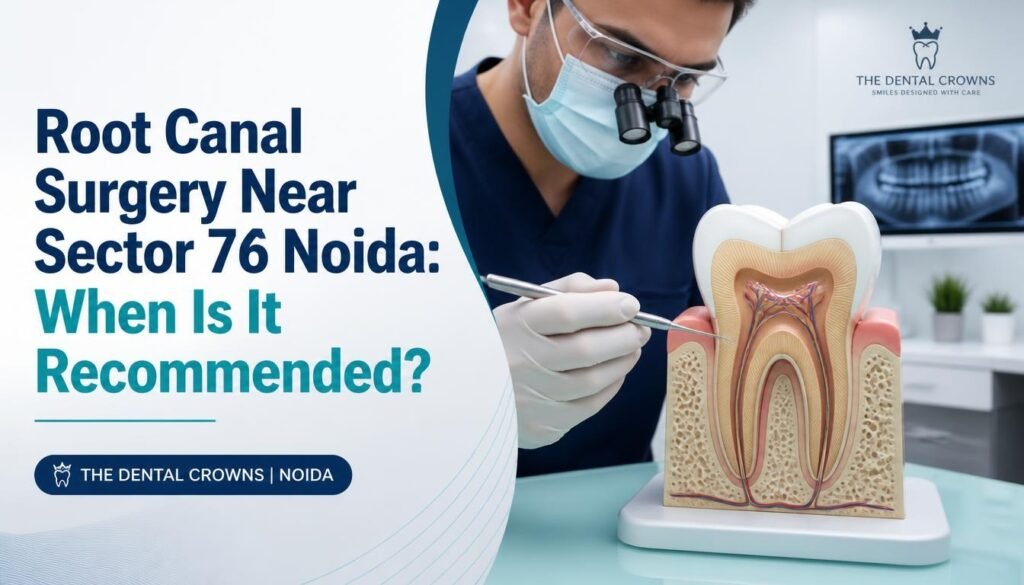
Tooth pain, prolonged sensitivity, or discomfort while chewing can be signs of an underlying dental infection. When the soft tissue inside a tooth becomes infected or inflamed, a dentist may recommend root canal treatment to eliminate the infection and preserve the natural tooth. However, when the root canal system is complicated or contains extremely narrow canals, advanced dental technology can make a significant difference in how the dentist examines and treats the affected tooth.
One such advancement is microscope-assisted root canal treatment. Patients looking for root canal microscope treatment near Sector 74 Noida may benefit from understanding how dental operating microscopes work, why they are used in modern endodontics, and how they can support more precise treatment.
Let’s explore everything you need to know.
What Is Microscope-Assisted Root Canal Treatment?
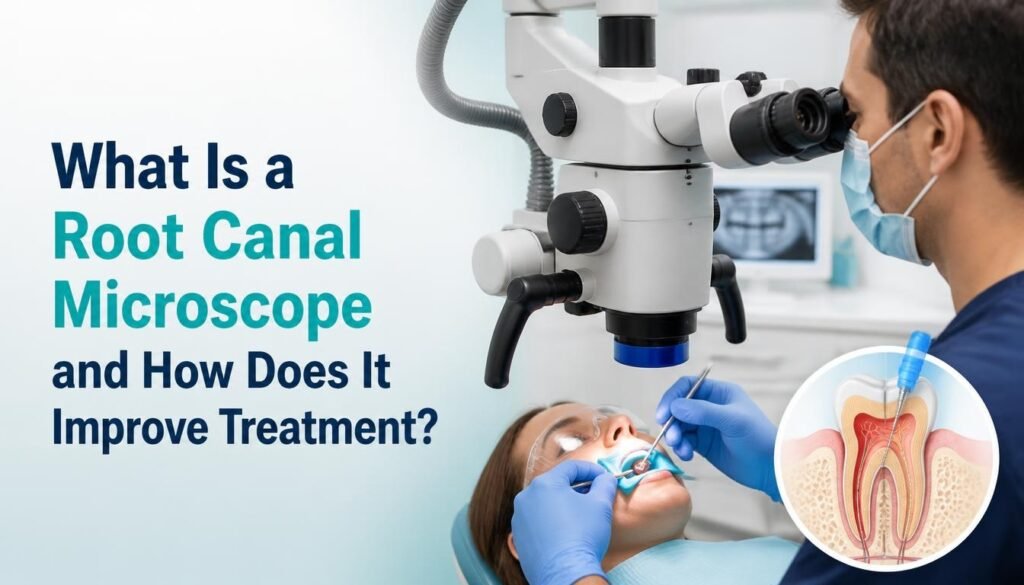
Microscope-assisted root canal treatment is an advanced endodontic procedure in which a dentist uses a specialised dental operating microscope to examine the internal structures of a tooth during treatment.
A conventional dental examination may not always provide a clear view of extremely small root canal openings, narrow passages, hidden canals, or tiny cracks. A dental operating microscope provides enhanced magnification and focused illumination, helping the dentist visualise these structures more clearly.
Unlike ordinary dental magnifying glasses, an operating microscope provides adjustable magnification and illumination, making it particularly useful in complex root canal procedures.
How Does a Dental Microscope Help During Root Canal Treatment?
A dental microscope is not simply an additional piece of equipment. It can help dentists perform several important steps with improved visibility.
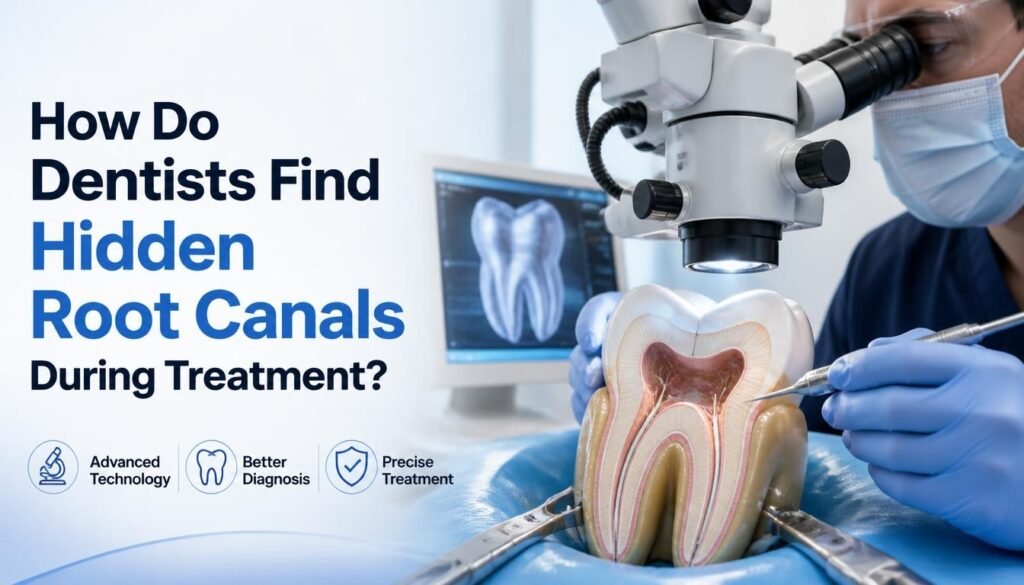
1. Helps Identify Hidden Root Canals
Some teeth, particularly molars, have complicated root canal anatomy. Certain canals may be extremely narrow, curved, or difficult to locate during a conventional examination.
If a canal is overlooked, bacteria and infected tissue may remain inside the tooth, potentially contributing to persistent infection.
Microscope-assisted treatment helps dentists examine the pulp chamber more closely and locate additional canal openings that might otherwise be difficult to identify.
2. Provides Better Visibility and Precision
Root canal treatment involves working inside very small spaces. Even minor anatomical variations can make the procedure challenging.
A dental operating microscope provides magnified images with focused lighting, allowing the dentist to observe fine details during access preparation, canal cleaning, and other treatment steps.
This improved visualisation can support more controlled and precise treatment.
3. Helps Preserve Natural Tooth Structure
Preserving healthy tooth structure is an important consideration during root canal treatment.
Excessive removal of healthy dentine can weaken the remaining tooth. Magnification helps the dentist examine the internal tooth structure and work more selectively, potentially reducing unnecessary removal of healthy tissue.
The exact amount of tooth structure preserved depends on the tooth’s condition and the complexity of the procedure.
4. Helps Manage Complicated Root Canal Cases
Not every root canal procedure is straightforward. Some patients may have calcified canals, unusual root anatomy, previous unsuccessful root canal treatment, or separated dental instruments inside a canal.
A dental operating microscope can assist in identifying and managing these complications by providing a clearer view of the treatment area.
It may be particularly useful in selected root canal retreatment cases where the dentist needs to locate previously missed canals or remove existing filling materials.
5. Assists in Identifying Small Cracks and Defects
Tiny cracks, perforations, and other structural defects can sometimes be difficult to detect with the naked eye.
Magnification and focused illumination help dentists examine suspicious areas more carefully. Early identification can help the dentist decide whether the tooth can be treated and preserved.
However, not every crack can be identified using a microscope alone. Additional clinical examinations and dental imaging may be necessary.
Who Can Benefit from Microscope-Assisted Root Canal Treatment?
Microscope-assisted endodontic treatment may be particularly helpful for patients experiencing:
- Complicated root canal anatomy.
- Extremely narrow or calcified root canals.
- Persistent tooth pain after previous root canal treatment.
- Suspected missed root canals.
- Separated instruments inside the root canal.
- Small cracks or defects requiring detailed examination.
- Cases where additional precision is required during treatment.
It is important to understand that every patient does not necessarily require microscope-assisted treatment. A dentist or endodontist will evaluate the tooth and recommend an appropriate treatment approach.
Is Microscope-Assisted Root Canal Treatment Better Than Conventional Root Canal Treatment?
Both conventional and microscope-assisted root canal treatments aim to remove infected pulp, clean and disinfect the root canal system, and seal the canals to prevent reinfection.
The primary difference is the level of visual magnification available to the dentist.
A conventional procedure may be suitable for many routine cases. However, a microscope can provide additional visual assistance when the tooth has complicated anatomy or when the dentist needs to examine very small structures.
Here is a simple comparison:
| Feature | Conventional RCT | Microscope-Assisted RCT |
|---|---|---|
| Visualisation | Direct clinical vision and available magnification | Enhanced magnification and illumination |
| Hidden canals | May be difficult to identify | Easier to inspect visually |
| Complex anatomy | Depends on clinical visibility and experience | Additional visual assistance |
| Small cracks | Can be challenging to examine | Better visual inspection |
| Precision | Depends on clinical skill and available equipment | Enhanced visual guidance |
| Treatment suitability | Many routine cases | Particularly useful in selected complex cases |
Important: A microscope does not guarantee a successful root canal or eliminate the possibility of complications. The dentist’s expertise, diagnosis, infection control, treatment technique, and final restoration all contribute to the outcome.
What Happens During Microscope-Assisted Root Canal Treatment?
If your dentist recommends microscope-assisted treatment, the procedure generally involves the following stages:
Step 1: Dental Examination
The dentist examines your teeth, discusses your symptoms, and may recommend dental X-rays or other imaging to understand the extent of infection.
Step 2: Local Anaesthesia
Local anaesthesia is administered to numb the affected area and help keep you comfortable during treatment.
Step 3: Accessing the Tooth
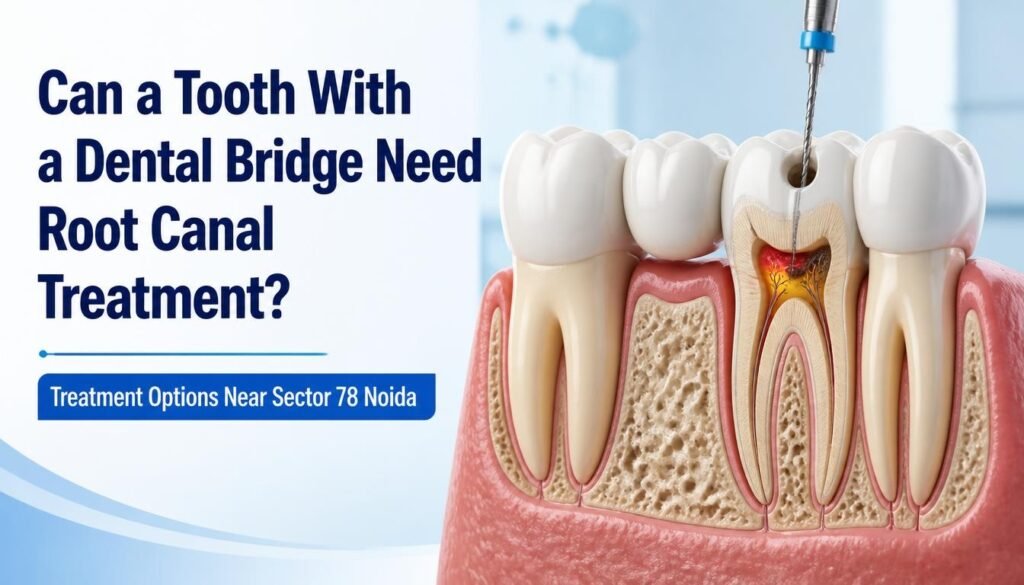
A small opening is made in the tooth to access the infected pulp chamber. The microscope can help the dentist examine the internal structures more closely.
Step 4: Locating and Cleaning the Root Canals
The infected or inflamed pulp is removed. The root canals are carefully cleaned, shaped, and disinfected.
Step 5: Filling and Sealing
After cleaning and preparation, the root canals are filled with an appropriate dental material and sealed to reduce the risk of reinfection.
Step 6: Final Restoration
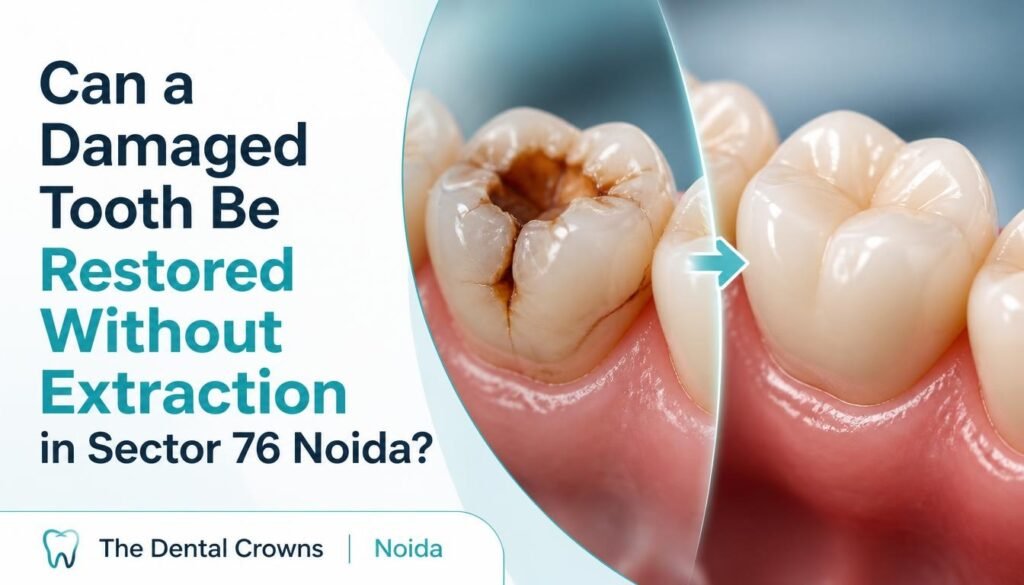
Depending on the amount of remaining tooth structure and the tooth’s location, a permanent filling or dental crown may be recommended to restore strength and function.
Is Microscope-Assisted Root Canal Treatment Painful?
One of the biggest concerns patients have before undergoing root canal treatment is pain.
Some tenderness or sensitivity may occur for a few days after treatment. However, severe, worsening, or persistent pain should be evaluated by your dentist.
The use of a dental microscope primarily improves visualisation; it does not replace local anaesthesia or independently guarantee a pain-free experience.
Why Should You Choose a Qualified Dentist for Root Canal Treatment Near Sector 74 Noida?
Choosing the right dental professional is just as important as the technology used during treatment.
If you are searching for advanced root canal treatment near Sector 74 Noida, consider the following factors before making your decision:
- Clinical experience: Look for a dentist with appropriate training and experience in endodontic procedures.
- Accurate diagnosis: A proper examination and suitable dental imaging help determine the condition of the affected tooth.
- Modern dental equipment: Ask about the technology available for examining and treating complicated root canal cases.
- Sterilisation standards: Proper infection-control and sterilisation practices are essential.
- Treatment planning: Your dentist should explain the procedure, possible complications, expected visits, and restoration requirements.
- Follow-up care: Regular reviews help monitor healing and the condition of the treated tooth.
Root Canal Treatment Near Sector 74 Noida at The Dental Crowns
Patients searching for root canal treatment near Sector 74 Noida can explore the dental services available at The Dental Crowns, located at Civitech Stadia, Sector 79, Noida.
The clinic provides root canal treatment with a patient-focused approach, experienced dental professionals, and modern dental technology.
The dental team includes Dr. Charu, BDS, MDS, a Conservative Dentist and Endodontist, along with other dental specialists.
At The Dental Crowns, treatment planning focuses on understanding the patient’s dental condition and recommending appropriate care.
Whether you are experiencing persistent toothache, sensitivity, or discomfort while chewing, an early dental consultation can help identify the cause and determine whether root canal treatment is required.
If you specifically require microscope-assisted treatment, ask the clinic about microscope availability and whether it is suitable for your case before booking.
Clinic Details:
The Dental Crowns
Shop No. 16, 1st Floor, Civitech Stadia, Sector 79, Noida, Uttar Pradesh – 201301
Phone: +91 89202 71787
Explore our Root Canal Treatment Services or schedule a dental appointment.
Frequently Asked Questions (FAQs)
1. What is microscope-assisted root canal treatment?
Microscope-assisted root canal treatment uses a specialised dental operating microscope to magnify and illuminate the internal structures of a tooth, helping dentists examine small canals and perform complex endodontic procedures with better visualisation.
2. How many times can a dental microscope magnify a tooth?
Some dental operating microscopes can magnify vision up to 25 times, depending on the equipment and magnification settings.
3. Is microscope-assisted root canal treatment more effective?
A microscope can improve visualisation and help identify hidden canals, calcifications, and other anatomical details. However, successful treatment also depends on the dentist’s expertise, diagnosis, infection control, and appropriate restoration.
4. Can a dental microscope help identify missed root canals?
Yes. A dental operating microscope can help dentists identify additional or previously missed root canals, particularly in teeth with complicated internal anatomy.
5. Is microscope-assisted root canal treatment suitable for everyone?
No. It is especially useful in selected complex cases. Many routine root canal procedures can be successfully performed without an operating microscope.
6. Does microscope-assisted root canal treatment hurt?
The microscope itself does not cause pain. Root canal treatment is generally performed under local anaesthesia to minimise discomfort. Mild tenderness may occur after the procedure.
7. Do I need a dental crown after root canal treatment?
A dental crown may be recommended depending on the tooth’s location, the amount of remaining natural structure, and the risk of fracture. Molars and premolars often require additional protection.
Conclusion
For patients searching for root canal microscope treatment near Sector 74 Noida, understanding the available treatment options and choosing a qualified dental professional are important steps towards protecting their natural teeth.
If you are experiencing tooth pain or suspect a dental infection, do not delay your consultation. Contact The Dental Crowns to discuss your symptoms and explore suitable root canal treatment options.