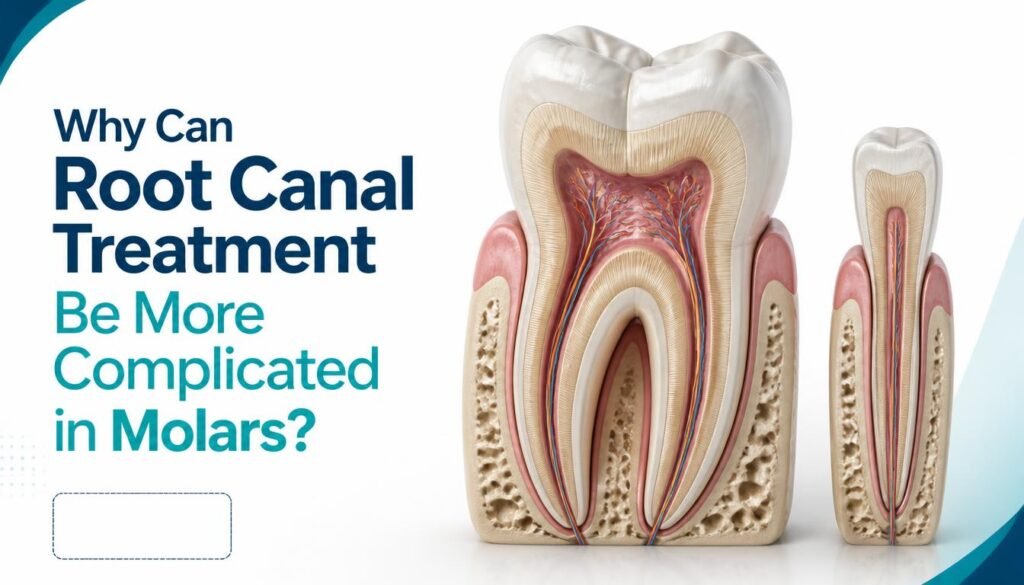
Have you been told that your tooth has curved roots and are wondering whether a root canal treatment is still possible? You are not alone. Many patients become concerned when dental X-rays reveal unusually shaped, bent or curved tooth roots. They may worry that the treatment will be too complicated or that the tooth will need to be extracted.
The good news is that a root canal can often be successfully performed on a tooth with curved roots. However, these cases require careful diagnosis, appropriate dental instruments and specialised treatment techniques.
Modern endodontic techniques have made it possible for dentists to treat many complicated root canal cases while preserving the natural tooth. The final decision depends on the degree of root curvature, the condition of the tooth and the complexity of its internal canal structure.
If you are considering root canal treatment in Noida, understanding how curved root canals are managed can help you make a more informed decision about your dental health.
What Are Curved Roots in Teeth?
Every tooth has one or more roots that anchor it to the jawbone. Inside these roots are narrow passages called root canals, which contain the dental pulp, including nerves and blood vessels.
In some people, tooth roots are not perfectly straight. Instead, they may bend or curve in one or multiple directions. This condition is commonly described as curved root anatomy.
Curved roots are a natural anatomical variation and do not necessarily indicate a dental problem.
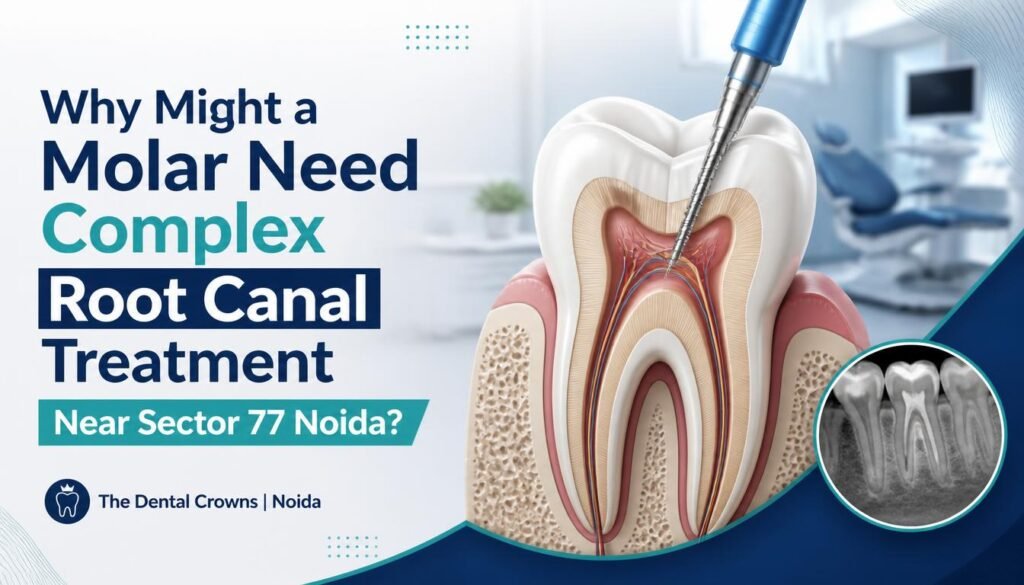
However, when the pulp inside such a tooth becomes infected or severely inflamed, performing root canal treatment can be more challenging because the dentist must carefully navigate the curved canals.
Curved root anatomy is particularly common in certain molars, where multiple roots and narrow canals can make treatment more complex.
Can a Root Canal Be Done on a Tooth With Curved Roots?
Yes, root canal treatment is possible on many teeth with curved roots.
The presence of curved roots does not automatically mean that a tooth cannot be saved. Modern endodontic instruments and treatment methods allow dentists to carefully clean, shape, disinfect and seal many curved root canals.
The main challenge is reaching the entire length of the curved canal without damaging its original structure.
The dentist must assess several factors before beginning treatment:
- The degree and direction of root curvature.
- The number of roots and root canals.
- Whether the canals are narrow, blocked or calcified.
- The extent of infection inside the tooth.
- The amount of healthy tooth structure remaining.
- Whether the tooth can be restored after treatment.
Depending on these findings, the dentist may perform the procedure using specialised flexible instruments or refer the patient to an endodontist for advanced treatment.
Why Is Root Canal Treatment Difficult When Roots Are Curved?
Unlike straight canals, curved root canals require more precision because the dental instruments must follow the natural shape of the canal.
Some of the common challenges include:
1. Difficulty Reaching the Entire Root Canal
A sharply curved canal can make it difficult for conventional dental instruments to reach the tip of the root.
If the full canal cannot be properly accessed, cleaning and disinfection may become more challenging.
2. Risk of Instrument Separation
Root canal instruments experience additional mechanical stress when navigating sharply curved canals.
In certain situations, an instrument may fracture or separate inside the canal, making the procedure more complicated.
3. Canal Transportation
Canal transportation occurs when instrumentation unintentionally changes the original pathway or shape of the root canal.
This can affect cleaning, shaping and the final sealing of the canal.
4. Narrow or Calcified Canals
Some curved canals are also extremely narrow or partially blocked by calcified deposits.
These conditions can make it harder for the dentist to identify and negotiate the natural canal pathway.
5. Increased Treatment Complexity
Depending on the severity of the curvature, the dentist may need additional diagnostic imaging, magnification, specialised instruments and more treatment time.
How Do Dentists Perform Root Canal Treatment on Curved Roots?
Modern dentistry offers several techniques to manage curved root canals safely and effectively.
The exact approach depends on the patient’s tooth anatomy and the dentist’s clinical assessment.
1. Detailed Dental Examination and X-Rays
The first step is to understand the internal structure of the affected tooth.
Dental X-rays help the dentist assess the number of roots, the approximate canal length, curvature and surrounding bone condition.
However, CBCT is not necessary for every root canal case. It is used when the additional information is expected to improve diagnosis or treatment planning.
2. Flexible Nickel-Titanium Instruments
One of the important advancements in modern endodontics is the use of nickel-titanium (NiTi) instruments.
These instruments are more flexible than conventional stainless-steel instruments and can better follow the natural pathway of curved root canals when used appropriately.
Their flexibility helps dentists clean and shape difficult canals while reducing the risk of altering the original canal anatomy.
3. Rotary and Reciprocating Endodontic Systems
Modern root canal systems may use rotary or reciprocating instruments to clean and shape the inside of the tooth.
These instruments are designed to work within the root canal’s natural pathway.
The choice of instrument depends on the canal’s curvature, width, condition and the dentist’s experience.
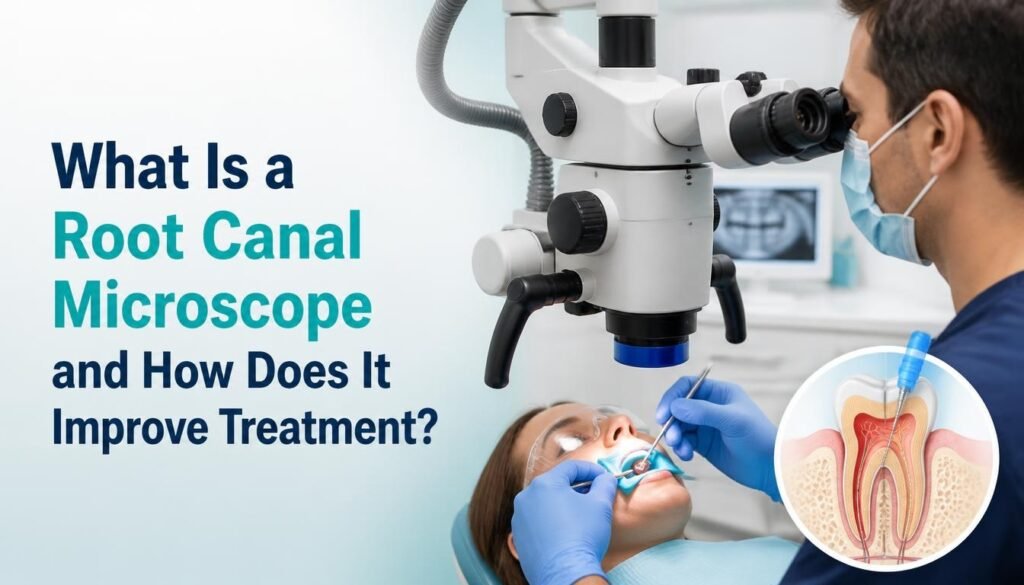
4. Dental Magnification and Microscopes
In complicated root canal cases, magnification can help dentists identify small canal openings and understand difficult internal structures.
An operating microscope provides improved visibility and can be particularly useful when treating narrow, calcified or unusually curved canals.
5. Cleaning, Disinfection and Sealing
After accessing and shaping the canals, the dentist uses appropriate irrigation solutions to help remove bacteria and debris.
Once the canals have been adequately cleaned and dried, they are filled with a suitable root canal filling material and sealed.
Is Root Canal Treatment on Curved Roots Risky?
Root canal treatment on curved roots is more technically demanding than treatment on straightforward canals. However, it does not automatically mean that the procedure is unsafe or unsuccessful.
Some potential complications include:
- Instrument separation inside the canal.
- Incomplete cleaning of complex canal anatomy.
- Canal blockage or transportation.
- Root perforation.
- Persistent infection if bacteria remain inside the canal.
These complications are not inevitable. Careful diagnosis, appropriate instrumentation and an experienced clinician can help manage the risks.
In particularly difficult cases, consultation with an endodontist may improve treatment planning.
Does a Tooth With Curved Roots Always Need Extraction?
No. Curved roots alone are not a reason to remove a tooth.
If the tooth has sufficient healthy structure, adequate supporting bone and a manageable infection, root canal treatment may help preserve it.
However, extraction may be considered if the tooth has:
- A severe vertical root fracture.
- Extensive damage that makes restoration impossible.
- Advanced supporting bone loss.
- An infection or structural problem that cannot be predictably managed.
The dentist must evaluate the complete condition of the tooth before recommending extraction.
Whenever possible, preserving a natural tooth is worth considering, but treatment decisions should be based on individual clinical findings.
Does a Curved Root Canal Require More Time?
It can.
The treatment duration depends on the degree of curvature, the number of canals, the presence of infection and how easily the canals can be accessed and cleaned.
A straightforward root canal may sometimes be completed in one appointment, whereas complicated curved root canal cases may require additional appointments.
The dentist will explain the expected treatment schedule after examining the tooth.
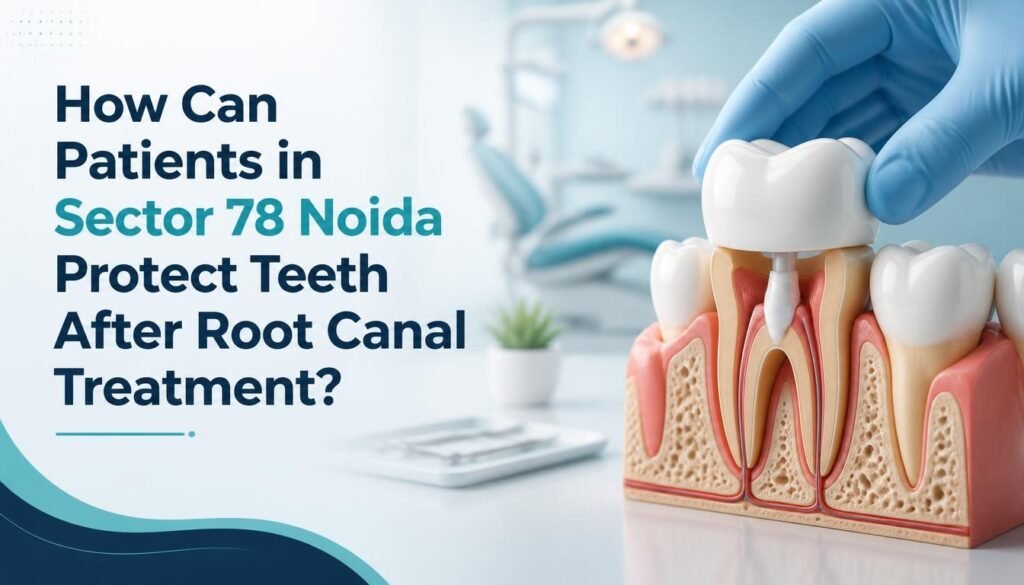
Do You Need a Dental Crown After Root Canal Treatment?
A dental crown may be recommended after root canal treatment, particularly when the tooth has lost significant structure due to decay, previous fillings or damage.
A crown covers and protects the remaining tooth structure and helps restore its shape and function.
However, not every root-canal-treated tooth automatically requires a crown. The recommendation depends on the tooth’s location, remaining structure and biting forces.
Read more about dental crown treatment in Noida to understand the available restoration options.
Where Can You Get Root Canal Treatment in Noida?
If you have been diagnosed with curved roots, it is important to get a proper dental assessment before deciding whether to undergo treatment or extraction.
At The Dental Crowns, located at Civitech Stadia, Sector 79, Noida, patients can consult the dental team regarding root canal treatment and other restorative dental procedures.
The clinic provides dental services including root canal treatment, dental crowns, dental implants and other general and cosmetic dental treatments.
Patients from Noida Sectors 74, 75, 76, 77, 78 and 79 can consider visiting the clinic for a dental consultation.
If you are experiencing persistent tooth pain, sensitivity, swelling or discomfort while chewing, do not delay a dental examination.
To discuss your dental concerns or schedule a consultation, contact The Dental Crowns at +91 89202 71787.
Frequently Asked Questions
1. Can a root canal be successful on a tooth with curved roots?
Yes. Many teeth with curved roots can be treated successfully using appropriate endodontic techniques. The outcome depends on the degree of curvature, canal anatomy, infection and the tooth’s overall condition.
2. Are curved roots a serious dental problem?
Not necessarily. Curved roots are often a natural anatomical variation. They become relevant when treatment such as root canal therapy is required because the canals may be more difficult to access and clean.
3. Can severely curved root canals be treated?
Some severely curved root canals can be treated using specialised instruments and advanced techniques. However, very complex cases may require an endodontist’s expertise. Treatment feasibility must be determined after clinical evaluation.
4. Is root canal treatment painful for teeth with curved roots?
Local anaesthesia is used to help keep patients comfortable during root canal treatment. Curved roots do not automatically make the procedure more painful. Some tenderness may occur after treatment.
5. Do curved roots increase the risk of root canal failure?
Complex canal anatomy can increase the technical challenges of treatment and the risk of procedural complications. Proper cleaning, disinfection, sealing and follow-up are important for a favourable outcome.
6. Will I need a CBCT scan before root canal treatment?
Not always. Conventional dental X-rays are sufficient for many cases. CBCT imaging may be recommended when a three-dimensional view of complex root anatomy is necessary for treatment planning.
7. Can a dentist use rotary files on curved root canals?
Yes. Flexible nickel-titanium rotary or reciprocating instruments may be used to navigate curved canals. The dentist selects the appropriate instruments and technique according to the individual case.
8. Should a tooth with curved roots be extracted instead of getting a root canal?
No, not automatically. If the tooth is restorable and its infection can be managed, root canal treatment may help preserve it. Extraction is considered when the tooth cannot be predictably saved.
Conclusion
Having curved roots does not mean that you have to lose your natural tooth. In many cases, root canal treatment on curved roots is possible with modern endodontic instruments, careful diagnosis and appropriate clinical techniques.
The most important step is to understand the complexity of your tooth’s anatomy and choose a treatment approach based on a professional dental examination.
If you are experiencing tooth pain or have been told that your roots are curved, consult a dentist before making a decision about extraction.
For patients looking for root canal treatment in Noida, The Dental Crowns offers dental consultations at its Sector 79 clinic to help patients understand their treatment options.
Disclaimer: This article is intended for general educational purposes and should not replace professional dental advice, diagnosis or treatment. The suitability and expected outcome of root canal treatment depend on individual clinical findings.