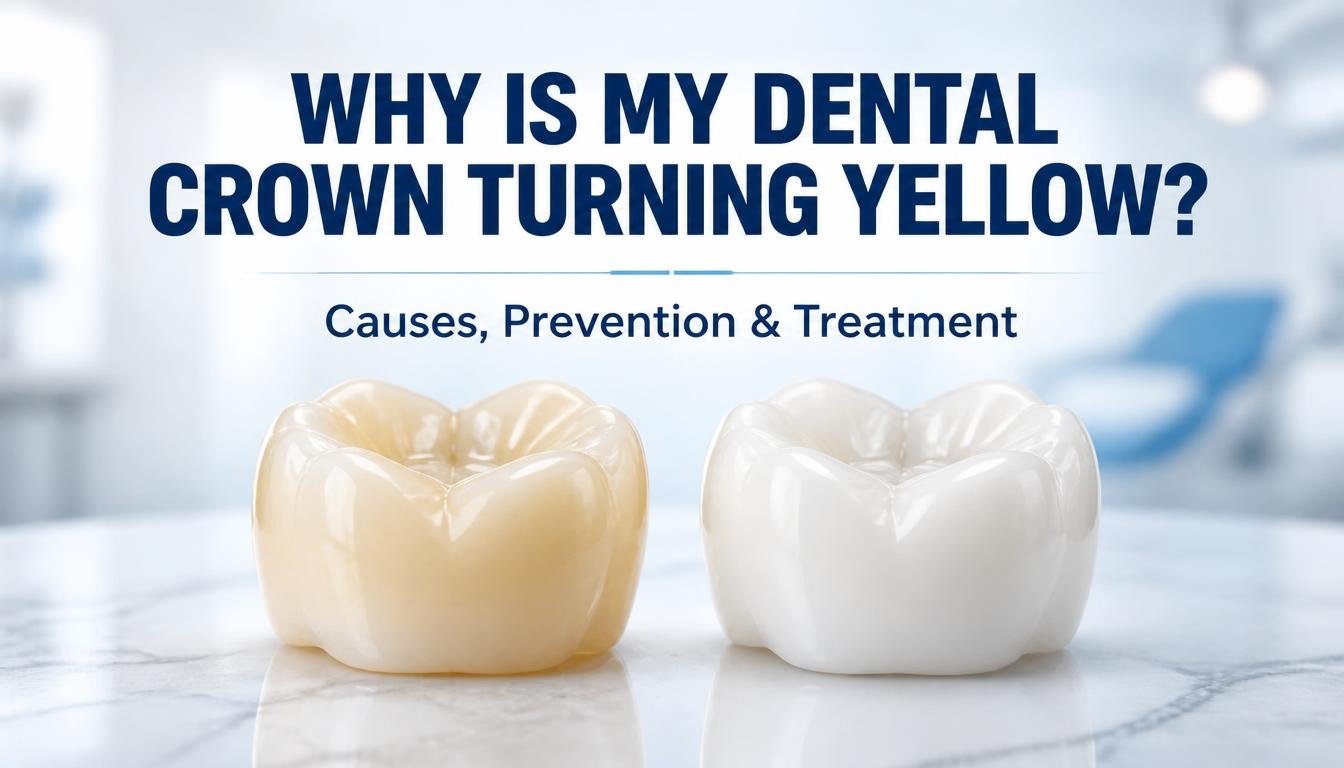
A dental crown is designed to restore a damaged tooth while maintaining its natural appearance. It protects the underlying tooth, improves its function and helps you smile confidently. However, noticing a yellowish colour around a dental crown can be frustrating, especially if it once matched your natural teeth perfectly.
So, why is my dental crown turning yellow? Is it because of coffee, tea, poor oral hygiene, ageing or a problem with the crown itself?
The answer depends on the crown material, the location of the discolouration and the condition of the surrounding gums and natural tooth. Although modern porcelain and ceramic crowns are generally resistant to staining, they are not completely immune to surface discolouration or changes around their edges.
In this guide, we will explain the common causes of yellow dental crowns, how to prevent discolouration, whether whitening treatments work on crowns and when you should consult a dentist.
Can Dental Crowns Turn Yellow?
Yes, dental crowns can develop a yellowish appearance over time, although the likelihood depends on the material used.
Porcelain and ceramic crowns are generally more resistant to staining than natural teeth. Their smooth surfaces help reduce the accumulation of pigments from everyday foods and beverages. However, surface wear, scratches, plaque accumulation and changes around the gumline can affect how a crown looks.
Crowns made from composite or resin-based materials may be more susceptible to staining than many ceramic alternatives.
It is also important to understand that sometimes the crown itself is not turning yellow. The natural tooth next to it, the exposed tooth structure near the gumline or plaque around the crown may be responsible for the colour difference.
Identifying the actual cause is the first step towards choosing the right treatment.
7 Common Reasons Why Your Dental Crown Is Turning Yellow
Several factors can contribute to dental crown discolouration. Here are the most common reasons.
1. Frequent Consumption of Tea and Coffee
Tea and coffee are among the most common causes of tooth staining. They contain coloured compounds that can accumulate on dental surfaces over time.
Although porcelain and ceramic crowns are more stain-resistant than natural enamel, surface deposits can still develop, particularly if the crown has become rough or its protective surface has been damaged.
Other foods and beverages that may contribute to surface staining include:
- Red wine
- Dark-coloured berries
- Cola and other dark beverages
- Tomato-based sauces
- Turmeric-rich foods
- Strongly pigmented spices
If you regularly consume these foods and drinks, maintaining good oral hygiene and rinsing your mouth with water afterwards can help reduce staining.
2. Plaque and Tartar Accumulation Around the Crown
Poor oral hygiene is another possible reason for a dental crown looking yellow.
Plaque is a sticky bacterial film that develops on teeth and dental restorations. If it is not removed regularly, it can harden into tartar, which cannot be removed effectively through ordinary brushing.
Plaque and tartar may accumulate around the gumline and at the edges of a dental crown, making the area look yellow or discoloured.
Regular brushing, flossing and professional dental cleaning can help maintain the appearance and health of the crowned tooth.
3. Wear and Tear of the Crown Surface
Dental crowns are designed to withstand everyday chewing forces, but they are not indestructible.
Over time, normal chewing, teeth grinding and accidental damage may affect the crown’s surface. Adjustments made during dental treatment can also affect its original finish if the surface is not properly polished afterwards.
A roughened or damaged ceramic surface may retain more plaque and staining deposits than a smooth, properly finished surface.
If your crown looks dull, scratched or increasingly yellow, ask your dentist to examine its surface.
4. Gum Recession Around the Dental Crown
Sometimes, the yellow or dark appearance is not caused by the crown material at all.
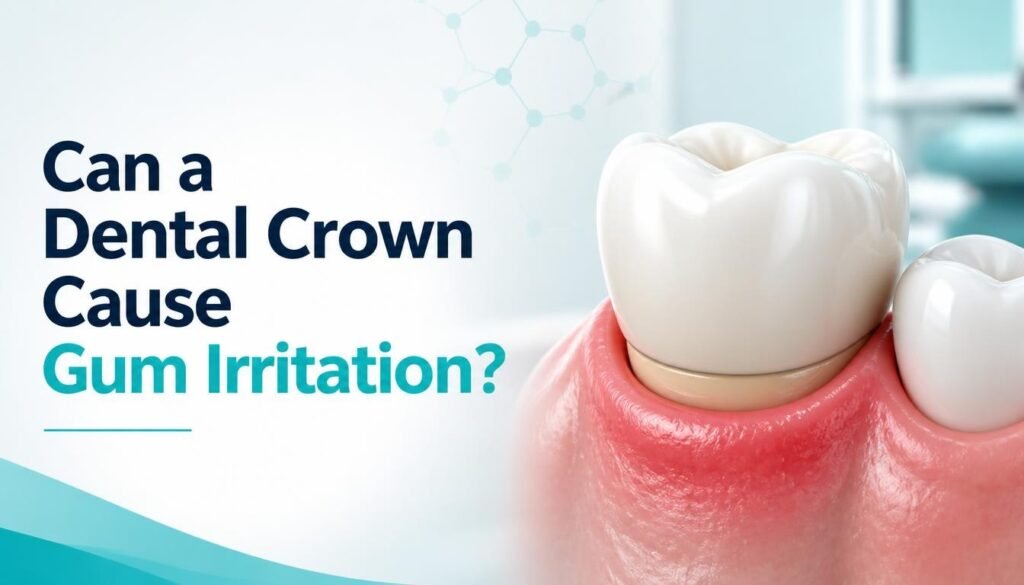
Gum recession occurs when the gum tissue moves away from the tooth, exposing more of the underlying tooth structure.
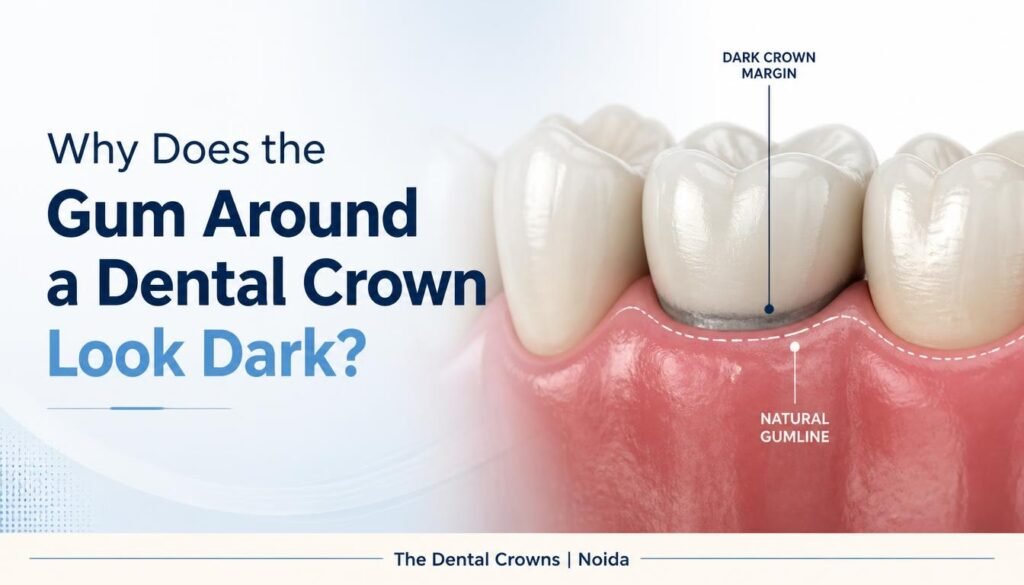
When this happens around a crowned tooth, the natural tooth near the crown’s edge may become visible. This can create a noticeable difference in colour between the crown and the surrounding area.
In some older porcelain-fused-to-metal crowns, gum recession may also reveal the underlying metal margin, creating a greyish or dark line.
A dental examination can help determine whether the issue is related to gum recession, the crown margin or another dental concern.
5. The Type of Dental Crown Material
Not all dental crowns have the same staining resistance.
The material used to manufacture your crown can influence its long-term appearance.
Porcelain Crowns: These crowns offer a natural-looking appearance and good resistance to everyday staining. However, surface damage and accumulated deposits can affect their appearance.
Zirconia Crowns: Zirconia is a strong ceramic material with good colour stability and resistance to staining. However, it still requires proper care and professional monitoring.
Porcelain-Fused-to-Metal Crowns: These crowns combine a metal structure with a porcelain outer layer. If the gum recedes, the metal margin may become visible and create a dark appearance.
Composite or Resin Crowns: These materials can be more susceptible to surface staining and wear compared with many ceramic alternatives.
If you are considering a new crown or experiencing discolouration, discuss the available materials with your dentist.
6. Smoking and Tobacco Consumption
Smoking and tobacco use can contribute to staining and poor oral health.
Tobacco contains substances that can leave yellowish or brown deposits on natural teeth and dental surfaces. These deposits may also accumulate around the edges of dental restorations.
Apart from affecting the appearance of your smile, tobacco use can negatively affect gum health.
Reducing or avoiding tobacco consumption is an important step towards maintaining healthy gums and a cleaner-looking smile.
7. Discolouration of the Natural Tooth Around the Crown
Another common reason for a crown appearing yellow is a colour difference between the restoration and surrounding natural teeth.
Your natural teeth may gradually become darker due to ageing, dietary habits, tobacco use or other causes of tooth discolouration.
Since dental crowns do not change colour in exactly the same way as natural enamel, the difference can become more noticeable over time.
In this situation, the crown may be perfectly fine. The surrounding natural teeth may simply have changed shade.
How to Remove Yellow Stains From a Dental Crown
If your dental crown looks yellow, the appropriate treatment depends on the cause of the discolouration.
Here are some options your dentist may recommend.
1. Professional Dental Cleaning
If the yellow appearance is caused by plaque, tartar or superficial deposits, professional dental cleaning may improve the appearance.
A dentist can examine the crown and surrounding gums before selecting suitable cleaning instruments and techniques.
Professional cleaning is particularly useful when deposits have accumulated around the crown margins.
2. Professional Crown Polishing
If the crown surface has minor staining or roughness, your dentist may recommend suitable polishing.
The polishing method must be appropriate for the crown material to avoid unnecessary surface damage.
Not every crown can be restored through polishing, so a dental assessment is important.
3. Professional Teeth Whitening for Natural Teeth
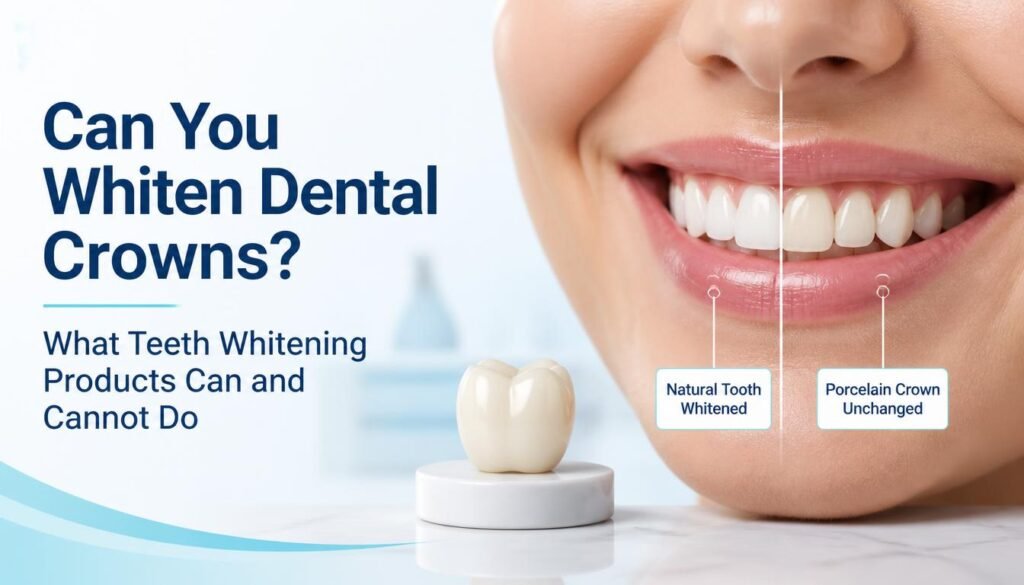
One important fact many patients overlook is that teeth whitening does not change the colour of dental crowns.
If the natural teeth surrounding your crown have become yellow, professional whitening may help improve their appearance. However, the crown will retain its existing shade.
Your dentist can evaluate the colour difference and recommend an appropriate cosmetic treatment.
Learn more about professional teeth whitening treatment in Noida.
4. Dental Crown Repair or Replacement
If your crown is chipped, damaged, severely worn or no longer fits properly, your dentist may recommend repair or replacement.
Replacement may also be considered when the crown’s appearance cannot be improved with cleaning or polishing.
Before recommending a new crown, the dentist should examine the underlying tooth, gum condition, crown margins and bite.
Explore porcelain dental crown treatment at The Dental Crowns to understand the available restorative option.
How to Prevent Your Dental Crown From Turning Yellow
Taking proper care of your dental crown can help maintain its appearance and support long-term oral health.
Follow these simple preventive measures:
1. Brush Twice a Day: Brush your teeth twice daily using a soft-bristled toothbrush and fluoride toothpaste. Pay particular attention to the gumline around the crown.
2. Floss Every Day: Clean between your teeth daily to remove food particles and plaque that can accumulate around the crown margins.
3. Limit Staining Foods and Drinks: Reduce frequent consumption of tea, coffee, cola and other strongly pigmented foods and beverages.
4. Avoid Tobacco Products: Smoking and tobacco use can cause stains and negatively affect your gum health.
5. Visit Your Dentist Regularly: Routine dental check-ups allow your dentist to monitor the crown, surrounding gums and underlying tooth.
6. Avoid Abrasive Home Remedies: Do not use lemon juice, baking soda mixtures, charcoal powders or harsh whitening products to clean your crown. These methods may damage surfaces or irritate your gums.
7. Wear a Night Guard if Recommended: If you grind your teeth while sleeping, ask your dentist whether a custom night guard is appropriate to protect your crown.
When Should You Visit a Dentist for a Yellow Dental Crown?
A slight colour difference may be a cosmetic concern, but certain symptoms should not be ignored.
Consult your dentist if you notice:
- Sudden or significant colour changes around the crown.
- Pain or sensitivity in the crowned tooth.
- Bleeding, redness or swelling around the gums.
- A loose or moving dental crown.
- Food frequently getting trapped around the crown.
- A visible gap, crack or chip.
- Persistent bad breath or an unpleasant taste around the crowned tooth.
These symptoms may indicate a problem with the crown, gums or underlying tooth. Early examination can help identify the issue and prevent further complications.
Why Choose The Dental Crowns for Dental Crown Treatment in Noida?
Choosing the right dental clinic is important when it comes to maintaining your dental restorations and protecting your oral health.
At The Dental Crowns, located in Sector 79, Noida, patients can access a range of general, cosmetic and restorative dental services.
The clinic offers porcelain dental crowns, teeth whitening, root canal treatment, dental implants and other dental care solutions.
Whether you are experiencing crown discolouration, gum-related concerns or a difference in the appearance of your smile, a professional dental evaluation can help determine the appropriate treatment.
If your dental crown is turning yellow, consult a dentist rather than attempting to whiten or repair it at home.
Book a Dental Consultation Today
Take the next step towards a healthier and more confident smile.
Visit The Dental Crowns in Sector 79, Noida, for a dental consultation.
Phone: +91 89202 71787
Website: https://thedentalcrowns.in/
Frequently Asked Questions (FAQs)
1. Why is my dental crown turning yellow?
A dental crown may appear yellow due to surface deposits, plaque accumulation, surface wear, gum recession or discolouration of the surrounding natural tooth. The crown material also influences its resistance to staining.
2. Can porcelain dental crowns turn yellow?
Porcelain crowns are generally resistant to staining, but they are not completely stain-proof. Surface deposits, scratches and changes around the crown margins can affect their appearance over time.
3. Can I whiten a yellow dental crown at home?
No. Regular whitening toothpaste and bleaching products do not change the intrinsic colour of dental crowns. Consult your dentist to identify the cause of the discolouration and discuss suitable treatment.
4. Does coffee stain dental crowns?
Coffee can leave surface deposits on dental restorations, especially if their surfaces have become rough or damaged. Regular oral hygiene and professional cleaning can help manage these deposits.
5. How do dentists clean yellow dental crowns?
Depending on the material and cause of staining, dentists may recommend professional cleaning, appropriate polishing or other restorative procedures.
6. Do zirconia crowns turn yellow over time?
Zirconia crowns have good resistance to staining and colour changes. However, plaque, surface deposits and changes in the surrounding natural teeth or gums can still affect their overall appearance.
7. Should I replace my dental crown if it turns yellow?
Not necessarily. If the discolouration is caused by surface deposits, professional cleaning or polishing may help. Replacement is considered when the crown is damaged, poorly fitting or cannot be restored to an acceptable condition.
8. How can I maintain the colour of my dental crown?
Brush twice daily, floss regularly, avoid tobacco, limit frequent exposure to staining beverages and visit your dentist for routine check-ups and professional cleaning.
Final Thoughts
A yellow-looking dental crown does not automatically mean that your crown needs replacement. In many cases, the discolouration may be caused by surface deposits, gum recession or changes in the surrounding natural teeth.
The best approach is to identify the underlying cause before choosing any treatment.
With proper oral hygiene, regular dental examinations and appropriate professional care, you can maintain the appearance and function of your dental crown for years.
If you are noticing changes in your dental crown, consult The Dental Crowns in Sector 79, Noida, for a professional dental evaluation.