When a tooth becomes severely damaged, infected, or painful, your dentist may discuss two possible treatments: root canal treatment or tooth extraction. Although both procedures can address an infected or badly damaged tooth, they work in very different ways.
A root canal treatment is designed to clean infection from inside the tooth while preserving the natural tooth structure. Tooth extraction, on the other hand, removes the entire tooth from its socket. The choice depends on factors such as the condition of the tooth, the extent of decay or infection, cracks or fractures, supporting bone, and whether the tooth can be restored.
The American Association of Endodontists explains that root canal treatment removes infected pulp, cleans and disinfects the inside of the tooth, and seals it, allowing the natural tooth to remain in place.
If you are experiencing severe tooth pain, sensitivity, swelling, or signs of infection, a dental examination is important before deciding between these treatments.
Root Canal vs Tooth Extraction: What Is the Main Difference?
The simplest difference is:
Root canal treatment saves the natural tooth, while extraction removes the tooth.
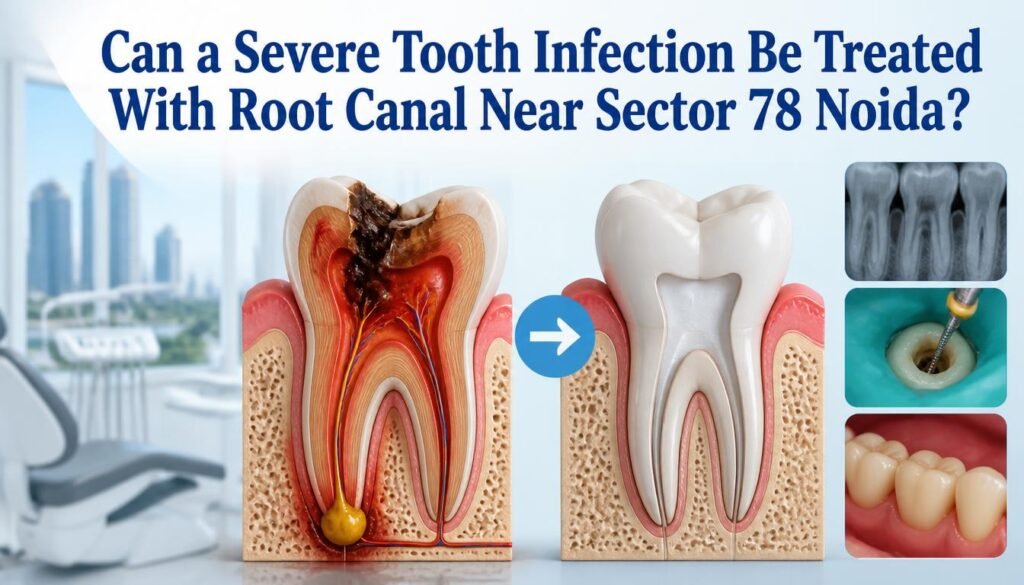
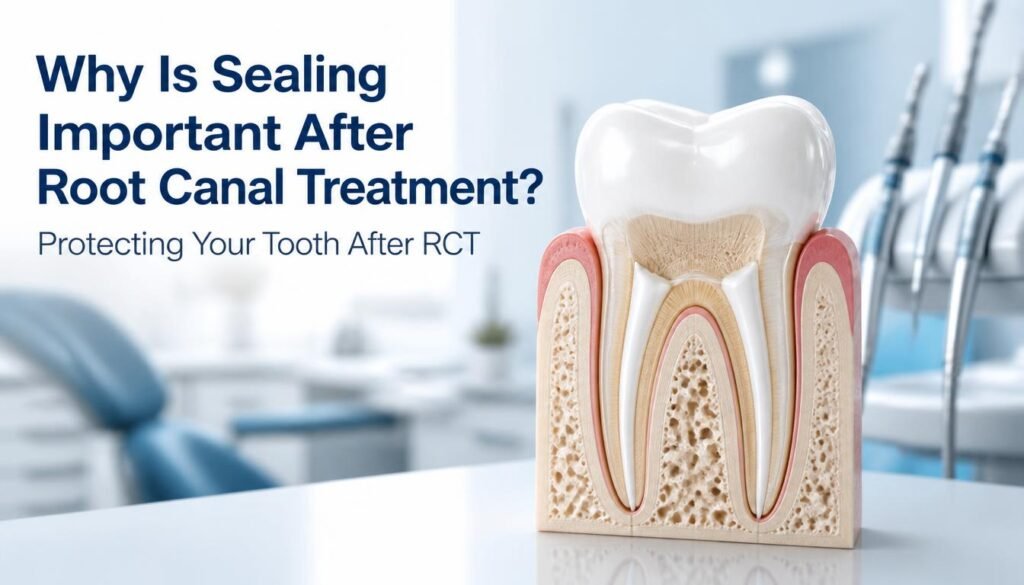
During a root canal, the dentist removes the infected or inflamed pulp from inside the tooth, cleans the root canals, fills and seals them, and then restores the tooth with a filling or crown when required.
During an extraction, the dentist removes the tooth from its socket. Afterward, the missing tooth may need to be replaced with an implant, bridge, or another suitable restoration depending on the location of the tooth and your individual dental needs.
Root Canal vs Extraction at a Glance
| Factor | Root Canal Treatment | Tooth Extraction |
|---|---|---|
| Main purpose | Treat infection while saving the tooth | Remove a damaged or unsalvageable tooth |
| Natural tooth | Preserved | Removed |
| Tooth replacement | Usually not required | Often needs consideration |
| Treatment area | Inside the tooth/root canals | Entire tooth and socket |
| Restoration | Filling or crown may be required | Implant, bridge, denture or other option may be considered |
| Long-term goal | Preserve natural function | Remove the problematic tooth and restore function if necessary |
What Happens During a Root Canal Treatment?
A root canal is performed when the pulp inside a tooth becomes inflamed or infected. This can happen because of deep tooth decay, repeated dental procedures, cracks, trauma, or other damage.
Generally, the procedure involves:
- Numbing the tooth with local anaesthesia.
- Creating access to the inside of the tooth.
- Removing infected or inflamed pulp.
- Cleaning and disinfecting the root canals.
- Filling and sealing the canals.
- Restoring the tooth with a filling or dental crown when appropriate.
The NHS notes that root canal treatment removes infection from inside the tooth and then cleans and fills the tooth to help prevent further infection.
You can learn more about the treatment offered by The Dental Crowns on its Painless Root Canal Treatment in Noida page.
What Happens During a Tooth Extraction?
A tooth extraction involves removing a tooth from its socket. The dentist normally uses local anaesthesia to numb the area before removing the tooth.
Extraction may be considered when a tooth cannot be predictably restored or saved. Examples can include severe structural damage, certain fractures, extensive decay, or situations where other treatment options are not suitable.
After extraction, the empty space may require further planning. Depending on the patient’s needs, options can include a dental implant, dental bridge, or removable dental prosthesis.
The American Association of Endodontists notes that when a tooth cannot be saved, it may need to be extracted and replaced with an artificial tooth.
For more information, see The Dental Crowns’ Painless Tooth Extraction in Noida service page.
Is a Root Canal Better Than Tooth Extraction?
There is no single treatment that is appropriate for every tooth.
However, when a tooth can be predictably saved and restored, preserving the natural tooth is generally an important consideration. Root canal treatment can remove infection while allowing the tooth to remain functional.
The American Association of Endodontists states that preserving a natural tooth can help maintain normal chewing and avoid some of the additional treatment that may be needed after extraction.
That does not mean every infected tooth should receive a root canal. Some teeth may be too damaged to restore successfully. Your dentist needs to examine the tooth and determine whether it is structurally and clinically suitable for treatment.
When Is Root Canal Treatment Recommended?
A dentist may consider root canal treatment when the pulp inside the tooth is infected or irreversibly inflamed but the tooth can still be restored.
Common causes include:
- Deep tooth decay
- A cracked or fractured tooth
- Dental trauma
- Repeated dental procedures
- Damage to the pulp
- Dental infection or abscess
Symptoms can include:
- Persistent toothache
- Sensitivity to hot or cold
- Pain while chewing
- Swelling around the tooth
- Tenderness
- A pimple or swelling on the gum
- Darkening of the tooth
However, symptoms alone cannot determine whether you need a root canal or extraction. A dentist may need to perform an examination and take dental X-rays before recommending treatment.
When Is Tooth Extraction Necessary?
Extraction may be recommended when a tooth cannot be predictably restored or when keeping it would not provide a reliable long-term outcome.
Possible reasons include:
1. Extensive Tooth Damage
If too much of the tooth structure has been destroyed, there may not be enough healthy tooth remaining for predictable restoration.
2. Severe Fracture
Some fractures can make a tooth impossible to restore successfully. The location and extent of the fracture are important.
3. Advanced Infection or Damage
In certain situations, infection may be associated with a tooth that cannot be restored.
4. Other Dental Reasons
Extraction may also be recommended for specific orthodontic, wisdom-tooth, periodontal, or other dental conditions.
The decision should be made after a professional examination rather than based only on how painful the tooth feels.
Root Canal or Extraction: Which One Hurts More?
Modern dental treatment uses local anaesthesia to numb the area during both root canal treatment and extraction.
You may experience some soreness or sensitivity after either procedure. Recovery can vary depending on the condition of the tooth and the complexity of treatment.
The American Association of Endodontists reports that root canal treatment is often associated with less postoperative discomfort than extraction.
However, individual experiences differ, so your dentist should explain what you can expect based on your specific condition.
What Happens After a Root Canal?
A root canal does not necessarily mean the tooth is completely finished after the infected pulp is removed.
The tooth may need a permanent filling or dental crown depending on how much tooth structure remains and which tooth has been treated.
A crown can help protect a structurally weakened tooth and restore its function.
The American Dental Association’s MouthHealthy explains that after root canal treatment, a permanent filling or crown may be placed to protect the tooth.
If you are interested in tooth restoration, you can also explore Porcelain Crowns offered by The Dental Crowns.
What Happens After Tooth Extraction?
After an extraction, a blood clot normally forms in the socket as part of the healing process. Following your dentist’s aftercare instructions is important.
For example, the American Dental Association’s MouthHealthy recommends avoiding actions that can interfere with normal healing, such as smoking or vigorous rinsing immediately after extraction.
Once the extraction site has healed sufficiently, your dentist can discuss whether the missing tooth should be replaced.
Possible replacement options include:
- Dental implants
- Dental bridges
- Dentures
- Other restorative solutions
The appropriate choice depends on your oral health, the location of the missing tooth, your bone condition, and your treatment plan.
Does Extraction Mean You Will Need a Dental Implant?
Not necessarily.
A dental implant is one possible way of replacing a missing tooth, but it is not automatically required after every extraction.
If replacement is appropriate, your dentist may discuss an implant, bridge, denture, or another solution.
The Dental Crowns provides Dental Implant Treatment in Noida for patients who require tooth replacement.
The American Association of Endodontists also identifies implants and bridges among the possible options for replacing an extracted tooth.
Root Canal vs Extraction: Which Is More Expensive?
The total cost cannot be determined simply by comparing the price of the root canal procedure with the price of an extraction.
A root canal may require a subsequent filling or crown. An extraction may require replacement of the missing tooth, potentially involving an implant, bridge, or denture.
Therefore, the overall treatment cost depends on the complete treatment plan, not just the initial procedure.
The American Association of Endodontists notes that extraction can involve additional treatment to replace the missing tooth.
If you are comparing treatment costs in Noida, ask your dentist for a complete estimate that includes the procedure, restoration, follow-up visits, and any replacement treatment that may be necessary.
Can a Tooth Infection Be Treated Without Extraction?
In many cases, yes.
When the infection originates inside the tooth and the tooth is still restorable, root canal treatment can remove the infected pulp while preserving the natural tooth.
The NHS states that untreated infection inside a tooth may ultimately result in the need for extraction, while root canal treatment is one method used to remove the infection and retain the tooth.
However, not every tooth can be saved. The dentist must determine whether sufficient healthy tooth structure remains and whether treatment is likely to provide a predictable result.
Can You Have a Root Canal Instead of an Extraction?
Sometimes, yes.
If your dentist recommends extraction, you can ask whether the tooth can be treated with root canal therapy or whether referral to an endodontist is appropriate.
The American Association of Endodontists recommends discussing tooth-saving options before choosing extraction when there may be a possibility of preserving the natural tooth.
This is particularly important when the tooth plays an important role in chewing or maintaining your bite.
What If You Have a Dental Abscess?
A dental abscess requires professional dental treatment and should not simply be ignored.
Possible symptoms include:
- Severe toothache
- Gum swelling
- Facial or jaw swelling
- Bad taste in the mouth
- Difficulty chewing
- Fever
- Sensitivity to hot or cold
The NHS states that a dental abscess requires urgent dental treatment and will not go away on its own. Depending on the source of the infection, treatment may involve root canal treatment or removal of the tooth.
If swelling is severe or you have difficulty breathing, speaking, swallowing, or opening your mouth, seek urgent medical attention.
Root Canal vs Tooth Extraction: The Decision Depends on Your Tooth
The most important question isn’t simply “Which treatment is better?”
The real question is:
“Can my natural tooth be predictably saved and restored?”
Your dentist may consider:
- Amount of remaining tooth structure
- Location and severity of decay
- Presence and location of cracks
- Condition of the tooth roots
- Supporting bone and gums
- Extent of infection
- Previous dental treatment
- Overall restorability of the tooth
A clinical examination and dental imaging can help your dentist determine the appropriate treatment.
Why Saving Your Natural Tooth Matters
Natural teeth are designed to work together for biting, chewing and maintaining the normal relationship between your teeth.
When a tooth is removed, the missing space may require additional treatment. Nearby teeth can also shift into an empty space over time, which is one reason replacement may be discussed after extraction.
For this reason, dentists may consider tooth-saving treatment when a damaged tooth remains restorable.
The goal is not simply to remove pain—it is to treat the underlying dental problem while preserving healthy function whenever possible.
Frequently Asked Questions
Is a root canal the same as an extraction?
No. A root canal removes infected or inflamed pulp from inside the tooth while preserving the tooth itself. An extraction removes the entire tooth from its socket.
Is extraction faster than a root canal?
The treatment time varies depending on the tooth and complexity. Although extraction may remove the tooth in one procedure, replacing the missing tooth can require additional appointments and treatment.
Is root canal treatment painful?
Modern local anaesthesia is used to numb the area during treatment. Some soreness or sensitivity can occur afterward. Your dentist can explain what to expect based on your individual condition.
Can every infected tooth be saved with a root canal?
No. Some teeth may have extensive structural damage, certain fractures, or other problems that make them unsuitable for predictable restoration. A dentist or endodontist can assess whether the tooth can be saved.
What happens if I extract a tooth instead of getting a root canal?
The tooth will be removed. Depending on your situation, your dentist may recommend replacing it with a dental implant, bridge, denture, or another restoration.
Can a root canal-treated tooth last a long time?
With appropriate restoration and good oral hygiene, a root canal-treated tooth can continue functioning for many years. The American Dental Association’s MouthHealthy notes that a properly cared-for restored tooth can last a lifetime.
Should I choose extraction because I am afraid of a root canal?
Fear alone should not determine the treatment. Ask your dentist to explain whether the tooth can be saved, what the procedure involves, and what your alternatives are.
What should I do if my dentist recommends extraction?
Ask why the tooth cannot be saved and whether root canal treatment or referral to an endodontist is an option. The answer depends on the clinical condition of your tooth.
Final Takeaway: Root Canal vs Tooth Extraction
Root canal treatment and tooth extraction are not the same procedure.
A root canal is intended to remove infection from inside the tooth while preserving the natural tooth, whereas extraction removes the tooth completely.
If your tooth can be predictably restored, preserving the natural tooth may help you avoid the additional treatment that can follow tooth removal. However, when a tooth cannot be saved, extraction may be necessary.
The right decision should be made after a dental examination and appropriate imaging.
If you are experiencing persistent tooth pain, swelling, sensitivity, or signs of infection, schedule a dental consultation rather than delaying treatment.
For patients looking for root canal treatment in Noida, The Dental Crowns provides dental care at Civitech Stadia, Sector 79, Noida. You can explore the clinic’s Painless Root Canal Treatment or Tooth Extraction services to learn more about available treatment options.
Resources
- American Association of Endodontists – Root Canal vs Extraction
- American Dental Association / MouthHealthy – Root Canals
- American Dental Association / MouthHealthy – Extractions
- NHS – Root Canal Treatment
- NHS – Dental Abscess
Medical disclaimer: This article is for general educational purposes and does not replace an examination or diagnosis by a qualified dental professional. Treatment recommendations vary from patient to patient.