Yes, laser dentistry can be used during root canal treatment in selected cases. Dental lasers may be used as an additional technology to support certain stages of endodontic treatment, particularly root canal disinfection, irrigation activation and, in some protocols, postoperative comfort.
However, laser dentistry does not automatically replace conventional root canal treatment. A successful root canal still involves proper diagnosis, removal of infected or inflamed pulp, cleaning and shaping of the root canal system, disinfection and sealing of the canals. The American Association of Endodontists describes these steps as fundamental parts of root canal treatment.
For patients searching for laser dentistry or root canal treatment in Noida, understanding how lasers are actually used can help you discuss the most appropriate treatment option with your dentist.
Quick Answer: Can Laser Dentistry Be Used During a Root Canal?
Yes. A dental laser can sometimes be incorporated into root canal treatment as an adjunct to conventional endodontic techniques.
Depending on the equipment and treatment protocol, laser technology may be used for:
- Root canal disinfection
- Laser-activated irrigation
- Reduction of microorganisms
- Photobiomodulation and postoperative pain management
- Supporting selected endodontic procedures
- Certain soft-tissue procedures associated with dental treatment
Research has found potential benefits from some laser-assisted endodontic techniques, but results vary depending on the laser type, wavelength, treatment settings and clinical protocol. A recent 2026 umbrella review concluded that evidence for laser-activated irrigation remains limited and heterogeneous, meaning more standardized clinical research is needed.
What Is Root Canal Treatment?
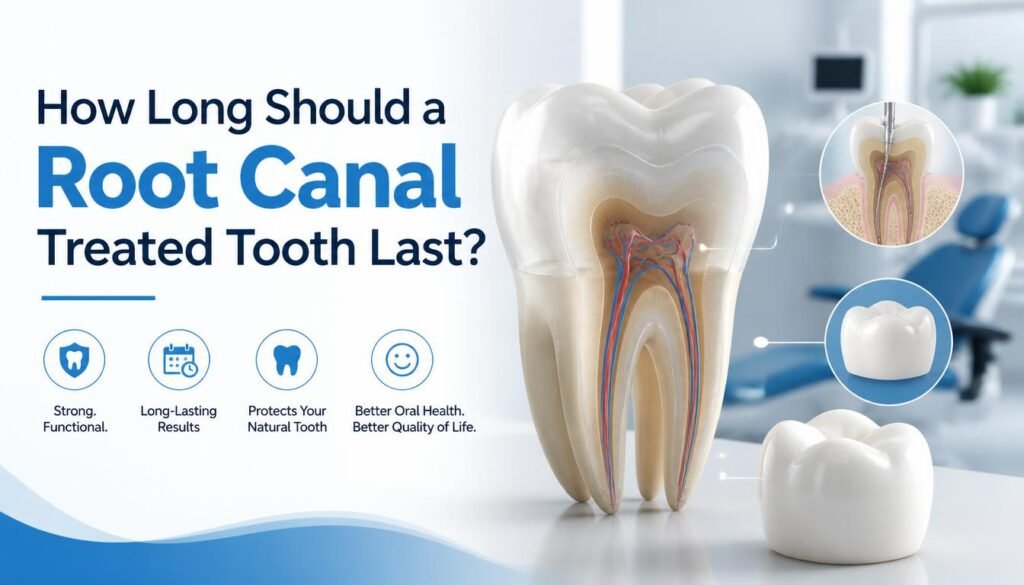
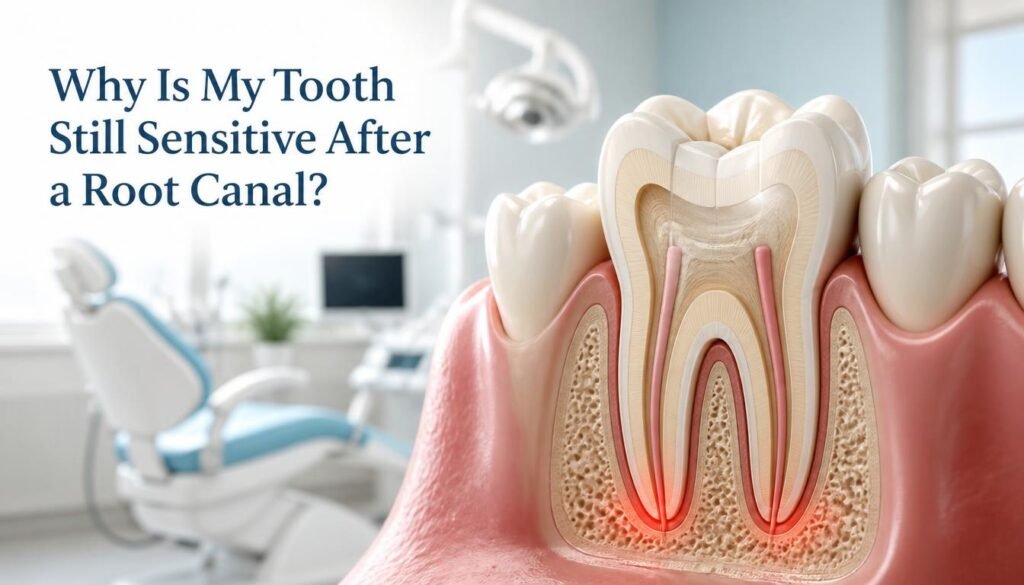
Root canal treatment, also called endodontic treatment, is performed when the pulp inside a tooth becomes inflamed or infected.
Common causes include:
- Deep tooth decay
- A cracked or fractured tooth
- Dental trauma
- Repeated dental procedures
- Large or untreated cavities
- Bacterial infection reaching the dental pulp
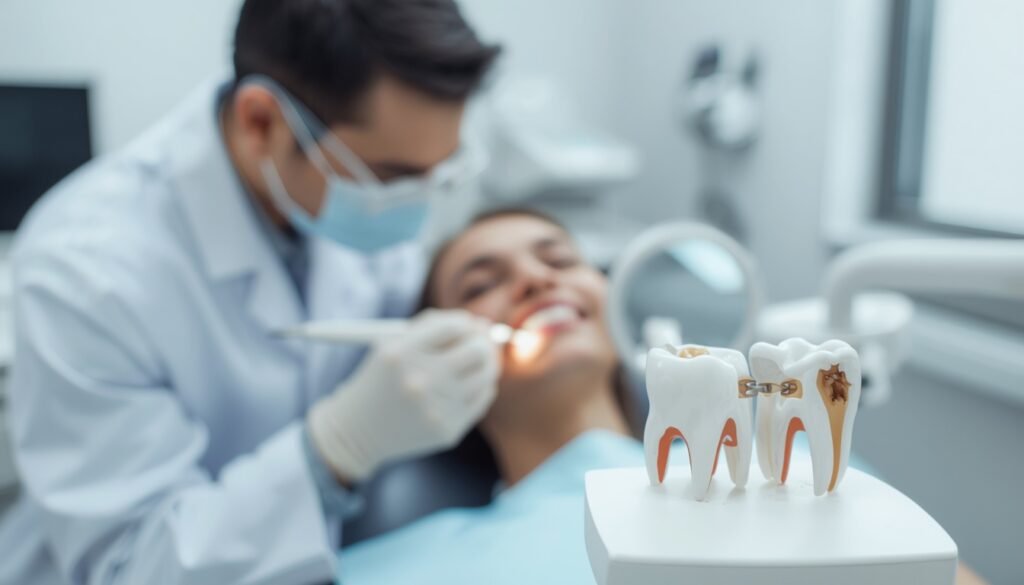
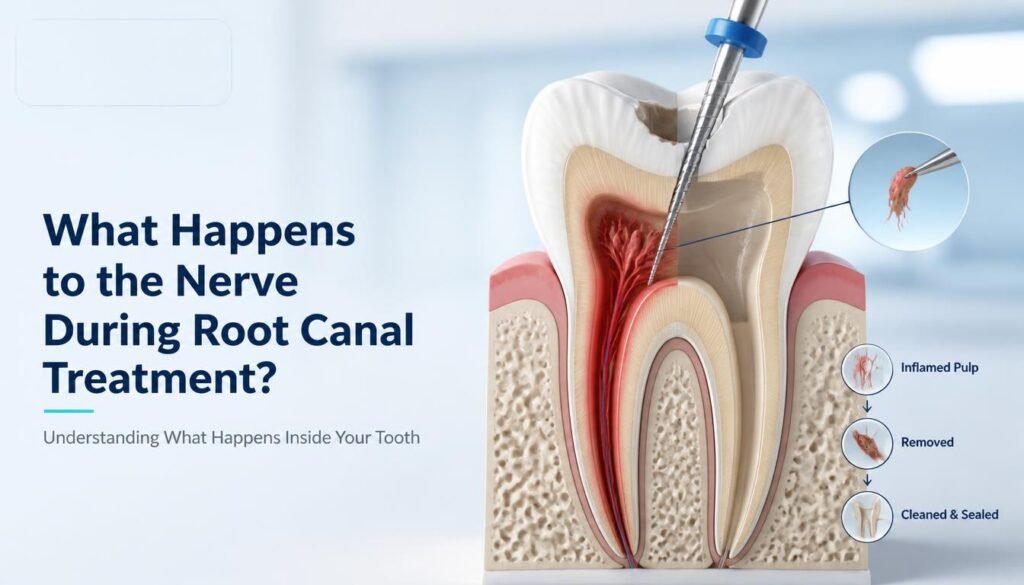
During root canal treatment, the dentist accesses the inside of the tooth, removes diseased pulp, cleans and shapes the root canals, disinfects them and seals the canal space.
The main objective is to control infection while preserving the natural tooth whenever it can be predictably restored.
If you are experiencing persistent tooth pain or have been advised to undergo RCT, you can learn more about our Painless Root Canal Treatment service.
What Is Laser Dentistry?
Laser dentistry uses concentrated light energy for specific dental applications.
It is important to understand that laser dentistry is not one single treatment. Different types of dental lasers have different applications.
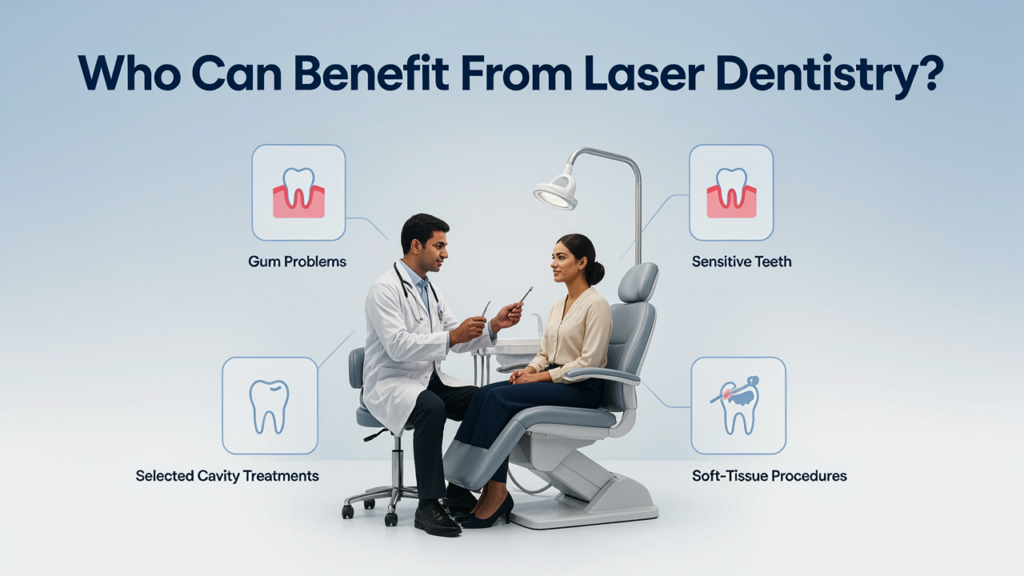
Depending on the laser system and the procedure, lasers may be used for:
- Selected gum treatments
- Soft-tissue procedures
- Certain hard-tissue applications
- Root canal disinfection
- Laser-activated irrigation
- Gum reshaping
- Selected cosmetic procedures
- Certain oral surgical procedures
The Dental Crowns offers Laser Dentistry as part of its dental services in Noida.
How Can a Laser Be Used During Root Canal Treatment?
Laser technology can be incorporated into different stages of endodontic treatment depending on the dentist’s treatment protocol.
1. Diagnosis and Examination
Before any root canal treatment, the dentist needs to determine what is causing the patient’s symptoms.
This may involve:
- Dental examination
- X-rays
- Assessment of tooth sensitivity
- Evaluation of the surrounding tissues
- Examination of the tooth’s root anatomy
The dentist then determines whether root canal treatment is necessary and whether laser assistance has a potential role.
2. Local Anaesthesia
Root canal treatment is generally performed using local anaesthesia to keep the procedure comfortable.
The use of a laser does not necessarily mean that anaesthesia will not be required.
Your dentist determines the appropriate approach based on the procedure and your individual condition.
3. Accessing the Root Canal
The dentist creates an opening through the tooth to access the pulp chamber and root canal system.
Conventional dental instruments remain important during this stage.
4. Cleaning and Shaping
The infected or inflamed pulp is removed, and the root canals are cleaned and shaped.
This remains a fundamental part of root canal treatment.
Laser technology should therefore be viewed as a potential adjunct, rather than an automatic replacement for the complete conventional procedure.
5. Laser-Assisted Disinfection
One of the most researched applications of lasers in endodontics is disinfection.
Root canal systems can have complex anatomy, including areas that are difficult to reach mechanically. Researchers have investigated whether laser energy and laser-activated irrigation can improve microbial reduction within the canal system.
A systematic review of high-power lasers reported potential benefits when lasers were used as an adjunct to conventional root canal treatment, although the authors emphasized appropriate case selection and technique.
6. Irrigation Activation
Irrigation is an important part of root canal treatment because it helps clean areas that mechanical instruments may not contact directly.
Some laser systems can be used to activate irrigating solutions.
This approach is commonly referred to as laser-activated irrigation (LAI).
Current evidence suggests that laser-activated irrigation may have potential benefits, but research results are not completely consistent. A 2026 umbrella review found substantial variation between laser systems, protocols and outcome measures.
7. Filling and Sealing the Root Canal
After cleaning and disinfection, the root canal is filled and sealed.
The objective is to prevent reinfection and provide an appropriate seal.
8. Restoring the Tooth
After root canal treatment, the tooth may require a restoration such as a filling or dental crown.
Whether a crown is recommended depends on factors such as:
- Which tooth was treated
- How much natural tooth structure remains
- The amount of decay or damage
- The forces placed on the tooth
- The dentist’s restorative plan
You can explore Dental Crown Treatment if your dentist has recommended protecting a root-canal-treated tooth with a crown.
What Are the Potential Benefits of Laser-Assisted Root Canal Treatment?
Laser-assisted endodontic treatment has been investigated for several potential benefits.
1. Additional Disinfection Support
The complex anatomy of root canals can make complete cleaning challenging.
Laser-assisted techniques may provide an additional method for reducing microorganisms when used appropriately with conventional treatment.
However, lasers should not be presented as a guarantee that every microorganism will be eliminated.
2. Laser-Activated Irrigation
Laser energy can be used in specific protocols to activate irrigating solutions inside the root canal.
This is one of the areas receiving significant research attention.
3. Potential Postoperative Comfort
Some studies have investigated low-level laser therapy and laser-activated irrigation for reducing postoperative discomfort following root canal treatment.
A systematic review found that many studies reported reduced postoperative pain with low-level laser therapy, but the certainty of evidence was limited because of differences in treatment protocols and study quality.
A separate systematic review specifically examining laser-activated irrigation and postoperative pain also evaluated randomized clinical trials comparing laser-activated irrigation with conventional needle irrigation.
4. Additional Treatment Options
Modern dentistry increasingly uses multiple technologies together.
A dentist may use conventional instrumentation, irrigation, imaging and laser technology when appropriate instead of relying on one technique for every patient.
Is Laser Root Canal Treatment Better Than Conventional Root Canal Treatment?
There is no simple answer that applies to every patient.
Laser technology may provide useful advantages in selected situations, but current research does not support treating laser dentistry as an automatic replacement for conventional endodontic treatment.
A 2026 systematic review and meta-analysis examining adjunctive laser therapy for periapical lesion healing found no significant difference in radiographic healing compared with conventional endodontic treatment and rated the certainty of evidence as low.
Similarly, the 2026 umbrella review of laser-activated irrigation concluded that the available evidence remains limited and heterogeneous.
Therefore, the important question is not simply:
“Is laser root canal treatment better?”
A more useful question is:
“Would laser assistance provide a meaningful benefit in my particular root canal treatment?”
Your dentist can answer this after examining the tooth and considering its anatomy, infection, restoration requirements and overall condition.
Can Laser Dentistry Reduce Root Canal Pain?
Laser technology has been studied for its potential role in managing discomfort associated with endodontic treatment.
Some systematic reviews report reductions in postoperative pain with low-level laser therapy. However, the evidence is affected by differences in laser types, energy settings, treatment protocols and study quality.
This means patients should not assume that laser treatment guarantees a completely painless experience.
The amount of discomfort after a root canal can also depend on:
- The original infection
- Inflammation around the tooth
- The complexity of the root canal
- The type of treatment performed
- Individual pain sensitivity
- Post-treatment inflammation
Is Laser Dentistry Safe During Root Canal Treatment?
When used appropriately by a trained dental professional with suitable equipment and treatment parameters, lasers can be incorporated into dental procedures.
However, laser energy must be carefully controlled.
Different wavelengths and settings interact differently with dental tissues. Incorrect application or excessive energy can potentially cause unwanted thermal effects.
Patients considering laser-assisted root canal treatment should therefore ask their dentist:
- What type of laser will be used?
- Why is laser treatment recommended in my case?
- What part of my root canal treatment will involve the laser?
- Will conventional cleaning and irrigation still be performed?
- What benefits are expected?
- Are there alternative treatment options?
- What will the total treatment cost be?
Who May Need Laser-Assisted Root Canal Treatment?
Laser assistance is not required for every root canal.
A dentist may consider it based on factors such as:
- Type of infection
- Root canal anatomy
- Complexity of the tooth
- Previous root canal treatment
- Need for additional disinfection
- Available laser technology
- Dentist’s training and experience
- Individual treatment requirements
The final decision should be made after a professional dental examination.
Laser Dentistry in Noida
Patients searching for laser dentistry in Noida may find laser technology offered as part of comprehensive dental care.
The Dental Crowns is located at Civitech Stadia, Sector 79, Noida, and provides laser dentistry alongside root canal treatment, dental implants, dental crowns and other dental services.
The clinic’s service range includes:
- Laser Dentistry
- Painless Root Canal Treatment
- Dental Implants
- Porcelain Crowns
- Dental Bridges
- Tooth-Coloured Restoration
You can also visit the complete Dental Services page to explore available treatments.
Questions to Ask Your Dentist Before Laser-Assisted Root Canal Treatment
Before starting treatment, consider asking:
Do I definitely need a root canal?
Tooth pain can have several causes. A proper examination is necessary to identify the underlying problem.
Can a laser help in my case?
Laser treatment should be recommended for a clinical reason rather than simply because it is newer technology.
What type of laser will you use?
Different laser systems have different applications.
Will the laser replace conventional root canal treatment?
In many endodontic applications, laser technology is used as an adjunct rather than replacing cleaning, shaping, irrigation and sealing.
Will I need a crown afterward?
Ask whether your tooth will need additional protection after root canal treatment.
How many appointments will I need?
The number of visits depends on the tooth, infection, complexity and treatment plan.
What should I expect after treatment?
Your dentist can explain expected soreness, oral-care instructions and when to return for follow-up.
Frequently Asked Questions
Can laser dentistry be used during root canal treatment?
Yes. Laser technology can be used as an adjunct during selected root canal procedures, particularly for applications such as disinfection and laser-activated irrigation.
Can laser completely replace conventional root canal treatment?
No. Laser technology does not automatically replace the conventional stages of root canal treatment, including cleaning, shaping, irrigation and sealing.
Does laser root canal treatment hurt less?
Some laser-based techniques have been associated with reduced postoperative pain in certain studies, but results vary and the evidence is not strong enough to guarantee less pain for every patient.
Is laser root canal treatment safe?
Laser technology can be incorporated into endodontic treatment when appropriate equipment, settings and clinical protocols are used. The dentist should determine whether it is suitable for your tooth.
Is laser dentistry suitable for every root canal?
No. The need for laser assistance depends on the patient’s diagnosis, tooth anatomy, infection and treatment plan.
Can lasers remove all bacteria from a root canal?
No. No dental treatment should be described as guaranteeing the complete elimination of every microorganism. The objective is effective cleaning, disinfection and sealing of the root canal system.
Does every dentist provide laser dentistry?
No. Availability of laser equipment, technology and clinical expertise varies between dental clinics.
Can laser dentistry be used with a dental crown?
Laser technology may be useful for selected soft-tissue or other procedures associated with restorative treatment, but a conventional crown procedure may still require traditional dental techniques.
Is laser dentistry available in Sector 79 Noida?
The Dental Crowns, located at Civitech Stadia in Sector 79, Noida, lists laser dentistry and root canal treatment among its services.
Is laser dentistry available near Sector 77 Noida?
Patients in Sector 77 and nearby sectors can consider dental clinics in surrounding Noida areas. The Dental Crowns is located in Sector 79 and offers laser dentistry alongside root canal and other dental treatments.
What is laser-activated irrigation in root canal treatment?
Laser-activated irrigation is a technique in which laser energy is used to activate an irrigating solution during endodontic treatment. It has been studied for its potential effect on cleaning and microbial reduction.
Can laser treatment help with postoperative root canal pain?
Some research suggests that certain laser-based protocols may reduce postoperative discomfort, although results depend on the laser type and treatment protocol.
Final Thoughts
Can laser dentistry be used during root canal treatment? Yes.
Laser technology can be incorporated into selected root canal procedures, particularly as an adjunct for disinfection, irrigation activation and potentially postoperative comfort.
However, laser treatment should not be considered a universal replacement for conventional root canal procedures. Current evidence is promising in some areas but remains variable, and recent reviews continue to call for better standardized clinical research.
If you have persistent tooth pain, sensitivity, swelling or discomfort while chewing, a dental examination can help determine whether you need root canal treatment and whether laser-assisted treatment has a role in your case.
Medical Disclaimer
This article is intended for general educational purposes and does not replace a professional dental examination, diagnosis or personalized treatment plan. Treatment options vary according to each patient’s dental condition.