If you are planning to replace missing upper teeth with dental implants, your dentist may recommend an additional procedure called a sinus lift. This is especially common when considering dental implants in the upper back jaw, where the available bone may be insufficient to support an implant securely.
For patients searching for dental implants near Sector 76, Noida, understanding whether a sinus lift is necessary can help them make informed decisions about their treatment, recovery, and long-term oral health.
But is a sinus lift always required before dental implants? The answer is no. It depends on your jawbone condition, the location of the missing tooth, and the amount of bone available for implant placement.
What Is a Sinus Lift in Dental Implant Treatment?
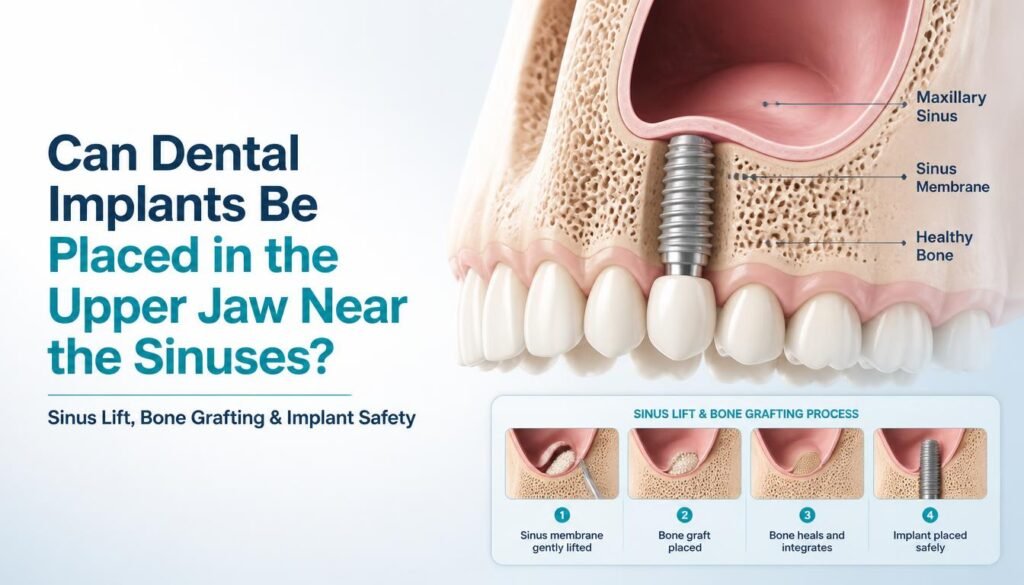
A sinus lift, also known as sinus augmentation, is a dental surgical procedure that increases the amount of bone in the upper jaw near the molars and premolars.
The maxillary sinuses are air-filled spaces located above the upper back teeth. When teeth in this area are lost, the jawbone may gradually shrink, and the sinus may expand downward. This can leave insufficient bone for supporting a dental implant.
During a sinus lift procedure, a dentist or implant specialist gently raises the sinus membrane and places bone grafting material beneath it. Over time, the graft helps new bone develop, creating a stronger foundation for dental implants.
Learn more about sinus augmentation and dental implant preparation from the American Association of Oral and Maxillofacial Surgeons.
Is a Sinus Lift Necessary Before Dental Implants Near Sector 76 Noida?
A sinus lift is not necessary for every dental implant patient. It is generally recommended when the upper jaw does not have enough bone height or volume to support an implant safely.
Your dentist may recommend sinus lift surgery if:
- You have lost one or more upper molars or premolars.
- Your jawbone has deteriorated following tooth loss.
- The maxillary sinus extends close to the planned implant site.
- Your existing bone height is insufficient for conventional implant placement.
- You have experienced bone loss due to gum disease or other dental conditions.
If your jawbone has adequate height, width, and density, you may be able to proceed with dental implant placement without sinus augmentation.
The American Academy of Periodontology explains that sinus augmentation can help create the bone support required for implant placement in the upper back jaw.
Read more: American Academy of Periodontology – Sinus Augmentation
Why Does Bone Loss Occur in the Upper Jaw?
Bone loss after tooth extraction or tooth loss is a natural process that can affect your eligibility for dental implants.
Some common reasons include:
1. Missing teeth for a long time
When a tooth is missing, the jawbone no longer receives stimulation from chewing through that tooth. Over time, the bone may gradually shrink.
2. Advanced gum disease
Periodontal disease can damage the tissues and bone supporting your teeth. Severe bone loss may affect future implant placement.
3. Natural sinus expansion
The maxillary sinus may gradually expand into the space previously occupied by the roots of upper back teeth, reducing the available bone height.
4. Previous dental infections
Infections around the roots of teeth can sometimes damage the surrounding bone and affect the conditions required for implant treatment.
If you are considering dental implants in Noida, an early dental evaluation can help identify bone deficiencies before treatment planning begins.
How Do Dentists Determine Whether You Need a Sinus Lift?
Before recommending sinus lift surgery, your dentist evaluates the condition of your jawbone and the surrounding structures.
CBCT scan and dental imaging
A Cone Beam Computed Tomography (CBCT) scan provides a three-dimensional view of your jawbone, teeth, and sinus anatomy.
It helps your dentist evaluate:
- Available bone height and width
- Bone density and quality
- Distance between the jawbone and sinus floor
- Position of neighbouring teeth and anatomical structures
- Possible sinus abnormalities
Based on these findings, the dentist can determine whether conventional implants, bone grafting, or sinus augmentation may be appropriate.
A detailed assessment is important because the need for a sinus lift cannot be determined accurately from symptoms alone or a routine visual examination.
What Are the Different Types of Sinus Lift Procedures?
There are two commonly performed approaches to sinus augmentation.
1. Internal Sinus Lift (Closed Sinus Lift)
An internal sinus lift is generally considered when a relatively small amount of additional bone height is required and sufficient existing bone is available.
The procedure is performed through the implant preparation site. The sinus membrane is gently elevated, and bone graft material may be placed to improve the available bone support.
In selected cases, the dental implant can be placed during the same procedure.
2. External Sinus Lift (Open Sinus Lift)
An external sinus lift may be recommended when more significant bone augmentation is required.
The dentist creates a small opening in the side of the upper jaw to access the sinus membrane. The membrane is carefully lifted, and bone graft material is placed underneath it.
Depending on the existing bone condition and stability, dental implants may be placed simultaneously or after the graft has healed.
Your dentist will determine the appropriate technique based on your individual clinical findings.
Can Dental Implants Be Placed Without a Sinus Lift?
Yes. Several treatment approaches may be considered when sufficient bone is available or when sinus augmentation can be avoided.
Short dental implants
Shorter implants may be suitable for selected patients with limited bone height. Their use depends on bone quality, implant position, and bite forces.
Angled dental implants
In certain cases, implants can be placed at carefully planned angles to avoid the sinus cavity while providing adequate support.
Alternative implant positioning
Depending on the number and location of missing teeth, your dentist may recommend a different implant position or prosthetic design.
These alternatives are not suitable for everyone. A specialist must evaluate their safety and long-term suitability before recommending them.
For more information, explore our guide to single tooth dental implants near Noida Sector 76.
How Long Does It Take to Get Dental Implants After a Sinus Lift?
The treatment timeline varies depending on the extent of bone loss, the type of sinus lift, and your body’s healing response.
| Treatment stage | Approximate timeline |
|---|---|
| Initial consultation and scans | 1–2 appointments |
| Sinus lift and bone graft healing | Around 4–12 months in many cases |
| Dental implant placement | After adequate bone healing, or simultaneously in selected cases |
| Implant integration | Usually several months |
| Final dental crown placement | After sufficient healing and stability |
These timelines are approximate. Some patients may require less time, while others need additional healing before implant placement.
The American Academy of Periodontology discusses bone development following sinus augmentation and explains that healing time depends on individual treatment requirements.
Is Sinus Lift Surgery Painful?
Sinus lift surgery is generally performed under local anaesthesia, which helps minimise discomfort during the procedure.
After surgery, patients may experience:
- Mild to moderate swelling
- Tenderness around the surgical area
- Temporary bruising
- Minor bleeding
- A feeling of pressure around the cheek or sinus
These symptoms usually improve gradually during recovery. Your dentist will provide specific instructions regarding medication, oral hygiene, and follow-up appointments.
What Are the Risks of Sinus Lift Surgery?
Like other surgical procedures, sinus augmentation has potential risks and complications.
These may include:
- Sinus membrane perforation
- Post-operative swelling or discomfort
- Infection
- Bleeding
- Delayed bone graft healing
- Insufficient bone formation
- Sinus-related complications
The likelihood of complications depends on your oral health, medical history, surgical complexity, and adherence to post-operative instructions.
Choosing an appropriately qualified dental professional and completing the recommended diagnostic evaluation can help minimise risks.
How Much Does a Sinus Lift Cost in Sector 76, Noida?
The cost of sinus lift surgery in Noida can vary considerably depending on several factors, including:
- Whether an internal or external sinus lift is required
- The amount of bone grafting material needed
- The type of graft material used
- The complexity of the procedure
- Whether dental implants are placed simultaneously
- Additional diagnostic scans and treatment requirements
For an accurate estimate, it is best to consult your dentist after a clinical examination and CBCT scan. A personalised treatment plan can help you understand the overall cost of sinus augmentation and dental implant placement.
Where Can You Consult for Dental Implants Near Sector 76 Noida?
If you are experiencing tooth loss or considering dental implants, a professional dental consultation can help you understand the available treatment options.
At The Dental Crowns, patients can seek consultation for dental implant treatment, oral evaluation, and personalised treatment planning based on their dental requirements.
Whether you need a single tooth implant, multiple implants, or an assessment for bone grafting, an individualised approach is essential for achieving functional and long-lasting results.
Explore our dental services to learn more about available treatments.
Frequently Asked Questions (FAQs)
1. Is a sinus lift compulsory before dental implants?
No. A sinus lift is recommended only when the available bone in the upper back jaw is insufficient to support dental implants safely.
2. How do I know if I need a sinus lift?
Your dentist may recommend a CBCT scan to evaluate your bone height, density, and sinus position before determining whether augmentation is required.
3. Can I get dental implants and a sinus lift on the same day?
In selected cases, both procedures can be performed simultaneously if sufficient existing bone provides primary implant stability.
4. How many months should I wait after a sinus lift?
Healing commonly takes around 4–12 months, although the exact duration depends on the procedure and your individual healing response.
5. Is a sinus lift safe before dental implants?
Sinus lift surgery is a commonly performed bone augmentation procedure. However, its suitability and risks must be evaluated by a qualified dental professional.
6. Can I avoid a sinus lift with short dental implants?
Some patients may be suitable candidates for short implants or alternative implant positioning. A dentist must assess whether these options are appropriate for your jawbone and bite.
7. Does a sinus lift increase the success of dental implants?
When bone deficiency is the limiting factor, sinus augmentation can create the necessary foundation for implant placement. Outcomes depend on several patient-specific and clinical factors.
8. Where can I get dental implant consultation near Sector 76 Noida?
You can contact The Dental Crowns for a dental evaluation and discuss suitable implant treatment options based on your oral health and diagnostic findings.
Conclusion
A sinus lift may be necessary before dental implants near Sector 76, Noida, but it is not a universal requirement. The decision depends primarily on the amount and quality of bone available in your upper jaw and the position of your maxillary sinus.
With proper diagnostic imaging, professional evaluation, and personalised treatment planning, dentists can determine whether you need sinus augmentation or can proceed with dental implant placement directly.
Considering dental implants? Schedule a consultation with The Dental Crowns to understand your bone condition, explore suitable treatment options, and plan your dental restoration with confidence.
Disclaimer: This article is intended for educational purposes only and does not replace professional dental advice, diagnosis, or treatment. Individual treatment recommendations should be made after a clinical examination.