
If you are suffering from persistent tooth pain, sensitivity, swelling, or discomfort while chewing, your dentist may recommend root canal treatment (RCT). But one question many patients ask is: “Can a root canal be completed in just one sitting?”
The short answer is yes, single-sitting root canal treatment can be possible for selected cases. However, it is not appropriate for every tooth or every patient. The decision depends on factors such as the condition of the tooth, the extent of infection, the anatomy of the root canals, whether the canals can be adequately cleaned and dried, and the overall treatment plan.
At The Dental Crowns, patients can consult a dental team for diagnosis and treatment planning. The clinic is located at Civitech Stadia, Sector 79, Noida, and provides painless root canal treatment among its dental services.
What Is Single-Sitting Root Canal Treatment?
Single-sitting root canal treatment, also called single-visit RCT or one-visit root canal treatment, means that the major stages of root canal therapy are completed during one appointment.
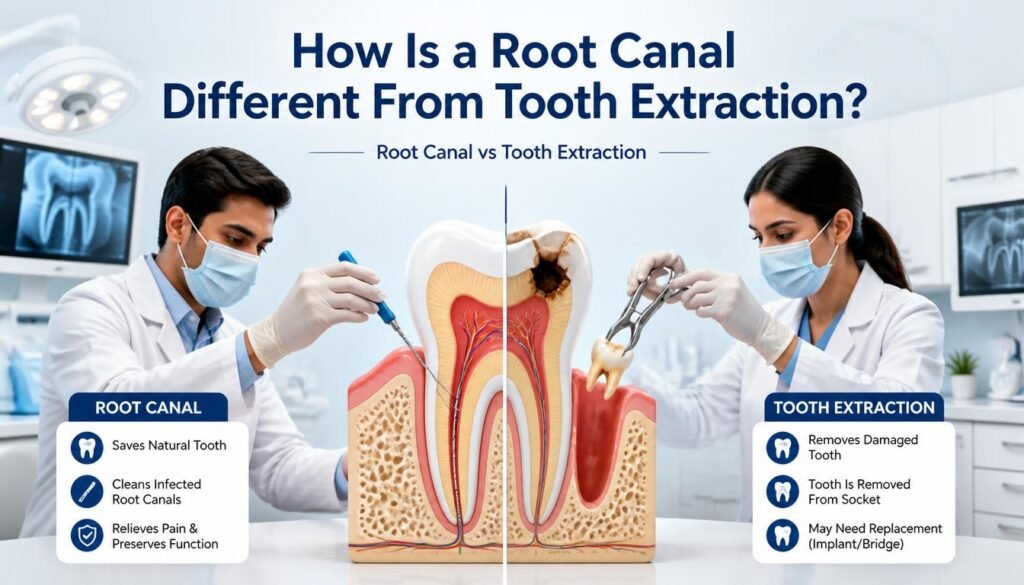
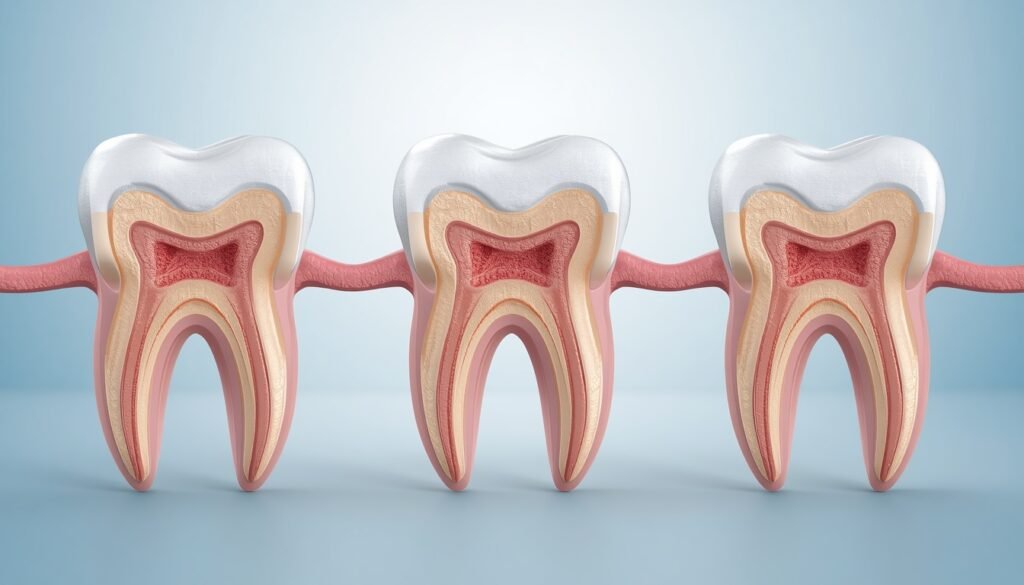
A conventional root canal involves removing infected or inflamed pulp, cleaning and disinfecting the root canal system, shaping the canals, filling them, and sealing the tooth. The American Association of Endodontists explains that root canal treatment is designed to remove infected or inflamed pulp, clean and disinfect the canals, and seal the tooth to prevent reinfection.
In suitable cases, these steps can be completed in one extended appointment rather than being divided across multiple visits.
However, single sitting does not mean that every case should be rushed into one appointment. Your dentist should first determine whether completing the treatment in one visit is clinically appropriate.
Is Single-Sitting RCT Possible in Noida Sector 78?
Yes, single-sitting RCT can be possible for suitable patients in and around Noida Sector 78.
Modern endodontic techniques have made one-visit treatment a practical option for many cases. A 2026 survey of practicing U.S. endodontists found that single-visit treatment was commonly used in several clinical situations, while multiple visits were more frequently preferred when canals could not be dried or when significant swelling was present.
This means that the number of visits should be decided according to the clinical condition of your tooth—not simply because you want faster treatment.
Who May Be a Good Candidate for Single-Sitting Root Canal Treatment?
Not every RCT case is suitable for one-visit treatment. Your dentist may consider single-sitting RCT when:
1. The Infection Can Be Adequately Managed
If the infected pulp can be removed and the root canal system can be properly cleaned and disinfected, completing treatment in one visit may be possible.
2. The Canals Can Be Properly Cleaned and Dried
The ability to adequately clean, shape, disinfect, and dry the canals is an important consideration. If the canals cannot be appropriately prepared or dried, your dentist may recommend another appointment.
3. There Is No Significant Uncontrolled Swelling
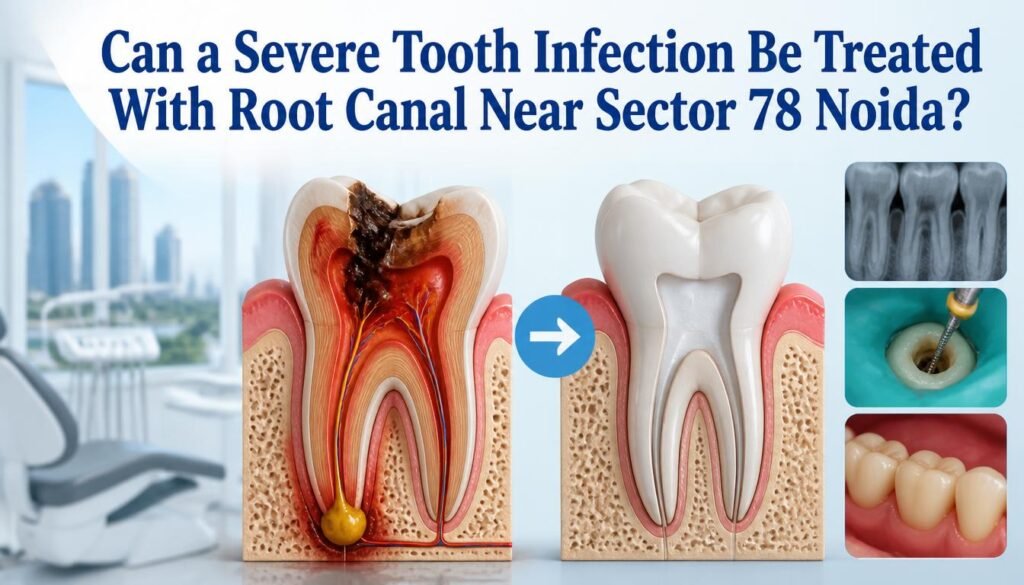
Cases with considerable swelling or acute infection may require a different treatment approach. Recent endodontic research indicates that diffuse swelling is one situation in which practitioners are more likely to choose multiple visits.
4. The Tooth Has Manageable Canal Anatomy
Some teeth have relatively straightforward canal anatomy, while others have narrow, curved, calcified, or additional canals. Complex anatomy may require additional time or specialized treatment.
5. The Tooth Can Be Properly Restored
After RCT, the tooth must be adequately sealed and restored. Depending on how much tooth structure remains, a filling or dental crown may be recommended to protect the tooth.
The American Association of Endodontists notes that after root canal treatment, a tooth may be restored with a crown or filling and can continue functioning like a natural tooth.
When Is Multiple-Visit Root Canal Treatment Better?
There are situations where completing RCT over two or more appointments may be the safer or more appropriate option.
Multiple visits may be considered when:
- There is significant swelling or an acute infection.
- The canals cannot be adequately dried.
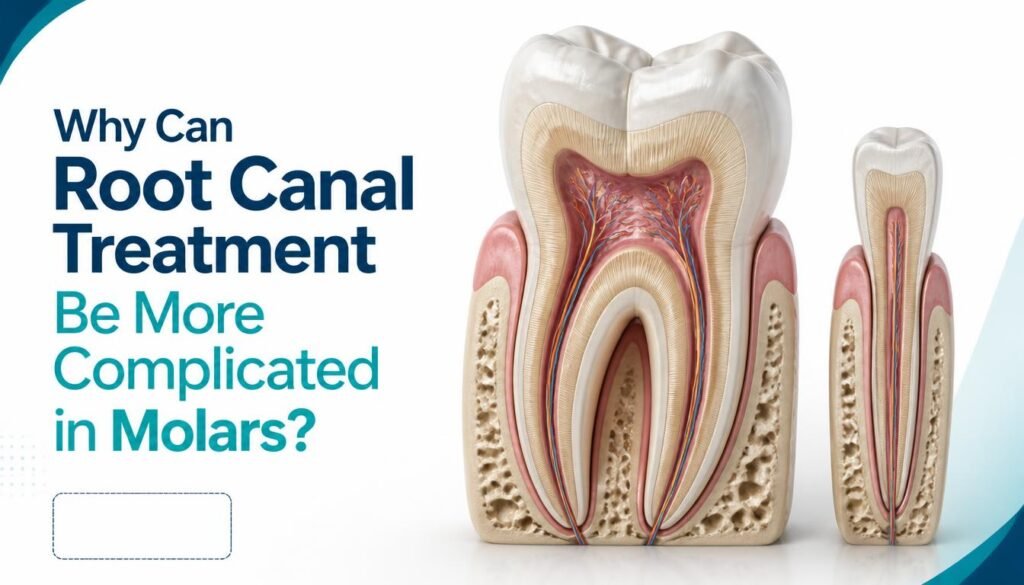
- The tooth has complicated root canal anatomy.
- There is extensive infection around the root.
- The tooth requires additional procedures.
- There is a difficult retreatment or previously failed RCT.
- The dentist needs additional time to evaluate the response of the tooth.
- The tooth has other complications that make one-visit treatment unsuitable.
The NHS explains that root canal treatment often requires two or more appointments, while the American Association of Endodontists states that modern treatment can often be completed in one or two appointments depending on the tooth and individual circumstances.
Therefore, one sitting is not automatically better than multiple sittings. The best treatment plan is the one that properly addresses the infection and protects your natural tooth.
What Happens During a Single-Sitting Root Canal?
Although the exact sequence can vary, your dentist generally performs several important steps during RCT.
Step 1: Dental Examination and Diagnosis
The dentist first evaluates your symptoms, tooth condition, and surrounding tissues. Dental imaging may also be required to understand the roots and canal anatomy.
Step 2: Local Anaesthesia
Local anaesthesia is used to numb the treatment area. This helps make the procedure more comfortable.
Step 3: Accessing the Tooth
A small opening is created in the tooth to reach the infected or inflamed pulp.
Step 4: Removing the Infected Pulp
The diseased pulp tissue is removed from inside the tooth.
Step 5: Cleaning and Shaping the Canals
The root canals are carefully cleaned, disinfected, and shaped so that the infected material and bacteria can be removed as effectively as possible.
Step 6: Filling and Sealing
Once the canals have been properly prepared, they are filled and sealed to reduce the possibility of reinfection.
Step 7: Final Restoration
Depending on the condition of the tooth, your dentist may recommend a permanent filling or dental crown to restore strength and function.
These steps are consistent with the basic principles of root canal treatment described by the American Association of Endodontists and NHS.
How Long Does Single-Sitting RCT Take?
The treatment time varies according to the tooth and complexity of the case.
A relatively straightforward tooth may be treated within one extended appointment, while a molar with several canals can take considerably longer.
Factors affecting treatment time include:
- Number of canals
- Canal shape and curvature
- Severity of infection
- Presence of previous dental treatment
- Tooth location
- Difficulty of accessing the canals
- Need for additional procedures
- Patient comfort and clinical requirements
So, patients searching for “one sitting root canal treatment near me” in Noida Sector 78 should focus on the quality and suitability of treatment rather than simply choosing a clinic based on the shortest appointment time.
Is Single-Sitting Root Canal Treatment Painful?
One of the biggest concerns patients have about RCT is pain.
Modern root canal treatment is generally performed under local anaesthesia. The American Association of Endodontists states that root canal treatment is typically a comfortable procedure and that modern treatment can relieve dental pain while helping save the natural tooth.
Some soreness or sensitivity may occur after treatment as the surrounding tissues recover. This does not necessarily mean that the treatment has failed.
If you are looking for painless root canal treatment in Noida, you can learn more about the treatment approach offered by The Dental Crowns through its Painless Root Canal Treatment service.
Benefits of Single-Sitting Root Canal Treatment
When clinically appropriate, one-visit RCT can offer several practical benefits.
Fewer Dental Visits
Completing the major treatment in one appointment can reduce the number of visits required.
Convenient for Busy Patients
Professionals, students, business owners, and people travelling from nearby sectors may find a single extended appointment more convenient.
Faster Progress Toward Final Restoration
Once the root canal is appropriately completed, the tooth can move toward its final restoration according to the dentist’s treatment plan.
Reduced Travel and Scheduling
Patients from Sector 78, Sector 77, Sector 79, Sector 75, Sector 76, and nearby Noida areas may prefer fewer clinic visits.
Natural Tooth Preservation
The main goal of RCT is not simply speed—it is to treat infection and preserve the natural tooth whenever possible. The AAE emphasizes saving the natural tooth when it can be predictably treated and restored.
Single-Sitting vs Multiple-Sitting RCT
| Feature | Single-Sitting RCT | Multiple-Sitting RCT |
|---|---|---|
| Number of major treatment visits | Usually one | Two or more |
| Convenience | Higher | Requires more visits |
| Suitable for every case? | No | No |
| Complex infections | May not be appropriate | May be preferred |
| Significant swelling | May require another approach | Often considered |
| Canal drying | Must be achievable | Additional appointments may help |
| Treatment decision | Case-dependent | Case-dependent |
The important point is that there is no universal “one visit is always better” rule. The appropriate number of visits depends on diagnosis and treatment requirements.
Does Single-Sitting RCT Guarantee Success?
No dental procedure should be presented as having a guaranteed outcome.
The success of root canal treatment depends on multiple factors, including:
- Correct diagnosis
- Thorough cleaning and disinfection
- Proper canal filling and sealing
- Tooth anatomy
- Quality of the final restoration
- Existing infection
- Oral hygiene
- Follow-up care
- Whether the tooth is structurally restorable
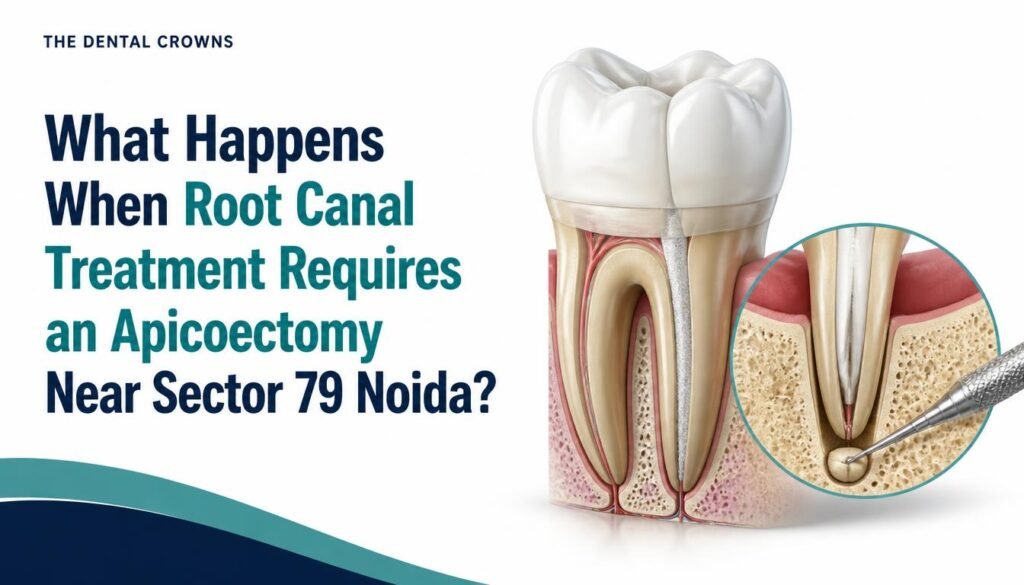
If symptoms continue after treatment, your dentist may need to investigate the cause. In some complicated situations, additional endodontic treatment or surgery may be considered. The AAE notes that endodontic surgery can sometimes be required when conventional root canal treatment alone cannot resolve a problem.
Why Is a Dental Crown Sometimes Needed After RCT?
A root canal treats the inside of the tooth, but the tooth may still require structural protection.
If a tooth has lost significant structure because of decay, fracture, or the root canal process, a crown may be recommended. The NHS explains that a crown can be used to cover and protect a damaged tooth, while the AAE notes that a root-canal-treated tooth may subsequently be restored with a crown or filling depending on the circumstances.
You can explore Porcelain Dental Crowns at The Dental Crowns if your dentist recommends a crown after RCT.
What Should You Do After Single-Sitting RCT?
Following your dentist’s instructions is important for protecting the treated tooth.
General precautions may include:
- Avoid chewing hard foods on the treated tooth until your dentist confirms it is safe.
- Maintain regular brushing and flossing.
- Attend any recommended follow-up appointment.
- Get the permanent restoration completed when advised.
- Contact your dentist if you experience persistent or worsening pain, swelling, or other unusual symptoms.
The NHS also recommends attending follow-up appointments and maintaining good oral hygiene after root canal treatment.
How to Choose a Dentist for Root Canal Treatment in Noida Sector 78
If you are searching for a root canal dentist near Noida Sector 78, don’t choose a clinic solely because it advertises “single sitting.”
Instead, consider:
Experience With Root Canal Cases
Ask whether the dentist routinely performs conventional and complex RCT cases.
Proper Diagnosis
A good treatment plan begins with an accurate diagnosis and appropriate examination.
Modern Dental Technology
Technology can assist dentists in visualizing, cleaning, shaping, and treating complex root canal systems.
Sterilization and Hygiene
A clean and properly maintained clinical environment is essential for dental treatment.
Transparent Treatment Planning
Your dentist should explain whether your tooth is suitable for one-visit treatment and what alternatives are available.
Final Tooth Restoration
Ask how the tooth will be restored after RCT and whether a crown is recommended.
The Dental Crowns lists painless root canal treatment, dental crowns, dental implants, laser dentistry, tooth-coloured restorations, bridges, and other dental services on its website.
Why Choose The Dental Crowns for Root Canal Treatment Near Noida Sector 78?
Although the clinic is located in Civitech Stadia, Sector 79, Noida, it serves patients from nearby Noida sectors. The clinic’s website lists painless root canal treatment as one of its general dentistry services.
The clinic describes an approach focused on patient comfort, modern dental technology, and personalized treatment planning. Its root canal service page also highlights laser-assisted treatment and experienced dental professionals.
Patients can also explore the clinic’s complete dental services to understand other available treatment options.
Frequently Asked Questions About Single-Sitting RCT in Noida Sector 78
Can a root canal really be completed in one sitting?
Yes. Single-sitting RCT is possible in selected cases, particularly when the canals can be adequately cleaned, disinfected, prepared, and sealed during the same appointment. However, your dentist must determine whether your specific tooth is suitable.
Is single-sitting RCT better than two-sitting RCT?
Not necessarily. The best option depends on the condition of the tooth. Some cases can be safely completed in one visit, while complicated infections or cases with swelling may require multiple visits.
How long does one-sitting RCT take?
The duration varies depending on the tooth, number of canals, anatomy, infection, and complexity. Some cases can be completed in one appointment, while complex teeth may require considerably more time.
Is one-sitting root canal treatment painful?
Root canal treatment is performed under local anaesthesia, and modern techniques are designed to make treatment comfortable. Mild soreness after the procedure can occur.
Can a molar be treated in one sitting?
A molar may sometimes be treated in one sitting, but molars usually have more complex canal anatomy. Your dentist should evaluate the tooth before deciding.
What if there is swelling?
Significant swelling or an active infection may affect whether single-visit RCT is appropriate. Your dentist may recommend a different treatment sequence based on your condition.
Will I need a crown after root canal treatment?
Possibly. If the tooth has significant structural damage, your dentist may recommend a crown to provide additional protection.
Can I go back to work after RCT?
Many patients can resume normal activities after treatment, but this depends on the procedure, the tooth treated, and how you feel afterward. Follow your dentist’s specific instructions.
Final Verdict: Is Single-Sitting Root Canal Treatment Possible in Noida Sector 78?
Yes, single-sitting root canal treatment can be possible in Noida Sector 78 for carefully selected cases. However, it should never be performed simply to save time if the tooth requires additional treatment.
The priority should always be proper diagnosis, thorough cleaning and disinfection, effective sealing, and long-term preservation of the natural tooth.
If you are experiencing persistent toothache, sensitivity, swelling, or pain while chewing, don’t delay a dental examination. Early assessment can help determine whether you need RCT and whether single-sitting root canal treatment is appropriate for your tooth.
For patients near Sector 78, The Dental Crowns in Sector 79, Noida, provides root canal treatment and other restorative dental services. You can visit the Painless Root Canal Treatment page or explore the clinic’s complete dental services to learn more.
Medical References:
- American Association of Endodontists – Root Canal Treatment
- American Association of Endodontists – What Is a Root Canal?
- American Association of Endodontists – Saving Your Natural Tooth
- American Association of Endodontists – Root Canal Safety
- NHS – Root Canal Treatment
- NHS – Dental Treatments
- PubMed – Single-Visit vs Multiple-Visit Endodontics Research