

A toothache can start as a mild sensitivity or occasional discomfort and gradually become severe enough to affect eating, sleeping, or everyday activities. This often leads to an important question: Can root canal treatment be avoided if a toothache is treated early?
In some cases, yes. Early diagnosis and treatment may prevent a minor dental problem from progressing to extensive pulp damage or infection. However, early treatment does not guarantee that a root canal can always be avoided. If the nerve or pulp inside the tooth has already become irreversibly inflamed or infected, root canal treatment may be necessary to save the natural tooth.
The key is not simply treating the pain. It is identifying why the tooth hurts and addressing the underlying dental problem as early as possible.
If you are experiencing persistent tooth pain, sensitivity, swelling, or pain while chewing, a dental examination can help determine whether you need a simple restoration, another conservative treatment, or root canal treatment.
Can Early Toothache Treatment Prevent a Root Canal?
Sometimes, early treatment can help prevent the dental problem from progressing to the point where root canal treatment becomes necessary.
A toothache can have many causes, including:
- Early or deep tooth decay
- A cracked or fractured tooth
- Worn or damaged fillings
- Gum problems
- Tooth sensitivity
- Food trapped between teeth
- Dental trauma
- Inflammation of the tooth pulp
- Infection inside the tooth
Not every toothache means that you need an RCT.
For example, if tooth decay is detected before it reaches the pulp, your dentist may be able to remove the decay and restore the tooth with an appropriate filling. Treating the problem at this stage can help preserve healthy tooth structure and potentially prevent the decay from reaching the nerve.
However, once the pulp becomes severely inflamed or infected, treating only the outer part of the tooth may no longer be enough.
According to the American Association of Endodontists, root canal treatment is generally required when the pulp becomes inflamed or infected due to problems such as deep decay, cracks, trauma, or repeated dental procedures.
Why Should You Never Ignore an Early Toothache?
One of the biggest mistakes people make is waiting for tooth pain to disappear on its own.
Dental pain can sometimes temporarily decrease even though the underlying problem continues to develop. In some situations, the nerve inside a severely damaged tooth can lose its ability to respond normally, while infection may continue around the root.
The American Association of Endodontists recommends seeking dental care promptly when symptoms such as pain, swelling, sensitivity, or dental injury occur.
Ignoring a toothache can allow a small problem to become more complicated.
For example:
Early decay → deeper decay → pulp inflammation → infection → possible abscess → root canal or extraction
This progression does not happen in every case, but it demonstrates why early dental evaluation matters.
What Types of Toothache May Be Treatable Without a Root Canal?
A dentist needs to examine the tooth before determining whether RCT can be avoided. Some types of discomfort may be associated with problems that can be treated conservatively.
1. Mild Sensitivity
Brief sensitivity to cold or sweet foods can sometimes be related to exposed dentin, enamel wear, gum recession, or early dental problems.
Depending on the cause, your dentist may recommend preventive care, desensitizing products, a filling, or another appropriate treatment.
However, sensitivity that is severe or continues for a long time after the hot or cold stimulus is removed should not be ignored.
2. Early Tooth Decay
If decay has not reached the pulp, treating the cavity early may prevent further damage.
Your dentist may remove the decayed portion and restore the tooth using a suitable filling material.
This is one of the clearest examples of why regular dental examinations can be valuable even when you do not have severe pain.
3. Food Trapping Between Teeth
Sometimes pain is caused by food repeatedly getting stuck between teeth because of a cavity, gum problem, or improper contact.
Removing the trapped food may provide temporary relief, but recurring food impaction should still be evaluated by a dentist.
4. Minor Dental Damage
A small chip or minor restoration problem may sometimes cause sensitivity without requiring a root canal.
Depending on the extent of damage, the tooth may be restored using a filling, bonding, or another restorative option.
When Is Root Canal Treatment More Likely to Be Necessary?
Root canal treatment becomes more likely when the pulp inside the tooth has become irreversibly inflamed or infected.
Possible warning signs include:
- Severe or persistent toothache
- Pain when biting or chewing
- Lingering sensitivity to hot or cold
- Swelling around the tooth
- Tender or swollen gums
- A pimple or boil on the gum
- Deep tooth decay
- A cracked tooth
- Tooth discoloration
- Recurring pain in a previously treated tooth
The American Association of Endodontists identifies symptoms such as severe pain when chewing, lingering hot/cold sensitivity, swollen or tender gums, and deep decay as signs that may require evaluation for endodontic treatment.
It is important to remember that the absence of severe pain does not necessarily mean the tooth is healthy. Some dental infections can develop with limited or changing symptoms.
How Does a Dentist Determine Whether You Need an RCT?
A professional diagnosis is essential because toothache alone cannot determine whether root canal treatment is necessary.
During an examination, your dentist may:
- Ask about your symptoms and how long they have been present.
- Examine the tooth and surrounding gums.
- Check how the tooth responds to temperature or other diagnostic tests.
- Assess pain when biting or tapping the tooth.
- Look for cracks, decay, or defective restorations.
- Take dental X-rays or other imaging when required.
- Determine whether the pulp is healthy, inflamed, or infected.
- Recommend the most appropriate treatment.
This diagnostic process helps distinguish between a problem that may be treated with a filling or other conservative approach and one that requires endodontic treatment.
Does Treating Toothache Early Always Prevent Root Canal Treatment?
No.
This is an important distinction.
Early treatment can reduce the risk of a dental problem becoming more advanced, but it cannot reverse every type of pulp damage.
For example, if bacteria have already reached the pulp because of deep decay, simply treating the cavity may not eliminate the infection inside the tooth.
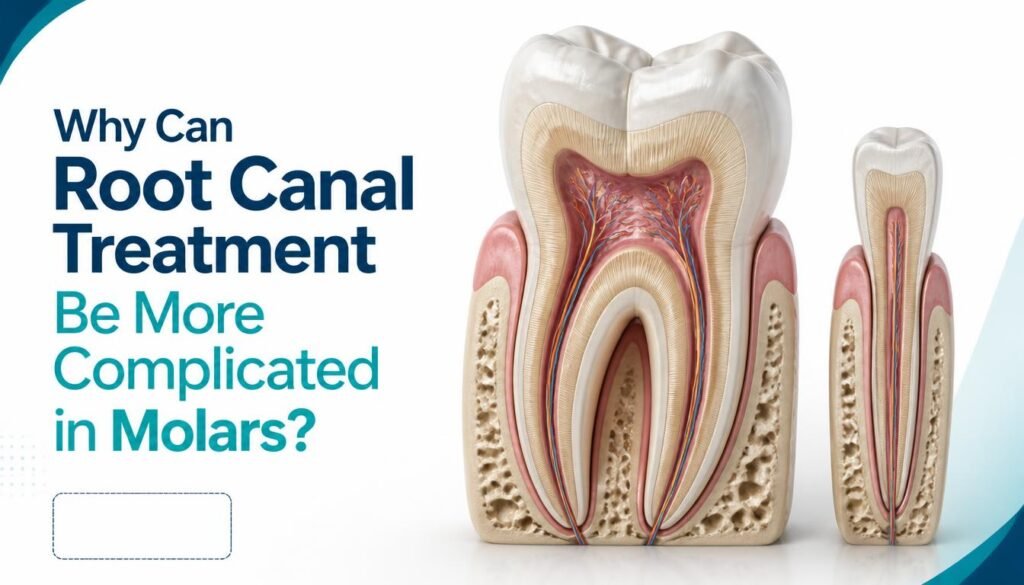
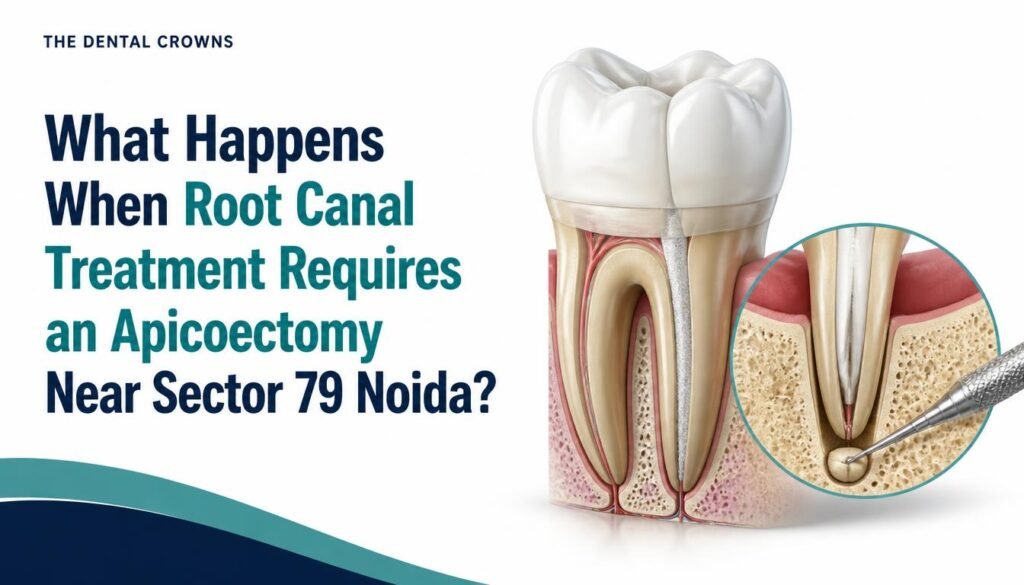
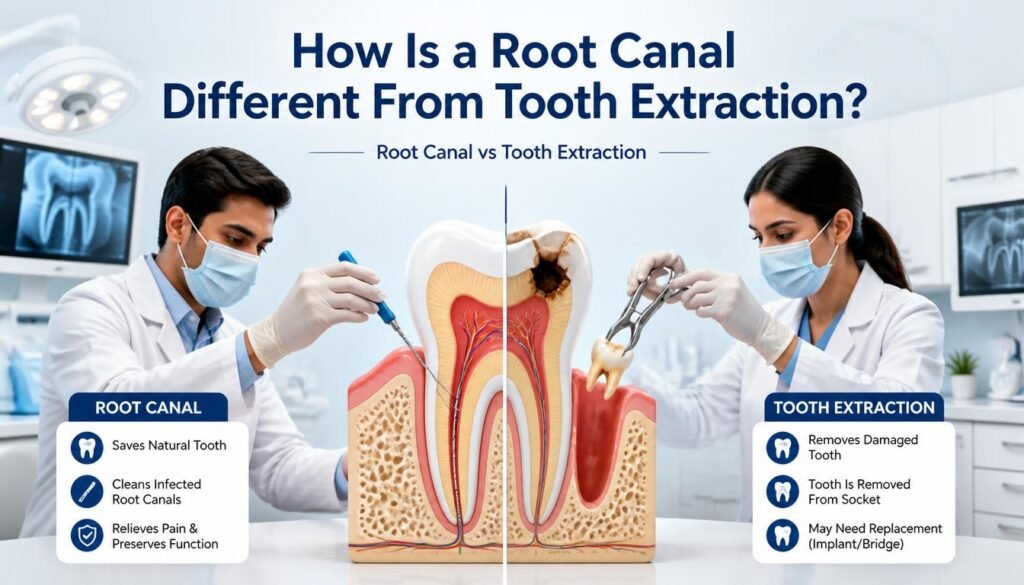
In such situations, root canal treatment may be recommended to remove the inflamed or infected pulp, clean and disinfect the root canals, and seal the tooth.
The goal of RCT is not simply to treat pain. It is to remove the source of infection or inflammation and preserve the natural tooth whenever possible.
What Happens During Root Canal Treatment?
Many patients delay treatment because they are worried that an RCT will be extremely painful.
Modern root canal treatment is performed using local anesthesia and contemporary dental techniques designed to keep patients comfortable.
Generally, the dentist:
- Numbs the affected area.
- Creates an opening to access the inside of the tooth.
- Removes infected or inflamed pulp.
- Cleans and disinfects the root canals.
- Shapes the canals.
- Fills and seals the cleaned canals.
- Restores the tooth with a suitable filling or dental crown when necessary.
The American Association of Endodontists describes root canal treatment as a procedure designed to remove inflamed or infected pulp, clean and disinfect the canals, and seal the tooth so that it can be preserved.
If you are worried about discomfort, you can learn more about painless root canal treatment at The Dental Crowns.
Why Saving the Natural Tooth Matters
When possible, preserving your natural tooth is generally preferable to losing it.
A successfully treated natural tooth can continue to function for chewing and maintaining the natural arrangement of your teeth.
The American Association of Endodontists emphasizes preserving natural teeth whenever possible and explains that endodontic treatment can help save a natural tooth.
If a tooth cannot be saved and extraction becomes necessary, replacement options may include a dental bridge or implant, depending on your individual situation.
You can explore dental implant treatment at The Dental Crowns if you have a missing tooth.
Can a Dental Crown Be Needed After Root Canal Treatment?
Sometimes.
A root canal treats the inside of the tooth, but the tooth may still require a suitable restoration afterward.
Whether you need a dental crown depends on factors such as:
- The amount of healthy tooth structure remaining
- The location of the tooth
- The extent of damage
- The forces placed on the tooth during chewing
- The type of restoration required
Molars and premolars may frequently require additional structural protection because they experience significant chewing forces.
You can read more about whether a dental crown is needed after root canal treatment before discussing restoration options with your dentist.
7 Signs You Should See a Dentist Instead of Waiting
If you experience any of the following symptoms, it is better to arrange a dental examination rather than waiting for the pain to disappear:
1. Toothache That Keeps Coming Back
Pain that repeatedly returns may indicate an unresolved dental problem.
2. Pain While Chewing
Pain when biting can be associated with decay, cracks, inflammation, or infection.
3. Lingering Hot or Cold Sensitivity
If sensitivity continues after the food or drink is removed, the tooth may require professional evaluation.
4. Swelling
Swelling around a tooth or in the gums can be a sign of infection and should be evaluated promptly.
5. Gum Pimple or Boil
A pimple-like bump near a tooth can sometimes indicate drainage from an underlying infection.
6. Deep Cavity
A large cavity can allow bacteria to move closer to the pulp.
7. Broken or Cracked Tooth
A crack can allow bacteria to reach deeper parts of the tooth and may cause pulp damage.
What Can You Do at Home While Waiting for a Dental Appointment?
Home care should not replace professional diagnosis, but you can take sensible steps while arranging an appointment.
- Maintain gentle oral hygiene.
- Brush twice daily using a soft-bristled toothbrush.
- Clean carefully between the teeth.
- Avoid extremely hot, cold, hard, or sugary foods if they trigger pain.
- Avoid chewing heavily on the painful tooth.
- Do not place aspirin directly on the gum or tooth.
- Follow appropriate over-the-counter pain-relief guidance and check with a healthcare professional or pharmacist if you are unsure whether a medicine is suitable for you.
- Arrange a dental examination if the pain persists or returns.
Most importantly, do not use pain relief as a substitute for dental treatment. Pain medication may temporarily reduce discomfort while the underlying dental problem continues.
How Can You Reduce the Risk of Needing a Root Canal?
You cannot prevent every root canal, but good oral-health habits can reduce the risk of advanced tooth decay and other dental problems.
Maintain Good Oral Hygiene
Brush twice daily with fluoride toothpaste and clean between your teeth regularly.
Do Not Ignore Persistent Sensitivity
Occasional sensitivity may have a simple explanation, but recurring or worsening sensitivity deserves professional evaluation.
Treat Cavities Early
A small cavity is generally easier to manage than extensive decay that has reached the pulp.
Protect Your Teeth
If you participate in contact sports, ask your dentist about appropriate mouth protection.
Attend Regular Dental Checkups
Regular examinations can help identify cavities, cracks, gum problems, and other issues before they become more advanced.
Root Canal Treatment in Noida
If you are experiencing persistent tooth pain and live in Noida Sector 74, Sector 75, Sector 76, Sector 77, Sector 78, Sector 79, or nearby areas, an early dental consultation can help identify the cause of your symptoms.
The Dental Crowns is located at Civitech Stadia, Sector 79, Noida, and provides painless root canal treatment along with dental crowns, dental implants, laser dentistry, tooth-coloured restorations, dentures, bridges, and other dental services.
You can explore the complete range of dental services offered by The Dental Crowns.
Frequently Asked Questions
Can an early toothache go away without a root canal?
Sometimes the pain may be caused by a problem that can be treated without RCT. However, disappearing pain does not always mean the underlying problem has resolved. A dentist should determine the cause.
Does every toothache require root canal treatment?
No. Toothache can have many causes, and not every cause requires RCT. A professional dental examination is needed to determine the appropriate treatment.
Can a cavity be treated without a root canal?
If the cavity has not significantly affected the pulp, the tooth may potentially be restored with a filling or another conservative treatment. If the pulp is infected or irreversibly damaged, RCT may be required.
Is root canal treatment painful?
Modern root canal treatment uses local anesthesia and contemporary techniques to control discomfort. Mild soreness or sensitivity can occur after treatment, but your dentist can provide appropriate aftercare instructions.
Can tooth pain stop even if I still need a root canal?
Yes. Pain can change or temporarily disappear even when a dental problem remains. Therefore, relying only on whether the tooth currently hurts is not a reliable way to determine whether treatment is needed.
How quickly should I see a dentist for tooth pain?
If tooth pain persists, repeatedly returns, or is accompanied by swelling, fever, sensitivity, or pain while chewing, arrange a dental evaluation promptly.
Can early dental treatment save my natural tooth?
Early diagnosis and appropriate treatment can help manage dental problems before they become more advanced. When a tooth requires endodontic treatment, RCT can often help preserve the natural tooth.
When should I consider root canal treatment?
RCT may be recommended when the pulp inside the tooth is irreversibly inflamed or infected. Your dentist will determine whether it is appropriate after examination and diagnostic testing.
Final Takeaway
Can root canal treatment be avoided if a toothache is treated early?
Sometimes, yes—but there is no guarantee.
The biggest advantage of treating tooth pain early is that your dentist may be able to identify and manage the underlying problem before it progresses further. A small cavity, for example, may be treatable with a restoration before the pulp becomes involved.
But if the pulp has already become severely inflamed or infected, root canal treatment may be the appropriate way to eliminate the infection and preserve the natural tooth.
So, instead of waiting for toothache to become severe, get the cause diagnosed early.
If you are experiencing persistent tooth pain, sensitivity, swelling, or discomfort while chewing and are looking for root canal treatment in Noida, consult a dental professional at The Dental Crowns for an evaluation and personalized treatment plan.