
A damaged tooth can create a lot of questions. Do you need a filling, dental crown, root canal treatment, veneer, or extraction? The answer depends on how much of the tooth is damaged, whether the inner pulp is affected, where the damage is located, and how healthy the surrounding tooth and gums are.
Choosing the right dental treatment is not simply about fixing the visible portion of a damaged tooth. A dentist needs to determine whether the tooth can be restored, whether there is an infection, and how much healthy tooth structure remains.
If you have a chipped, cracked, broken, decayed, or painful tooth, getting a professional dental examination early can help prevent the problem from becoming more complicated.
At The Dental Crowns in Noida, treatment options can include tooth-coloured restorations, root canal treatment, porcelain dental crowns, laser dentistry, bridges, implants, and tooth extraction depending on the condition of the tooth.
Explore Dental Treatments at The Dental Crowns
Quick Answer: Which Dental Treatment Is Right for a Damaged Tooth?
There is no single treatment that is suitable for every damaged tooth.
In general:
- Small cavities or minor damage: A tooth-coloured restoration or dental filling may be sufficient.
- A significantly weakened or broken tooth: A dental crown may be recommended to protect the remaining tooth structure.
- Damage or infection involving the dental pulp: Root canal treatment may be necessary, often followed by a crown.
- Cosmetic damage affecting the front surface of a tooth: Depending on the situation, veneers or another cosmetic restoration may be considered.
- A tooth that cannot be predictably restored: Extraction may be recommended.
- A missing tooth after extraction: A dental implant or dental bridge may be considered for replacement.
The exact treatment should be determined after a dentist evaluates the tooth clinically and, when necessary, uses dental X-rays or other diagnostic tests.
The NHS explains that treatment for tooth decay depends on its severity: early decay may be managed conservatively, a cavity may require a filling, deeper decay affecting the pulp may require root canal treatment, and severely damaged teeth may sometimes require extraction.
What Causes a Tooth to Become Damaged?
A tooth can become damaged for many reasons. Common causes include:
- Tooth decay
- Dental cavities
- Accidental injury
- Sports-related trauma
- Biting hard foods
- Teeth grinding
- Large or failing fillings
- Cracks or fractures
- Untreated dental infection
- Normal wear over time
Sometimes the damage is obvious, such as when a piece of a tooth breaks off. In other situations, the problem may be hidden beneath the surface.
For example, a tooth can have a crack or infection even when very little damage is visible externally.
The Indian Dental Association notes that treatment for a broken tooth depends on the severity of the fracture. A small chip may sometimes be repaired with composite material, while a larger loss of tooth structure may require a crown. If the pulp is seriously damaged, root canal treatment may be required before the tooth receives a crown.
1. Is a Dental Filling Enough for Your Damaged Tooth?
A tooth-coloured restoration or dental filling may be appropriate when the damage is relatively limited and enough healthy tooth structure remains.
Fillings are commonly used to repair cavities caused by tooth decay. The dentist removes the damaged portion and restores the tooth with an appropriate restorative material.
The American Dental Association explains that the size and location of a cavity, durability, appearance and other individual factors can influence the choice of filling material.
A filling may be considered when:
- The cavity is relatively small or moderate.
- The tooth has enough healthy structure remaining.
- The damage has not significantly weakened the tooth.
- The pulp is not irreversibly infected.
- The tooth does not require full-coverage protection.
If you are looking for a natural-looking restoration, you can learn more about tooth-coloured restoration at The Dental Crowns.
Why shouldn’t every damaged tooth receive a filling?
A large filling can sometimes leave a tooth structurally compromised. If substantial tooth structure has already been lost, simply filling the space may not provide the protection the tooth needs.
That is where a dental crown may become a better option.
2. When Does a Damaged Tooth Need a Dental Crown?
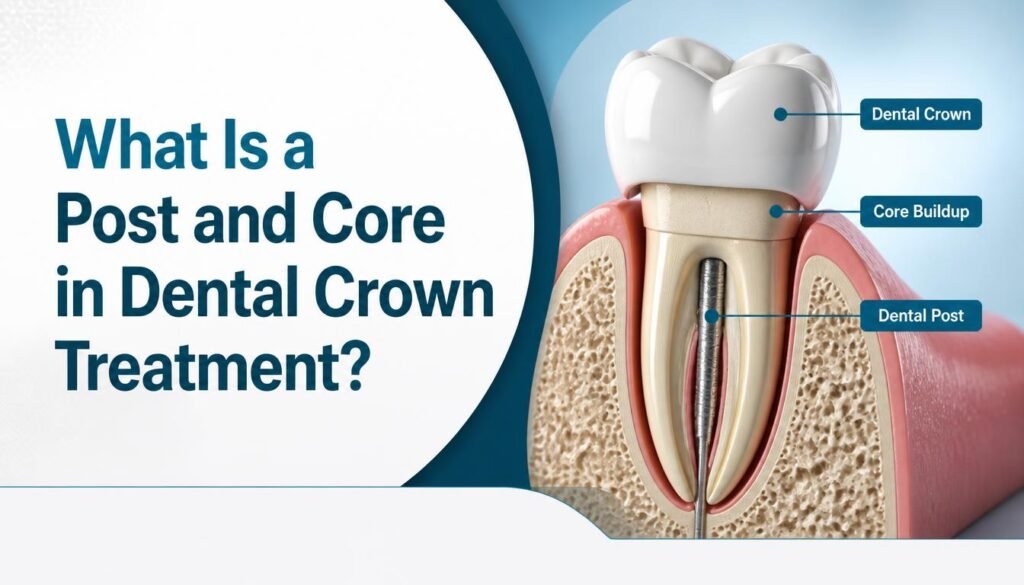
A dental crown is a restoration that covers the remaining tooth to restore its shape, function and strength.
Crowns can be used for teeth that have been significantly broken, weakened or damaged by decay. The NHS describes a crown as a cap that completely covers a natural tooth and notes that crowns can be used when teeth are broken, decayed or otherwise damaged.
A crown may be considered when:
- A large portion of the tooth is missing.
- The tooth has a large filling.
- The tooth is structurally weak.
- A tooth has suffered significant fracture.
- The tooth has undergone root canal treatment.
- The tooth needs additional protection from chewing forces.
Dental Crown vs Filling
| Feature | Dental Filling | Dental Crown |
|---|---|---|
| Coverage | Repairs a specific area | Covers most/all of the visible tooth |
| Typical use | Smaller cavities | Severely weakened or damaged teeth |
| Tooth structure | More structure remains | Significant structure may be missing |
| Protection | Moderate | Greater structural protection |
| Appearance | Can be tooth-coloured | Can be designed to resemble natural teeth |
If your dentist determines that your damaged tooth needs full-coverage restoration, you can explore porcelain dental crowns at The Dental Crowns.
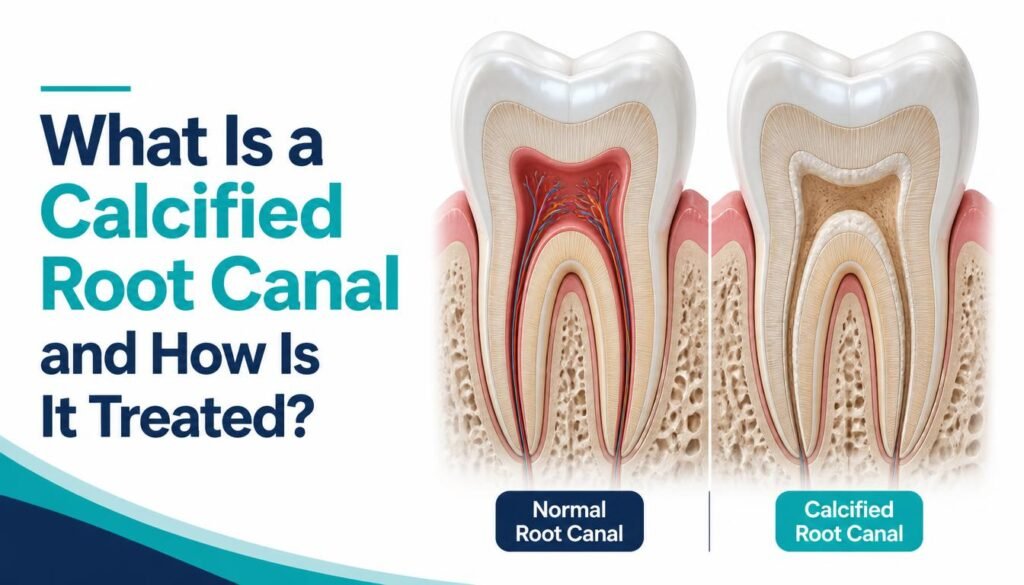
3. Could You Need Root Canal Treatment?
One of the most important questions is whether the dental pulp inside the tooth has become infected or irreversibly damaged.
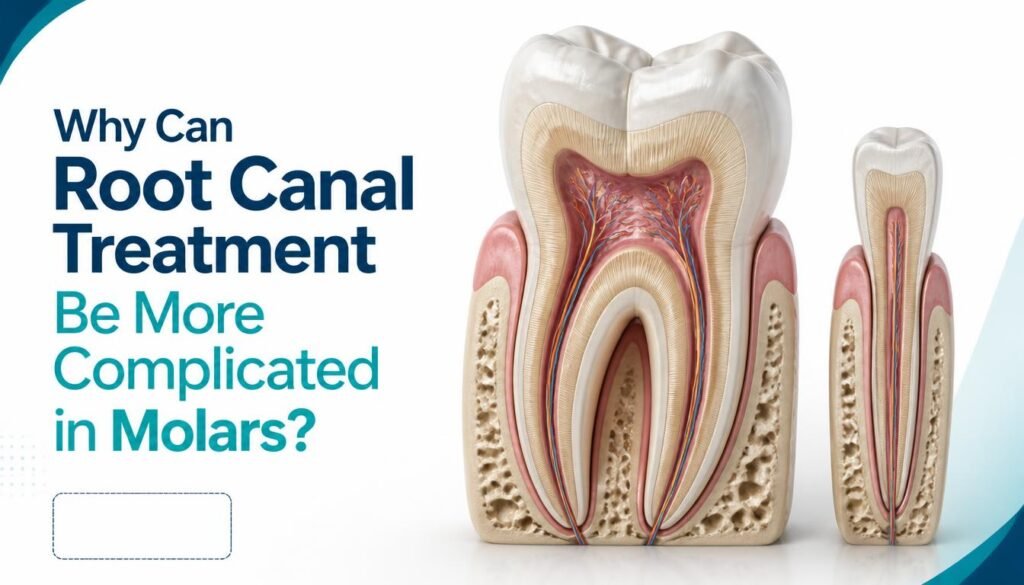
The pulp contains nerves and blood vessels. Deep decay, cracks, trauma or repeated dental procedures can allow bacteria to affect this inner portion of the tooth.
The American Dental Association explains that root canal treatment can be used to save a severely damaged or infected tooth instead of removing it.
Signs that may indicate deeper tooth damage include:
- Persistent toothache
- Severe sensitivity to hot or cold
- Pain when biting
- Swelling around the tooth
- A pimple or abscess on the gum
- Darkening or discoloration of the tooth
- Pain that continues after exposure to hot or cold
- A history of significant trauma
However, symptoms alone cannot determine whether you need a root canal.
A dentist may need to perform clinical tests and take an X-ray before recommending treatment.
The NHS notes that root canal treatment removes infection from inside the tooth, after which the tooth is cleaned, filled and sealed. A crown may be needed when the tooth has been badly infected or weakened.
You can learn more about painless root canal treatment in Noida at The Dental Crowns.
4. Why Is a Crown Sometimes Needed After Root Canal Treatment?
A root canal treats the infection inside the tooth, but the tooth may still require structural protection.
When significant tooth structure has been lost because of decay, fracture or previous restorations, a crown may be recommended after root canal treatment.
This is particularly important for teeth that experience substantial chewing forces.
The treatment sequence may therefore look like:
Deep decay → Root canal treatment → Tooth restoration → Dental crown
The exact sequence varies depending on the tooth and the amount of remaining healthy structure.
The NHS confirms that after root canal treatment, the tooth is sealed with a filling or crown and that a crown may be needed when the tooth has been badly infected.
5. What If the Tooth Is Cracked or Broken?
Not every broken tooth needs the same treatment.
A small chip may require only smoothing or bonding. A larger fracture may require a restoration or crown. If the fracture reaches the pulp, root canal treatment may be necessary.
In some situations, a tooth may be too severely fractured to restore predictably.
The Indian Dental Association specifically states that treatment of a broken tooth varies according to the severity of the fracture. It also notes that a tooth with serious pulp damage may need root canal treatment before a crown, while a tooth without enough remaining structure to retain a crown may need extraction.
Never ignore a cracked tooth
A cracked tooth can worsen when exposed to chewing forces. Delaying an examination may allow damage or infection to progress.
If your tooth suddenly breaks, try to avoid chewing on that side and arrange a dental examination as soon as possible.
6. When Is Tooth Extraction Necessary?
Dentists generally try to preserve a natural tooth whenever it can be predictably restored.
However, extraction may sometimes become necessary when:
- The tooth is severely fractured.
- The fracture extends in a way that makes restoration unreliable.
- There is insufficient healthy tooth structure.
- Severe infection cannot be predictably managed.
- Advanced periodontal disease has significantly compromised the tooth.
- The tooth cannot support a restoration.
- Previous treatment has failed and the tooth cannot reasonably be saved.
Extraction should not automatically be considered the first solution for a damaged tooth.
Your dentist should assess whether saving the natural tooth is feasible before recommending removal.
7. What Happens If the Damaged Tooth Cannot Be Saved?
If extraction is necessary, the next question is how to replace the missing tooth.
Depending on your oral health, bone condition, location of the missing tooth and overall treatment plan, options can include:
Dental Implants
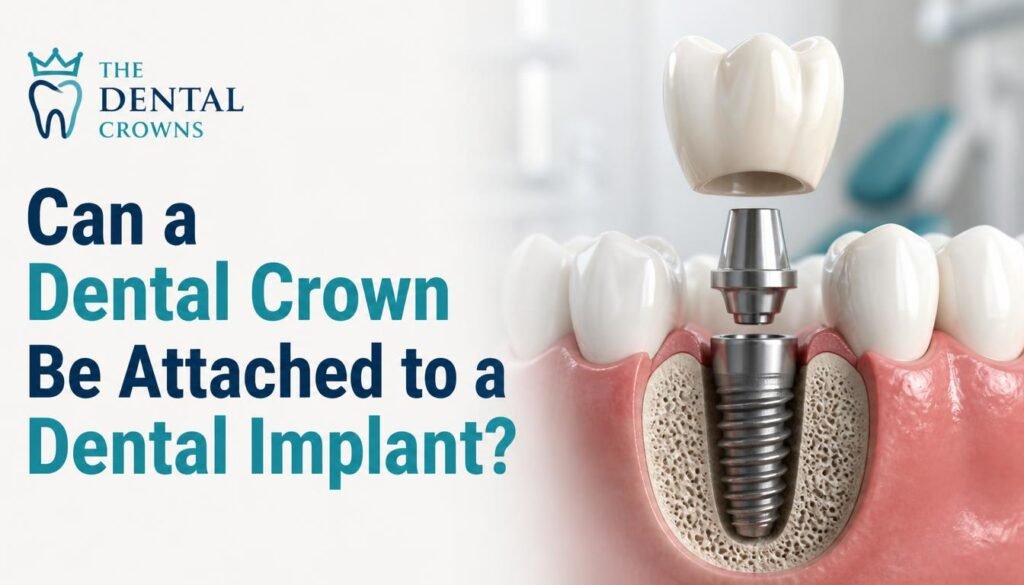
A dental implant can replace the root portion of a missing tooth and support a dental crown.
Explore dental implants at The Dental Crowns to learn more.
Dental Bridges
A dental bridge can replace one or more missing teeth using support from adjacent teeth.
Dentures
Dentures can replace multiple missing teeth or, in appropriate cases, an entire arch.
The appropriate replacement depends on your individual dental condition rather than simply choosing the most popular option.
8. Can Laser Dentistry Treat a Damaged Tooth?
Laser dentistry is another technology that may be used for selected dental procedures.
However, it is important to understand that laser dentistry is not a universal replacement for fillings, crowns, root canal treatment or other restorative procedures.
Its use depends on the specific dental problem and the equipment and expertise available.
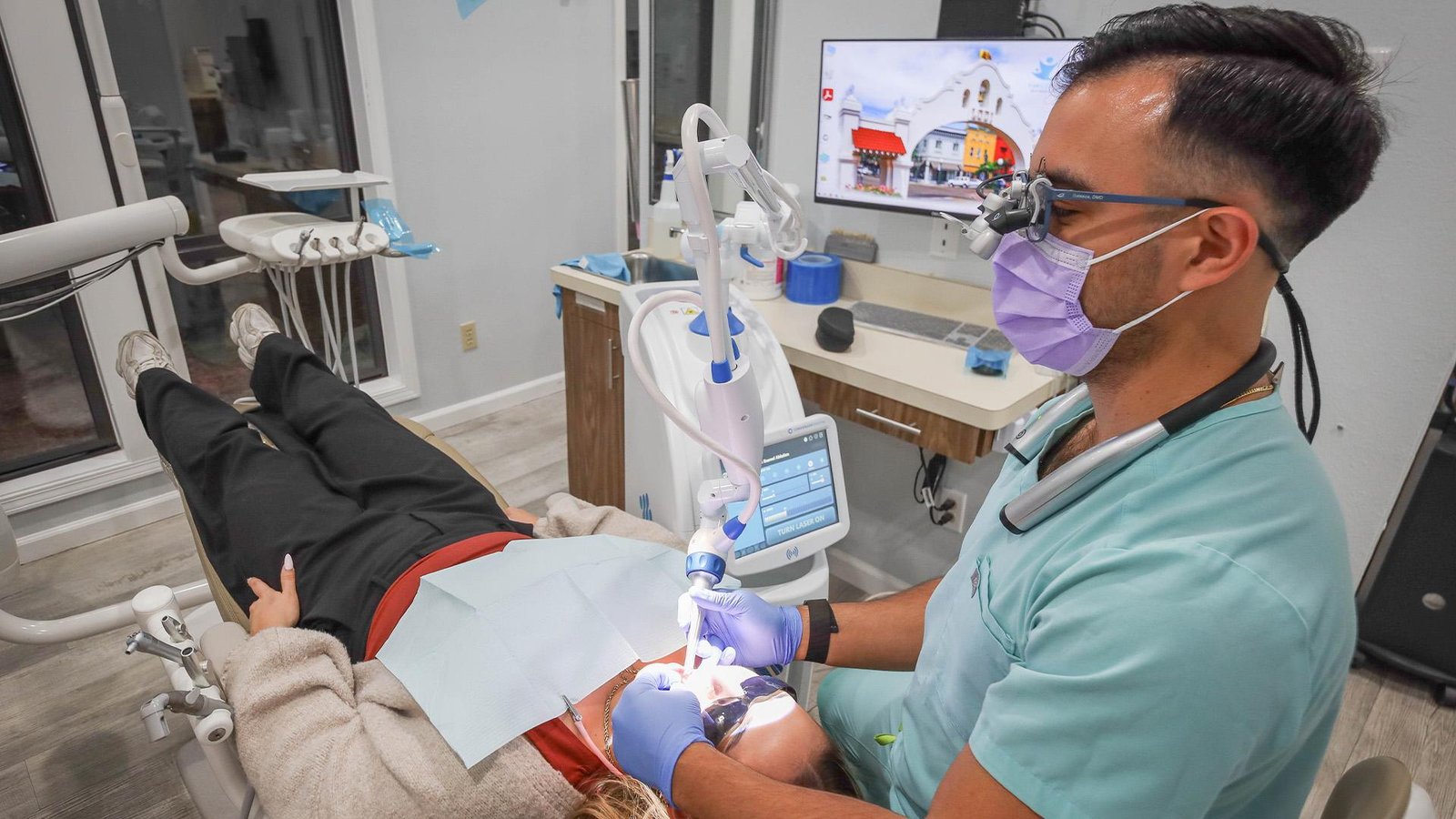
The Dental Crowns offers advanced clinical laser dentistry in Noida.
The clinic describes laser dentistry as being used for selected applications involving cavities, gum-related treatment and other dental procedures.
Your dentist can determine whether laser technology is appropriate for your particular condition.
9. Does Tooth Location Affect the Treatment?
Yes.
A damaged front tooth and a damaged molar may require different considerations.
Front teeth
Front teeth are highly visible, so appearance can be an important factor. Depending on the type and extent of damage, treatment may involve bonding, tooth-coloured restoration, veneers or a crown.
Premolars and molars
Back teeth handle substantial chewing forces. If significant tooth structure is lost, the dentist may need to consider how much protection the tooth requires.
Aesthetic and functional factors both matter
A successful restoration should not only look natural but should also function properly within your bite.
10. Does Tooth Damage Always Cause Pain?
No.
A damaged or decayed tooth can sometimes have little or no pain, particularly during the early stages.
The NHS notes that tooth decay may initially cause no symptoms. As decay progresses, it can produce toothache, sensitivity, visible spots, cavities and sometimes infection or an abscess.
This is one reason routine dental examinations are important.
No pain does not always mean no problem.
A dentist may identify decay, cracks or structural weakness before you experience significant symptoms.
11. How Does a Dentist Decide Which Treatment You Need?
Your dentist will usually consider several factors before recommending treatment.
1. How much tooth structure remains?
The amount of healthy tooth remaining can determine whether a filling, crown or another restoration is appropriate.
2. Is the pulp healthy?
If the pulp is infected or irreversibly damaged, root canal treatment may be required.
3. Is the tooth cracked?
The location and depth of a fracture can dramatically affect whether the tooth can be restored.
4. Is there an infection?
An infection may require endodontic treatment rather than simply placing a filling over the damaged area.
5. How strong is the tooth?
A heavily weakened tooth may require a crown for additional protection.
6. What is the condition of the gums and supporting bone?
A tooth may not be a good candidate for restoration if its supporting structures are severely compromised.
7. What does the X-ray show?
X-rays can help dentists assess areas that cannot be seen during a normal visual examination.
8. Where is the tooth located?
Front and back teeth experience different aesthetic and functional demands.
9. What are your long-term goals?
The treatment plan should consider your oral health, function, appearance, maintenance and long-term expectations.
Dental Treatment Decision Guide
Here’s a simple way to understand the general decision-making process:
Minor cavity or limited damage
↓
Tooth-coloured restoration / filling
Large cavity or significantly weakened tooth
↓
Dental crown may be considered
Deep decay or pulp infection
↓
Root canal treatment
↓
Restoration / crown when required
Severe fracture but tooth remains restorable
↓
Restoration or crown ± root canal treatment
Tooth cannot be predictably restored
↓
Extraction
Tooth removed
↓
Implant / bridge / denture depending on individual needs
This is a general guide—not a substitute for an examination.
12. What Questions Should You Ask Your Dentist?
Before agreeing to treatment, ask your dentist:
About the diagnosis
- What exactly is wrong with my tooth?
- How much healthy tooth structure remains?
- Is the pulp affected?
- Is there an infection?
- Do I have a crack or fracture?
- Do I need an X-ray?
About treatment
- Can my natural tooth be saved?
- Would a filling be enough?
- Do I need a dental crown?
- Do I need root canal treatment?
- Could a less invasive treatment work?
- What happens if I delay treatment?
About long-term results
- How long can the proposed restoration last?
- Will I be able to chew normally?
- What maintenance will I need?
- Are there alternatives?
- What are the risks and benefits of each option?
The American Dental Association emphasizes evidence-based approaches to restorative treatment and recommends considering appropriate restorative materials and caries-management strategies according to clinical circumstances.
13. Why You Shouldn’t Choose a Dental Treatment Based Only on Price
When comparing dental treatments, cost is naturally important.
However, choosing the cheapest treatment without considering the underlying condition can sometimes lead to additional treatment later.
For example, if a severely weakened tooth is treated as though it only needs a small filling, the restoration may not provide the level of protection the tooth requires.
Instead, discuss:
- Diagnosis
- Treatment alternatives
- Expected longevity
- Materials
- Risks
- Maintenance
- Number of appointments
- Total treatment cost
- What happens if the tooth cannot be saved
The goal should be appropriate treatment for the condition of your tooth, not simply the cheapest treatment available.
14. Why Early Dental Treatment Matters
A small dental problem can become significantly more complicated when ignored.
For example:
Small cavity → larger cavity → pulp involvement → infection → root canal → possible crown
Not every damaged tooth follows this exact progression, but untreated decay can worsen over time.
The NHS recommends seeing a dentist when you have toothache, sensitivity, gum problems or other dental concerns, and stresses the importance of regular dental check-ups.
Early diagnosis can give you more treatment options and may help preserve more of your natural tooth structure.
15. What Should You Do If Your Tooth Suddenly Breaks?
If a tooth breaks unexpectedly:
- Don’t panic.
- Remove any loose pieces from your mouth carefully.
- Rinse your mouth gently with water.
- Avoid chewing on the affected side.
- If there is swelling, a cold compress may provide temporary relief.
- Save the broken fragment if possible and take it to your dentist.
- Arrange a dental examination promptly.
The Indian Dental Association recommends prompt dental assessment following dental trauma and notes that X-rays may be used to determine the extent of damage.
If you experience facial swelling, fever, difficulty swallowing or breathing, or rapidly worsening symptoms, seek urgent dental or medical care.
Frequently Asked Questions
How do I know if my damaged tooth needs a filling or crown?
A filling may be suitable when the damage is limited and enough healthy tooth structure remains. A crown may be recommended when a tooth has lost substantial structure or needs greater protection. Your dentist should assess the tooth before making the decision.
Is a root canal always necessary for a broken tooth?
No. A broken tooth does not automatically require root canal treatment. It depends on whether the fracture or damage has affected the pulp and whether the tooth is otherwise restorable.
Can a severely decayed tooth be saved?
Sometimes. If sufficient healthy tooth structure remains and the infection can be treated, root canal treatment and restorative treatment may save the tooth. In other cases, extraction may be necessary.
Does a dental crown fix an infected tooth?
A crown protects and restores the tooth, but it does not replace treatment for an infection inside the pulp. If the pulp is infected, root canal treatment may be required before the tooth is restored.
Can laser dentistry repair every damaged tooth?
No. Laser dentistry has specific applications and is not a universal replacement for fillings, crowns, root canals or extraction. Your dentist must determine whether laser treatment is suitable.
Is tooth extraction the first option for a damaged tooth?
Usually, dentists consider whether the natural tooth can be predictably saved before recommending extraction. The decision depends on the amount of remaining tooth structure, infection, fracture and supporting tissues.
How can I tell if my tooth is infected?
Possible signs include persistent pain, swelling, sensitivity, an abscess, pain when biting or changes in the tooth’s appearance. However, some dental infections may have limited symptoms, so professional diagnosis is important.
Can a tooth hurt even if there is no visible damage?
Yes. Problems such as decay, cracks or pulp inflammation may not always be obvious when looking at the tooth.
Can a filling prevent the need for a crown?
In some cases, treating decay early with a filling may help preserve more natural tooth structure. However, once a tooth has become significantly weakened, a crown may be more appropriate.
What happens if I ignore a damaged tooth?
Damage can worsen, and decay or infection may progress. Depending on the condition, this can result in pain, infection, additional restorative treatment or tooth loss.
Final Takeaway: How Do You Know Which Dental Treatment Is Right?
The right dental treatment depends on the type and extent of damage, remaining healthy tooth structure, pulp health, infection, fracture pattern, gum health and your long-term dental needs.
A simple filling may be enough for a small cavity. A weakened tooth may need a crown. A tooth with infected pulp may require root canal treatment followed by appropriate restoration. If the tooth cannot be predictably restored, extraction and tooth replacement may be considered.
The most important step is getting the damaged tooth examined before deciding on treatment.
If you have a chipped, broken, decayed, cracked or painful tooth, don’t wait until the problem becomes an emergency.
The Dental Crowns in Sector 79, Noida provides a range of dental services, including root canal treatment, tooth-coloured restoration, porcelain crowns, implants, laser dentistry and tooth extraction.
Book a Dental Appointment with The Dental Crowns
References & Trusted Dental Resources
For readers who want to learn more about dental treatment and tooth restoration: