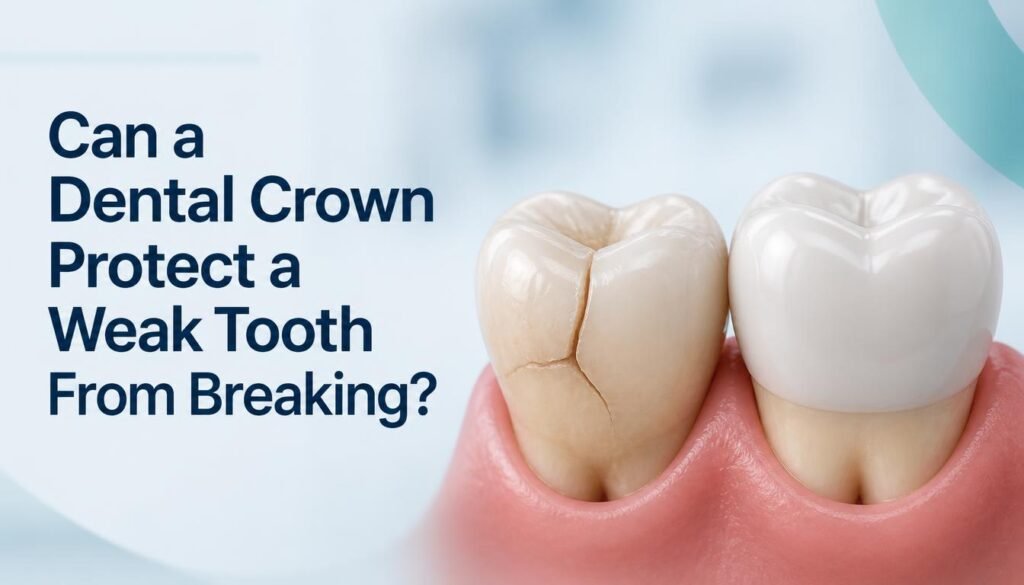
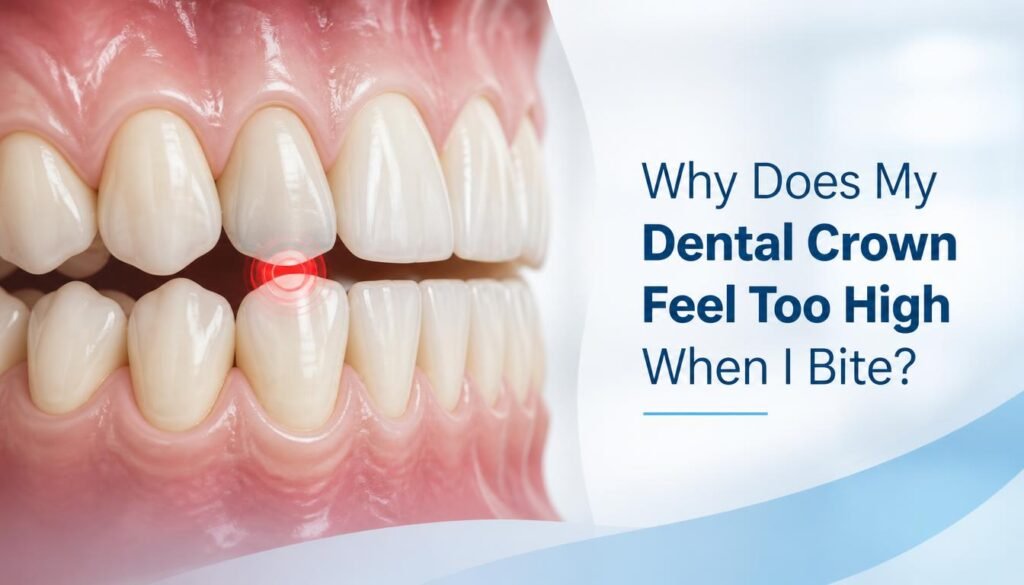
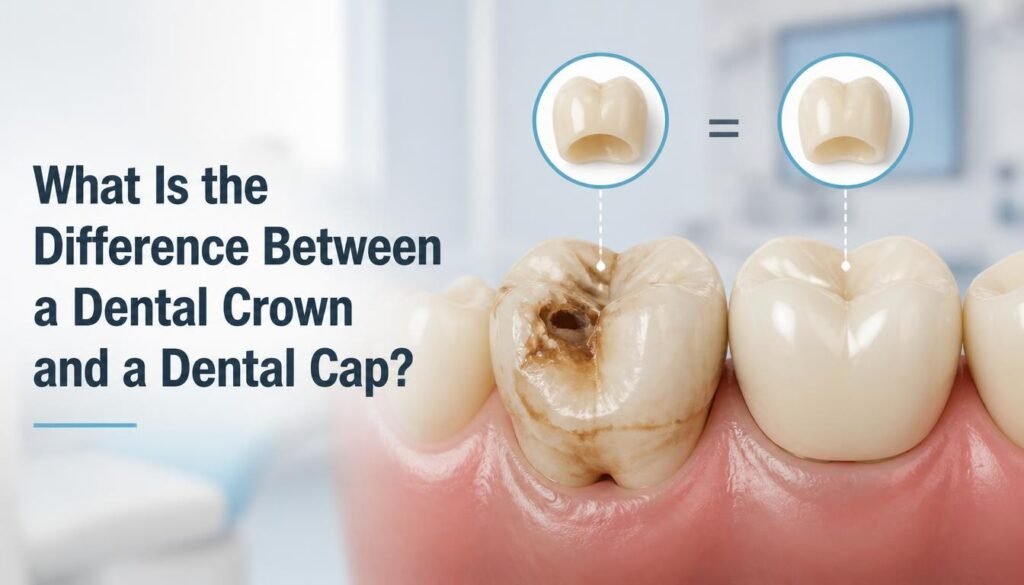
A dental crown is designed to protect and restore a damaged or weakened tooth, but having a crown does not make the natural tooth underneath completely immune to decay. Decay can develop around the edges of an existing dental crown, particularly where the crown meets the natural tooth or when plaque and bacteria accumulate around the restoration.
If you notice sensitivity, toothache, a bad taste, bleeding gums, food getting trapped around the crown, or a crown that feels loose, it is important to have the tooth examined by a dentist.
The good news is that decay around a dental crown does not automatically mean the tooth has to be extracted. Treatment depends on where the decay is located, how extensive it is, how much healthy tooth structure remains, and whether the tooth’s pulp or root has become involved.
According to Cleveland Clinic, crowns can last many years with proper care, but they can become damaged or develop problems over time. Poorly fitting crowns can also contribute to bacterial accumulation and decay.
Quick Answer: What Happens If There Is Decay Around an Existing Dental Crown?
If decay develops around an existing dental crown, a dentist will first determine the location and severity of the decay.
Depending on the situation, treatment may involve:
- Monitoring a very early lesion when appropriate
- Removing decay and repairing the affected area
- Repairing part of the restoration in selected cases
- Removing and replacing the existing dental crown
- Performing root canal treatment if the decay has reached the pulp
- Extracting the tooth if it is severely damaged and cannot be predictably restored
The treatment cannot be determined simply by looking at the crown from the outside. A dental examination and, when indicated, dental X-rays are needed to assess the tooth underneath and around the crown.
Can a Tooth Get Decay Under or Around a Dental Crown?
Yes.
A dental crown covers the visible portion of a prepared tooth, but it does not eliminate the need for oral hygiene. The natural tooth and the gumline surrounding the crown still require daily cleaning.
Decay can develop particularly around the crown margin, which is the area where the crown meets the natural tooth.
Dental caries is a disease process associated with plaque biofilm, dietary sugars and repeated acid attacks on dental tissues. The American Dental Association describes caries as a multifactorial disease involving demineralization and remineralization of tooth structure.
If plaque remains around the crown margin, bacteria can contribute to recurrent or secondary decay.
What Causes Decay Around an Existing Dental Crown?
Several factors can contribute to decay around a crown.
1. Plaque Accumulation
Plaque can build up around the edge of a crown, especially if brushing and flossing are inadequate.
Over time, bacteria in plaque can contribute to tooth decay.
2. Difficulty Cleaning Around the Crown
Some patients find flossing around crowns difficult. If food and plaque remain between the crown and neighbouring teeth, the risk of dental problems may increase.
3. Crown Margin Problems
The margin is the area where the restoration meets the tooth. If there is a defective margin or an area that allows plaque retention, decay may develop in the underlying tooth structure.
The American Dental Association has reported that crown-margin repair because of carious lesions is one of the restoration conditions clinicians encounter.
4. High Sugar and Acid Exposure
Frequent consumption of sugary foods and drinks can increase caries risk. The frequency of exposure matters because repeated acid attacks can contribute to demineralization.
5. Gum Recession
As gums recede, previously covered root surfaces may become exposed. Root surfaces are more vulnerable to decay than enamel.
6. An Old or Damaged Crown
Dental crowns are durable but are not permanent. Cleveland Clinic notes that crowns commonly last around 5 to 15 years, although individual crowns can last longer with appropriate care.
A crown may eventually develop wear, cracks, loosening or other problems that require evaluation.
What Are the Signs of Decay Around a Dental Crown?
Decay around a crown may not cause noticeable symptoms in its early stages.
Possible warning signs include:
- Tooth sensitivity to hot or cold
- Sensitivity to sweet foods
- Toothache
- Pain when biting
- Bad breath
- Bad taste around the tooth
- Bleeding or irritated gums
- Food frequently getting stuck around the crown
- A dark or discoloured area near the crown margin
- A loose crown
- Swelling around the tooth
However, the absence of pain does not necessarily mean there is no decay.
Cavities can remain relatively silent until decay progresses deeper into the tooth. Dental X-rays may help identify decay that is not easily visible during a routine examination.
Can Decay Develop Under a Dental Crown Without Pain?
Yes.
This is one reason regular dental examinations are important.
Early tooth decay may not produce obvious symptoms. As decay progresses toward the deeper layers of the tooth, sensitivity or pain may become more noticeable.
If bacteria eventually reach the pulp, inflammation or infection can develop. In more advanced cases, treatment such as root canal therapy may become necessary.
This is why waiting for severe pain before visiting a dentist is not recommended.
How Does a Dentist Diagnose Decay Around a Crown?
Your dentist may use several methods to evaluate the tooth.
Clinical Examination
The dentist will inspect:
- The crown margins
- Gums around the crown
- Crown stability
- Visible discoloration
- Plaque accumulation
- Signs of tooth damage
Dental X-Rays
X-rays can help identify decay or changes that cannot be seen directly.
This is particularly important when the crown covers much of the visible tooth structure.
Evaluation of the Pulp
If you have persistent pain, sensitivity or other symptoms suggesting involvement of the pulp, your dentist may perform additional tests to determine whether the tooth’s nerve and blood supply are healthy.
The exact diagnostic approach depends on your symptoms and clinical findings.
What Happens If Decay Is Found Around an Existing Crown?
The treatment depends on how much decay is present and how much healthy tooth remains.
There is no single treatment that is appropriate for every patient.
Option 1: Early Decay May Be Managed Conservatively
If a lesion is detected at an early stage and has not formed a significant cavity, your dentist may recommend preventive or non-restorative management where clinically appropriate.
The ADA’s caries management guidance emphasizes identifying caries risk and managing the disease process rather than relying only on a “drill and fill” approach.
Your dentist may recommend measures such as improved oral hygiene, fluoride strategies, dietary changes and closer monitoring depending on your individual risk.
Option 2: The Affected Area May Need a Restoration
If a definite cavity has developed but the tooth and crown remain suitable for repair, the dentist may remove the decayed tissue and restore the affected area.
The feasibility of repairing a crown depends on factors such as:
- Location of the decay
- Size of the lesion
- Accessibility
- Crown condition
- Remaining tooth structure
- Crown margin
- Oral hygiene
- Overall prognosis of the tooth
Not every crown with decay can or should be repaired.
Option 3: The Existing Crown May Need to Be Replaced
If decay is extensive or the existing crown no longer provides a suitable seal or fit, the dentist may recommend removing the crown.
After the crown is removed, the dentist can evaluate the underlying tooth more thoroughly.
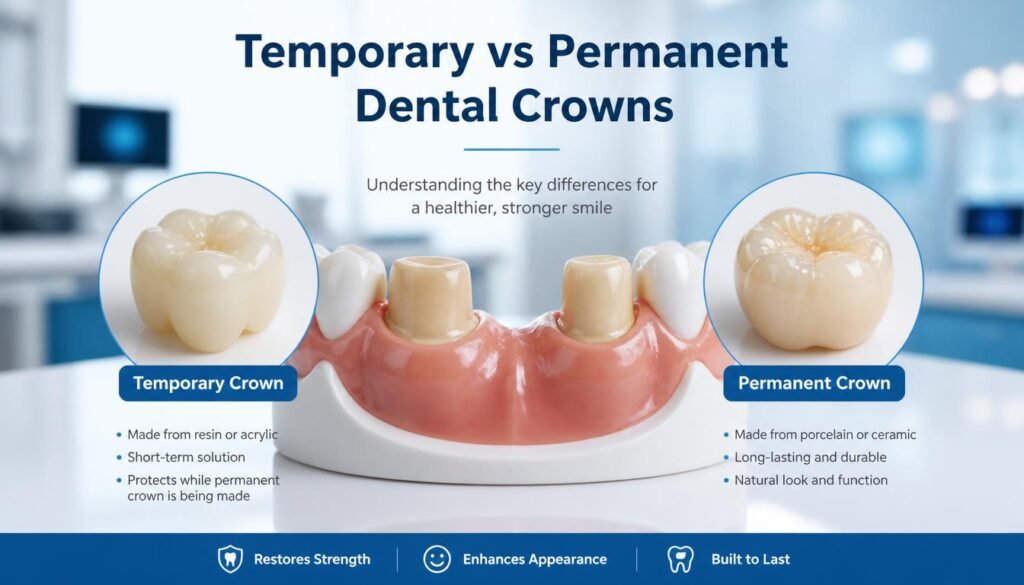
If enough healthy tooth structure remains, the tooth may be treated and restored with a new crown.
This is one reason early assessment is important: treating decay before it becomes extensive may help preserve more natural tooth structure.
Option 4: Root Canal Treatment May Be Necessary
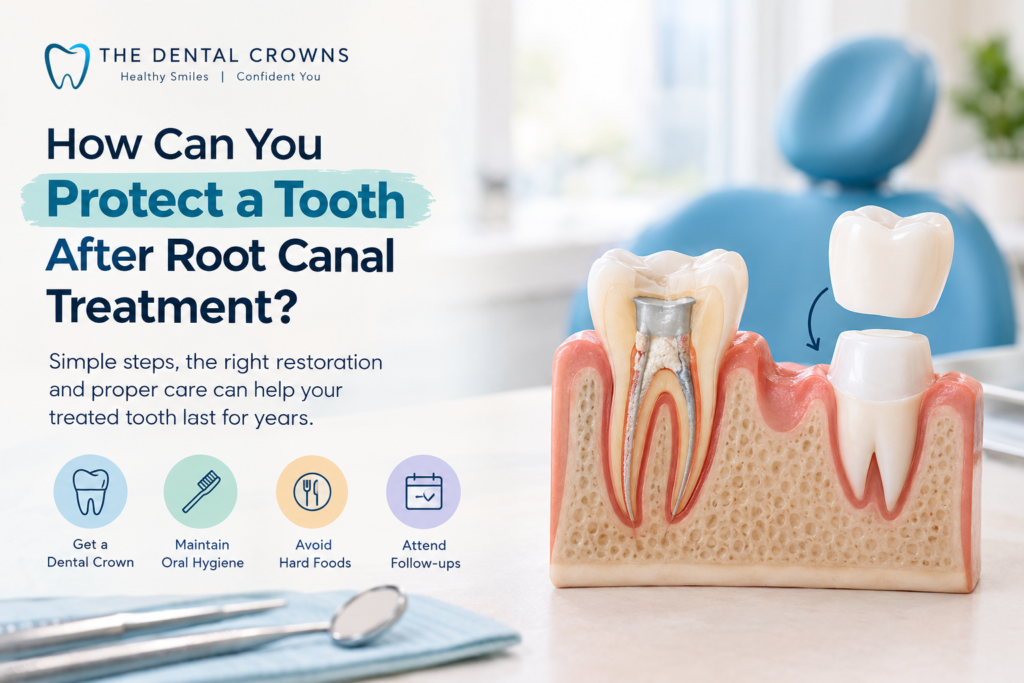
If decay extends deeply into the tooth and affects the pulp, root canal treatment may be required.
During root canal treatment, the infected or inflamed pulp is removed, the root canal system is cleaned and sealed, and the tooth is subsequently restored.
Cleveland Clinic notes that advanced tooth decay can require root canal treatment, and teeth treated with root canal therapy may require a crown or another suitable restoration to protect the remaining tooth structure.
If an existing crown is present, the dentist must determine whether it can be preserved, accessed, repaired or needs to be replaced as part of the treatment plan.
For patients considering this treatment, see our guide to Root Canal Treatment and our article on What Happens During Root Canal Retreatment?.
Does a Crown Always Need to Be Replaced If There Is Decay?
No.
The decision depends on the individual tooth and restoration.
In selected situations, a localized restoration may be repairable without completely replacing the crown. The ADA has discussed the clinical use of repair approaches for defective restorations, although secondary caries can make the decision more complex.
Your dentist may consider:
- How large the decay is
- Whether the decay is accessible
- Whether the crown is otherwise healthy
- Whether the crown fits properly
- How much natural tooth remains
- Whether the pulp is affected
- Whether the tooth can be predictably restored
Therefore, a dental examination is necessary before deciding between repair and replacement.
What If the Tooth Cannot Be Saved?
In some cases, decay may become so extensive that there is not enough healthy tooth structure left to support a predictable restoration.
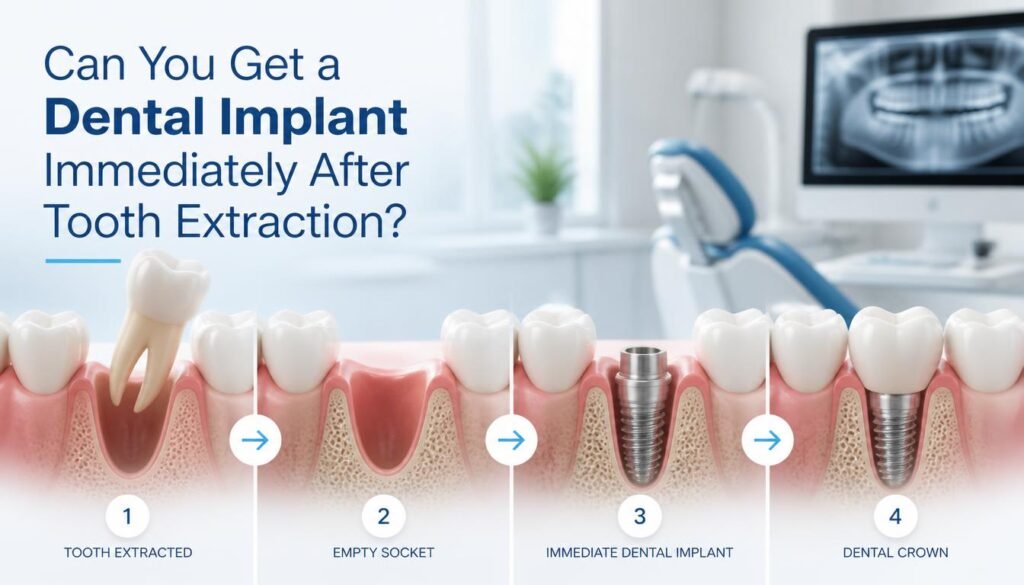
If the tooth cannot be restored, extraction may be recommended.
After extraction, replacement options can include a:
- Dental implant
- Dental bridge
- Denture
Dental implants are one of the services offered by The Dental Crowns. You can learn more about Dental Implants and discuss whether implant treatment is appropriate for your individual situation.
Cleveland Clinic also notes that severely damaged or decayed teeth may sometimes require extraction followed by replacement with a dental implant or bridge.
Can You Prevent Decay Around a Dental Crown?
Although no dental restoration eliminates future dental disease risk, good oral care can help protect the natural tooth surrounding a crown.
Brush Twice a Day
Brush with fluoride toothpaste and pay particular attention to the gumline around the crown.
Floss Every Day
Cleaning between teeth helps remove plaque and food particles that a toothbrush cannot reach.
If conventional floss is difficult to use, ask your dentist about suitable interdental cleaning options.
Limit Frequent Sugary Snacks and Drinks
Reducing frequent sugar exposure can help lower your risk of tooth decay.
Attend Regular Dental Check-Ups
Regular examinations allow your dentist to monitor existing crowns and identify problems before they become more advanced.
Do Not Ignore a Loose Crown
A loose crown should be assessed by a dentist rather than repeatedly pushed back into place at home.
Follow Your Dentist’s Crown Aftercare Instructions
Your dentist can recommend an appropriate cleaning routine based on the location of the crown, your gum health, bite and individual caries risk.
For additional information, read our guide on Dental Crown Aftercare Tips for Patients in Sector 78 Noida.
How Long Can a Dental Crown Last?
There is no fixed expiration date for every dental crown.
Cleveland Clinic reports an average lifespan of approximately 5 to 15 years, although crowns can last longer depending on factors such as oral hygiene, bite forces, material, tooth condition and maintenance.
A crown may need earlier attention if it:
- Becomes loose
- Cracks
- Chips
- Develops a defective margin
- Is associated with recurrent decay
- Causes persistent discomfort
- No longer provides adequate protection
If you already have an older crown and notice changes around it, a dental examination can determine whether monitoring, repair or replacement is appropriate.
Is Decay Around a Crown an Emergency?
Not every case is an emergency, but it should not be ignored.
You should arrange a dental examination if you notice:
- Persistent tooth pain
- Facial or gum swelling
- Pus around the tooth
- Fever associated with dental symptoms
- Severe sensitivity
- A significantly loose crown
- Difficulty chewing
- A broken crown
Advanced dental infection can lead to an abscess and may require urgent treatment.
If you have facial swelling, difficulty breathing or swallowing, or rapidly worsening symptoms, seek urgent medical or dental care.
Decay Around a Dental Crown: Repair or Replacement?
The choice between repairing and replacing an existing crown depends on the clinical condition of both the restoration and the natural tooth.
| Situation | Possible approach |
|---|---|
| Very early caries activity | Preventive management/monitoring where appropriate |
| Small accessible cavity | Restoration may be considered |
| Localized crown-margin defect | Repair may be possible in selected cases |
| Extensive decay | Crown removal and further treatment may be needed |
| Pulp involvement | Root canal treatment may be required |
| Severe structural damage | Extraction may be considered |
| Non-restorable tooth | Extraction followed by tooth replacement options |
This table is a general guide, not a diagnosis. Your dentist must evaluate the individual tooth before recommending treatment.
Why Early Treatment Matters
A small problem around a crown can become much more complicated if it is left untreated.
As decay progresses, more natural tooth structure may be lost. If bacteria reach the pulp, root canal treatment may become necessary. If the tooth becomes severely damaged, extraction may eventually be required.
Early diagnosis gives your dentist more information and may allow more conservative treatment when appropriate.
The ADA’s evidence-based caries guidelines emphasize diagnosis, risk assessment and appropriate management of carious lesions based on their stage and clinical circumstances.
Frequently Asked Questions
Can a cavity form under an existing crown?
Yes. A crown covers the prepared tooth but does not make the underlying natural tooth immune to decay. Decay can develop around the crown margin or other exposed tooth surfaces.
How do I know if I have decay under my crown?
Possible signs include sensitivity, pain, bad taste, bad breath, gum irritation, food trapping or a loose crown. However, some decay causes no symptoms initially, so dental examinations and X-rays may be needed.
Can a dentist fix decay without replacing the crown?
Sometimes. If the decay is localized and the crown remains suitable, repair may be possible. In other situations, the crown may need to be removed and replaced.
Does decay under a crown mean I need a root canal?
Not necessarily. Root canal treatment is generally considered when the pulp becomes inflamed or infected or when the tooth otherwise requires endodontic treatment. The dentist must assess the tooth before making this decision.
Can I get a new crown if the tooth underneath has decay?
Potentially, yes. The decay must first be evaluated and treated, and the dentist must determine whether enough healthy tooth structure remains to support a new restoration.
Can decay around a crown cause tooth loss?
Advanced untreated decay can severely weaken a tooth and may eventually make it impossible to restore. In such cases, extraction may be necessary. Early diagnosis can help identify problems sooner.
How can I prevent decay around my dental crown?
Brush twice daily with fluoride toothpaste, clean between your teeth every day, limit frequent sugar exposure, maintain regular dental examinations and follow your dentist’s recommendations for crown care.
Final Takeaway
Decay around an existing dental crown does not automatically mean that the crown or tooth must be removed. The correct treatment depends on the extent and location of the decay, the condition of the crown, the amount of healthy tooth structure remaining and whether the pulp has been affected.
If you have an existing crown and notice sensitivity, pain, a bad taste, food trapping, gum irritation or a loose crown, arrange a dental examination rather than waiting for the symptoms to become severe.
For patients looking for dental crown treatment in Noida, The Dental Crowns provides restorative and general dental services, including dental crowns, root canal treatment and dental implants. The clinic is located at Civitech Stadia, Sector 79, Noida.
You can also explore our guides on Dental Crown Treatment Near Noida Sector 78, Dental Crown Preparation Near Sector 76 Noida and Dental Crown Treatment Near Sector 77 Noida.
If you are concerned about decay around an existing crown, a professional dental examination is the best way to determine whether the tooth needs monitoring, repair, crown replacement, root canal treatment or another option.