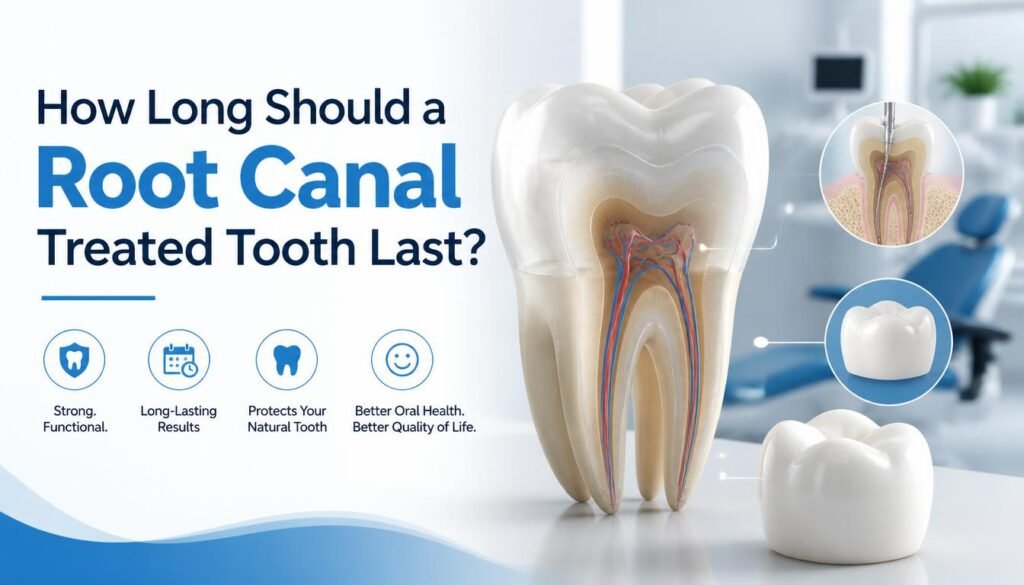
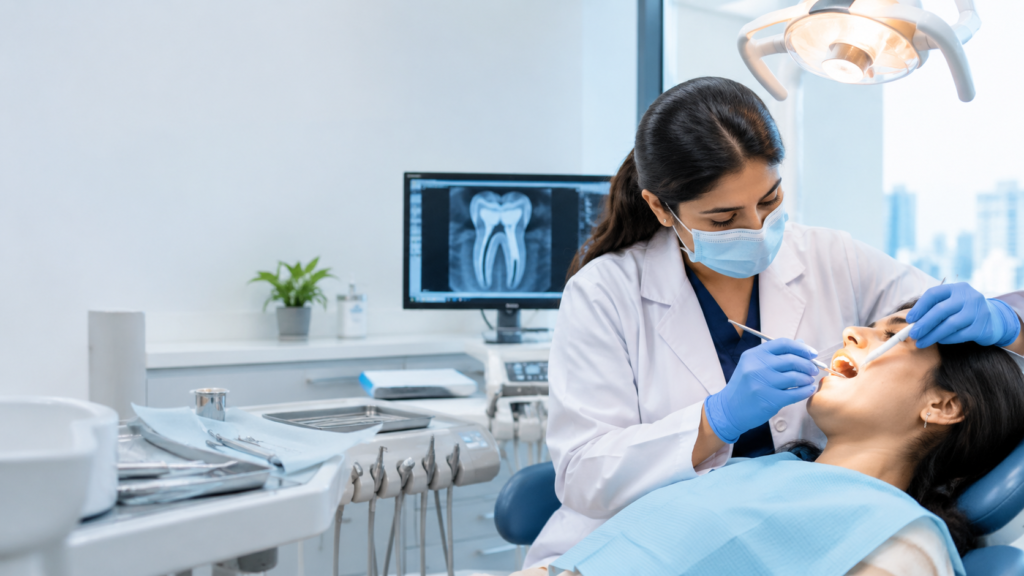
Yes. A root canal-treated tooth can develop new decay. Root canal treatment removes infected or inflamed pulp from inside the tooth, cleans the root canals and seals them. However, the treatment does not make the visible tooth structure or surrounding areas permanently immune to dental decay.
New decay can develop on the remaining tooth structure, around the edges of a filling or crown, or in another part of the mouth. According to the American Association of Endodontists, new decay can expose the root canal filling material to bacteria and potentially lead to a new infection. A loose, cracked or broken crown or filling can also allow bacteria to enter the tooth again.
This is why taking care of a root canal-treated tooth is just as important as taking care of natural teeth.
If you have previously undergone RCT and have started noticing sensitivity, a rough edge, food getting trapped around a crown, tooth discoloration, swelling or discomfort while biting, a dental examination can help identify the cause.
For patients looking for root canal treatment in Noida, The Dental Crowns provides root canal treatment and restorative dental care at its clinic in Sector 79.
What Happens to a Tooth During Root Canal Treatment?
To understand why a root canal-treated tooth can still develop decay, it helps to understand what RCT actually does.
Inside a healthy tooth is a soft tissue called the pulp, which contains nerves and blood vessels. Deep decay, cracks, trauma or other damage can allow bacteria to reach the pulp and cause inflammation or infection.
During root canal treatment, the dentist generally:
- Examines the affected tooth.
- Takes dental X-rays or other imaging when required.
- Numbs the area with local anesthesia.
- Creates an opening to access the infected pulp.
- Removes infected or inflamed tissue.
- Cleans and disinfects the root canals.
- Shapes the canals.
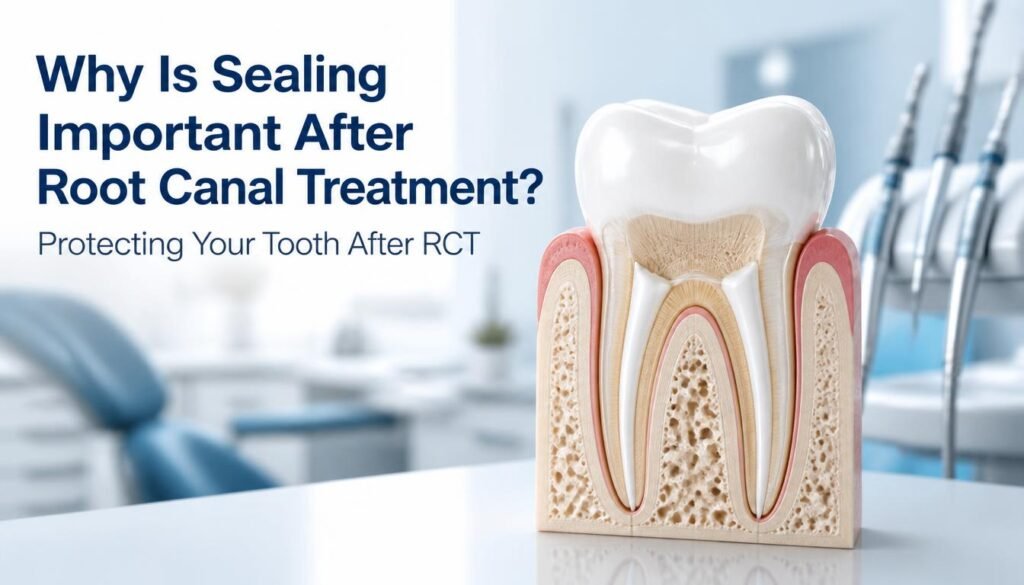
- Fills and seals the cleaned canals.
- Restores the tooth with an appropriate filling or dental crown when required.
The goal is to remove infection from inside the tooth and seal the root canal system.
However, root canal treatment does not prevent future decay on the tooth’s outer surfaces.
You can learn more about the treatment in our guide to Painless Root Canal Treatment.
Why Can a Root Canal-Treated Tooth Develop New Decay?
There are several possible reasons.
1. Poor Oral Hygiene
Dental plaque contains bacteria that contribute to tooth decay. If plaque regularly accumulates around a root canal-treated tooth, the remaining natural tooth structure can still develop cavities.
Brushing twice daily, cleaning between the teeth and maintaining regular dental checkups can help reduce the risk.
2. Decay Around a Filling or Crown
A root canal-treated tooth often requires a permanent restoration. Depending on the tooth and how much structure remains, this may be a filling, onlay or dental crown.
Over time, decay can develop around the margins of a restoration if plaque accumulates or if the restoration becomes damaged or compromised.
This is sometimes called recurrent or secondary decay.
3. A Loose or Damaged Crown
A dental crown can protect a weakened tooth, but it is not indestructible.
If a crown becomes loose, cracked or damaged, bacteria may gain access to areas that were previously protected.
The American Association of Endodontists specifically identifies a loose, cracked or broken crown or filling as a possible route for new infection in a previously treated tooth.
If you have a damaged crown, do not ignore it simply because the tooth has already undergone RCT.
Read more about Dental Crown Treatment Near Noida Sector 78.
4. New Decay Around the Tooth
Root canal treatment focuses on the infected pulp and root canal system. It does not make neighboring teeth or the remaining tooth structure resistant to cavities.
For example, if someone frequently consumes sugary foods and drinks and does not maintain adequate oral hygiene, they may develop new cavities even after successful RCT.
5. Delayed Permanent Restoration
After root canal treatment, the tooth usually needs an appropriate final restoration based on its condition.
A temporary filling is not intended to replace the long-term restoration indefinitely.
Delaying the recommended permanent restoration may leave the tooth more vulnerable to fracture, leakage or other problems.
The appropriate restoration depends on factors such as the amount of remaining tooth structure, tooth location, biting forces and the dentist’s clinical assessment.
Can You Get a Cavity Under a Dental Crown?
Yes.
A dental crown covers the visible portion of a tooth, but the tooth underneath and around the crown still requires proper care.
Decay can potentially develop at or near the crown margin. If the crown is damaged or does not maintain an adequate seal, bacteria can gain access to the underlying tooth structure.
Signs that may require examination include:
- A visible dark area near the crown
- Food frequently getting trapped around the crown
- A rough or broken crown edge
- A loose crown
- Bad taste or odor around the tooth
- Gum irritation near the crown
- Pain or discomfort while chewing
- Swelling around the tooth
Importantly, not every symptom means that a tooth has developed new decay. Your dentist needs to examine the tooth to determine whether the problem is decay, crown damage, gum disease, root canal reinfection, a crack or another condition.
Can a Root Canal Tooth Get Infected Again?
Yes.
A root canal-treated tooth can sometimes develop a new infection or fail to heal properly.
The American Association of Endodontists explains that problems can occur because of factors such as untreated canal anatomy, leakage around a restoration, new decay or damage to the tooth.
A previously treated tooth may therefore require root canal retreatment in selected cases.
Possible signs include:
- Recurring tooth pain
- Pain while chewing
- Swelling near the tooth
- Tender gums
- A recurring gum boil
- New sensitivity or discomfort
- A damaged crown or filling
- Changes around the root seen on dental imaging
If symptoms return months or years after RCT, it does not automatically mean that the tooth needs to be extracted.
A dentist or endodontist can evaluate the tooth and determine whether retreatment, restoration repair, surgical treatment or another option is appropriate.
You can also read our guide on What Happens During Root Canal Retreatment?.
Is New Decay the Same as Root Canal Failure?
Not necessarily.
These are two different issues that can sometimes be related.
New decay means that the tooth has developed a new carious lesion after the original treatment.
Root canal failure or reinfection refers to a problem involving the previously treated root canal system or tissues around the tooth.
For example, a tooth could develop decay near a crown margin without immediately having an infection inside the root canal system.
On the other hand, advanced new decay can eventually provide bacteria with access to the previously treated canal space.
That is why early examination is important.
A dentist may use a clinical examination and dental imaging to determine what is happening.
What Are the Signs of Decay After Root Canal Treatment?
A root canal-treated tooth may not produce the same symptoms as a tooth with a healthy nerve because the pulp has been removed.
Therefore, you should not rely only on toothache to identify a problem.
Possible warning signs include:
1. Visible Discoloration
A dark spot or change in the appearance of the tooth or restoration may require evaluation.
2. Food Trapping
If food repeatedly becomes trapped around a crown or filling, there may be an issue with the restoration or surrounding tooth structure.
3. Rough or Broken Restoration
A chipped crown, broken filling or rough edge should be assessed.
4. Swollen or Tender Gums
Localized swelling near a previously treated tooth can indicate an underlying dental problem.
5. Pain While Biting
Pain or pressure sensitivity around a previously treated tooth deserves professional assessment.
6. Recurring Bad Taste
A persistent unpleasant taste or drainage near a tooth may be associated with infection and should be evaluated.
7. No Symptoms at All
This is important.
Some dental problems can progress without obvious pain. Regular dental examinations allow dentists to identify problems that may not yet be noticeable to the patient.
How Can You Prevent New Decay After a Root Canal?
The good news is that many everyday habits can help protect your treated tooth.
Brush Twice a Day
Use a soft-bristled toothbrush and fluoride toothpaste unless your dentist has recommended another approach.
Pay particular attention to the gumline and areas around dental restorations.
Clean Between Your Teeth
Floss or use another dentist-recommended interdental cleaning method every day.
This is particularly important around teeth with crowns, bridges or other restorations.
Reduce Frequent Sugary Snacking
Repeated exposure to sugary foods and drinks can increase the risk of dental caries.
Instead of frequently sipping or snacking on sugary products throughout the day, discuss a tooth-friendly eating routine with your dentist.
Protect Your Dental Crown
Avoid using your teeth to open packages or bite very hard objects.
If you grind or clench your teeth, ask your dentist whether a protective night guard is appropriate.
Attend Regular Dental Checkups
Routine dental examinations can help identify decay, damaged restorations, gum problems and other issues before they become more complicated.
Replace Damaged Restorations Promptly
If your crown or filling becomes loose, cracked or broken, arrange a dental examination rather than waiting for pain to appear.
Does Every Root Canal-Treated Tooth Need a Crown?
No.
The need for a crown depends on the individual tooth.
Molars and premolars often experience substantial chewing forces, and a crown may be recommended when significant tooth structure has been lost.
Some front teeth may be restored with another type of restoration when enough healthy tooth structure remains.
Your dentist will consider:
- The amount of remaining tooth structure
- Tooth location
- Bite and chewing forces
- Existing restoration
- Risk of fracture
- Oral hygiene
- Overall dental condition
For more information, read Do You Need a Dental Crown After Root Canal Treatment?.
What Happens If New Decay Is Found?
Treatment depends on how extensive the decay is and whether the root canal system has been affected.
Possible treatment options may include:
Minor Decay
If decay is limited and the tooth structure is adequate, the dentist may recommend removing the decayed portion and placing an appropriate restoration.
Decay Around a Crown
The dentist may need to evaluate the crown, underlying tooth structure and margins. Depending on the condition, the crown may need repair or replacement.
Deep Decay
If decay has progressed significantly, treatment may become more complex.
Reinfection of the Root Canal
If bacteria have entered the root canal system, the dentist may consider root canal retreatment or another endodontic procedure.
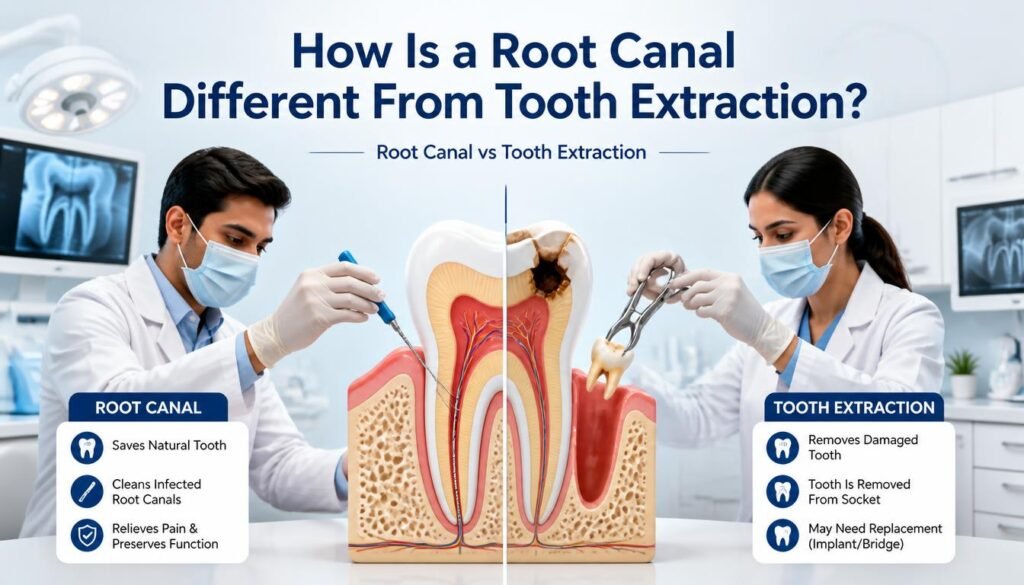
Tooth Cannot Be Restored
In severely damaged teeth, extraction may sometimes be considered. Tooth replacement options can include a dental implant or dental bridge depending on the patient’s situation.
The correct treatment cannot be determined from symptoms alone.
Why Follow-Up Care Matters After Root Canal Treatment
Root canal treatment is not the end of dental care.
The treated tooth should continue to receive the same attention as the rest of your mouth.
Follow-up care can help your dentist monitor:
- The condition of the restoration
- Gum health
- Signs of recurrent or new decay
- Changes around the root
- Tooth fractures
- Overall oral hygiene
If you have recently completed RCT, you can also read our guide on Root Canal Follow-Up Care for Patients Near Sector 78 Noida.
When Should You Visit a Dentist?
You should arrange a dental examination if you notice:
- Pain or discomfort in a previously root canal-treated tooth
- Swelling around the tooth
- A loose crown
- A cracked or broken filling
- New discoloration
- Pain while chewing
- Food repeatedly getting trapped around a restoration
- A recurring gum boil
- A persistent bad taste or drainage
Do not wait for severe pain before seeking an evaluation.
A dental examination can help determine whether you are dealing with new decay, a damaged restoration, gum disease, a tooth fracture, root canal reinfection or another issue.
Root Canal Treatment in Noida
If you are searching for root canal treatment in Noida, The Dental Crowns provides root canal and restorative dental services at its clinic in Civitech Stadia, Sector 79, Noida.
The clinic lists painless root canal treatment among its general dentistry services and also provides dental crown and other restorative treatment options.
You can explore the clinic’s complete dental services or learn more about Painless Root Canal Treatment in Noida.
A dentist can examine your tooth and recommend treatment according to its individual condition.
Frequently Asked Questions
Can a root canal-treated tooth develop a cavity?
Yes. Root canal treatment removes infected or inflamed pulp, but it does not make the remaining tooth structure immune to decay. New decay can occur on or around the remaining tooth structure or restoration.
Can decay occur under a crown after a root canal?
Yes. Decay can develop near the crown margin or on remaining natural tooth structure. A damaged or compromised crown can also allow bacteria to reach the underlying tooth.
Can a root canal tooth get infected again?
Yes. A previously treated tooth can sometimes develop new infection because of new decay, leakage around a restoration, untreated canal anatomy, cracks or other problems.
Does a root canal protect a tooth from future cavities?
No. A root canal treats the infected pulp and root canal system. It does not prevent future dental decay.
How do I protect a root canal-treated tooth?
Maintain good oral hygiene, clean between your teeth, limit frequent sugary snacks and drinks, attend regular dental checkups and have damaged restorations assessed promptly.
Does every root canal-treated tooth require a crown?
No. The recommended restoration depends on the tooth’s location, remaining tooth structure, chewing forces and individual dental condition.
Can a dentist detect decay under a crown?
A dentist can evaluate the crown and surrounding tooth clinically and may use dental X-rays or other diagnostic methods when appropriate. The exact diagnostic approach depends on the tooth and suspected problem.
What should I do if my root canal tooth starts hurting again?
Arrange a dental examination. Recurring pain may have several possible causes, including new decay, restoration problems, cracks or persistent/recurrent infection.
Can a root canal-treated tooth be retreated?
In selected cases, yes. Root canal retreatment may be considered when a previously treated tooth has persistent or recurrent infection or another problem involving the root canal system.
Can new decay after a root canal lead to extraction?
Severe decay can sometimes make a tooth unrestorable, in which case extraction may be considered. However, the treatment decision depends on the amount of remaining healthy tooth structure and the overall condition of the tooth.
Final Takeaway
Can a root canal-treated tooth develop new decay? Yes.
A successful root canal removes infection from inside the tooth, but the remaining natural tooth structure can still develop cavities. Decay can also occur around fillings or crowns, particularly when plaque accumulates or a restoration becomes damaged or compromised.
The best way to protect a root canal-treated tooth is to maintain good oral hygiene, complete the recommended permanent restoration, avoid damaging dental restorations and attend regular dental checkups.
If you notice pain, swelling, a damaged crown, food trapping, discoloration or any other unusual change around a previously treated tooth, have it examined by a dentist rather than assuming that the tooth is permanently protected because it has had an RCT.
Looking for root canal treatment in Noida?
The Dental Crowns provides root canal and restorative dental care in Sector 79, Noida. Visit the Dental Services page to learn more about available treatments.