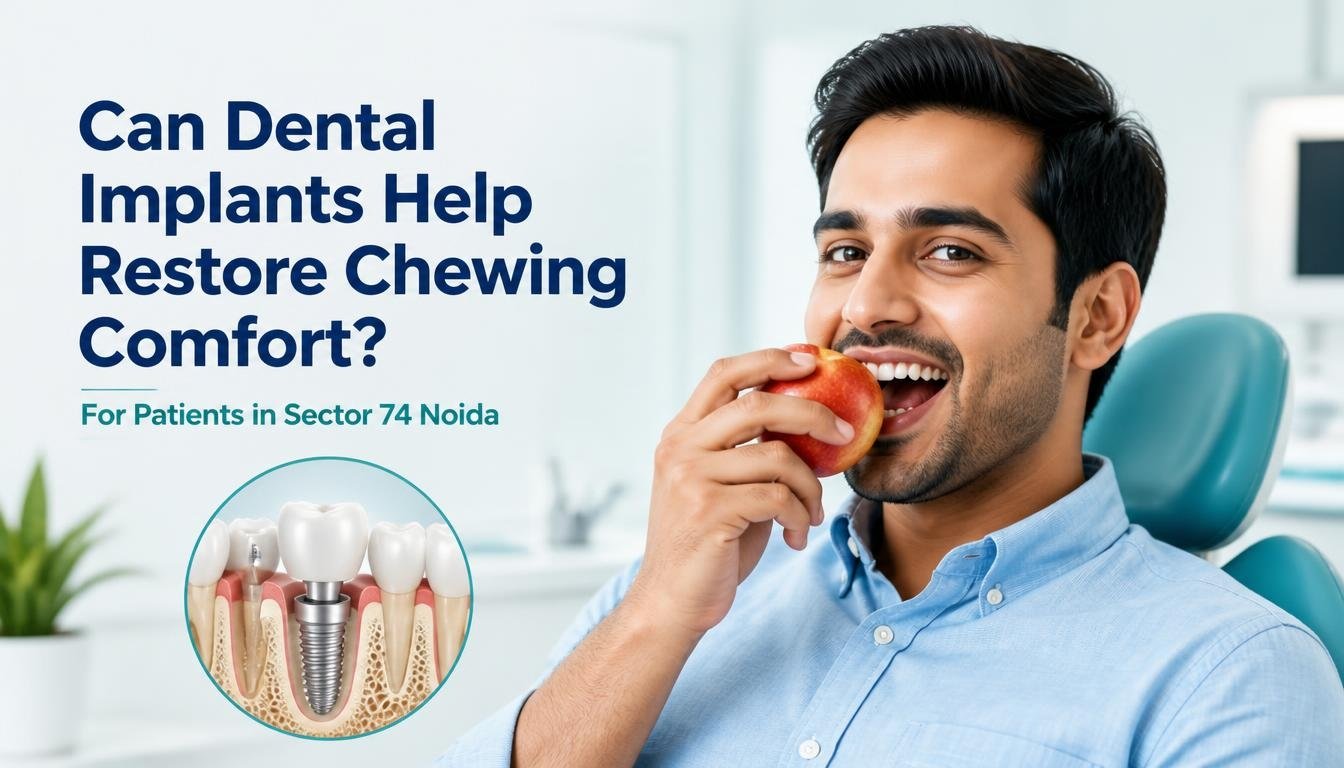
Missing teeth can affect more than just the appearance of your smile. They can make everyday activities such as eating, chewing, and speaking less comfortable. Many people with missing teeth find themselves avoiding certain foods or relying more heavily on the opposite side of their mouth while eating.
The good news is that dental implants can help restore chewing comfort and improve oral function for patients who are suitable candidates for the treatment.
If you are looking for dental implants in Sector 74 Noida, understanding how implants work, their benefits, and the treatment process can help you make a more informed decision about your oral health.
At The Dental Crowns, patients from Sector 74 and nearby areas of Noida can explore personalised dental implant treatment options based on their individual dental needs.
How Do Missing Teeth Affect Chewing Comfort?
Teeth play an important role in breaking down food into smaller pieces before swallowing. When one or more teeth are missing, the chewing process can become less efficient.
Some common difficulties experienced by patients with missing teeth include:
- Difficulty chewing hard, crunchy, or fibrous foods
- Discomfort while biting or chewing
- Avoiding certain foods because of chewing difficulties
- Increased pressure on the remaining natural teeth
- Changes in the way the upper and lower teeth meet
- Reduced confidence while eating in social situations
The extent of these problems depends on the location and number of missing teeth, the condition of the remaining teeth, and the patient’s overall oral health.
Replacing missing teeth with an appropriate dental restoration can help improve chewing function and make eating more comfortable.
What Are Dental Implants and How Do They Work?
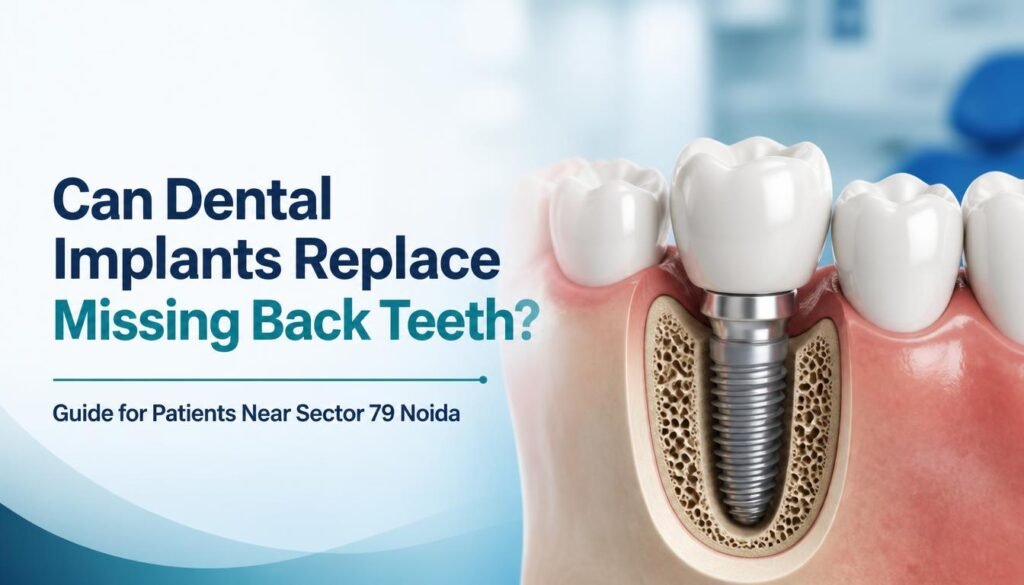
Dental implants are artificial tooth roots, usually made from biocompatible titanium, that are surgically placed into the jawbone to support replacement teeth.
A conventional dental implant restoration generally consists of three components:
1. Dental Implant
The implant fixture is placed into the jawbone and serves as the foundation for the replacement tooth.
2. Abutment
The abutment connects the implant fixture to the final dental restoration.
3. Dental Crown
The dental crown is the visible, tooth-shaped part that is designed to restore the appearance and function of the missing tooth.
Learn more about dental implant treatment at The Dental Crowns.
Can Dental Implants Help Restore Chewing Comfort?
Yes. Dental implants can help restore chewing comfort by providing a stable foundation for replacement teeth. Research has shown improvements in bite force, patient satisfaction, and chewing ability with implant-supported restorations, although results vary according to the type of treatment and individual circumstances.
Here are some ways dental implants may help improve chewing function.
1. Provide Stability While Chewing
Unlike conventional removable dentures, dental implants are anchored into the jawbone.
This fixed support can help reduce movement of the replacement tooth while chewing, potentially making the experience more comfortable for suitable patients.
2. Help Restore Bite Function
When a tooth is missing, the distribution of chewing forces may change.
A properly positioned and restored dental implant can help re-establish a more balanced bite. Your dentist will evaluate the relationship between the upper and lower teeth to ensure that the restoration is designed to function appropriately.
3. Support More Efficient Chewing
Missing teeth may make it difficult to break down certain foods effectively.
Implant-supported restorations can improve chewing efficiency in suitable patients, allowing them to manage a wider variety of food textures more comfortably after healing.
However, the improvement depends on the number of missing teeth, the type of restoration, and the patient’s individual oral condition.
4. Reduce Dependence on Removable Dentures
Some patients experience discomfort, instability, or movement with conventional removable dentures.
Implant-supported dentures can provide additional retention and stability, which may improve comfort and confidence while eating.
The choice between fixed implants, implant-supported dentures, and conventional dentures depends on the patient’s needs and clinical assessment.
5. Help Maintain Jawbone Structure
After tooth loss, the jawbone in the affected area may gradually lose volume because it no longer receives stimulation from the natural tooth root.
Dental implants transmit functional forces to the surrounding bone and may help preserve bone in the implant area. This is another important consideration when planning long-term tooth replacement.
Who Can Benefit from Dental Implants in Sector 74 Noida?
Dental implants may be considered for patients who have:
- A single missing tooth
- Multiple missing teeth
- Difficulty chewing due to tooth loss
- Loose or uncomfortable conventional dentures
- A tooth that requires extraction and replacement
- Suitable jawbone support for implant placement
However, dental implants are not suitable for everyone without proper evaluation.
Your dentist may assess your gum health, jawbone volume, oral hygiene, bite alignment, general health, and any existing dental infections before recommending treatment.
Patients with insufficient jawbone support may require additional procedures, such as bone grafting, depending on their individual condition.
If you are exploring your options, read our guide on who may be a good candidate for dental implants near Noida Sector 74.
What Is the Dental Implant Procedure Like?
Dental implant treatment generally involves several stages. The exact process and timeline depend on the patient’s oral health and treatment requirements.
Step 1: Dental Consultation and Examination
The dentist examines the missing tooth area, surrounding gums, remaining teeth, and jawbone.
Dental X-rays or other diagnostic imaging may be recommended to evaluate the implant site and plan the procedure.
Step 2: Personalised Treatment Planning
A treatment plan is prepared according to the number of missing teeth, available bone, bite, and type of restoration required.
Step 3: Dental Implant Placement
The implant is surgically placed into the jawbone under appropriate anaesthesia.
The procedure is planned according to the patient’s condition and the dentist’s clinical assessment.
Step 4: Healing and Osseointegration
The implant requires time to integrate with the surrounding bone.
During this period, patients should follow the dentist’s instructions and avoid putting unnecessary pressure on the implant site.
Step 5: Placement of the Final Restoration
After sufficient healing, the abutment and customised dental crown or other restoration are placed.
Your dentist evaluates the bite and makes any necessary adjustments to help ensure proper function and comfort.
How Long Does It Take to Chew Comfortably After Dental Implant Treatment?
The recovery timeline differs from one patient to another.
During the initial healing period, the dentist may recommend softer foods and advise avoiding chewing directly over the surgical site.
As healing progresses and the final restoration is placed, the patient may gradually return to a wider range of foods according to the dentist’s instructions.
The overall treatment duration depends on factors such as:
- Jawbone condition
- Gum health
- Implant stability
- Whether additional procedures are required
- Healing and bone integration
- Type of dental restoration
It is important not to rush the process. Allowing sufficient healing time helps support the long-term success of the treatment.
Dental Implants vs. Conventional Dentures: Which Is Better for Chewing?
Both dental implants and conventional dentures can help replace missing teeth, but they work differently.
| Feature | Dental Implants | Conventional Dentures |
|---|---|---|
| Support | Anchored in the jawbone | Rest on the gums |
| Stability | Generally fixed or implant-retained | May move during chewing |
| Chewing comfort | Can improve chewing function in suitable patients | Depends on fit, retention, and adaptation |
| Bone support | May help preserve bone around the implant | Do not provide the same stimulation to the jawbone |
| Maintenance | Requires regular cleaning and dental check-ups | Requires cleaning, adjustments, and periodic replacement |
Neither option is automatically the best for every patient. Your dentist can explain the advantages, limitations, and alternatives based on your oral condition.
How Much Do Dental Implants Cost in Sector 74 Noida?
The cost of dental implants depends on several factors, including:
- Number of implants required
- Implant system and material
- Type of dental crown
- Jawbone condition
- Need for additional procedures
- Complexity of the treatment
For a detailed breakdown, read our guide: How Much Do Dental Implants Cost in Noida Sector 74?
A personalised consultation is necessary to determine the treatment plan and final cost.
Why Choose The Dental Crowns for Dental Implants Near Sector 74 Noida?
Choosing the right dental clinic is an important step when considering implant treatment.
The Dental Crowns provides dental implant treatment and a range of restorative, cosmetic, and general dental services.
Patients can benefit from:
- Individualised dental treatment planning
- Experienced dental professionals
- Modern diagnostic and treatment technology
- Patient-focused consultations
- Comprehensive dental care
- Guidance on implant aftercare and maintenance
Located at Civitech Stadia, Sector 79, Noida, The Dental Crowns is accessible to patients from Sector 74 and other nearby areas.
To explore the clinic’s complete range of treatments, visit our Dental Services page.
Tips to Maintain Chewing Comfort After Dental Implants
Maintaining good oral hygiene and following your dentist’s recommendations are important for the long-term health of your dental implants.
Here are some useful tips:
- Brush twice daily using a soft-bristled toothbrush.
- Clean carefully around the implant-supported restoration.
- Use floss or interdental cleaning aids as recommended by your dentist.
- Avoid putting excessive pressure on the implant during the initial healing period.
- Follow all prescribed medication and post-operative instructions.
- Avoid smoking or tobacco, particularly during healing.
- Attend regular dental check-ups and professional cleaning appointments.
- Contact your dentist if you experience persistent discomfort, swelling, bleeding, or implant mobility.
For further guidance, read our complete dental implant aftercare guide.
Frequently Asked Questions (FAQs)
1. Can dental implants restore normal chewing ability?
Dental implants can help restore chewing function in suitable patients. The improvement depends on the number of missing teeth, implant stability, the final restoration, and overall oral health.
2. Are dental implants more comfortable than dentures?
Many patients experience improved stability and chewing comfort with implant-supported restorations compared with conventional removable dentures. However, individual experiences and treatment suitability vary.
3. Can I eat hard foods after dental implant treatment?
You may gradually return to a wider variety of foods after healing and once your dentist confirms that the implant restoration is ready for normal function. Avoid hard or excessively chewy foods during the initial healing period as advised.
4. Does getting a dental implant hurt?
Implant placement is performed using appropriate anaesthesia to manage discomfort. Mild soreness, swelling, or tenderness may occur after the procedure. Recovery varies between patients.
5. How long do dental implants last?
Dental implants can provide a long-term tooth replacement option. Their longevity depends on oral hygiene, gum health, implant placement, bite forces, and regular professional maintenance.
6. Can I get dental implants if I have been missing a tooth for years?
Possibly. However, prolonged tooth loss may lead to changes in the jawbone. A dentist must evaluate the available bone and determine whether additional procedures are necessary before implant placement.
7. Where can I get dental implants near Sector 74 Noida?
The Dental Crowns offers dental implant treatment at Civitech Stadia, Sector 79, Noida. Patients from Sector 74 and nearby locations can schedule a consultation to discuss their dental needs and treatment options.
Conclusion
Missing teeth can affect your ability to chew comfortably, enjoy different foods, and maintain confidence in everyday situations.
Dental implants can help restore chewing comfort, improve bite function, and provide stable tooth replacement for patients who are suitable candidates. However, successful treatment requires proper diagnosis, personalised planning, adequate healing, and long-term maintenance.
If you are experiencing chewing difficulties because of missing teeth, consult a qualified dental professional to understand whether dental implants are the right option for you.
At The Dental Crowns, patients from Sector 74 Noida can receive personalised guidance and explore suitable dental implant treatment options.
Book your dental consultation today to take the next step towards a healthier, more comfortable smile.
Medical Disclaimer
This article is intended for general educational purposes only and does not replace professional dental examination, diagnosis, or treatment. Dental implant suitability, recovery, and outcomes vary between individuals. Always consult a qualified dentist for personalised advice.