
If you are considering dental implants in Noida Sector 76, one of the first questions you may have is: How long do dental implants last?
The good news is that dental implants are designed to be a long-term solution for replacing missing teeth. With proper oral hygiene, regular dental check-ups, healthy gums and appropriate treatment planning, the implant itself can remain functional for many years.
Research on long-term implant outcomes is encouraging. A systematic review published in the Journal of Dentistry reported an estimated 10-year implant survival of around 96.4% under conventional analysis, while a more conservative sensitivity analysis estimated survival at approximately 93.2%.
Another systematic review evaluating implants followed for at least 10 years found implant survival of approximately 95% at the implant level.
However, it is important to understand one thing: dental implants are not guaranteed to last forever. Their lifespan depends on your oral health, implant placement, bone and gum condition, oral hygiene habits, lifestyle and regular professional maintenance.
What Is a Dental Implant?
A dental implant is an artificial tooth root that is surgically placed into the jawbone to support a replacement tooth.
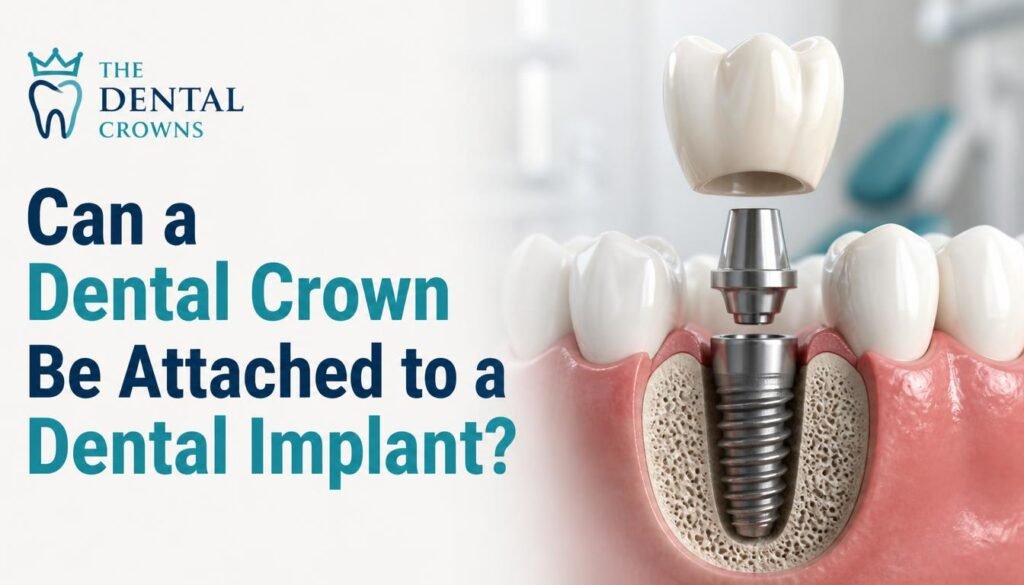
A typical dental implant restoration has three main components:
- Implant fixture: The titanium or other biocompatible implant component placed into the jawbone.
- Abutment: The connector that joins the implant fixture to the replacement tooth.
- Dental crown: The visible tooth-shaped restoration placed on top of the implant.
Over time, the implant can integrate with the surrounding jawbone through a process known as osseointegration.
For patients with one or more missing teeth, dental implants can provide a stable foundation for replacement teeth.
You can explore Dental Implants at The Dental Crowns to learn more about the clinic’s available implant services.
So, How Long Do Dental Implants Actually Last?
There is no single number that applies to every patient.
In general, the implant fixture can potentially remain functional for decades, provided it remains healthy and properly maintained. However, the dental crown attached to the implant may need maintenance, repair or replacement sooner than the implant itself.
Long-term research supports the durability of implant treatment. One systematic review of 18 prospective studies reported a conventional 10-year implant survival estimate of 96.4%.
Another systematic review involving more than 7,700 implants reported cumulative survival of approximately 94.6% over long-term follow-up, with a mean follow-up period of 13.4 years.
Therefore, rather than thinking of an implant as something that lasts for a fixed number of years, it is better to consider it a long-term tooth replacement that requires ongoing care.
Dental Implant vs Implant Crown: Are They the Same Thing?
No.
This is an important distinction when discussing dental implant lifespan.
The implant is the component placed into your jawbone.
The crown is the artificial tooth attached to the implant.
The implant may remain stable for many years, while the crown can experience normal wear and may eventually require replacement.
A long-term study of single-tooth implants found implant survival around 95% at 10 years, while the survival of original single implant crowns was lower, around 89.5%. The study specifically noted that replacement of implant crowns may need to be considered during long-term maintenance.
This means that needing a new crown does not necessarily mean that the dental implant has failed.
7 Factors That Affect How Long Dental Implants Last
Several factors can influence the longevity of dental implants.
1. Oral Hygiene
Good oral hygiene is one of the most important factors for maintaining healthy gums around an implant.
You should:
- Brush your teeth twice a day.
- Clean between your teeth regularly.
- Follow your dentist’s recommendations for implant cleaning.
- Attend regular dental examinations.
- Seek professional care if you notice bleeding, swelling or discomfort.
Poor oral hygiene can contribute to gum inflammation and other complications around implants.
2. Gum Health
Healthy gums are essential for maintaining the tissues surrounding an implant.
If you have a history of gum disease, your dentist may recommend additional monitoring and professional maintenance.
Patients who notice persistent gum bleeding, swelling, bad breath or discomfort around an implant should not ignore these symptoms.
Early evaluation may help identify problems before they become more serious.
3. Jawbone Condition
Dental implants depend on adequate bone support.
Before implant placement, your dentist may evaluate:
- Jawbone volume
- Bone density
- Gum condition
- Tooth position
- Adjacent teeth
- Bite
- Overall oral health
If there is insufficient bone, some patients may require additional procedures before implant placement.
This is one reason why an individual dental examination is more useful than relying only on generic online information.
4. Smoking and Tobacco Use
Smoking can negatively affect oral health and may increase the risk of complications associated with dental implant treatment.
If you smoke or use tobacco, discuss it honestly with your dentist before implant treatment.
Your dentist can explain how your habits may affect healing and long-term implant maintenance.
5. Teeth Grinding and Excessive Bite Forces
Some people unconsciously grind or clench their teeth, particularly during sleep.
Excessive forces can place additional stress on dental restorations and surrounding structures.
If you grind or clench your teeth, your dentist may recommend appropriate protective measures, such as a night guard, depending on your individual condition.
6. Quality of Implant Placement and Treatment Planning
Successful implant treatment starts before the implant is placed.
Your dentist needs to assess the missing tooth area, bone condition, gums, bite and overall dental health.
Proper treatment planning can help determine:
- The appropriate implant position
- The suitable implant size
- Whether additional procedures are required
- The appropriate restoration
- How the implant should be maintained afterward
For this reason, choosing an experienced dental professional is an important part of your implant journey.
7. Regular Dental Check-Ups
Even if your implant feels completely normal, routine dental examinations remain important.
During follow-up appointments, your dentist can assess the implant, crown, gums, bite and surrounding teeth.
Regular professional maintenance may help identify early signs of complications.
What Can Cause a Dental Implant to Fail?
Dental implants have high long-term survival rates, but implant failure can still occur.
Possible contributing factors may include:
- Poor oral hygiene
- Gum disease
- Insufficient bone support
- Smoking or tobacco use
- Excessive biting forces
- Poorly controlled oral-health problems
- Implant positioning issues
- Inadequate maintenance
- Trauma or accidental damage
- Certain individual health or healing factors
Not every implant complication means the implant itself has failed.
For example, a loose or damaged crown may require repair or replacement while the underlying implant remains stable.
A dentist should evaluate the specific cause rather than assuming that the entire implant needs to be removed.
Can Dental Implants Last a Lifetime?
They can potentially last for decades, but no dentist can guarantee that an implant will last for your entire lifetime.
Long-term studies demonstrate high implant survival over 10 years and beyond.
However, individual outcomes vary.
Your dental implant may have a better chance of long-term success when you:
- Maintain excellent oral hygiene
- Attend regular dental check-ups
- Follow post-treatment instructions
- Avoid tobacco
- Manage teeth grinding when necessary
- Protect your teeth from unnecessary trauma
- Replace or repair a worn implant crown when recommended
The goal should not simply be to ask, “How many years will my implant last?”
A better question is:
“What can I do to keep my implant healthy for as long as possible?”
How to Make Dental Implants Last Longer
If you have dental implants or are planning implant treatment near Sector 76 Noida, follow these practical habits.
Brush Twice Daily
Use a suitable toothbrush and toothpaste recommended by your dentist.
Clean Between Your Teeth
Food and plaque can accumulate around dental restorations, so daily interdental cleaning is important.
Don’t Use Your Teeth as Tools
Avoid biting extremely hard objects or using your teeth to open packages.
Attend Dental Check-Ups
Regular appointments allow your dentist to monitor your implant and surrounding tissues.
Address Teeth Grinding
If you clench or grind your teeth, discuss it with your dentist.
Don’t Ignore Symptoms
Contact your dentist if you notice:
- Implant movement
- Persistent pain
- Gum swelling
- Bleeding
- Pus or discharge
- Difficulty chewing
- A loose crown
- A chipped crown
- Persistent bad taste or bad breath around the implant
Early evaluation is better than waiting for the problem to worsen.
How Long Does an Implant Crown Last?
The implant crown is exposed to daily chewing forces and may eventually show wear.
Its lifespan can depend on:
- Crown material
- Bite forces
- Oral hygiene
- Tooth location
- Teeth grinding
- Diet
- General maintenance
- Accidental damage
Therefore, the crown may need replacement before the implant fixture itself.
If you are comparing different restoration options, you can also read the existing guide on Dental Implants vs Bridges for a broader comparison.
Dental Implants for Patients in Noida Sector 76
If you live in Noida Sector 76, you have several nearby sectors where dental clinics provide implant-related services.
The Dental Crowns is located at Civitech Stadia, Sector 79, Noida, and its existing implant information specifically mentions serving patients from nearby areas including Sector 76.
The clinic provides dental implants along with other restorative treatments such as dental crowns, bridges, dentures and root canal treatment.
If you are searching for an implantologist near Sector 76 Noida, your first step should be a professional consultation rather than selecting treatment based only on price.
A dentist can assess your:
- Missing tooth or teeth
- Gum health
- Jawbone
- Bite
- Existing restorations
- Overall oral condition
- Treatment goals
Based on this assessment, the dentist can explain whether dental implants are suitable for you.
Dental Implants vs Dentures: Which Lasts Longer?
Dental implants and dentures are different tooth-replacement options.
Dental implants are fixed into the jawbone and can provide a stable foundation for a crown, bridge or denture.
Dentures are removable restorations that can replace multiple missing teeth.
The appropriate option depends on your oral health, bone support, number of missing teeth, preferences, budget and treatment requirements.
If you want to explore another tooth-replacement option, you can read more about Dentures through The Dental Crowns’ dental services.
There is no universally “best” option for every patient.
What Should You Ask Before Getting Dental Implants?
Before starting treatment, consider asking your dentist:
- Am I a suitable candidate for dental implants?
- Do I have sufficient jawbone support?
- Are my gums healthy?
- Will I need bone grafting?
- What type of implant is being recommended?
- What type of crown will be used?
- How long is the expected treatment process?
- What maintenance will I need after treatment?
- What should I do if my implant crown becomes loose?
- How often should I return for follow-up appointments?
Getting clear answers can help you understand your treatment and expected long-term maintenance.
Frequently Asked Questions About Dental Implant Lifespan
1. How long do dental implants last?
Dental implants are designed as a long-term tooth replacement solution and can potentially remain functional for decades. Research has reported approximately 93–96% implant survival at 10 years, depending on the study and analysis method.
2. Can dental implants last 20 years?
Yes, some implants can remain functional for 20 years or longer. However, individual longevity varies, and long-term success depends on factors such as oral hygiene, gum health, bone support, lifestyle and regular dental maintenance.
3. Do dental implants last longer than dentures?
Dental implants and dentures work differently. Implants are fixed tooth-replacement foundations, while dentures are removable. Implant treatment can offer long-term stability, but the right option depends on your individual dental condition.
4. Does the dental implant crown last as long as the implant?
Not necessarily. The implant fixture may remain functional for decades, while the crown may eventually need repair or replacement because of normal wear or damage.
5. Can a dental implant fail after 10 years?
Although long-term implant survival is high, complications or implant failure can occur even after several years. Regular dental check-ups help monitor the implant and surrounding tissues.
6. What makes dental implants fail?
Potential factors include gum disease, poor oral hygiene, inadequate bone support, smoking, excessive bite forces, trauma and individual healing factors.
7. How can I make my dental implant last longer?
Maintain good oral hygiene, clean between your teeth, attend regular dental check-ups, avoid tobacco, manage teeth grinding if necessary and follow your dentist’s maintenance instructions.
8. Are dental implants painful?
The procedure is performed using appropriate local anaesthesia and pain-management measures. Some discomfort or swelling may occur during recovery, but your dentist will provide specific aftercare instructions.
9. How long does dental implant treatment take?
Treatment time varies. Some straightforward cases may require less time, while patients needing bone grafting, additional procedures or extensive treatment may require a longer treatment period.
10. Can anyone get dental implants?
Not everyone is automatically a suitable candidate. Your dentist needs to evaluate your gums, jawbone, oral health and individual treatment requirements before recommending implants.
When Should You Visit a Dentist About a Dental Implant?
If you already have an implant and notice something unusual, don’t wait for the problem to disappear.
Arrange a dental evaluation if you experience:
- Persistent discomfort
- Swelling around the implant
- Bleeding gums
- Implant movement
- A loose crown
- Difficulty chewing
- Changes in your bite
- A chipped or broken crown
- Persistent bad taste
- Unusual discharge around the implant
Early assessment can help determine whether the issue involves the crown, abutment, gums or implant itself.
Final Takeaway: How Long Do Dental Implants Last?
So, how long do dental implants last?
The implant fixture is designed to be a long-term tooth replacement and can potentially last for decades. Long-term research shows encouraging survival rates, with several systematic reviews reporting approximately 93–96% survival at 10 years.
However, the longevity of your implant depends on more than the implant itself.
Your oral hygiene, gum health, jawbone, lifestyle, bite forces, treatment planning and regular professional maintenance all matter.
For patients searching for dental implants in Noida Sector 76, the best approach is to schedule a professional consultation and receive an individualized assessment.
The Dental Crowns provides dental implant treatment from its clinic at Civitech Stadia, Sector 79, Noida, serving patients from nearby Noida sectors including Sector 76.
You can explore The Dental Crowns’ complete dental services or read the clinic’s existing Dental Implants Near Noida Sector 77 guide for additional information.
Book a dental consultation before making a decision about implant treatment. Your dentist can determine whether dental implants are appropriate for your specific needs and explain the expected long-term maintenance.
Medical Reference
The scientific evidence used in this article comes primarily from peer-reviewed systematic reviews indexed by PubMed.
- PubMed – 10-Year Dental Implant Survival Systematic Review– Long-term (10-year) dental implant survival – PubMed research
- PubMed – Long-Term Single Dental Implant Survival– A Systematic Review of Survival of Single Implants – PubMed
- PubMed – Long-Term Survival and Success of Dental Implants– Evaluation of Survival and Success Rates of Dental Implants – PubMed
- NIDCR – Oral Health Information– National Institute of Dental and Craniofacial Research (NIDCR) – Oral Health
- American Dental Association – Dental Restoration Information– American Dental Association – MouthHealthy