If you have a cracked, broken, severely decayed, worn or weakened tooth, your dentist may recommend a dental crown to restore its strength, shape and function. But if you are considering dental crown treatment near Sector 79 Noida, you may have several questions:
Will the procedure hurt? How many appointments will you need? What happens during crown preparation? Will the crown look natural? What should you eat afterward?
Understanding the dental crown procedure beforehand can make the treatment experience more comfortable and predictable.
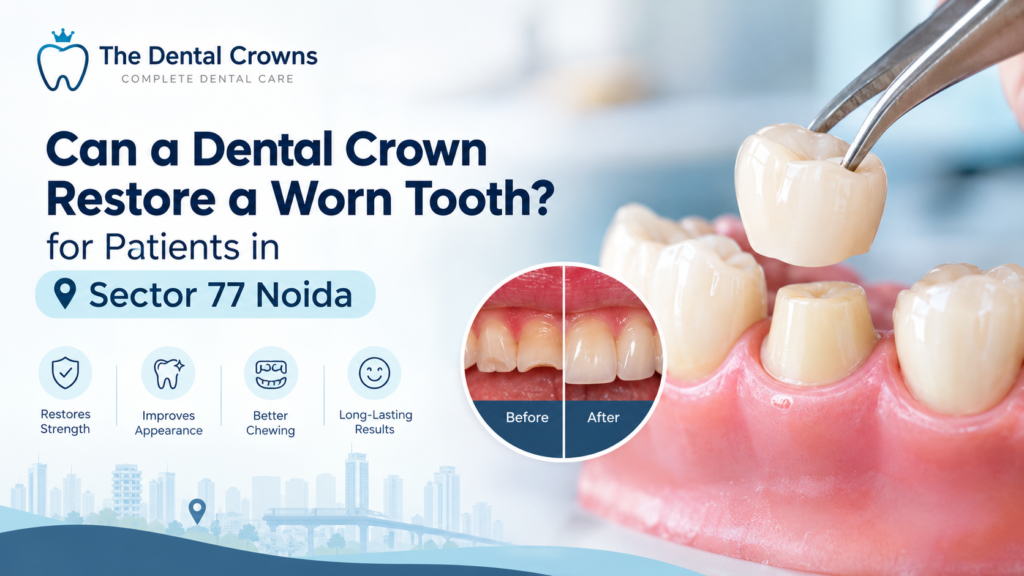
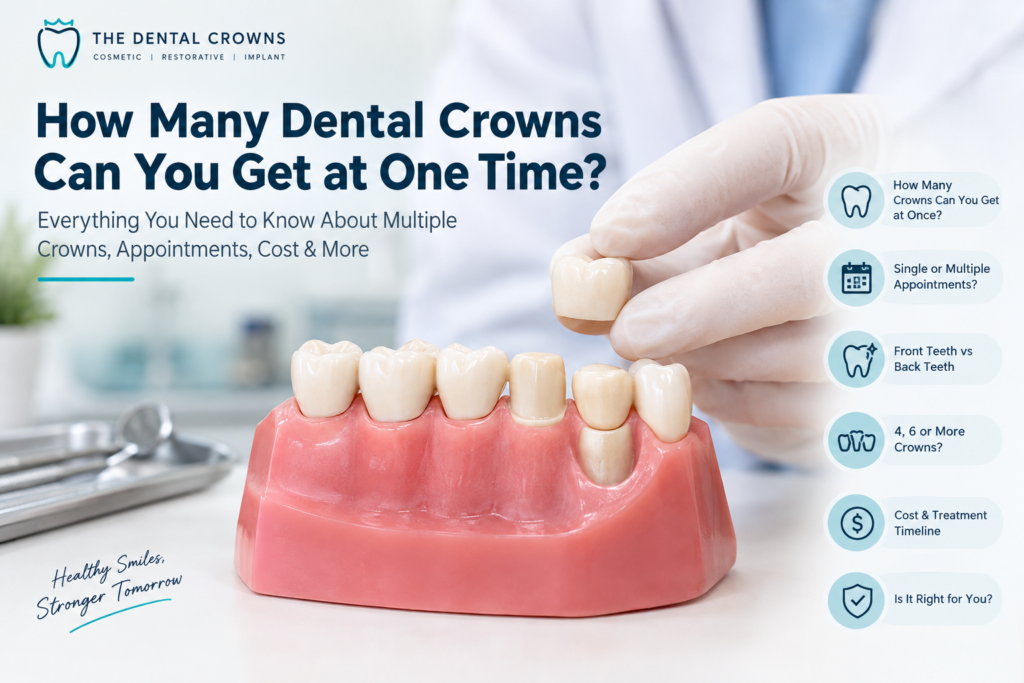
A dental crown is a custom-made restoration that fits over a prepared tooth. Crowns can be used to restore damaged or weakened teeth and may also be placed over certain root-canal-treated teeth or dental implants.
If you are looking for dental crown treatment in Sector 79 Noida, The Dental Crowns is located at Civitech Stadia, Sector 79, Noida, and provides restorative, cosmetic and other dental treatments.
What Is a Dental Crown?
A dental crown, also called a dental cap, is a customized restoration designed to cover the visible portion of a damaged or weakened tooth.
Depending on your individual condition, a dentist may recommend a crown when a tooth has:
- Extensive decay
- A large filling
- A crack or fracture
- Significant wear
- Severe structural damage
- Been treated with a root canal
- Lost substantial tooth structure
However, not every damaged tooth requires a crown. Your dentist may determine that a filling, inlay, onlay, veneer or another treatment is more appropriate after examining the tooth.
If you want to understand when a crown may be appropriate, you can also read our guide on when to consider dental crown treatment near Sector 79 Noida.
What Should You Expect During Dental Crown Treatment Near Sector 79 Noida?
Traditional dental crown treatment generally involves an examination and tooth preparation followed by fabrication and placement of the final crown. The exact process can vary depending on the condition of your tooth, crown material, laboratory process and whether additional treatment is required.
Here is what you can generally expect.
1. Initial Dental Examination
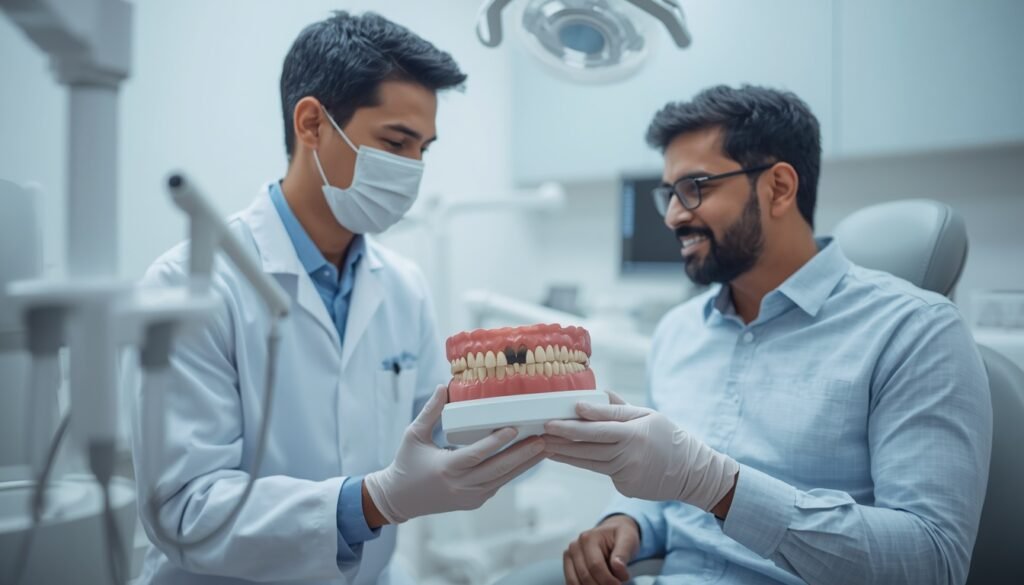
Your first appointment usually begins with a detailed examination of the tooth.
The dentist may check:
- The amount of healthy tooth structure remaining
- Tooth decay
- Cracks or fractures
- Gum health
- Your bite
- Previous restorations
- Signs of infection
- Whether root canal treatment is necessary
- Your cosmetic expectations
Dental X-rays or other diagnostic procedures may also be recommended depending on your condition.
This step is important because a crown should not be selected simply because a tooth looks damaged. The dentist needs to determine whether the tooth can be restored and what type of restoration is appropriate.
Can You Get a Crown Without an Examination?
It is not advisable to select a crown based only on an online search or price quotation.
A professional examination helps determine whether you actually need a crown and whether another treatment could preserve more of your natural tooth structure.
2. Discussing Your Dental Crown Options
Once your dentist evaluates your tooth, you can discuss available crown materials.
Depending on your case, options may include:
- Zirconia crowns
- Porcelain crowns
- Ceramic crowns
- Porcelain-fused-to-metal crowns
- Metal crowns
- Other restorative materials
Each material has different characteristics related to appearance, strength, durability and clinical use.
For example, zirconia is known for its strength, while tooth-coloured ceramic and porcelain options can provide a natural-looking appearance.
There is no single crown material that is automatically right for everyone. The choice can depend on the location of the tooth, bite forces, remaining tooth structure, aesthetic expectations and other clinical factors.
Read our detailed guide to dental crown treatment near Noida Sector 79, including types, benefits and cost.
3. Local Anaesthesia May Be Used
One of the most common concerns patients have is:
“Does dental crown treatment hurt?”
During tooth preparation, your dentist may use local anaesthesia to numb the treatment area.
This helps minimize discomfort while the tooth is being prepared.
You may feel pressure, vibration or movement during the procedure, but you should communicate with your dentist if you experience significant discomfort.
After the appointment, some temporary sensitivity or gum tenderness may occur. Persistent, severe or worsening pain should be discussed with your dentist.
4. The Tooth Is Prepared for the Crown
Once the area is numb, the dentist prepares the tooth so the crown can fit properly.
A small amount of tooth structure may need to be removed to create enough space for the restoration. In some cases, the dentist may also rebuild part of the tooth if insufficient structure remains to support the crown.
The goal is to create a suitable foundation for the final crown.
This is an important stage because the crown needs to fit properly with the surrounding teeth and your bite.
5. Impressions or Digital Scanning
After tooth preparation, your dentist needs an accurate representation of your teeth and the prepared tooth.
Depending on the clinic’s technology and treatment approach, this may involve:
- Traditional dental impressions
- Digital intraoral scanning
- Bite registration
- Shade selection
Digital scanning can create a digital model that helps the dental laboratory design the restoration.
The dentist may also select the appropriate shade so that a tooth-coloured crown blends naturally with the surrounding teeth.
6. A Temporary Crown May Be Placed
If your permanent crown is being fabricated at a dental laboratory, you may receive a temporary crown while you wait.
The temporary crown helps protect the prepared tooth and allows you to use the tooth during the waiting period.
The exact waiting period can vary depending on the laboratory workflow and type of restoration. Conventional crown treatment commonly requires more than one appointment.
During this period, follow the instructions provided by your dentist.
7. Your Permanent Dental Crown Is Checked
Once the permanent crown is ready, you will return for the placement appointment.
Before permanently cementing or bonding the crown, your dentist may check:
- Crown fit
- Shape
- Colour
- Margins
- Contact with neighbouring teeth
- Bite
- Overall appearance
This step is essential because the crown needs to function comfortably as part of your bite.
The dentist may make minor adjustments if the crown feels too high or interferes with your bite.
You can also read our guide about how a dental crown is checked after placement near Sector 79 Noida.
8. The Crown Is Permanently Placed
Once the dentist confirms that the crown fits correctly, it can be permanently bonded or cemented to the prepared tooth using appropriate dental cement.
After placement, your dentist may ask you to bite normally and assess how the restoration feels.
It may initially feel slightly different from your natural tooth because the crown is a new restoration. However, it should not create persistent discomfort or significantly interfere with your bite.
If the crown continues to feel high or uncomfortable, contact your dentist for an adjustment.
Is Dental Crown Treatment Near Sector 79 Noida Painful?
For most patients, the preparation procedure is performed using local anaesthesia.
You may experience some sensitivity or gum tenderness after treatment. This can be temporary.
However, pain that is severe, persistent or getting worse should not be ignored.
If the tooth has an underlying infection or requires root canal treatment, additional treatment may be necessary before the final crown is placed.
You can learn more about root canal treatment at The Dental Crowns.
How Many Visits Are Required for a Dental Crown?
The number of appointments depends on the individual case.
A conventional dental crown procedure may involve:
Visit 1:
Examination, diagnosis, tooth preparation, impressions or scanning and temporary crown placement.
Visit 2:
Removal of the temporary crown, checking the permanent crown and final placement.
Some cases may require additional appointments if the tooth needs treatment such as root canal therapy or if further adjustments are necessary.
The Dental Crowns’ existing guidance also notes that treatment duration can vary according to the tooth, crown material, laboratory turnaround and additional treatment requirements.
What Should You Eat After Dental Crown Treatment?
Immediately after treatment, follow the instructions given by your dentist.
If your mouth is still numb, avoid chewing until normal sensation returns to reduce the risk of accidentally biting your cheek or tongue.
Depending on the type of temporary or permanent restoration, your dentist may recommend avoiding particularly hard or sticky foods for a period of time.
Good oral hygiene remains important after crown placement.
Continue brushing and cleaning between your teeth as advised by your dentist.
How Should You Care for a Dental Crown?
A dental crown does not mean you can stop caring for the tooth underneath it.
Good oral hygiene can help protect the crowned tooth and surrounding gums.
Follow these basic habits:
- Brush twice daily with a fluoride toothpaste.
- Clean between your teeth regularly.
- Avoid using your teeth to open packages.
- Be cautious with very hard foods.
- Attend regular dental check-ups.
- Tell your dentist if you grind or clench your teeth.
- Contact your dentist if the crown becomes loose, chipped or uncomfortable.
Although dental crowns can last for years, they are not indestructible. Cleveland Clinic notes that crowns can last approximately five to 15 years with proper care, although lifespan varies between individuals and restorations.
What If You Need a Root Canal Before the Crown?
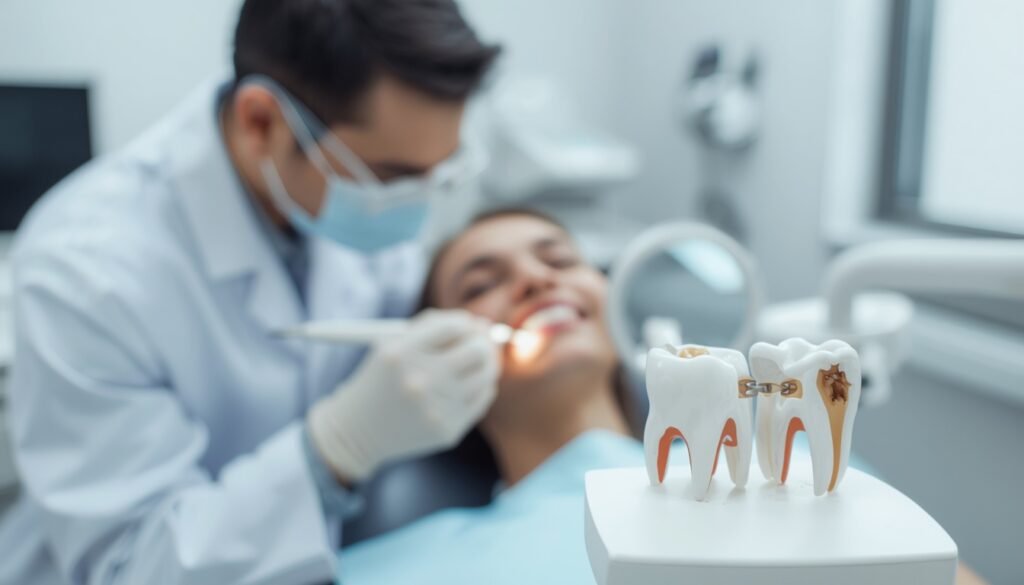
Sometimes a severely damaged or infected tooth may require root canal treatment before a crown can be placed.
Root canal treatment is designed to remove infected or inflamed pulp from inside the tooth, clean the root canals and seal them.
After the tooth has been appropriately treated, your dentist can determine whether a crown is needed to restore and protect the remaining tooth structure.
If you are specifically searching for painless root canal treatment in Noida, discuss your symptoms and treatment options with a qualified dentist.
Dental Crown Treatment Near Sector 79 Noida: What Can Affect the Cost?
The cost of a dental crown is not the same for every patient.
Factors that can affect the overall treatment cost include:
- Crown material
- Tooth location
- Amount of tooth damage
- Laboratory charges
- Diagnostic procedures
- Whether root canal treatment is required
- Additional restorative treatment
- Complexity of the case
- Number of appointments
Therefore, it is better to get an individual treatment estimate rather than relying on a generic online price.
If you are comparing options, you may also read our article on how to choose dental crown treatment in Noida Sector 79.
Why Choose a Dental Clinic Near Sector 79 Noida?
Location can be an important practical factor when planning dental treatment.
A crown may require an initial consultation, preparation appointment, final placement and potentially a follow-up appointment.
For people living in Sector 79 and nearby areas, The Dental Crowns is located at:
The Dental Crowns
Shop No. 16, 1st Floor, Civitech Stadia
Sector 79, Noida, Uttar Pradesh 201301
The clinic provides dental treatments including crowns, root canal treatment, dental implants, bridges, tooth-coloured restorations, veneers and other general and cosmetic dental services.
You can explore the complete range of dental services in Noida.
Dental Crown Treatment Near Sector 79 Noida: Questions to Ask Your Dentist
Before starting treatment, consider asking:
- Why do I need a dental crown?
- Could a filling, inlay or onlay be suitable instead?
- Does my tooth require root canal treatment?
- Which crown material is suitable for my tooth?
- How many appointments will I need?
- Will I receive a temporary crown?
- How will the crown colour be matched?
- How will my bite be checked?
- What should I avoid after treatment?
- What should I do if the crown feels uncomfortable?
Having these questions answered can help you understand your treatment plan before proceeding.
Frequently Asked Questions About Dental Crown Treatment Near Sector 79 Noida
1. How long does dental crown treatment take?
Traditional treatment often involves two main appointments, although the total timeline varies according to the tooth, crown material, laboratory process and whether additional dental treatment is required.
2. Is a dental crown painful?
The tooth is generally numbed with local anaesthesia during preparation. Temporary sensitivity or gum tenderness may occur afterward.
3. Can I get a crown after root canal treatment?
Yes. A crown may be recommended after root canal treatment when the remaining tooth structure needs additional protection.
4. How long does a dental crown last?
The lifespan varies depending on the material, oral hygiene, bite forces and other factors. With appropriate care, many crowns can function for several years.
5. What is the best dental crown material?
There is no single material that is suitable for every tooth. Zirconia, porcelain, ceramic, metal and porcelain-fused-to-metal crowns have different characteristics. Your dentist can recommend an option based on your individual needs.
6. Can a broken tooth receive a crown?
A crown may be suitable for some broken teeth if enough healthy tooth structure remains. A dental examination is necessary to determine whether the tooth can be restored.
7. Can I eat normally after getting a crown?
Your dentist will provide specific instructions. If your mouth remains numb immediately after treatment, wait until sensation returns before chewing.
8. What should I do if my crown feels too high?
Contact your dentist. A bite adjustment may be necessary if the crown interferes with your normal bite.
9. Can a dental crown fall out?
A crown can occasionally become loose or dislodged. If this happens, contact your dentist instead of attempting a permanent repair yourself.
10. Where can I get dental crown treatment near Sector 79 Noida?
The Dental Crowns is located at Civitech Stadia, Sector 79, Noida. You can contact the clinic to arrange an evaluation and discuss whether dental crown treatment is appropriate for your tooth.
Final Thoughts
Knowing what to expect can make dental crown treatment near Sector 79 Noida easier to understand.
The process generally involves dental examination, treatment planning, tooth preparation, impressions or digital scanning, temporary protection when required, fabrication of the permanent crown, fit and bite evaluation, and final placement.
The most important step is getting an appropriate dental evaluation before deciding on a crown. Your dentist can assess the condition of your tooth and explain whether a crown, root canal treatment, filling or another restoration is suitable.
If you are experiencing a damaged, cracked, broken or severely decayed tooth, schedule a dental consultation rather than waiting for the problem to become more complicated.
Looking for dental crown treatment near Sector 79 Noida?
Visit The Dental Crowns at Civitech Stadia, Sector 79, Noida, to discuss your dental condition and available treatment options.
Call: +91 89202 71787