If you have persistent tooth pain, sensitivity to hot or cold, swelling, or pain while chewing, you may wonder whether you need a root canal treatment. But tooth pain alone does not automatically mean that a root canal is necessary.
So, how does a dentist diagnose the need for root canal treatment?
A dentist usually combines your symptoms, dental and medical history, clinical examination, pulp tests, bite tests, and dental X-rays to determine what is causing the problem. The goal is to identify whether the tooth’s pulp is inflamed or infected and whether the natural tooth can be saved.
According to the American Association of Endodontists (AAE), root canal treatment is generally required when the pulp inside a tooth becomes inflamed or infected. The procedure involves removing the affected pulp, cleaning and disinfecting the root canals, and sealing the tooth.
At The Dental Crowns in Noida, root canal treatment is one of the general dentistry services offered to patients with damaged, infected, or painful teeth.
What Is Root Canal Treatment?
Before understanding how a dentist diagnoses the need for an RCT, it helps to understand what a root canal actually treats.
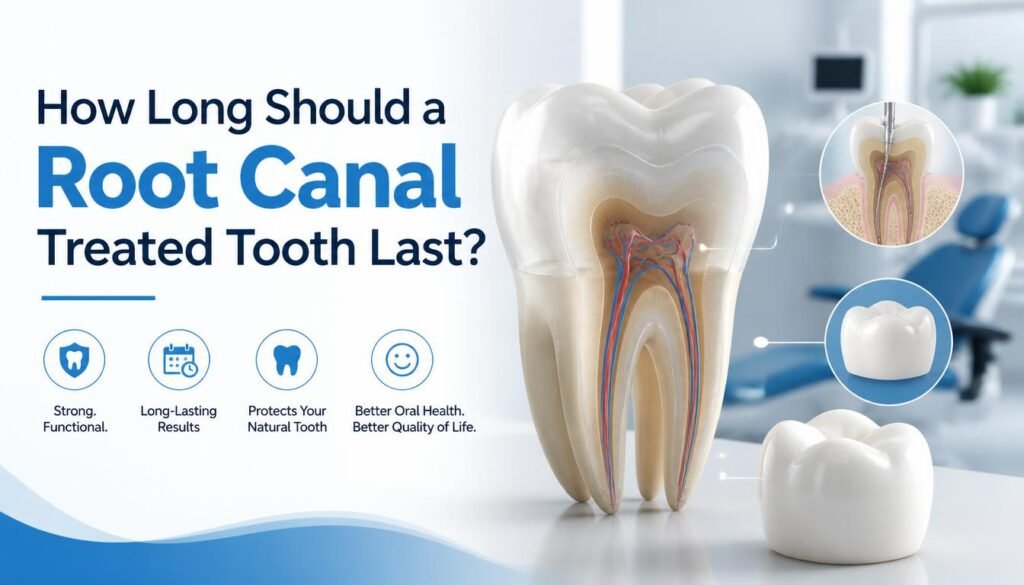
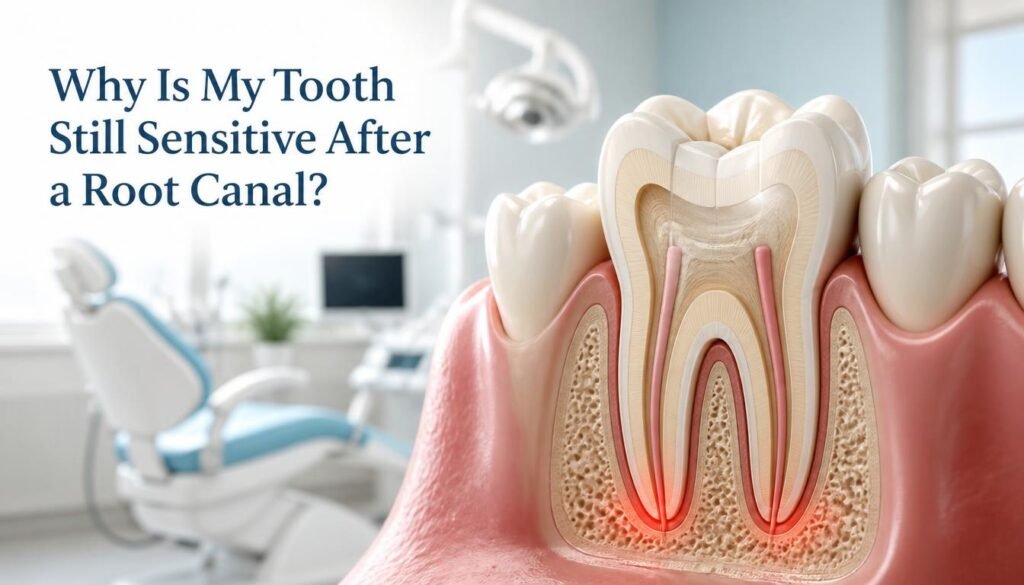
Inside every natural tooth is a soft tissue called the dental pulp. It contains nerves, blood vessels, and connective tissue. When deep decay, cracks, trauma, repeated dental procedures, or other damage allows bacteria to reach the pulp, the tissue may become inflamed or infected.
If the problem progresses, it can result in an abscess and may threaten the tooth.
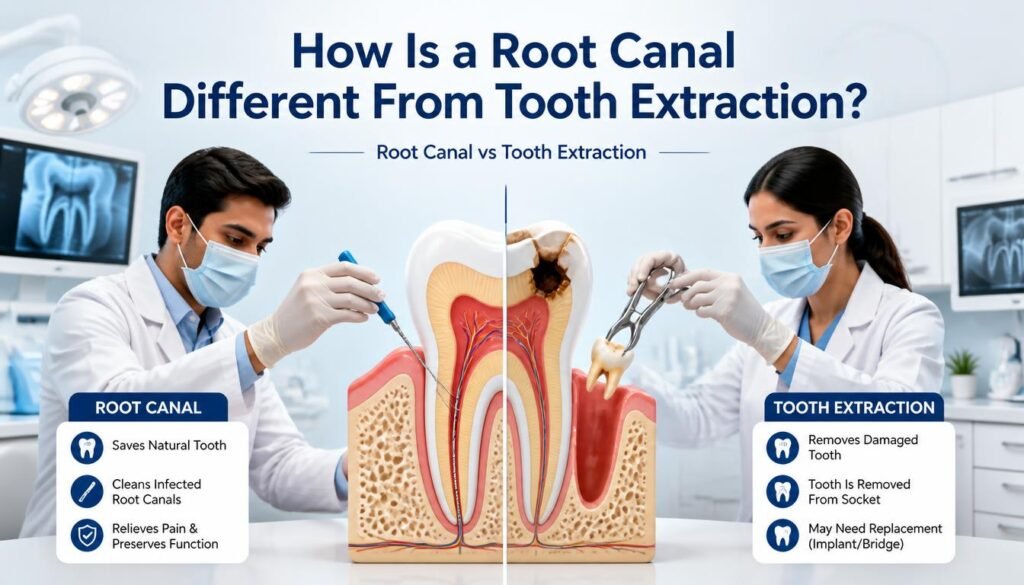
During root canal treatment, the dentist removes the diseased pulp, cleans and disinfects the root canals, fills and seals them, and then restores the tooth.
Read more about our Painless Root Canal Treatment in Noida.
Mayo Clinic also explains that root canal treatment is used to repair and save a badly damaged or infected tooth rather than automatically removing it.
What Symptoms May Make a Dentist Suspect a Root Canal Problem?
The first stage of diagnosis usually begins with what you are experiencing.
Common symptoms that may lead a dentist to investigate the tooth’s pulp include:
- Persistent or severe toothache
- Pain while chewing or biting
- Prolonged sensitivity to hot or cold
- Swelling around the tooth
- Tender or swollen gums
- A pimple or boil on the gums
- Deep tooth decay
- A cracked or chipped tooth
- Tooth discoloration
- Recurring pain in a previously treated tooth
The American Association of Endodontists lists symptoms such as severe pain when chewing, lingering sensitivity to hot or cold, swollen or tender gums, and deep decay among signs that may indicate the need for endodontic evaluation.
However, symptoms alone are not enough to confirm that you need a root canal.
For example, sensitivity can sometimes occur because of decay, a defective filling, gum recession, or other dental conditions. Similarly, pain when biting may be associated with decay, a crack, a loose restoration, or pulp damage.
This is why a dentist needs to perform a proper examination before recommending RCT.
Step 1: The Dentist Asks About Your Symptoms and Dental History
The diagnosis often starts with a conversation.
Your dentist may ask questions such as:
- When did the pain start?
- Is the pain constant or intermittent?
- Is it sharp, dull, throbbing, or pressure-related?
- Does hot or cold food trigger the pain?
- How long does the sensitivity last?
- Does chewing make the tooth hurt?
- Have you experienced swelling?
- Has the tooth been injured?
- Have you previously had a filling, crown, or root canal on that tooth?
The answers can help the dentist understand whether the symptoms could be associated with the pulp or another part of the tooth.
Your previous dental treatment is also important. A tooth that has already received treatment may develop new problems that require further examination.
Step 2: A Clinical Examination of the Tooth
After discussing your symptoms, the dentist examines your mouth and the affected tooth.
The dentist may look for:
- Visible cavities
- Cracks or fractures
- Discoloration
- Broken fillings
- Damaged crowns
- Swollen gums
- Gum abnormalities
- Signs of infection
- Changes around the affected tooth
The dentist may also compare the suspected tooth with neighboring teeth.
This is important because sometimes the location where you feel pain is not necessarily the exact source of the problem.
A comprehensive dental examination helps the dentist narrow down the possible cause before deciding whether additional diagnostic tests are needed.
Step 3: Pulp Sensitivity or Vitality Testing
One of the important parts of diagnosing a root canal problem is evaluating how the tooth’s pulp responds to stimulation.
Your dentist may use tests involving cold, heat, or other controlled stimulation to determine whether the pulp is responding normally.
The purpose is not simply to find out whether you feel something. The dentist compares the response of the suspected tooth with nearby healthy teeth.
For example, a short sensitivity to cold that quickly disappears can have a different clinical significance from pain that continues after the stimulus is removed.
The American Association of Endodontists notes that lingering sensitivity to hot or cold can be a symptom associated with pulp problems.
Why Is Pulp Testing Important?
A dentist should not recommend root canal treatment simply because a tooth hurts.
Pulp testing provides additional information about the condition of the tissue inside the tooth.
The result is considered together with:
- Your symptoms
- Clinical examination
- Dental X-rays
- Bite testing
- Tooth history
- Other diagnostic findings
This combination helps the dentist make a more informed diagnosis.
Step 4: Bite or Percussion Testing
Your dentist may gently tap or apply controlled pressure to the tooth.
This is commonly used to determine whether the tissues surrounding the tooth are sensitive.
You may be asked whether the tooth hurts when you bite down or release your bite.
Pain associated with biting can have several possible causes, including decay, a crack, a loose filling, or inflammation involving the tooth.
Therefore, bite testing is another piece of information rather than a standalone confirmation of the need for root canal treatment.
Step 5: Dental X-Rays
Dental X-rays are an important diagnostic tool when a dentist is investigating possible root canal problems.
An X-ray can help the dentist evaluate:
- The depth of tooth decay
- The tooth’s roots
- Bone surrounding the tooth
- Changes around the root
- The shape of the root canals
- Possible infection-related changes
- Previous root canal treatment
- Other structural problems
Mayo Clinic states that dental X-rays are used at the beginning of root canal treatment to evaluate the amount of damage to the tooth.
Read the Mayo Clinic’s information about root canal treatment.
However, an X-ray should be interpreted alongside the clinical examination and symptoms. A dentist generally does not diagnose a root canal solely by looking at an X-ray.
Step 6: Checking for Deep Decay or Infection
If decay has progressed deep into the tooth, bacteria may have reached or affected the pulp.
Your dentist will assess how extensive the decay is and whether the tooth can be restored.
Deep decay may sometimes be treated with a filling or another restoration if the pulp remains healthy. If the pulp is irreversibly damaged or infected, root canal treatment may be considered.
Mayo Clinic explains that when decay reaches the inner pulp of the tooth, a root canal may be required to remove diseased pulp and save the tooth.
This is why early treatment of cavities is important.
Step 7: Looking for Cracks or Tooth Fractures
A cracked tooth can sometimes produce symptoms that resemble other dental problems.
Patients may experience:
- Pain when chewing
- Sensitivity
- Intermittent discomfort
- Pain when biting or releasing the bite
The dentist may carefully inspect the tooth and surrounding area to determine whether a crack could be responsible for the symptoms.
If the pulp has been damaged because of a crack, root canal treatment may become part of the treatment plan. However, the type and extent of the fracture are also important in determining whether the tooth can be predictably restored.
Step 8: Evaluating Previous Dental Work
A previously restored tooth may sometimes develop new symptoms.
For example, a tooth may have:
- A previous large filling
- A dental crown
- Previous root canal treatment
- Recurrent decay
- A fracture
- New infection
Your dentist may review your previous treatment and compare it with your current symptoms and diagnostic findings.
If a tooth has already undergone root canal treatment and develops recurring symptoms, additional evaluation may be required to determine the cause.
Step 9: The Dentist Rules Out Other Causes of Tooth Pain
This is one of the most important parts of diagnosis.
Not every toothache requires root canal treatment.
Tooth pain may be associated with:
- Dental decay
- Gum disease
- Tooth sensitivity
- Cracked teeth
- A defective filling
- A loose crown
- Trauma
- Wisdom teeth
- Sinus-related problems
- Jaw or bite-related problems
The dentist therefore considers different possibilities before recommending treatment.
The American Association of Endodontists emphasizes that endodontic specialists are trained to diagnose difficult-to-identify causes of oral and facial pain and consider treatment options for each individual case.
Step 10: Deciding Whether the Tooth Can Be Saved
Once the dentist has gathered the diagnostic information, the next question is whether the tooth can be restored and maintained.
If the tooth is suitable for root canal treatment, the dentist may recommend removing the infected or inflamed pulp, cleaning the canals, sealing them, and restoring the tooth.
The final restoration may involve a filling or dental crown, depending on the amount of remaining tooth structure, the tooth’s location, and its functional requirements.
You can learn more about dental crown treatment at The Dental Crowns and read our guide on whether a dental crown is needed after root canal treatment.
Does Tooth Pain Always Mean You Need a Root Canal?
No.
This is one of the most common misunderstandings about RCT.
Tooth pain is a symptom, not a diagnosis.
For example, a cavity that has not reached the pulp may be treated with a filling. Tooth sensitivity may have a different cause. A cracked tooth may require a different treatment depending on the severity and location of the crack.
A dentist therefore uses multiple pieces of evidence before recommending root canal treatment.
The goal is to treat the actual cause of the problem while preserving the natural tooth whenever possible.
Can You Need a Root Canal Without Severe Pain?
Yes.
Some teeth with significant pulp damage or infection may not produce severe pain.
This is one reason regular dental examinations are valuable. A dentist may identify problems through clinical examination and imaging even when the patient is not experiencing intense symptoms.
The American Association of Endodontists recommends contacting a dental professional when ongoing pain or discomfort develops because dental problems can arise from decay, injury, or infection.
What Happens After a Dentist Diagnoses the Need for Root Canal Treatment?
If the diagnostic findings indicate that RCT is appropriate, your dentist will explain the treatment plan.
The general process involves:
- Numbing the tooth and surrounding area.
- Creating access to the pulp chamber.
- Removing inflamed or infected pulp.
- Cleaning and disinfecting the root canals.
- Shaping the canals.
- Filling and sealing the canals.
- Restoring the tooth with an appropriate restoration.
Mayo Clinic notes that root canal treatment may be completed in one or more visits depending on the individual case.
After treatment, protecting the tooth with an appropriate permanent restoration may be important, particularly when substantial tooth structure has been lost.
When Should You See a Dentist for Possible Root Canal Treatment?
Consider arranging a dental examination if you experience:
- Persistent toothache
- Pain while chewing
- Lingering hot or cold sensitivity
- Swelling around a tooth
- Tender gums
- A gum boil or pimple
- A cracked or severely damaged tooth
- Deep tooth decay
- Recurrent symptoms after previous dental treatment
You should seek prompt dental care if you develop significant swelling, fever, difficulty swallowing, difficulty breathing, or other symptoms suggesting a spreading infection.
Root Canal Diagnosis in Noida
If you are searching for root canal treatment in Noida, an accurate diagnosis should come before treatment.
The Dental Crowns provides painless root canal treatment in Noida and lists root canal treatment among its general dentistry services. The clinic is located at Civitech Stadia, Sector 79, Noida.
Patients from nearby areas, including Sector 74, Sector 75, Sector 76, Sector 77, Sector 78 and Sector 79, can consult a dental professional to have their symptoms and tooth condition evaluated.
Explore all dental services at The Dental Crowns.
You can also read our related guide:
Root Canal Consultation Near Sector 75 Noida: What Should You Expect?
Frequently Asked Questions
1. How does a dentist know if I need a root canal?
A dentist considers your symptoms, dental history, clinical examination, pulp testing, bite testing and dental X-rays. These findings are evaluated together before recommending root canal treatment.
2. Can an X-ray confirm that I need a root canal?
An X-ray can provide important information about the tooth and surrounding structures, but it is generally interpreted together with your symptoms and clinical examination.
3. Is severe pain necessary for a root canal?
No. Some teeth with pulp damage or infection may not cause severe pain. A dental examination can help identify problems that may not be obvious from symptoms alone.
4. Does sensitivity to cold mean I need a root canal?
Not necessarily. Cold sensitivity can have several causes. The duration and nature of the response, along with other examination findings, help the dentist determine the likely cause.
5. Why does my tooth hurt when I bite?
Pain while biting can have multiple causes, including decay, a cracked tooth, a loose restoration, or inflammation around the tooth. A dentist needs to examine the tooth to determine the cause.
6. Can a dentist save an infected tooth?
In many cases, root canal treatment can help save a damaged or infected natural tooth. Whether the tooth can be saved depends on its condition, remaining structure, periodontal health, and other clinical factors.
7. Will I need a crown after a root canal?
Not every root-canal-treated tooth automatically requires the same restoration. The recommended restoration depends on factors such as the remaining tooth structure, tooth location, function and clinical assessment.
8. How quickly should I get a suspected root canal problem checked?
If you have persistent pain, swelling, prolonged sensitivity, or other concerning symptoms, arrange a dental examination rather than waiting for the symptoms to disappear.
Final Thoughts
So, how does a dentist diagnose the need for root canal treatment?
The diagnosis is based on more than just tooth pain. A dentist typically combines your symptoms and dental history with a clinical examination, pulp testing, bite testing, dental X-rays and other findings to determine whether the tooth’s pulp is inflamed or infected.
Most importantly, not every toothache requires a root canal. A professional examination helps identify the actual cause of your symptoms and determine whether root canal treatment, a filling, a crown, another restoration, or a different treatment is appropriate.
If you are experiencing persistent tooth pain, sensitivity, swelling, or discomfort and are looking for root canal treatment in Noida, you can consult the dental professionals at The Dental Crowns for an appropriate evaluation.
Trusted Dental Resources
Medical disclaimer: This article is for general educational purposes and does not replace an examination or diagnosis by a qualified dental professional. The appropriate treatment depends on your individual dental condition.