Have you had a large dental filling for several years and recently started experiencing tooth pain or sensitivity? You may be wondering whether root canal treatment can be done on a tooth with a large filling or whether the tooth needs to be extracted.
The good news is that a tooth with a large filling can often be treated with a root canal if enough healthy tooth structure remains and the tooth can be restored successfully. However, the right treatment depends on the extent of decay, the condition of the dental pulp, the presence of cracks and the amount of natural tooth structure left.
At The Dental Crowns in Noida, understanding the condition of your tooth is an important first step towards choosing the appropriate dental treatment.
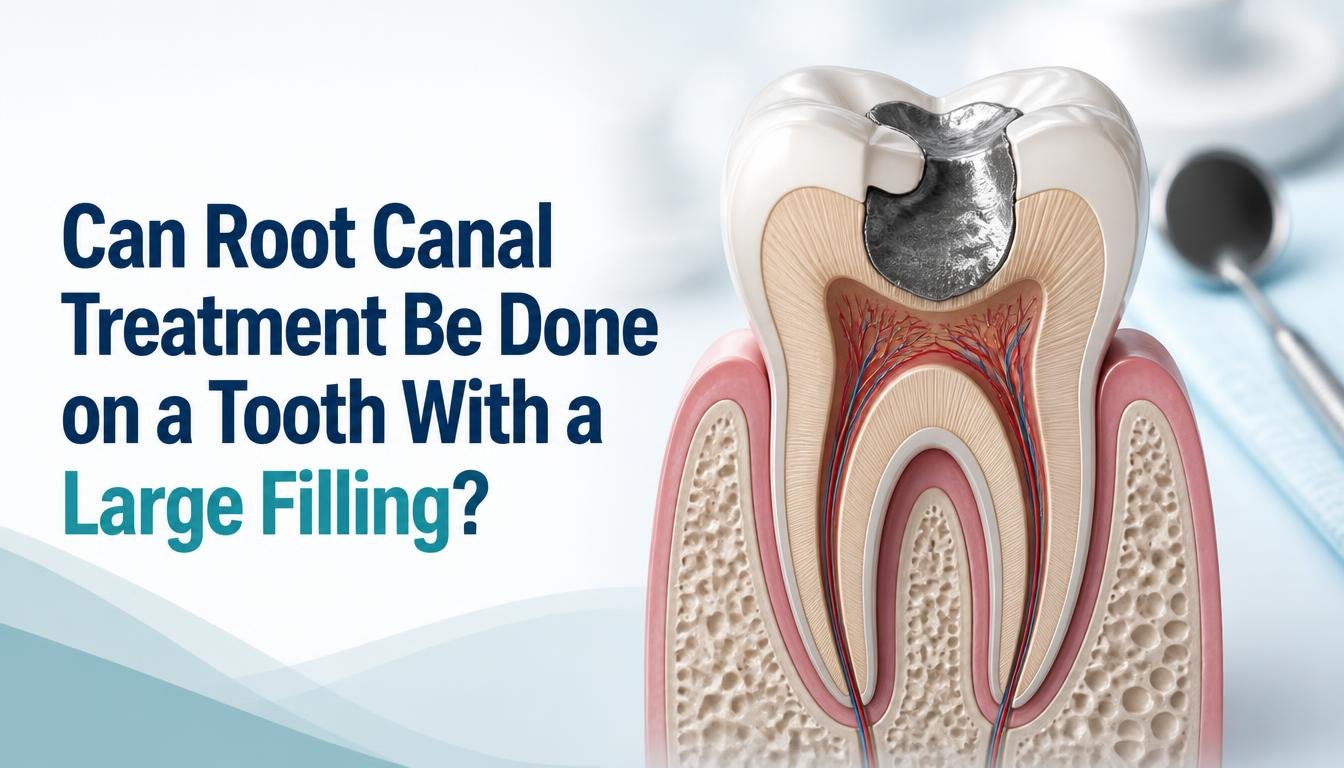
Can Root Canal Treatment Be Done on a Tooth With a Large Filling?
Yes, root canal treatment can be performed on a tooth with a large filling. The presence of an existing filling does not automatically prevent a dentist from carrying out root canal treatment.
A dentist may recommend root canal treatment when the pulp inside the tooth becomes inflamed, infected or irreversibly damaged. This can happen because of deep tooth decay, repeated dental procedures, cracks or leakage around an existing restoration.
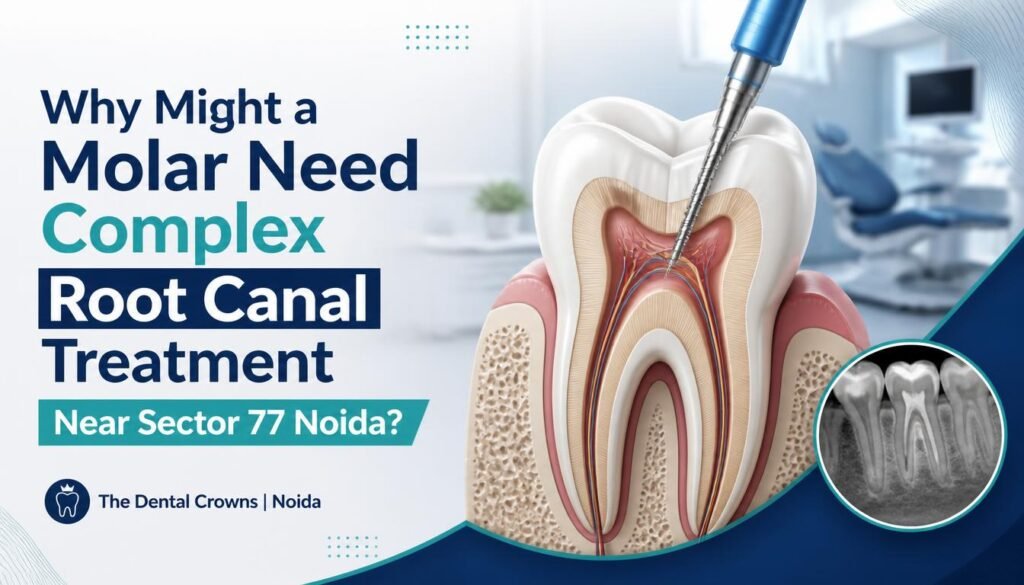
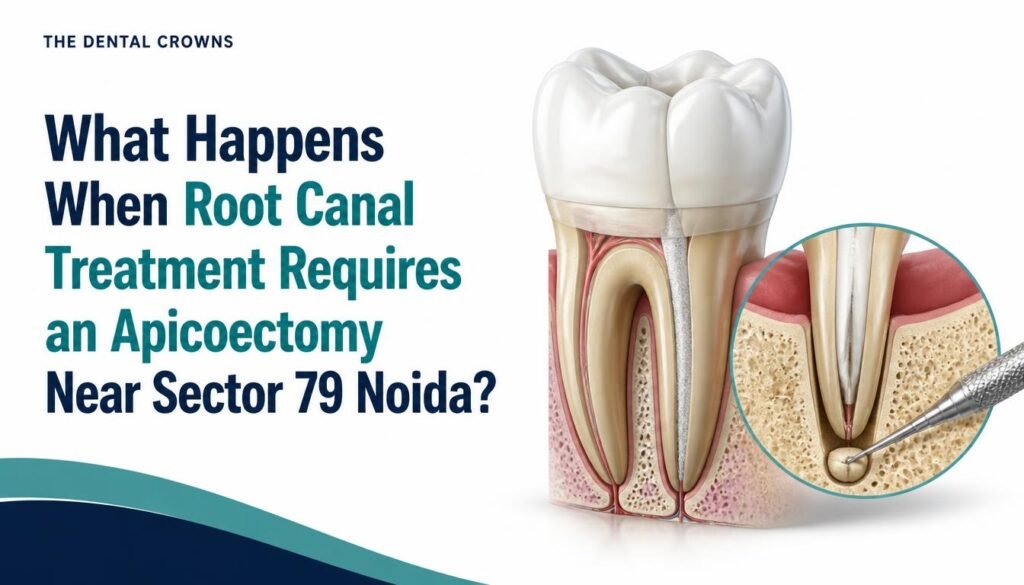
During treatment, the dentist creates an opening in the tooth, removes the damaged or infected pulp, cleans and disinfects the root canals, and seals them with a suitable filling material.
The dentist then restores the outer portion of the tooth to help it function properly and protect the remaining structure.
However, if the tooth has a severe vertical fracture, extensive damage below the gum line or insufficient healthy structure for a reliable restoration, alternative treatments may need to be considered.
Why Can a Tooth With a Large Filling Develop Problems?
A large filling repairs a tooth that has lost some of its natural structure. Although fillings can last for many years, the remaining tooth may still develop problems.
1. Deep or Recurrent Tooth Decay
Decay can develop around the edges of an existing filling if bacteria gain access to the underlying tooth structure. If the decay reaches the pulp, root canal treatment may become necessary.
2. Leakage Around the Filling
Over time, a filling may wear down, crack or lose its seal. This can allow bacteria to enter the tooth and potentially cause further decay or infection.
3. Cracks in the Remaining Tooth
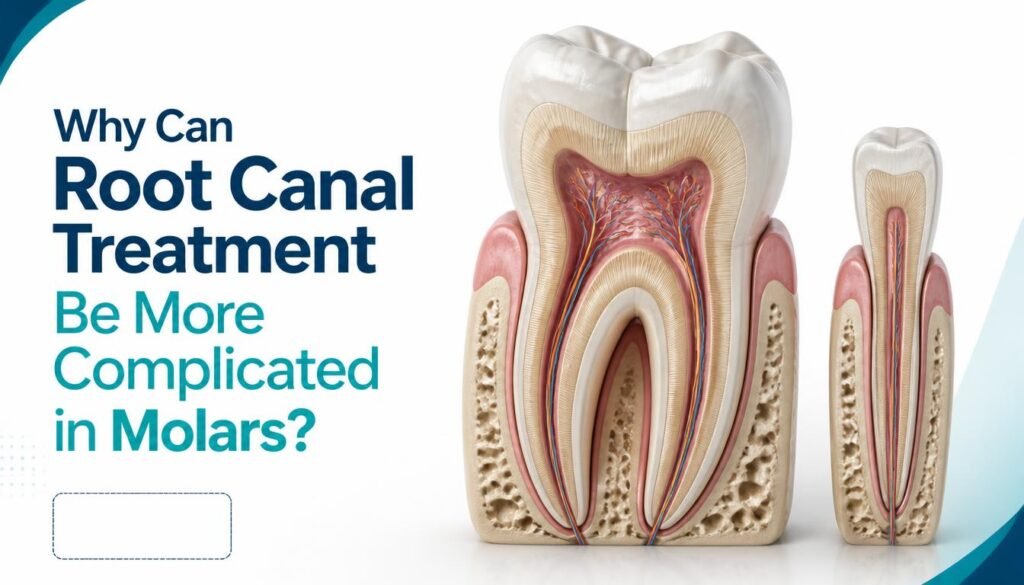
A tooth with a large filling may have thinner remaining walls. Repeated chewing forces can contribute to cracks, particularly in back teeth that experience considerable pressure.
Not every crack requires root canal treatment. The location and depth of the crack determine whether the tooth can be saved.
4. Damage to the Dental Pulp
Repeated dental procedures, deep cavities or trauma can affect the pulp inside the tooth. If the pulp becomes irreversibly inflamed or infected, a dentist may recommend root canal treatment.
What Are the Signs That a Filled Tooth May Need a Root Canal?
A large filling does not automatically mean that you need a root canal. However, certain symptoms should prompt a dental examination.
Watch for the following warning signs:
- Persistent or throbbing toothache.
- Pain when biting or chewing.
- Sensitivity to hot or cold temperatures that lingers after the trigger is removed.
- Swelling or tenderness around the affected tooth.
- A pimple-like swelling on the gums near the tooth.
- A filling that has cracked, loosened or fallen out.
- Darkening of the tooth or discomfort that keeps returning.
Some teeth with pulp damage do not cause obvious pain. Therefore, a dental examination and appropriate imaging may be necessary to identify the problem.
If you experience facial swelling, fever, rapidly increasing pain or difficulty swallowing or breathing, seek urgent medical or dental care.
How Does a Dentist Perform Root Canal Treatment on a Tooth With a Large Filling?
The treatment process depends on the tooth’s condition and the type of existing restoration. A typical procedure involves the following steps.
Step 1: Dental Examination and X-Rays
The dentist assesses your symptoms, examines the tooth and evaluates the surrounding tissues. Dental X-rays can help identify decay, changes around the root and other potential problems.
Additional tests may be required to determine whether the pulp is healthy, inflamed or infected.
Step 2: Accessing the Root Canals
The dentist creates an opening through the existing filling or remaining tooth structure to reach the pulp chamber. Depending on the condition of the filling, part or all of it may need to be removed.
Step 3: Cleaning and Disinfecting the Canals
The affected pulp is removed, and the root canals are carefully cleaned, shaped and disinfected.
Step 4: Sealing the Root Canals
After cleaning, the canals are filled with a suitable material and sealed to reduce the risk of reinfection.
Step 5: Restoring the Tooth
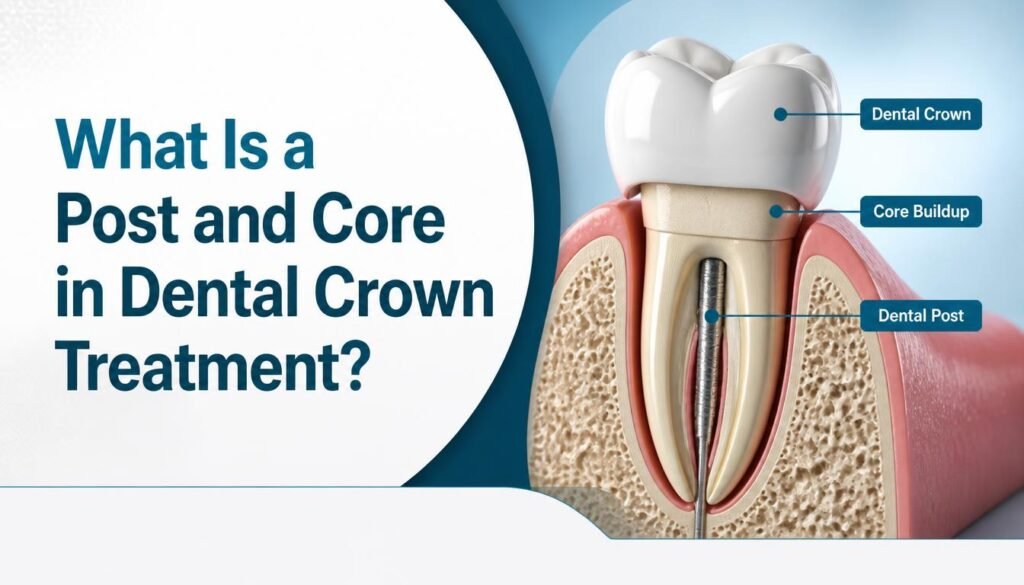
The dentist determines whether the tooth can be restored with a filling, an onlay or a dental crown. The choice depends on the amount of healthy tooth structure remaining, the tooth’s position and the forces placed on it during chewing.
You can learn more about the procedure on our Painless Root Canal Treatment in Noida page.
Will You Need a Dental Crown After Root Canal Treatment?
A dental crown may be recommended after root canal treatment, especially when the tooth already has a large filling. However, a crown is not necessary in every case.
A crown covers the visible part of a tooth and can help protect weakened tooth structure. It is often considered for molars and premolars when substantial tooth structure has been lost.
Your dentist may recommend a crown if:
- The existing filling occupies a large portion of the tooth.
- One or more tooth walls are weakened or damaged.
- The tooth has a significant crack that can still be managed with restorative treatment.
- The tooth needs additional protection against chewing forces.
- The remaining tooth structure cannot reliably support another conventional filling.
In some cases, a bonded restoration or onlay may be appropriate instead. Your dentist will recommend the most suitable option after examining the tooth.
Read our guide on Do You Need a Dental Crown After Root Canal Treatment? to understand the available restorative options.
Can a Tooth With a Large Filling Be Saved Without Extraction?
In many cases, yes. If the tooth has treatable pulp disease and enough healthy structure remains, root canal treatment followed by an appropriate restoration may help preserve the natural tooth.
However, saving the tooth is not always possible. Extraction may be considered if the tooth has a severe fracture, extensive damage that extends below the gum line, or insufficient structure to support a predictable restoration.
The decision should be based on a clinical examination, the tooth’s restorability, the expected outcome and your individual dental needs.
How Can You Protect a Tooth After Root Canal Treatment?
Once your root canal is complete, proper care helps maintain the tooth and its restoration.
- Brush twice daily with fluoride toothpaste.
- Clean between your teeth regularly.
- Avoid chewing hard foods on the treated tooth until your dentist confirms it is safe.
- Complete the recommended permanent restoration promptly.
- Attend follow-up appointments as advised.
- Seek dental care if pain increases, swelling develops or the restoration becomes loose.
Do not delay a recommended crown or other final restoration. A treated tooth may remain vulnerable to fracture until it is adequately protected.
When Should You Visit a Dentist in Noida?
If a tooth with a large filling is causing persistent pain, sensitivity or discomfort while chewing, arrange a dental examination rather than relying on pain relief alone.
An early assessment can help identify whether the problem is caused by recurrent decay, a damaged filling, a crack or pulp inflammation. The appropriate treatment might involve replacing the filling, performing root canal treatment, placing a crown or considering another option.
At The Dental Crowns, Sector 79, Noida, patients can explore root canal treatment and dental crown treatment based on their individual needs.
To discuss your symptoms or arrange an appointment, call +91 89202 71787.
Frequently Asked Questions
1. Can a dentist perform a root canal through an existing filling?
Yes. A dentist can create access to the pulp through an existing filling or the surrounding tooth structure. The filling may need to be partially or completely removed, depending on the circumstances.
2. Does a large filling mean that I will need a root canal?
No. A large filling alone does not indicate that root canal treatment is necessary. Treatment depends on whether the pulp is healthy, inflamed or infected and whether other problems, such as recurrent decay, are present.
3. Can a tooth with a large filling be saved?
Often, yes. If the tooth is restorable, root canal treatment and an appropriate final restoration may help preserve it. Severe fractures or extensive structural damage can affect the prognosis.
4. Is a crown always required after a root canal?
No. A crown is not required in every case. However, teeth with extensive existing fillings or significant loss of tooth structure may benefit from a crown or another protective restoration.
5. How long does root canal treatment take?
The number and length of appointments depend on the tooth, the complexity of the root canals, the presence of infection and the treatment plan. Some cases can be completed in one appointment, while others require multiple visits.
6. Is root canal treatment painful?
Local anaesthesia is used to help control pain during the procedure. Some tenderness may occur afterwards, but persistent or worsening pain should be assessed by your dentist.
7. What happens if I ignore pain in a tooth with a large filling?
The cause of the pain may worsen if left untreated. Depending on the problem, the tooth may develop further decay, pulp infection, an abscess or structural damage. Early assessment can help identify the appropriate treatment.
Conclusion
Root canal treatment can often be performed on a tooth with a large filling, provided the tooth can be restored successfully. The key factors are the condition of the pulp, the extent of decay or cracking, and the amount of healthy tooth structure remaining.
A large filling does not automatically mean that your tooth needs extraction or a root canal. A dental examination is the best way to determine whether you need a replacement filling, root canal treatment, a crown or another procedure.
If you are experiencing tooth pain or sensitivity in Noida, contact The Dental Crowns to arrange a consultation and discuss the appropriate treatment for your tooth.
Disclaimer: This article is for general educational purposes only and is not a substitute for an individual dental examination or professional diagnosis.