

Losing a single tooth can affect more than your smile. It can make chewing uncomfortable, affect speech, create a visible gap, and change how your remaining teeth meet. If you are searching for dental implants near Noida Sector 76, a single tooth implant may be one of the tooth-replacement options worth discussing with a qualified dentist.
A single dental implant is designed to replace the missing tooth root and support a replacement crown. Unlike a traditional tooth-supported bridge, an implant can replace one missing tooth without normally requiring the neighbouring teeth to be prepared as bridge supports. The American Academy of Periodontology explains that a single implant and crown can replace one missing tooth while helping preserve the surrounding bone.
At The Dental Crowns, patients from Sector 76 and surrounding Noida sectors can consult the dental team for implant treatment and other restorative dental services. The clinic is located at Civitech Stadia, Sector 79, Noida.
What Is a Single Tooth Dental Implant?
A single tooth dental implant is a tooth-replacement treatment used when one tooth is missing.
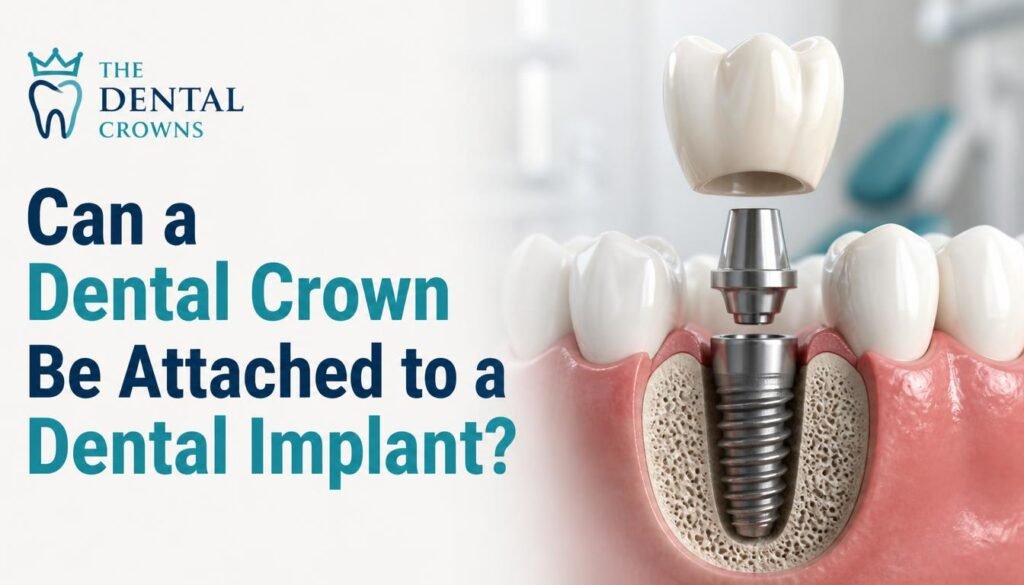
The treatment generally has three main components:
- Dental implant: A small post placed into the jawbone to act as an artificial tooth root.
- Abutment: A connector attached to the implant.
- Dental crown: The visible replacement tooth that is designed to restore appearance and function.
According to Mayo Clinic, a dental implant replaces the root portion of a missing tooth, while an abutment connects the implant to an artificial tooth or crown. The implant needs time to integrate with the surrounding bone before the final restoration can be completed.
If you want to learn more about the treatment offered by the clinic, you can explore Dental Implants Treatment at The Dental Crowns.
Why Consider a Single Tooth Implant Near Noida Sector 76?
When only one tooth is missing, you may have several replacement options. Your dentist may discuss an implant, dental bridge, partial denture, or another solution depending on your oral health.
A single tooth implant can be particularly useful because it is designed to replace the missing tooth and its root without normally relying on neighbouring natural teeth for support.
The American Academy of Periodontology notes that a single-tooth implant can provide advantages over a conventional tooth-supported bridge because the neighbouring teeth do not need to be reduced to support the replacement tooth. It can also help preserve the bone around the missing tooth area.
Potential advantages include:
- Replacing one missing tooth independently
- Restoring chewing function
- Improving the appearance of a smile
- Supporting a natural-looking dental crown
- Helping maintain the jawbone around the implant
- Avoiding preparation of otherwise healthy neighbouring teeth in many cases
- Providing a fixed tooth-replacement option
However, implants are not automatically the right choice for everyone. A dentist needs to examine your gums, jawbone, remaining teeth, bite, and overall dental condition before recommending treatment.
Who May Be Suitable for a Single Tooth Implant?
A dental implant may be considered when you have lost one tooth because of:
- Tooth decay
- Dental trauma
- A severely damaged tooth
- Gum disease
- Failed previous dental treatment
- Tooth extraction
The suitability of an implant depends on the condition of your jawbone and gums, oral hygiene, medical factors, and other individual circumstances.
Mayo Clinic states that appropriate candidates generally need sufficient bone to support the implant or the ability to undergo bone grafting when necessary, along with healthy oral tissues.
This is why a dental examination is important before deciding on an implant.
Single Tooth Implant Procedure: Step-by-Step
The exact treatment sequence can differ between patients. A typical single tooth implant procedure may involve the following stages.
1. Dental Examination
Your dentist first examines the missing-tooth area and evaluates your teeth and gums.
Diagnostic imaging may also be required to assess the available bone and surrounding structures.
2. Treatment Planning
Your dentist creates a personalised treatment plan based on your jawbone, gum health, bite, tooth position, and restoration requirements.
If there is insufficient bone, additional treatment such as bone grafting may sometimes be required.
3. Implant Placement
The dental implant is surgically placed into the jawbone.
The implant acts as the artificial root for the replacement tooth.
4. Healing and Osseointegration
After placement, the implant needs time to bond with the surrounding bone.
This biological process is called osseointegration.
The American Academy of Periodontology explains that this integration period may take approximately two to six months depending on the individual case and implant system.
5. Abutment Placement
Once the implant has adequately integrated, an abutment may be attached.
Some implant systems allow different stages to be combined, while others require a separate procedure.
6. Dental Crown Placement
The final crown is created to fit the implant and complement the surrounding teeth.
Once the dentist confirms that the implant and surrounding tissues are ready, the crown is attached to complete the restoration.
Mayo Clinic describes dental implant treatment as a staged process that can include implant placement, healing, abutment placement, and final crown restoration.
How Long Does a Single Tooth Implant Take?
There is no single treatment timeline that applies to every patient.
Some patients may complete treatment relatively quickly, while others may need additional healing time or procedures before the final crown can be placed.
The overall timeline can depend on:
- Bone density and volume
- Gum health
- Need for tooth extraction
- Need for bone grafting
- Implant position
- Healing response
- Type of implant system
- Timing of the final crown
Bone integration is one of the main reasons implant treatment can take several months. Mayo Clinic also notes that the overall process may take many months because adequate bone healing is required.
Your dentist should provide an estimated treatment timeline after examining your specific case.
Is a Single Tooth Implant Painful?
Dental implant placement is performed using appropriate local anaesthesia, so you should not experience the surgical procedure in the same way you would without anaesthesia.
After the procedure, some patients may experience temporary:
- Tenderness
- Swelling
- Bruising
- Minor bleeding
- Discomfort around the implant site
These symptoms can vary depending on the complexity of the procedure.
Mayo Clinic reports that swelling, bruising, pain at the implant site, and minor bleeding can occur following implant surgery.
Always follow the specific post-operative instructions provided by your dental professional.
Dental Implant vs Dental Bridge for One Missing Tooth
If you have lost one tooth, you may wonder whether a dental implant or bridge is better.
The answer depends on your individual dental condition.
| Factor | Single Tooth Implant | Dental Bridge |
|---|---|---|
| Replaces tooth root | Yes | No |
| Usually depends on neighbouring teeth | No | Yes |
| Surgery required | Yes | Usually no implant surgery |
| Treatment timeline | Generally longer | Generally shorter |
| Jawbone support | Helps replace the root and maintain bone | Does not replace the tooth root |
| Cleaning | Requires normal implant and oral hygiene care | Requires cleaning around the bridge |
| Suitable for everyone | No | No |
The American Academy of Periodontology highlights that conventional bridges generally require neighbouring teeth to support the replacement tooth, while a single implant can replace the missing tooth independently.
You can also read our detailed guide on Dental Implants vs Bridges: Which Is Better for a Missing Tooth?.
What If You Have Bone Loss?
Adequate bone support is important for dental implant placement.
If the jawbone has reduced after tooth loss, your dentist may determine that additional treatment is necessary before placing an implant.
Depending on the location and severity of bone loss, procedures such as bone grafting or ridge modification may be considered.
The American Academy of Periodontology explains that bone quantity and quality are important factors in implant treatment and that bone-grafting or ridge-modification procedures may sometimes be used to improve the foundation for an implant.
This does not mean that bone loss automatically rules out implants. It means your dentist needs to evaluate the site carefully.
How to Care for a Single Dental Implant
An implant should be maintained with the same level of attention you give your natural teeth.
Good oral hygiene can help protect the implant, crown, gums, and surrounding teeth.
Follow these habits:
- Brush twice daily as recommended by your dentist.
- Clean between your teeth regularly.
- Follow your dentist’s instructions for cleaning around the implant.
- Attend regular dental check-ups.
- Avoid using your teeth to open packages or bite extremely hard objects.
- Report persistent swelling, bleeding, pain, or changes around the implant.
- Follow professional maintenance recommendations.
The American Academy of Periodontology recommends regular oral hygiene and dental visits after implant treatment to help maintain implant health and monitor the gums and surrounding teeth.
How Much Does a Single Tooth Implant Cost in Noida?
The cost of a single tooth implant in Noida varies from patient to patient.
There is no responsible way to provide one fixed price without examining the patient and understanding what treatment is required.
Factors that can affect the total cost include:
- Implant brand and system
- Type of dental crown
- Diagnostic imaging
- Tooth extraction, if required
- Bone grafting
- Gum treatment
- Complexity of implant placement
- Temporary restoration
- Abutment type
- Follow-up requirements
For this reason, patients searching for single tooth implant cost in Noida Sector 76 should request a personalised treatment estimate rather than choosing a clinic solely on the basis of an advertised starting price.
Why Choose The Dental Crowns for Dental Implants Near Sector 76?
If you live in Sector 76, travelling to a nearby dental clinic can make consultations and follow-up appointments more convenient.
The Dental Crowns is located at Civitech Stadia, Sector 79, Noida, and serves patients from nearby sectors, including Sector 76. The clinic provides dental implants along with restorative, cosmetic, general, and surgical dental treatments.
The clinic’s implant service focuses on personalised treatment planning based on the patient’s dental condition and restoration requirements.
You can also explore the clinic’s complete Dental Services in Noida before booking a consultation.
What Should You Ask Before Getting a Dental Implant?
Before starting treatment, consider asking your dentist:
- Am I a suitable candidate for a dental implant?
- Do I have enough bone for implant placement?
- Will I need bone grafting?
- What type of implant is being recommended?
- What type of crown will be used?
- How long is the expected treatment timeline?
- What are the possible risks and complications?
- What will the complete treatment cost include?
- What aftercare will I need?
- How frequently will I need follow-up appointments?
Getting clear answers can help you make an informed decision.
Frequently Asked Questions About Dental Implants Near Noida Sector 76
Can I get a single tooth implant if only one tooth is missing?
Yes. A single dental implant can be used to replace one missing tooth when the patient is clinically suitable. The implant supports an abutment and crown to create an individual replacement tooth.
Is a dental implant better than a bridge?
Neither option is universally better. An implant can replace the missing root and generally does not require neighbouring teeth to support it. A bridge can offer a quicker alternative in selected cases. Your dentist should assess your teeth, gums, bone, treatment goals, and budget before recommending an option.
How long does a single dental implant last?
Implant longevity varies between individuals. Good oral hygiene, professional maintenance, healthy gums, appropriate bite management, and regular dental reviews can all contribute to long-term implant health. Your dentist can discuss the expected outlook for your particular case.
Does getting an implant hurt?
The surgical procedure is performed with anaesthesia. Temporary discomfort, swelling, bruising, or tenderness may occur during recovery.
Can I get an implant immediately after tooth extraction?
In selected cases, immediate implant placement may be possible. However, it depends on factors such as the condition of the extraction socket, infection, bone availability, gum condition, and the individual treatment plan.
What happens if I do not replace a missing tooth?
A missing tooth can affect chewing and the way your remaining teeth function. Bone changes can also occur in the area of tooth loss. Your dentist can explain the potential consequences of leaving the space untreated based on your specific situation.
Is bone grafting always necessary?
No. Bone grafting is not required for every implant patient. It may be considered when there is insufficient bone to provide the desired foundation for implant placement.
Where can I find dental implants near Noida Sector 76?
The Dental Crowns is located at Civitech Stadia, Sector 79, Noida, and serves patients from nearby areas including Sector 76. Patients can contact the clinic to schedule an implant consultation and determine whether a single tooth implant is suitable for them.
Book a Dental Implant Consultation Near Noida Sector 76
If you have a missing tooth and are considering a single tooth dental implant near Noida Sector 76, the first step is a professional dental evaluation.
At The Dental Crowns, patients can discuss their missing-tooth concerns, implant suitability, treatment options, expected timeline, and restoration requirements with the dental team.
The Dental Crowns
Shop No. 16, 1st Floor, Civitech Stadia
Sector 79, Noida, Uttar Pradesh 201301
Phone: +91 89202 71787
Contact The Dental Crowns for a Dental Implant Consultation
Helpful Dental Resources
For additional independent information about dental implants, readers can consult:
- Mayo Clinic – Dental Implant Surgery
- American Academy of Periodontology – Single Tooth Dental Implants
- American Academy of Periodontology – Dental Implant Procedures
- American Dental Association – Single-Tooth Implant Information
These sources provide independent patient information about implant treatment, treatment stages, suitability, and alternatives.
Final Takeaway
A single tooth dental implant can be an effective tooth-replacement option for patients who have lost one tooth and have suitable oral and jawbone conditions.
The treatment typically involves an implant, abutment, and dental crown. Because every patient’s situation is different, the exact procedure, healing time, cost, and need for additional treatment can vary.
If you are searching for dental implants near Noida Sector 76, The Dental Crowns in nearby Sector 79 can provide a personalised consultation to assess your dental condition and discuss suitable tooth-replacement options.
Do not choose an implant solely because of price or online rankings. Choose treatment after a proper clinical evaluation and a clear discussion of the benefits, limitations, alternatives, risks, and expected maintenance.